
Why Invisible Teeth Braces Have Changed Modern Orthodontics
Discover how invisible teeth braces offer discreet, precise orthodontic treatment with clear aligners and modern options for a confident smile.


Why Invisible Teeth Braces Are Changing Orthodontics
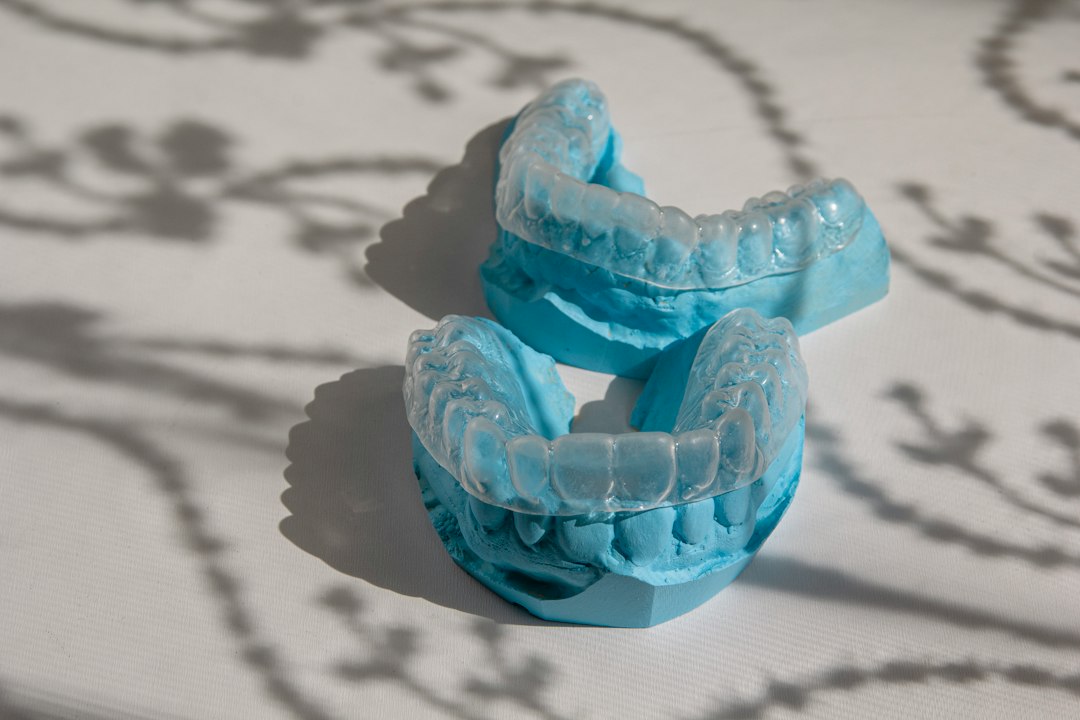
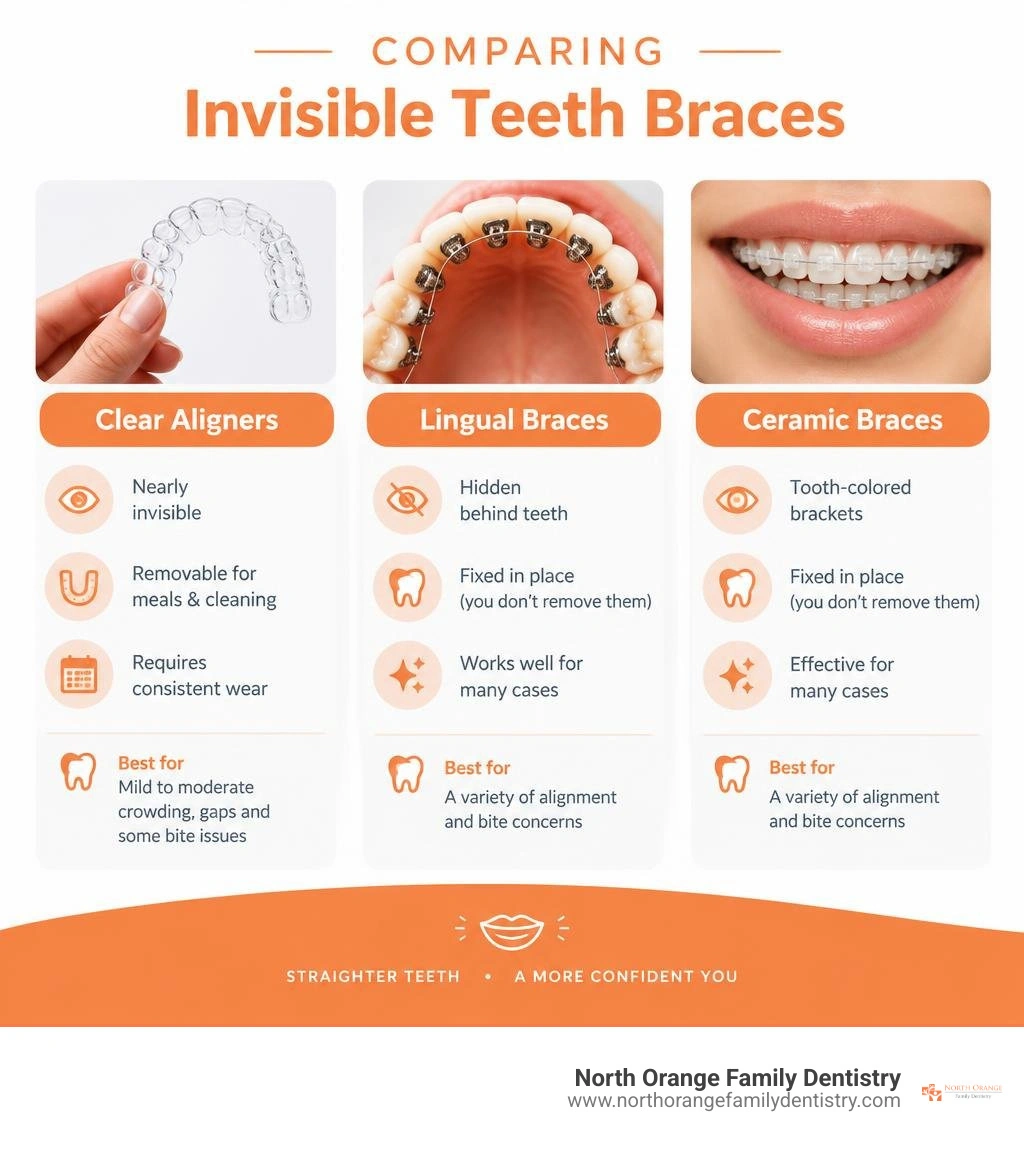
Invisible teeth braces straighten teeth with far less visible hardware than traditional metal braces. The main options are clear aligners, which are removable transparent trays; lingual braces, which sit behind the teeth; and tooth-colored ceramic braces. Each can improve concerns such as mild to moderate crowding, gaps, and some bite problems.
For many adults and teens, the biggest benefit is simple: they can pursue a healthier, straighter smile without feeling self-conscious about metal brackets. Clear aligners are especially popular because they come out for meals, brushing, and flossing. They do require consistency, though - most patients need to wear them about 20 to 22 hours each day.
The right choice depends on your bite, treatment goals, oral health, lifestyle, and willingness to follow daily instructions. A professional exam and digital scan can show whether Invisalign or another discreet option is a safe fit for your smile.
Invisible teeth braces word roundup:
How Invisible Teeth Braces Compare to Traditional Metal Systems
Modern orthodontic evolution has shifted the conversation from purely mechanical hardware to aesthetic, patient-centered solutions. While conventional systems rely on stainless steel brackets glued to the enamel and threaded with archwires, modern clear aligners use a series of custom-molded plastic shells. Both methods rely on biomechanical pressure to guide teeth through the alveolar bone, but the delivery mechanism is fundamentally different.
Traditional brackets pull teeth along an archwire, applying concentrated forces at the bracket bonding site. Clear aligners, in contrast, encase the entire clinical crown, distributing gentle, calibrated force over the tooth surfaces. This bracketless design eliminates sharp edges that poke cheeks, reducing the soft tissue irritation commonly experienced with metal appliances. Because aligners apply controlled force in planned phases, many patients report a smoother, more manageable adjustment period compared to the tightness felt after traditional wire-tightening visits.
Aesthetic and Lifestyle Advantages of Invisible Teeth Braces
The primary appeal for working professionals and active teens is discreet appearance. Whether you are leading a team meeting or participating in community events, clear trays blend into your natural smile.
Comparing aligners vs braces reveals significant lifestyle advantages:
- Dietary Freedom: There are no forbidden foods. You simply remove your trays before biting into crisp apples, popcorn, or chewy snacks.
- Simplified Hygiene: Brushing and flossing require no specialized threaders. You clean your teeth naturally before reinserting your trays.
- Comfortable Fit: Smooth, medical-grade thermoplastic avoids the broken wires or loose brackets that cause emergency appointments.
- Confidence Boost: Because the appliances are virtually transparent, most people will never notice you are undergoing orthodontic care.
- Active Lifestyles: Athletes and musicians who play wind instruments find removable trays far more accommodating and safer during physical activity.
Clinical Precision and Treatment Capabilities
Discreet orthodontics is not just about looks; it relies on advanced digital planning. Utilizing high-resolution 3D intraoral scans, we map out the exact movement of each tooth from start to finish. This computerized foresight allows us to address mild crowding, spacing, rotated teeth, and various forms of malocclusion, including overbites and crossbites.
For comprehensive bite correction, Invisalign treatment applies targeted micro-movements of a fraction of a millimeter per stage. Small, tooth-colored composite attachments can be placed on specific teeth to serve as gentle leverage points, enabling complex root and crown movements that rival traditional appliances.
The Main Types of Discreet Orthodontic Options

When exploring discreet orthodontic care, patients generally choose among three distinct modalities, each balancing invisibility, convenience, and control differently.
Clear Aligners and Modern Digital Orthodontics
Clear aligners represent the standard in removable orthodontic technology. Systems like Invisalign have treated over 17 million patients globally by utilizing sequential, transparent plastic trays. Each set is worn for one to two weeks before advancing to the next stage. As outlined in our Invisalign complete guide, these aligners are trimmed along your exact gumline for optimal aesthetics and comfort.
Lingual and Ceramic Braces
For patients seeking fixed appliances that stay in place 24/7 without visible metal:
- Lingual Braces: Attached entirely to the tongue-side (lingual) surface of the teeth, these custom-engineered brackets are completely hidden from external view. Shape-memory wires work behind the scenes, though they require a brief period of speech adaptation and careful flossing.
- Ceramic Braces: These use standard orthodontic mechanics but feature tooth-colored or translucent ceramic brackets paired with frosted archwires, providing a subtle look from a distance.
The Step-by-Step Treatment Journey and Daily Care
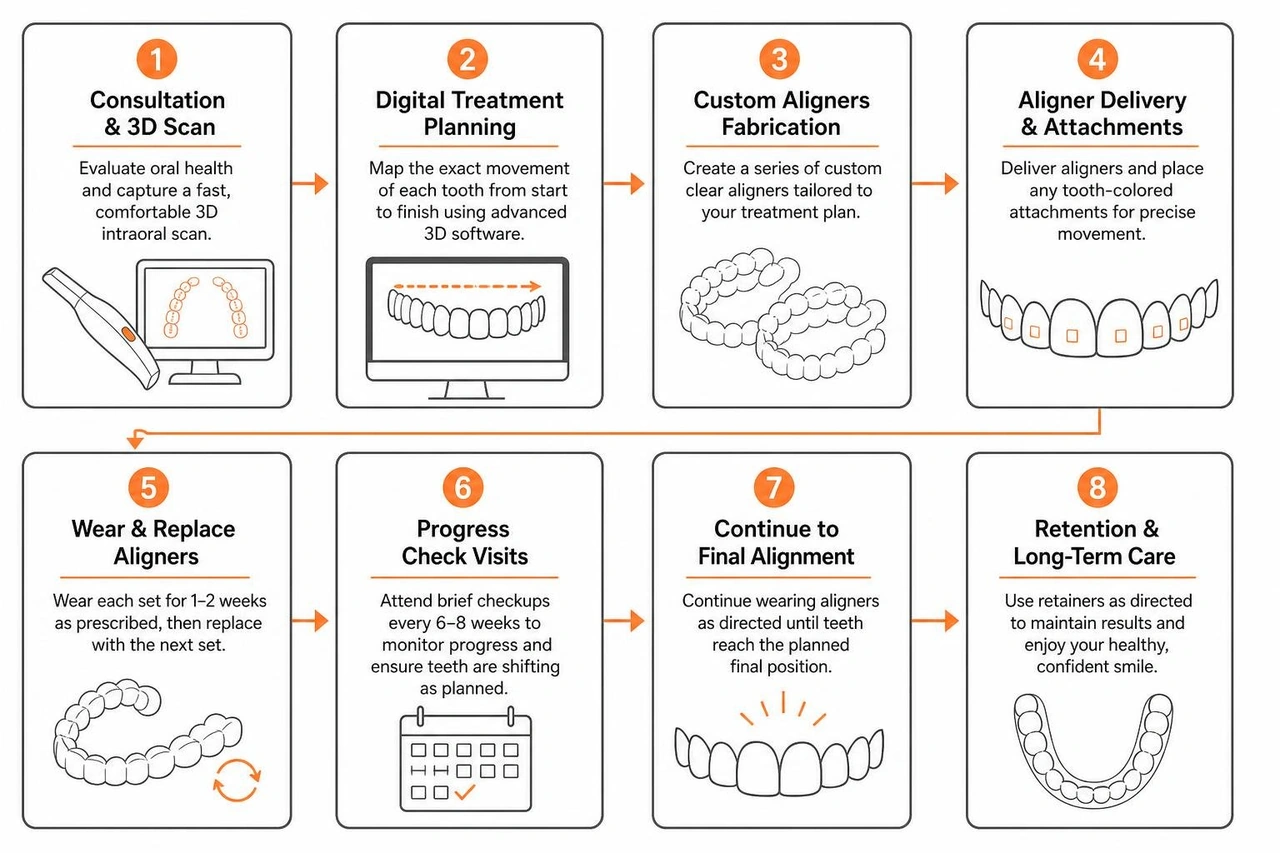
Embarking on orthodontic care begins with a comprehensive consultation. We evaluate your oral health, discuss your goals, and perform a fast, comfortable 3D intraoral scan. Reviewing clear aligners vs Invisalign helps clarify how customized treatment planning ensures predictable tooth tracking over time.
Once your custom trays are fabricated and delivered, we place any necessary tooth-colored attachments and verify the initial fit. You then wear each set according to your prescribed schedule, attending brief progress checks every six to eight weeks to ensure your teeth are shifting as planned.
Daily Wear and Hygiene Protocols for Invisible Teeth Braces
Success with clear appliances relies on consistent daily habits:
- 22-Hour Wear Rule: Aligners must remain in place day and night, removed only for eating, drinking non-water beverages, brushing, and flossing.
- Rinse and Clean: Clean your aligners daily with a soft toothbrush and cool water or specialized cleaning crystals. Avoid hot water, which can warp the plastic.
- Oral Cleanliness: Brush and floss thoroughly after every meal before putting your aligners back in to avoid trapping sugars and plaque against your enamel.
- Avoid Stains: Remove trays before drinking coffee, tea, or dark sodas to keep the plastic clear and stain-free.
Retention and Post-Treatment Stability
Completing your active treatment is an exciting milestone, but teeth have a natural tendency to shift back toward their original positions. The retention phase is critical to safeguard your new smile. Using clear retainers to straighten teeth and maintain long-term alignment keeps your bite stable. Initially, you may wear retainers full-time, transitioning to nighttime-only wear as your surrounding bone and gum tissues fully mature.
Cost, Insurance, and Value Considerations
The overall investment for discreet orthodontic treatment varies based on case complexity, treatment duration, and the type of appliance selected. To explore realistic planning factors, reviewing the average price of Invisalign provides helpful context on what influences total costs, such as the number of aligner trays required and the overall length of active movement.
Many dental insurance policies feature orthodontic benefits that cover clear aligners in the same manner as conventional braces. Consulting our dental insurance Invisalign complete guide can help you maximize lifetime orthodontic maximums. Flexible Spending Accounts (FSA) and Health Savings Accounts (HSA) can also be applied to cover out-of-pocket costs using pre-tax dollars. For patients without orthodontic insurance coverage, our practice offers an in-house Dental Wellness Plan to keep preventive care predictable and accessible. General orthodontic clinical guidance and educational standards are also maintained by organizations such as the American Association of Orthodontists, helping patients understand the clinical principles that guide modern tooth alignment.
Frequently Asked Questions About Invisible Braces
How long does treatment typically take compared to traditional braces?
For mild to moderate alignment needs, clear aligners often finish within 12 to 18 months, which is frequently faster than the 18 to 24 months common with traditional metal brackets. Simpler cosmetic adjustments can sometimes conclude in as little as six months, while complex bite corrections may take longer.
Can teenagers wear discreet orthodontic appliances successfully?
Yes. Teenagers are often excellent candidates for clear aligners. Modern teen aligner options include subtle compliance indicators that fade with consistent wear, helping parents and dentists verify that the trays are being worn for the necessary 20 to 22 hours each day.
What happens if an aligner tray is lost or damaged?
If an aligner is cracked or lost, contact our office immediately for guidance. Depending on where you are in your current wear cycle, we may advise you to move forward to the next tray early or step back to your previous tray while a replacement is fabricated, preventing any loss of progress.
Conclusion
A aligned, balanced smile improves your appearance while supporting long-term periodontal health, bite function, and easier daily hygiene. At North Orange Family Dentistry, Dr. Kyle Bogan and our experienced clinical team provide comprehensive care to help patients across Delaware, Lewis Center, Orange, and Powell, Ohio, achieve their ideal smiles.
Alongside advanced orthodontic solutions, our modern office offers leading-edge technology, including advanced laser treatments to relieve TMJ pain, promote rapid canker sore healing, and manage periodontal disease. We also provide endosteal dental implants at an average cost of about $4,500 per tooth to restore missing teeth seamlessly, and we can see patients same-day most of the time for urgent dental needs.
If you do not have dental insurance, our in-house Dental Wellness Plan helps uninsured individuals and families receive comprehensive yearly dental care at a predictable, discounted price. Our practice is designed to fit your schedule, with our last appointment of the day at 3pm.
Ready to see how discreet orthodontics can transform your smile? Take the next step today and schedule an Invisalign consultation with our welcoming team.
Why Invisible Teeth Braces Are Changing Orthodontics
Invisible teeth braces straighten teeth with far less visible hardware than traditional metal braces. The main options are clear aligners, which are removable transparent trays; lingual braces, which sit behind the teeth; and tooth-colored ceramic braces. Each can improve concerns such as mild to moderate crowding, gaps, and some bite problems.
For many adults and teens, the biggest benefit is simple: they can pursue a healthier, straighter smile without feeling self-conscious about metal brackets. Clear aligners are especially popular because they come out for meals, brushing, and flossing. They do require consistency, though - most patients need to wear them about 20 to 22 hours each day.
The right choice depends on your bite, treatment goals, oral health, lifestyle, and willingness to follow daily instructions. A professional exam and digital scan can show whether Invisalign or another discreet option is a safe fit for your smile.
Invisible teeth braces word roundup:
How Invisible Teeth Braces Compare to Traditional Metal Systems
Modern orthodontic evolution has shifted the conversation from purely mechanical hardware to aesthetic, patient-centered solutions. While conventional systems rely on stainless steel brackets glued to the enamel and threaded with archwires, modern clear aligners use a series of custom-molded plastic shells. Both methods rely on biomechanical pressure to guide teeth through the alveolar bone, but the delivery mechanism is fundamentally different.
Traditional brackets pull teeth along an archwire, applying concentrated forces at the bracket bonding site. Clear aligners, in contrast, encase the entire clinical crown, distributing gentle, calibrated force over the tooth surfaces. This bracketless design eliminates sharp edges that poke cheeks, reducing the soft tissue irritation commonly experienced with metal appliances. Because aligners apply controlled force in planned phases, many patients report a smoother, more manageable adjustment period compared to the tightness felt after traditional wire-tightening visits.
Aesthetic and Lifestyle Advantages of Invisible Teeth Braces
The primary appeal for working professionals and active teens is discreet appearance. Whether you are leading a team meeting or participating in community events, clear trays blend into your natural smile.
Comparing aligners vs braces reveals significant lifestyle advantages:
- Dietary Freedom: There are no forbidden foods. You simply remove your trays before biting into crisp apples, popcorn, or chewy snacks.
- Simplified Hygiene: Brushing and flossing require no specialized threaders. You clean your teeth naturally before reinserting your trays.
- Comfortable Fit: Smooth, medical-grade thermoplastic avoids the broken wires or loose brackets that cause emergency appointments.
- Confidence Boost: Because the appliances are virtually transparent, most people will never notice you are undergoing orthodontic care.
- Active Lifestyles: Athletes and musicians who play wind instruments find removable trays far more accommodating and safer during physical activity.
Clinical Precision and Treatment Capabilities
Discreet orthodontics is not just about looks; it relies on advanced digital planning. Utilizing high-resolution 3D intraoral scans, we map out the exact movement of each tooth from start to finish. This computerized foresight allows us to address mild crowding, spacing, rotated teeth, and various forms of malocclusion, including overbites and crossbites.
For comprehensive bite correction, Invisalign treatment applies targeted micro-movements of a fraction of a millimeter per stage. Small, tooth-colored composite attachments can be placed on specific teeth to serve as gentle leverage points, enabling complex root and crown movements that rival traditional appliances.
The Main Types of Discreet Orthodontic Options
When exploring discreet orthodontic care, patients generally choose among three distinct modalities, each balancing invisibility, convenience, and control differently.
Clear Aligners and Modern Digital Orthodontics
Clear aligners represent the standard in removable orthodontic technology. Systems like Invisalign have treated over 17 million patients globally by utilizing sequential, transparent plastic trays. Each set is worn for one to two weeks before advancing to the next stage. As outlined in our Invisalign complete guide, these aligners are trimmed along your exact gumline for optimal aesthetics and comfort.
Lingual and Ceramic Braces
For patients seeking fixed appliances that stay in place 24/7 without visible metal:
- Lingual Braces: Attached entirely to the tongue-side (lingual) surface of the teeth, these custom-engineered brackets are completely hidden from external view. Shape-memory wires work behind the scenes, though they require a brief period of speech adaptation and careful flossing.
- Ceramic Braces: These use standard orthodontic mechanics but feature tooth-colored or translucent ceramic brackets paired with frosted archwires, providing a subtle look from a distance.
The Step-by-Step Treatment Journey and Daily Care
Embarking on orthodontic care begins with a comprehensive consultation. We evaluate your oral health, discuss your goals, and perform a fast, comfortable 3D intraoral scan. Reviewing clear aligners vs Invisalign helps clarify how customized treatment planning ensures predictable tooth tracking over time.
Once your custom trays are fabricated and delivered, we place any necessary tooth-colored attachments and verify the initial fit. You then wear each set according to your prescribed schedule, attending brief progress checks every six to eight weeks to ensure your teeth are shifting as planned.
Daily Wear and Hygiene Protocols for Invisible Teeth Braces
Success with clear appliances relies on consistent daily habits:
- 22-Hour Wear Rule: Aligners must remain in place day and night, removed only for eating, drinking non-water beverages, brushing, and flossing.
- Rinse and Clean: Clean your aligners daily with a soft toothbrush and cool water or specialized cleaning crystals. Avoid hot water, which can warp the plastic.
- Oral Cleanliness: Brush and floss thoroughly after every meal before putting your aligners back in to avoid trapping sugars and plaque against your enamel.
- Avoid Stains: Remove trays before drinking coffee, tea, or dark sodas to keep the plastic clear and stain-free.
Retention and Post-Treatment Stability
Completing your active treatment is an exciting milestone, but teeth have a natural tendency to shift back toward their original positions. The retention phase is critical to safeguard your new smile. Using clear retainers to straighten teeth and maintain long-term alignment keeps your bite stable. Initially, you may wear retainers full-time, transitioning to nighttime-only wear as your surrounding bone and gum tissues fully mature.
Cost, Insurance, and Value Considerations
The overall investment for discreet orthodontic treatment varies based on case complexity, treatment duration, and the type of appliance selected. To explore realistic planning factors, reviewing the average price of Invisalign provides helpful context on what influences total costs, such as the number of aligner trays required and the overall length of active movement.
Many dental insurance policies feature orthodontic benefits that cover clear aligners in the same manner as conventional braces. Consulting our dental insurance Invisalign complete guide can help you maximize lifetime orthodontic maximums. Flexible Spending Accounts (FSA) and Health Savings Accounts (HSA) can also be applied to cover out-of-pocket costs using pre-tax dollars. For patients without orthodontic insurance coverage, our practice offers an in-house Dental Wellness Plan to keep preventive care predictable and accessible. General orthodontic clinical guidance and educational standards are also maintained by organizations such as the American Association of Orthodontists, helping patients understand the clinical principles that guide modern tooth alignment.
Frequently Asked Questions About Invisible Braces
How long does treatment typically take compared to traditional braces?
For mild to moderate alignment needs, clear aligners often finish within 12 to 18 months, which is frequently faster than the 18 to 24 months common with traditional metal brackets. Simpler cosmetic adjustments can sometimes conclude in as little as six months, while complex bite corrections may take longer.
Can teenagers wear discreet orthodontic appliances successfully?
Yes. Teenagers are often excellent candidates for clear aligners. Modern teen aligner options include subtle compliance indicators that fade with consistent wear, helping parents and dentists verify that the trays are being worn for the necessary 20 to 22 hours each day.
What happens if an aligner tray is lost or damaged?
If an aligner is cracked or lost, contact our office immediately for guidance. Depending on where you are in your current wear cycle, we may advise you to move forward to the next tray early or step back to your previous tray while a replacement is fabricated, preventing any loss of progress.
Conclusion
A aligned, balanced smile improves your appearance while supporting long-term periodontal health, bite function, and easier daily hygiene. At North Orange Family Dentistry, Dr. Kyle Bogan and our experienced clinical team provide comprehensive care to help patients across Delaware, Lewis Center, Orange, and Powell, Ohio, achieve their ideal smiles.
Alongside advanced orthodontic solutions, our modern office offers leading-edge technology, including advanced laser treatments to relieve TMJ pain, promote rapid canker sore healing, and manage periodontal disease. We also provide endosteal dental implants at an average cost of about $4,500 per tooth to restore missing teeth seamlessly, and we can see patients same-day most of the time for urgent dental needs.
If you do not have dental insurance, our in-house Dental Wellness Plan helps uninsured individuals and families receive comprehensive yearly dental care at a predictable, discounted price. Our practice is designed to fit your schedule, with our last appointment of the day at 3pm.
Ready to see how discreet orthodontics can transform your smile? Take the next step today and schedule an Invisalign consultation with our welcoming team.
Contact Us
Have any questions? Want to learn more?

