
Clear Aligners vs Invisalign and How to Pick the Best Fit for Your Teeth
Discover the key differences between clear aligners vs Invisalign to choose the best fit for your smile with expert guidance from North Orange Family Dentistry.


Clear Aligners vs Invisalign: How to Choose the Right Option
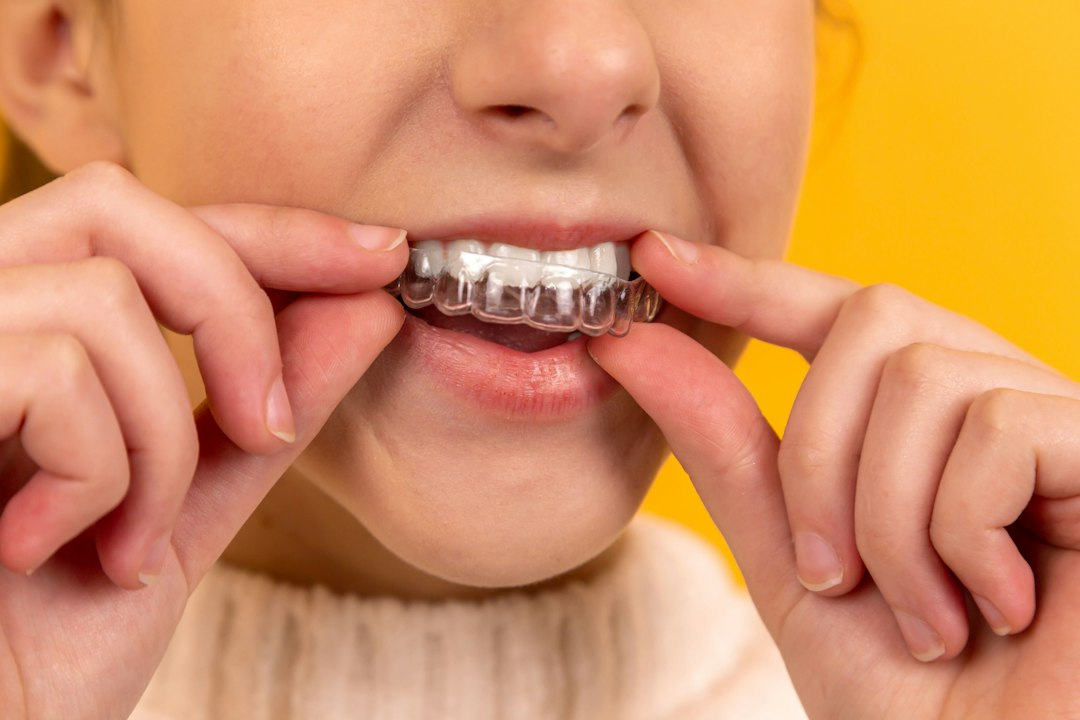
Clear aligners vs Invisalign comes down to category, brand, and supervision. Clear aligners are removable, nearly invisible trays that move teeth over time. Invisalign is a well-known brand of clear aligners with its own materials, digital planning tools, and provider network.
For minor spacing or mild crowding, several dentist-supervised aligner brands may be a good fit. For more involved concerns, such as major rotations, deep bites, crossbites, or significant crowding, Invisalign may offer more planning options. Some severe tooth or jaw problems still need braces or another orthodontic approach.
Before choosing, focus on these three questions:
- How complex is your bite or tooth movement?
- Will a dental professional examine and monitor your progress?
- What does the treatment plan include, such as scans, refinements, and retainers?
Both options require steady wear, usually about 20 to 22 hours a day. The best choice is not always the most familiar brand. It is the system and care team that can safely address your specific goals.
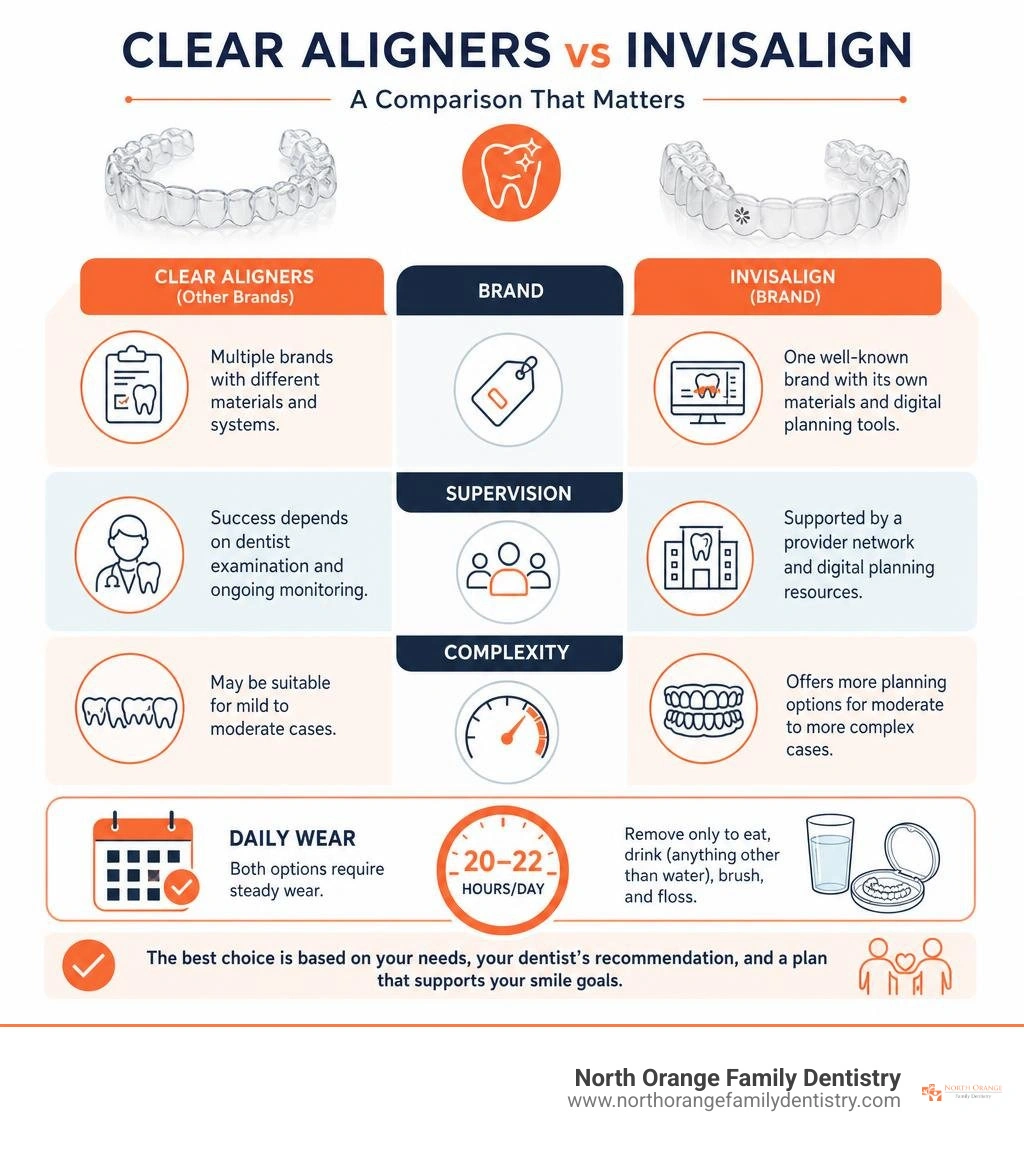
Clear aligners vs Invisalign basics:
Clear Aligners vs Invisalign: Understanding the Core Differences
Understanding how modern orthodontic systems straighten smiles begins with breaking down terminology. The global clear aligner market has expanded dramatically, evolving from a niche alternative into a mainstream orthodontic standard. As more options enter the landscape, comparing proprietary systems and generic options helps clarify which pathway matches your clinical needs.
While generic systems often rely on standard single-layer plastics like basic PET-G polymers, advanced platforms use specialized engineering. For example, clinicians evaluating treatment options look closely at digital planning software comparison data alongside the physical material properties of modern clear aligners to determine which system offers the greatest predictability.
Category vs Brand: Clear Aligners vs Invisalign Defined
To understand the difference, think of clear aligners as the broad category and Invisalign as the pioneering brand name within it—much like asking for a tissue versus a Kleenex. Clear aligners refer to any series of custom-fabricated, transparent, thermoformed plastic trays designed to shift teeth incrementally.
Invisalign, introduced by Align Technology after receiving FDA clearance in the late 1990s, established the modern clear aligner category. Today, Invisalign has treated over 22 million patients worldwide across a network of more than 271,000 doctor accounts. While all Invisalign trays are clear aligners, not all clear aligners are Invisalign. Exploring a comprehensive aligner overview shows how branded systems differ from generic alternatives across manufacturing, tracking precision, and clinical versatility.
Material Quality and Technology in Clear Aligners vs Invisalign
The material used to construct each tray directly influences how comfortably and predictably teeth move. Generic clear aligners commonly use standard PET-G or polyurethane plastics. While these materials are rigid and transparent, they can fatigue over a two-week wear cycle, gradually losing the consistent force necessary for complex tooth movements.
Invisalign utilizes a patented multilayer aromatic thermoplastic called SmartTrack. Engineered specifically for orthodontic movement, SmartTrack delivers gentle, continuous force over extended periods while maintaining high elasticity. This material adapts closely to the anatomy of each tooth, improving control over difficult shifts such as root uprighting and rotations. Furthermore, trays are precision-trimmed to match the patient's individual gumline, enhancing both aesthetic discretion and soft-tissue comfort compared to straight-cut edges that can press against delicate gums.
Comparing Treatment Scope, Complexity, and Clinical Supervision
Straightening teeth is not just a cosmetic upgrade; it is a biomechanical medical procedure that directly affects your jaw joints, periodontal health, and bite function. Evaluating how different aligner options handle varying degrees of misalignment is essential before starting care, especially when weighing evaluating aligners vs braces for complex adjustments.
In-Office Professional Oversight vs Mail-Order Trays
One of the most critical distinctions in orthodontic care is the difference between comprehensive, dentist-supervised treatment and direct-to-consumer mail-order kits. Mail-order aligners rely on home putty impressions or unsupervised scans, shipping a full set of trays directly to your door with little to no clinical oversight.
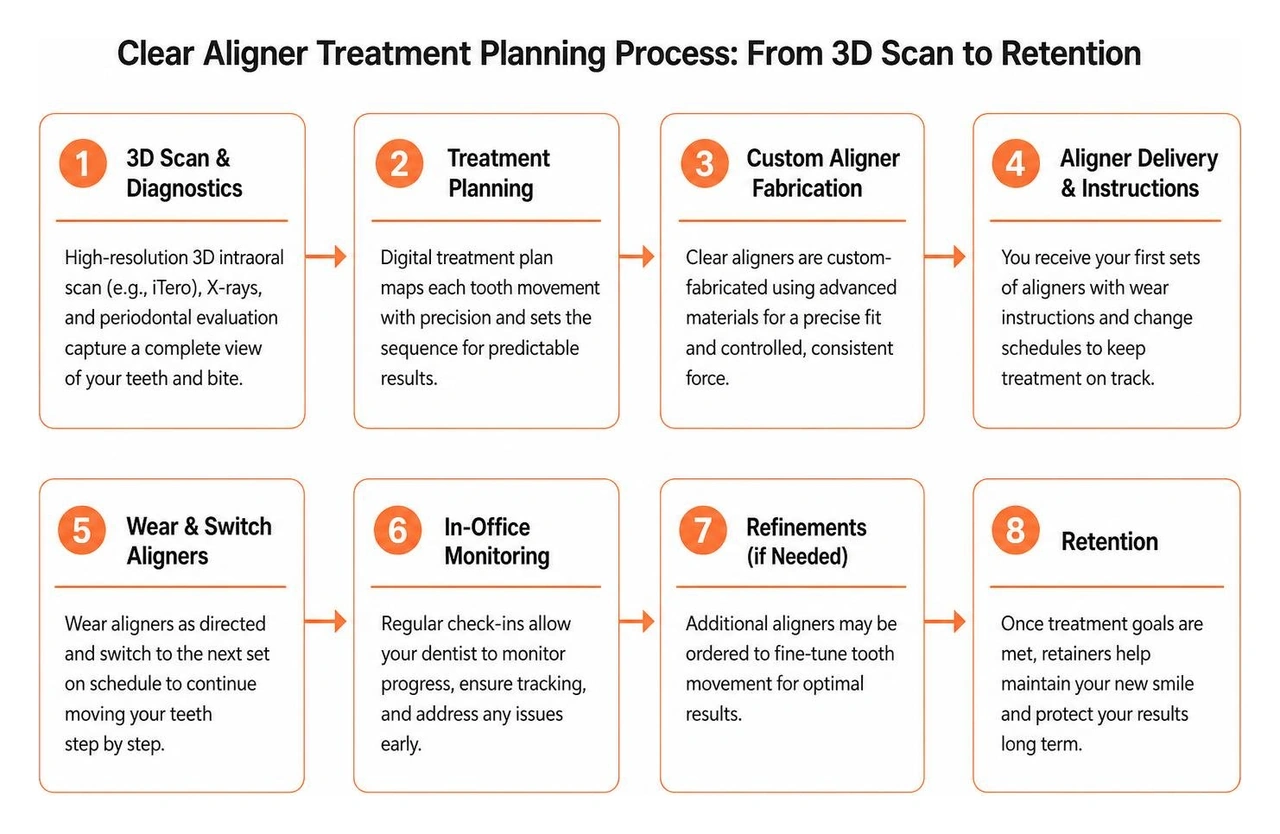
In contrast, in-office care begins with high-resolution digital imaging, such as an iTero 3D scanner, alongside diagnostic X-rays and comprehensive periodontal evaluations. During in-person care, your dentist monitors tracking at regular intervals, places composite SmartForce attachments to anchor complex movements, performs interproximal reduction (IPR) when spacing is tight, and orders mid-course refinements if stubborn teeth require adjustments. Professional oversight protects your roots, bone levels, and gum tissue from unmonitored forces.
Handling Mild Alignment vs Severe Bite Corrections
Different systems are designed for different clinical challenges:
- Mild cases: Minor spacing, slight relapse from childhood braces, or minimal aesthetic crowding can often be resolved within 6 to 9 months using targeted protocols like invisalign for mild cases.
- Moderate alignment issues: Pronounced crowding, rotations, and minor bite imbalances generally respond well to comprehensive aligner systems over 12 to 18 months, effectively treating crooked teeth with precision attachments.
- Severe malocclusion: Deep overbites, underbites, open bites, and crossbites require calibrated multi-force mechanics, elastics, and robust software algorithms. While Invisalign excels at handling many of these complex issues, severe skeletal discrepancies or extreme impactions may still require fixed appliances. Approximately one in six aligner patients across the industry may require auxiliary fixed appliances or targeted refinement if specific complex movements encounter anatomical limits.
Treatment Timeline, Comfort, and Daily Wear Experience
Achieving a healthy, aligned smile depends on daily habits, tray staging, and consistent wear schedules. Reviewing a complete guide to treatment helps establish clear expectations for day-to-day life with orthodontic aligners.
Expected Duration and Compliance Needs
Clear aligner treatment duration varies based on clinical complexity and patient dedication:
- Mild alignment: 6 to 9 months
- Moderate malocclusion: 12 to 18 months
- Complex corrections: 18 to 24 months
Regardless of brand, clear aligners require strict adherence to the 20 to 22 hour daily wear rule. Trays should only be removed for meals, drinking anything other than plain cool water, and daily brushing and flossing. Failing to meet daily wear requirements can stall tooth tracking, prolong treatment timelines, and necessitate mid-course re-scanning.
Comfort, Soreness, and Speech Adaptation
Orthodontic movement involves applying gentle pressure to remodel the supporting bone around tooth roots. Patients typically experience mild tightness or soreness for the first 24 to 48 hours after advancing to a fresh tray stage.
However, clear aligners offer significant comfort advantages over traditional bracket-and-wire systems. In clinical surveys, Invisalign patients rated their overall comfort at 7.1 out of 9, compared to 5.5 out of 9 for individuals wearing metal braces. Because the smooth thermoplastic is contoured to the teeth and scalloped along the gingival margin, patients experience minimal soft-tissue irritation, cheek abrasions, or emergency wire pokes. Any minor lisp or speech adjustment usually resolves naturally within a few days of consistent wear.
Cost Comparison, Insurance, and Value Considerations
Investing in orthodontic treatment involves looking at the overall value, clinical expertise, and long-term stability of your results. Exploring the average price of invisalign alongside essential post-treatment care like aligners and retainers ensures complete financial transparency.
Pricing Breakdown and Cost Factors
The overall investment for clear aligner therapy reflects several key components:
- Case complexity and tray count: Straightforward, mild cases requiring fewer aligners carry lower lab and clinical costs than multi-stage comprehensive cases requiring dozens of aligners.
- Digital diagnostics and scanning: Advanced 3D intraoral mapping and digital treatment setups eliminate uncomfortable physical impressions while improving accuracy.
- Refinements and mid-course corrections: Comprehensive treatment plans often include necessary refinement trays to ensure final tooth positions match the initial digital blueprint.
- Post-treatment retention: Retaining your final result with custom Vivera or clear retainers protects your investment and prevents natural orthodontic relapse.
Generic or limited aligner systems may present a lower initial fee, but they often exclude essential refinement stages, diagnostic imaging, or post-treatment retainers from the baseline quote.
Insurance Coverage and Long-Term Value
Many dental insurance policies include orthodontic benefits that apply directly to dentist-supervised clear aligners in the same manner as traditional braces. These benefits can significantly reduce out-of-pocket costs, with many plans contributing up to a set lifetime orthodontic maximum. Additionally, health savings accounts (HSA) and flexible spending accounts (FSA) can be utilized for eligible out-of-pocket aligner expenses.
To help keep complete preventive and routine dental care accessible for individuals and families without dental insurance, our practice provides the Dental Wellness Plan. This in-house membership allows patients without insurance to receive yearly preventive dental care and generous savings on a wide range of services for a predictable, discounted annual rate.
Frequently Asked Questions About Orthodontic Aligners
Can clear aligners fix severe misalignment or bite issues?
Yes, advanced systems like Invisalign can successfully correct many severe bite problems, including deep bites, open bites, crossbites, and extensive crowding. By combining SmartTrack material with tooth-colored SmartForce attachments and orthodontic elastics, dentists can direct precise, multi-vector forces. However, severe skeletal discrepancies or heavily impacted teeth may still require specialized surgical orthodontics or fixed braces.
How long does treatment typically take?
Treatment duration depends directly on the severity of your case and your daily wear compliance. Mild cosmetic adjustments can take as few as 6 to 9 months, while moderate crowding and spacing typically average 12 to 18 months. Complex bite adjustments may take 18 to 24 months. Wearing your aligners for the recommended 20 to 22 hours each day is the most important factor in keeping your treatment on schedule.
Are clear aligners or Invisalign more comfortable than braces?
Clear aligners are generally much more comfortable than metal braces. Because aligner trays are fabricated from smooth, medical-grade thermoplastic trimmed along your gumline, they eliminate the sharp brackets and poking wires that frequently cause cheek and lip irritation. While you will feel a sensation of firm pressure for a day or two after switching to a new tray, clinical comfort ratings consistently favor clear aligners over traditional fixed appliances.
Conclusion
Choosing between clear aligners and Invisalign comes down to understanding your unique dental anatomy, the complexity of your bite goals, and the value of experienced, in-person clinical oversight. While simpler aligner systems can address minor cosmetic adjustments, Invisalign’s proven track record, patented SmartTrack material, and advanced digital planning tools make it a dependable choice for achieving comprehensive, long-lasting smile transformations.
At North Orange Family Dentistry, Dr. Kyle Bogan and our experienced clinical team are dedicated to helping you achieve a radiant, healthy smile with personalized care. Whether you are interested in custom Invisalign treatment, advanced laser therapies for TMJ discomfort, teeth whitening, or restorative options like dental implants, we provide complete care in a comfortable, modern environment. Contact our Lewis Center office today to schedule your comprehensive digital scan and discover the best orthodontic path for your smile.
Clear Aligners vs Invisalign: How to Choose the Right Option
Clear aligners vs Invisalign comes down to category, brand, and supervision. Clear aligners are removable, nearly invisible trays that move teeth over time. Invisalign is a well-known brand of clear aligners with its own materials, digital planning tools, and provider network.
For minor spacing or mild crowding, several dentist-supervised aligner brands may be a good fit. For more involved concerns, such as major rotations, deep bites, crossbites, or significant crowding, Invisalign may offer more planning options. Some severe tooth or jaw problems still need braces or another orthodontic approach.
Before choosing, focus on these three questions:
- How complex is your bite or tooth movement?
- Will a dental professional examine and monitor your progress?
- What does the treatment plan include, such as scans, refinements, and retainers?
Both options require steady wear, usually about 20 to 22 hours a day. The best choice is not always the most familiar brand. It is the system and care team that can safely address your specific goals.
Clear aligners vs Invisalign basics:
Clear Aligners vs Invisalign: Understanding the Core Differences
Understanding how modern orthodontic systems straighten smiles begins with breaking down terminology. The global clear aligner market has expanded dramatically, evolving from a niche alternative into a mainstream orthodontic standard. As more options enter the landscape, comparing proprietary systems and generic options helps clarify which pathway matches your clinical needs.
While generic systems often rely on standard single-layer plastics like basic PET-G polymers, advanced platforms use specialized engineering. For example, clinicians evaluating treatment options look closely at digital planning software comparison data alongside the physical material properties of modern clear aligners to determine which system offers the greatest predictability.
Category vs Brand: Clear Aligners vs Invisalign Defined
To understand the difference, think of clear aligners as the broad category and Invisalign as the pioneering brand name within it—much like asking for a tissue versus a Kleenex. Clear aligners refer to any series of custom-fabricated, transparent, thermoformed plastic trays designed to shift teeth incrementally.
Invisalign, introduced by Align Technology after receiving FDA clearance in the late 1990s, established the modern clear aligner category. Today, Invisalign has treated over 22 million patients worldwide across a network of more than 271,000 doctor accounts. While all Invisalign trays are clear aligners, not all clear aligners are Invisalign. Exploring a comprehensive aligner overview shows how branded systems differ from generic alternatives across manufacturing, tracking precision, and clinical versatility.
Material Quality and Technology in Clear Aligners vs Invisalign
The material used to construct each tray directly influences how comfortably and predictably teeth move. Generic clear aligners commonly use standard PET-G or polyurethane plastics. While these materials are rigid and transparent, they can fatigue over a two-week wear cycle, gradually losing the consistent force necessary for complex tooth movements.
Invisalign utilizes a patented multilayer aromatic thermoplastic called SmartTrack. Engineered specifically for orthodontic movement, SmartTrack delivers gentle, continuous force over extended periods while maintaining high elasticity. This material adapts closely to the anatomy of each tooth, improving control over difficult shifts such as root uprighting and rotations. Furthermore, trays are precision-trimmed to match the patient's individual gumline, enhancing both aesthetic discretion and soft-tissue comfort compared to straight-cut edges that can press against delicate gums.
Comparing Treatment Scope, Complexity, and Clinical Supervision
Straightening teeth is not just a cosmetic upgrade; it is a biomechanical medical procedure that directly affects your jaw joints, periodontal health, and bite function. Evaluating how different aligner options handle varying degrees of misalignment is essential before starting care, especially when weighing evaluating aligners vs braces for complex adjustments.
In-Office Professional Oversight vs Mail-Order Trays
One of the most critical distinctions in orthodontic care is the difference between comprehensive, dentist-supervised treatment and direct-to-consumer mail-order kits. Mail-order aligners rely on home putty impressions or unsupervised scans, shipping a full set of trays directly to your door with little to no clinical oversight.
In contrast, in-office care begins with high-resolution digital imaging, such as an iTero 3D scanner, alongside diagnostic X-rays and comprehensive periodontal evaluations. During in-person care, your dentist monitors tracking at regular intervals, places composite SmartForce attachments to anchor complex movements, performs interproximal reduction (IPR) when spacing is tight, and orders mid-course refinements if stubborn teeth require adjustments. Professional oversight protects your roots, bone levels, and gum tissue from unmonitored forces.
Handling Mild Alignment vs Severe Bite Corrections
Different systems are designed for different clinical challenges:
- Mild cases: Minor spacing, slight relapse from childhood braces, or minimal aesthetic crowding can often be resolved within 6 to 9 months using targeted protocols like invisalign for mild cases.
- Moderate alignment issues: Pronounced crowding, rotations, and minor bite imbalances generally respond well to comprehensive aligner systems over 12 to 18 months, effectively treating crooked teeth with precision attachments.
- Severe malocclusion: Deep overbites, underbites, open bites, and crossbites require calibrated multi-force mechanics, elastics, and robust software algorithms. While Invisalign excels at handling many of these complex issues, severe skeletal discrepancies or extreme impactions may still require fixed appliances. Approximately one in six aligner patients across the industry may require auxiliary fixed appliances or targeted refinement if specific complex movements encounter anatomical limits.
Treatment Timeline, Comfort, and Daily Wear Experience
Achieving a healthy, aligned smile depends on daily habits, tray staging, and consistent wear schedules. Reviewing a complete guide to treatment helps establish clear expectations for day-to-day life with orthodontic aligners.
Expected Duration and Compliance Needs
Clear aligner treatment duration varies based on clinical complexity and patient dedication:
- Mild alignment: 6 to 9 months
- Moderate malocclusion: 12 to 18 months
- Complex corrections: 18 to 24 months
Regardless of brand, clear aligners require strict adherence to the 20 to 22 hour daily wear rule. Trays should only be removed for meals, drinking anything other than plain cool water, and daily brushing and flossing. Failing to meet daily wear requirements can stall tooth tracking, prolong treatment timelines, and necessitate mid-course re-scanning.
Comfort, Soreness, and Speech Adaptation
Orthodontic movement involves applying gentle pressure to remodel the supporting bone around tooth roots. Patients typically experience mild tightness or soreness for the first 24 to 48 hours after advancing to a fresh tray stage.
However, clear aligners offer significant comfort advantages over traditional bracket-and-wire systems. In clinical surveys, Invisalign patients rated their overall comfort at 7.1 out of 9, compared to 5.5 out of 9 for individuals wearing metal braces. Because the smooth thermoplastic is contoured to the teeth and scalloped along the gingival margin, patients experience minimal soft-tissue irritation, cheek abrasions, or emergency wire pokes. Any minor lisp or speech adjustment usually resolves naturally within a few days of consistent wear.
Cost Comparison, Insurance, and Value Considerations
Investing in orthodontic treatment involves looking at the overall value, clinical expertise, and long-term stability of your results. Exploring the average price of invisalign alongside essential post-treatment care like aligners and retainers ensures complete financial transparency.
Pricing Breakdown and Cost Factors
The overall investment for clear aligner therapy reflects several key components:
- Case complexity and tray count: Straightforward, mild cases requiring fewer aligners carry lower lab and clinical costs than multi-stage comprehensive cases requiring dozens of aligners.
- Digital diagnostics and scanning: Advanced 3D intraoral mapping and digital treatment setups eliminate uncomfortable physical impressions while improving accuracy.
- Refinements and mid-course corrections: Comprehensive treatment plans often include necessary refinement trays to ensure final tooth positions match the initial digital blueprint.
- Post-treatment retention: Retaining your final result with custom Vivera or clear retainers protects your investment and prevents natural orthodontic relapse.
Generic or limited aligner systems may present a lower initial fee, but they often exclude essential refinement stages, diagnostic imaging, or post-treatment retainers from the baseline quote.
Insurance Coverage and Long-Term Value
Many dental insurance policies include orthodontic benefits that apply directly to dentist-supervised clear aligners in the same manner as traditional braces. These benefits can significantly reduce out-of-pocket costs, with many plans contributing up to a set lifetime orthodontic maximum. Additionally, health savings accounts (HSA) and flexible spending accounts (FSA) can be utilized for eligible out-of-pocket aligner expenses.
To help keep complete preventive and routine dental care accessible for individuals and families without dental insurance, our practice provides the Dental Wellness Plan. This in-house membership allows patients without insurance to receive yearly preventive dental care and generous savings on a wide range of services for a predictable, discounted annual rate.
Frequently Asked Questions About Orthodontic Aligners
Can clear aligners fix severe misalignment or bite issues?
Yes, advanced systems like Invisalign can successfully correct many severe bite problems, including deep bites, open bites, crossbites, and extensive crowding. By combining SmartTrack material with tooth-colored SmartForce attachments and orthodontic elastics, dentists can direct precise, multi-vector forces. However, severe skeletal discrepancies or heavily impacted teeth may still require specialized surgical orthodontics or fixed braces.
How long does treatment typically take?
Treatment duration depends directly on the severity of your case and your daily wear compliance. Mild cosmetic adjustments can take as few as 6 to 9 months, while moderate crowding and spacing typically average 12 to 18 months. Complex bite adjustments may take 18 to 24 months. Wearing your aligners for the recommended 20 to 22 hours each day is the most important factor in keeping your treatment on schedule.
Are clear aligners or Invisalign more comfortable than braces?
Clear aligners are generally much more comfortable than metal braces. Because aligner trays are fabricated from smooth, medical-grade thermoplastic trimmed along your gumline, they eliminate the sharp brackets and poking wires that frequently cause cheek and lip irritation. While you will feel a sensation of firm pressure for a day or two after switching to a new tray, clinical comfort ratings consistently favor clear aligners over traditional fixed appliances.
Conclusion
Choosing between clear aligners and Invisalign comes down to understanding your unique dental anatomy, the complexity of your bite goals, and the value of experienced, in-person clinical oversight. While simpler aligner systems can address minor cosmetic adjustments, Invisalign’s proven track record, patented SmartTrack material, and advanced digital planning tools make it a dependable choice for achieving comprehensive, long-lasting smile transformations.
At North Orange Family Dentistry, Dr. Kyle Bogan and our experienced clinical team are dedicated to helping you achieve a radiant, healthy smile with personalized care. Whether you are interested in custom Invisalign treatment, advanced laser therapies for TMJ discomfort, teeth whitening, or restorative options like dental implants, we provide complete care in a comfortable, modern environment. Contact our Lewis Center office today to schedule your comprehensive digital scan and discover the best orthodontic path for your smile.
Contact Us
Have any questions? Want to learn more?

