
A Practical Guide to Comparing Tooth Bonding for Discoloration
A Practical Guide to Comparing Tooth Bonding for Discoloration - Learn about tooth bonding for discoloration



Tooth Bonding for Discoloration: What You Need to Know Before Your Next Visit
Tooth bonding for discoloration is one of the fastest, most affordable ways to cover a stained or discolored tooth — and it can often be done in a single visit.
Here is a quick summary of what you need to know:
- What it is: A tooth-colored composite resin is applied directly over the discolored tooth to hide the stain and restore a natural appearance.
- Who it helps: People with dark spots, intrinsic stains, or teeth that did not respond to traditional whitening treatments.
- How long it takes: About 30 to 60 minutes per tooth.
- How long it lasts: Typically 3 to 10 years before a touch-up or replacement is needed.
- Can you whiten it? No — standard whitening treatments do not work on composite resin. More on this below.
- Is it reversible? Yes. Unlike veneers, bonding usually requires little to no removal of natural tooth enamel.
Not every stain responds to whitening toothpaste or bleaching gels. Some discoloration runs deeper — caused by old trauma, medications like tetracycline, or fluorosis — and no amount of peroxide will touch it. That is exactly where dental bonding shines. It covers the problem rather than trying to chemically reverse it.
This guide walks through everything: how bonding works, how it compares to veneers, what causes it to stain over time, and how to keep it looking its best.
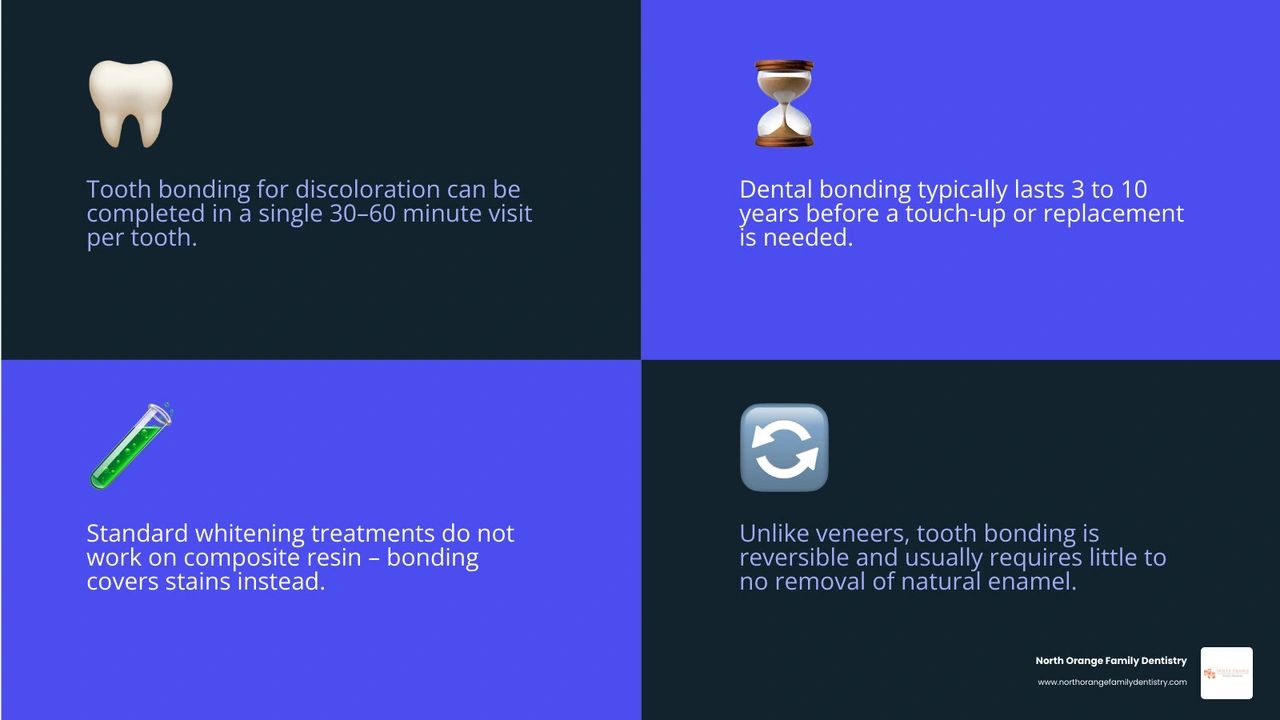
Quick look at tooth bonding for discoloration:
What is Tooth Bonding for Discoloration and How Does It Work?
When we talk about cosmetic dental solutions, simplicity and predictability are key. Tooth bonding utilizes a specialized, high-quality composite resin—a durable plastic mixture—to seamlessly cover imperfections. If you have been struggling with a single dark tooth or localized spots that make you self-conscious, this treatment provides a quick, beautiful solution.
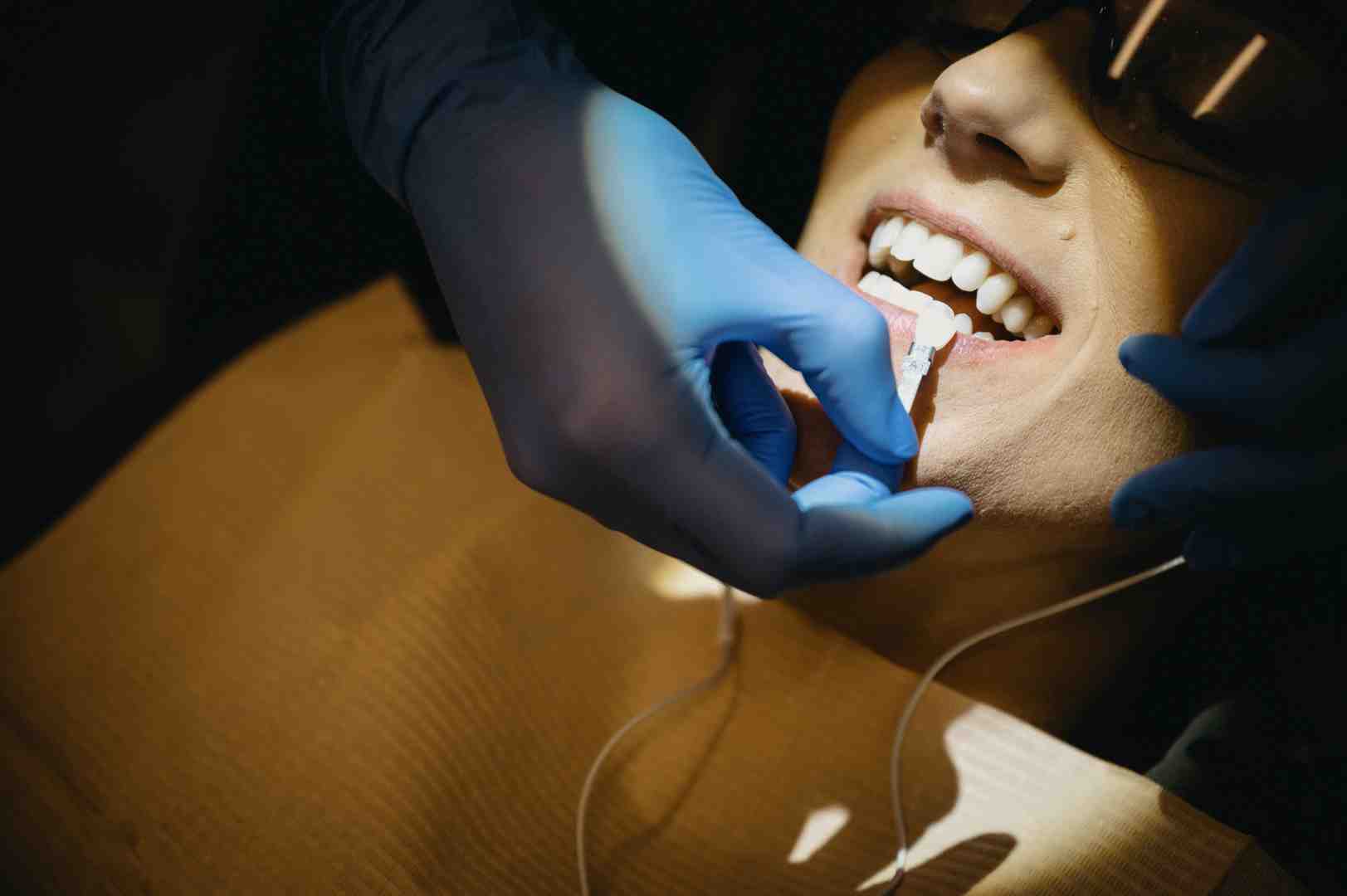
During the appointment, we select a resin shade that perfectly matches the surrounding teeth. By using a professional shade guide, we ensure that the final result looks completely natural. To prepare the tooth, we gently clean the surface. Because this is a highly conservative procedure, we do not need to drill away healthy enamel, which means local anesthesia is rarely necessary unless we are also treating an active cavity.
Once the tooth is prepared, we apply a mild conditioning liquid that helps the material adhere. We then apply the pliable resin, sculpting it carefully to restore the tooth's shape and mask any underlying discoloration. A specialized curing light is then used to harden the material in seconds. Finally, we polish the restoration to match the natural sheen of your surrounding teeth.
For a deeper look into the general mechanics of this treatment, you can read about What is Dental Bonding & What To Expect and explore our resource on What Is Dental Bonding?.
Step-by-Step Tooth Bonding for Discoloration
To help you visualize what happens during your visit, we have broken down the precise clinical steps we take to mask deep stains:
- Shade Selection: We match the composite resin to your existing teeth under natural lighting.
- Surface Etching: We apply a gentle phosphoric acid etching gel to micro-roughen the enamel. This creates microscopic texture for the bonding agent to grip.
- Conditioning Liquid: A liquid adhesive is brushed onto the etched surface to ensure a secure bond.
- Resin Layering: We apply the composite resin in thin layers, using opaque shades first if we need to block out a very dark stain, followed by translucent layers to mimic natural enamel.
- Curing: We use a high-intensity curing light to harden each layer of resin.
- Sculpting and Polishing: We carefully shape the cured resin with fine dental burs and polish it to a high gloss.
This systematic approach ensures the restoration is both structurally sound and highly aesthetic. You can review the complete timeline and details in our Tooth Bonding Process: Complete Guide.
Targeted Solutions for Intrinsic Stains
Tooth discoloration generally falls into two categories: extrinsic (surface stains from food and drink) and intrinsic (staining inside the tooth structure). Traditional whitening treatments are excellent for lifting extrinsic stains, but they often fail to address deep, intrinsic discoloration.
Tooth bonding for discoloration is highly effective at concealing:
- Enamel Erosion: As enamel thins, the yellowish dentin underneath becomes visible. Bonding restores a bright, protective outer layer.
- Tetracycline Staining: This medication can cause dark gray or brown bands inside the teeth of individuals who took it during childhood.
- Fluorosis: Excessive fluoride intake during tooth development can leave chalky white or dark brown splotches that do not respond to bleaching.
- Localized Trauma: A physical injury can cause a tooth to darken from the inside out. Bonding blocks this dark under-shade completely.
Dental Bonding vs. Porcelain Veneers for Aesthetic Restoration
When choosing the right cosmetic treatment, patients often compare composite bonding to porcelain veneers. Both are designed to cover stains, close gaps, and repair minor chips, but they do so using very different methods.
The primary difference lies in the preservation of your natural tooth structure. Porcelain veneers require us to shave down a small amount of your natural enamel to prevent the finished restoration from looking bulky. Because enamel does not grow back, veneers are considered a permanent, irreversible treatment. Dental bonding, on the other hand, requires virtually no enamel removal. This makes bonding completely reversible and highly conservative.
While porcelain is highly stain-resistant and incredibly durable, composite bonding is more budget-friendly and can be completed in a single short visit.
To explore these differences in depth, you can read our guide to Transform Your Smile with Tooth Bonding and Veneers.
Longevity and Durability Differences
How long will your new smile last? The materials used in these treatments have different lifespans and maintenance requirements:
- Dental Bonding: Typically lasts between 3 and 10 years (often 3 to 7 years depending on lifestyle, daily wear, and oral hygiene). It can be easily touched up, resurfaced, or completely replaced right in our office.
- Porcelain Veneers: Generally last between 10 and 20 years before they need replacement.
While composite resin is strong, it is more prone to gradual wear and physical chipping than porcelain. If you tend to bite your fingernails, chew on ice, or grind your teeth, the composite material can wear down faster. For more information on what to expect from the physical properties of bonding, check out the clinical perspective on Dental Bonding in Hamilton, NJ | Hamilton Dental Associates .
Can You Whiten Bonded Teeth and How Do You Prevent Stains?
A very common question we hear is: "If my bonded tooth gets stained, can I just use a whitening kit?"
The short answer is no. Professional whitening gels containing hydrogen peroxide or carbamide peroxide only work on natural, porous tooth enamel. These active ingredients penetrate the microscopic pores of your natural teeth to break down stains.
Composite resin is non-porous. It does not react to chemical bleaching agents. If you attempt to use over-the-counter or professional whitening treatments on a smile that has dental bonding, only your natural teeth will lighten. This will actually make your dental bonding stand out, creating an uneven, mismatched appearance.
To learn more about how whitening agents interact with different dental materials, please refer to our Dental Whitening Complete Guide.
Addressing Stained Tooth Bonding for Discoloration
If your existing bonding has turned yellow or absorbed stains over the years, you still have excellent options to restore its brightness:
- Professional Polishing: During your regular cleanings, we can use specialized, non-abrasive polishing pastes to buff away superficial surface stains and restore the resin's original luster.
- Composite Resurfacing: If the stain is slightly deeper but the restoration is structurally sound, we can minimally roughen the outer layer of the old composite and apply a thin, fresh, bright layer of new resin.
- Replacement Sequence: If you want a brighter smile overall, we always recommend performing a professional teeth whitening treatment first. Once your natural teeth reach your desired shade, we then replace the old bonding with a new composite resin matched to your newly brightened smile.
You can see examples of how we refresh and transform smiles in our Dental Bonding Before and After gallery.
Daily Maintenance and Dietary Habits
Because composite resin is microscopically porous compared to porcelain, it behaves like a very slow sponge for pigments. To keep your bonded teeth looking bright as long as possible, we recommend managing your daily habits:
- Rinse After Staining Foods: Highly pigmented beverages like coffee, black tea, and red wine can stain composite. Rinsing your mouth with water immediately after drinking these beverages helps prevent pigments from settling.
- Avoid Tobacco and Vaping: Nicotine and tar cause rapid, deep yellowing of composite resin that is difficult to polish away.
- Use the Right Tools: Always brush with a soft-bristled toothbrush and a non-abrasive toothpaste. Avoid whitening toothpastes that contain harsh abrasives (like baking soda or charcoal), as they can scratch the polished surface of the resin, making it catch stains even faster.
Frequently Asked Questions About Tooth Bonding
Is dental bonding reversible?
Yes. Unlike porcelain veneers or crowns, dental bonding is highly conservative and fully reversible. Because we do not need to cut away or alter your natural tooth enamel during preparation, the composite material can be safely removed by a dentist if you decide to upgrade to porcelain veneers in the future.
How long does dental bonding last before needing a touch-up?
Dental bonding typically lasts between 3 and 10 years. Most patients find that their bonding benefits from a minor touch-up or professional repolishing every 3 to 7 years to keep the margins smooth and the color looking vibrant.
Does dental bonding stain faster than natural teeth?
Yes, composite resin can absorb food and beverage pigments faster than natural enamel because of its microscopic porosity. However, keeping up with biannual dental cleanings allows us to polish away surface stains before they penetrate deeper into the material.
Conclusion
Tooth bonding for discoloration is a highly effective, conservative, and convenient option to restore a bright, balanced smile. Whether you want to cover a single dark spot or completely revitalize your front teeth, this single-visit procedure offers immediate results with zero downtime.
At North Orange Family Dentistry, Dr. Kyle Bogan and our highly experienced team are dedicated to providing comfortable, personalized care for families throughout Delaware, Lewis Center, Powell, and the surrounding Columbus metro area. We believe that everyone deserves a beautiful, healthy smile that fits their budget. For our patients who do not have dental insurance, we offer an in-house Dental Wellness Plan that provides routine preventive care and discounts on cosmetic treatments like bonding for an affordable, transparent annual fee.
Ready to find out if cosmetic bonding is the right choice for your smile? Explore our Tooth Bonding Services and schedule your consultation with us today!
Tooth Bonding for Discoloration: What You Need to Know Before Your Next Visit
Tooth bonding for discoloration is one of the fastest, most affordable ways to cover a stained or discolored tooth — and it can often be done in a single visit.
Here is a quick summary of what you need to know:
- What it is: A tooth-colored composite resin is applied directly over the discolored tooth to hide the stain and restore a natural appearance.
- Who it helps: People with dark spots, intrinsic stains, or teeth that did not respond to traditional whitening treatments.
- How long it takes: About 30 to 60 minutes per tooth.
- How long it lasts: Typically 3 to 10 years before a touch-up or replacement is needed.
- Can you whiten it? No — standard whitening treatments do not work on composite resin. More on this below.
- Is it reversible? Yes. Unlike veneers, bonding usually requires little to no removal of natural tooth enamel.
Not every stain responds to whitening toothpaste or bleaching gels. Some discoloration runs deeper — caused by old trauma, medications like tetracycline, or fluorosis — and no amount of peroxide will touch it. That is exactly where dental bonding shines. It covers the problem rather than trying to chemically reverse it.
This guide walks through everything: how bonding works, how it compares to veneers, what causes it to stain over time, and how to keep it looking its best.
Quick look at tooth bonding for discoloration:
What is Tooth Bonding for Discoloration and How Does It Work?
When we talk about cosmetic dental solutions, simplicity and predictability are key. Tooth bonding utilizes a specialized, high-quality composite resin—a durable plastic mixture—to seamlessly cover imperfections. If you have been struggling with a single dark tooth or localized spots that make you self-conscious, this treatment provides a quick, beautiful solution.
During the appointment, we select a resin shade that perfectly matches the surrounding teeth. By using a professional shade guide, we ensure that the final result looks completely natural. To prepare the tooth, we gently clean the surface. Because this is a highly conservative procedure, we do not need to drill away healthy enamel, which means local anesthesia is rarely necessary unless we are also treating an active cavity.
Once the tooth is prepared, we apply a mild conditioning liquid that helps the material adhere. We then apply the pliable resin, sculpting it carefully to restore the tooth's shape and mask any underlying discoloration. A specialized curing light is then used to harden the material in seconds. Finally, we polish the restoration to match the natural sheen of your surrounding teeth.
For a deeper look into the general mechanics of this treatment, you can read about What is Dental Bonding & What To Expect and explore our resource on What Is Dental Bonding?.
Step-by-Step Tooth Bonding for Discoloration
To help you visualize what happens during your visit, we have broken down the precise clinical steps we take to mask deep stains:
- Shade Selection: We match the composite resin to your existing teeth under natural lighting.
- Surface Etching: We apply a gentle phosphoric acid etching gel to micro-roughen the enamel. This creates microscopic texture for the bonding agent to grip.
- Conditioning Liquid: A liquid adhesive is brushed onto the etched surface to ensure a secure bond.
- Resin Layering: We apply the composite resin in thin layers, using opaque shades first if we need to block out a very dark stain, followed by translucent layers to mimic natural enamel.
- Curing: We use a high-intensity curing light to harden each layer of resin.
- Sculpting and Polishing: We carefully shape the cured resin with fine dental burs and polish it to a high gloss.
This systematic approach ensures the restoration is both structurally sound and highly aesthetic. You can review the complete timeline and details in our Tooth Bonding Process: Complete Guide.
Targeted Solutions for Intrinsic Stains
Tooth discoloration generally falls into two categories: extrinsic (surface stains from food and drink) and intrinsic (staining inside the tooth structure). Traditional whitening treatments are excellent for lifting extrinsic stains, but they often fail to address deep, intrinsic discoloration.
Tooth bonding for discoloration is highly effective at concealing:
- Enamel Erosion: As enamel thins, the yellowish dentin underneath becomes visible. Bonding restores a bright, protective outer layer.
- Tetracycline Staining: This medication can cause dark gray or brown bands inside the teeth of individuals who took it during childhood.
- Fluorosis: Excessive fluoride intake during tooth development can leave chalky white or dark brown splotches that do not respond to bleaching.
- Localized Trauma: A physical injury can cause a tooth to darken from the inside out. Bonding blocks this dark under-shade completely.
Dental Bonding vs. Porcelain Veneers for Aesthetic Restoration
When choosing the right cosmetic treatment, patients often compare composite bonding to porcelain veneers. Both are designed to cover stains, close gaps, and repair minor chips, but they do so using very different methods.
The primary difference lies in the preservation of your natural tooth structure. Porcelain veneers require us to shave down a small amount of your natural enamel to prevent the finished restoration from looking bulky. Because enamel does not grow back, veneers are considered a permanent, irreversible treatment. Dental bonding, on the other hand, requires virtually no enamel removal. This makes bonding completely reversible and highly conservative.
While porcelain is highly stain-resistant and incredibly durable, composite bonding is more budget-friendly and can be completed in a single short visit.
To explore these differences in depth, you can read our guide to Transform Your Smile with Tooth Bonding and Veneers.
Longevity and Durability Differences
How long will your new smile last? The materials used in these treatments have different lifespans and maintenance requirements:
- Dental Bonding: Typically lasts between 3 and 10 years (often 3 to 7 years depending on lifestyle, daily wear, and oral hygiene). It can be easily touched up, resurfaced, or completely replaced right in our office.
- Porcelain Veneers: Generally last between 10 and 20 years before they need replacement.
While composite resin is strong, it is more prone to gradual wear and physical chipping than porcelain. If you tend to bite your fingernails, chew on ice, or grind your teeth, the composite material can wear down faster. For more information on what to expect from the physical properties of bonding, check out the clinical perspective on Dental Bonding in Hamilton, NJ | Hamilton Dental Associates .
Can You Whiten Bonded Teeth and How Do You Prevent Stains?
A very common question we hear is: "If my bonded tooth gets stained, can I just use a whitening kit?"
The short answer is no. Professional whitening gels containing hydrogen peroxide or carbamide peroxide only work on natural, porous tooth enamel. These active ingredients penetrate the microscopic pores of your natural teeth to break down stains.
Composite resin is non-porous. It does not react to chemical bleaching agents. If you attempt to use over-the-counter or professional whitening treatments on a smile that has dental bonding, only your natural teeth will lighten. This will actually make your dental bonding stand out, creating an uneven, mismatched appearance.
To learn more about how whitening agents interact with different dental materials, please refer to our Dental Whitening Complete Guide.
Addressing Stained Tooth Bonding for Discoloration
If your existing bonding has turned yellow or absorbed stains over the years, you still have excellent options to restore its brightness:
- Professional Polishing: During your regular cleanings, we can use specialized, non-abrasive polishing pastes to buff away superficial surface stains and restore the resin's original luster.
- Composite Resurfacing: If the stain is slightly deeper but the restoration is structurally sound, we can minimally roughen the outer layer of the old composite and apply a thin, fresh, bright layer of new resin.
- Replacement Sequence: If you want a brighter smile overall, we always recommend performing a professional teeth whitening treatment first. Once your natural teeth reach your desired shade, we then replace the old bonding with a new composite resin matched to your newly brightened smile.
You can see examples of how we refresh and transform smiles in our Dental Bonding Before and After gallery.
Daily Maintenance and Dietary Habits
Because composite resin is microscopically porous compared to porcelain, it behaves like a very slow sponge for pigments. To keep your bonded teeth looking bright as long as possible, we recommend managing your daily habits:
- Rinse After Staining Foods: Highly pigmented beverages like coffee, black tea, and red wine can stain composite. Rinsing your mouth with water immediately after drinking these beverages helps prevent pigments from settling.
- Avoid Tobacco and Vaping: Nicotine and tar cause rapid, deep yellowing of composite resin that is difficult to polish away.
- Use the Right Tools: Always brush with a soft-bristled toothbrush and a non-abrasive toothpaste. Avoid whitening toothpastes that contain harsh abrasives (like baking soda or charcoal), as they can scratch the polished surface of the resin, making it catch stains even faster.
Frequently Asked Questions About Tooth Bonding
Is dental bonding reversible?
Yes. Unlike porcelain veneers or crowns, dental bonding is highly conservative and fully reversible. Because we do not need to cut away or alter your natural tooth enamel during preparation, the composite material can be safely removed by a dentist if you decide to upgrade to porcelain veneers in the future.
How long does dental bonding last before needing a touch-up?
Dental bonding typically lasts between 3 and 10 years. Most patients find that their bonding benefits from a minor touch-up or professional repolishing every 3 to 7 years to keep the margins smooth and the color looking vibrant.
Does dental bonding stain faster than natural teeth?
Yes, composite resin can absorb food and beverage pigments faster than natural enamel because of its microscopic porosity. However, keeping up with biannual dental cleanings allows us to polish away surface stains before they penetrate deeper into the material.
Conclusion
Tooth bonding for discoloration is a highly effective, conservative, and convenient option to restore a bright, balanced smile. Whether you want to cover a single dark spot or completely revitalize your front teeth, this single-visit procedure offers immediate results with zero downtime.
At North Orange Family Dentistry, Dr. Kyle Bogan and our highly experienced team are dedicated to providing comfortable, personalized care for families throughout Delaware, Lewis Center, Powell, and the surrounding Columbus metro area. We believe that everyone deserves a beautiful, healthy smile that fits their budget. For our patients who do not have dental insurance, we offer an in-house Dental Wellness Plan that provides routine preventive care and discounts on cosmetic treatments like bonding for an affordable, transparent annual fee.
Ready to find out if cosmetic bonding is the right choice for your smile? Explore our Tooth Bonding Services and schedule your consultation with us today!
Contact Us
Have any questions? Want to learn more?

