
How to Understand the Tooth Bonding Process
Learn the tooth bonding process step-by-step, from preparation to aftercare, and see how it compares to veneers for a confident smile.


What the Tooth Bonding Process Actually Involves (And Why It Matters)
The tooth bonding process is one of the simplest, most affordable ways to fix a chipped, cracked, discolored, or gapped tooth — often in a single appointment.
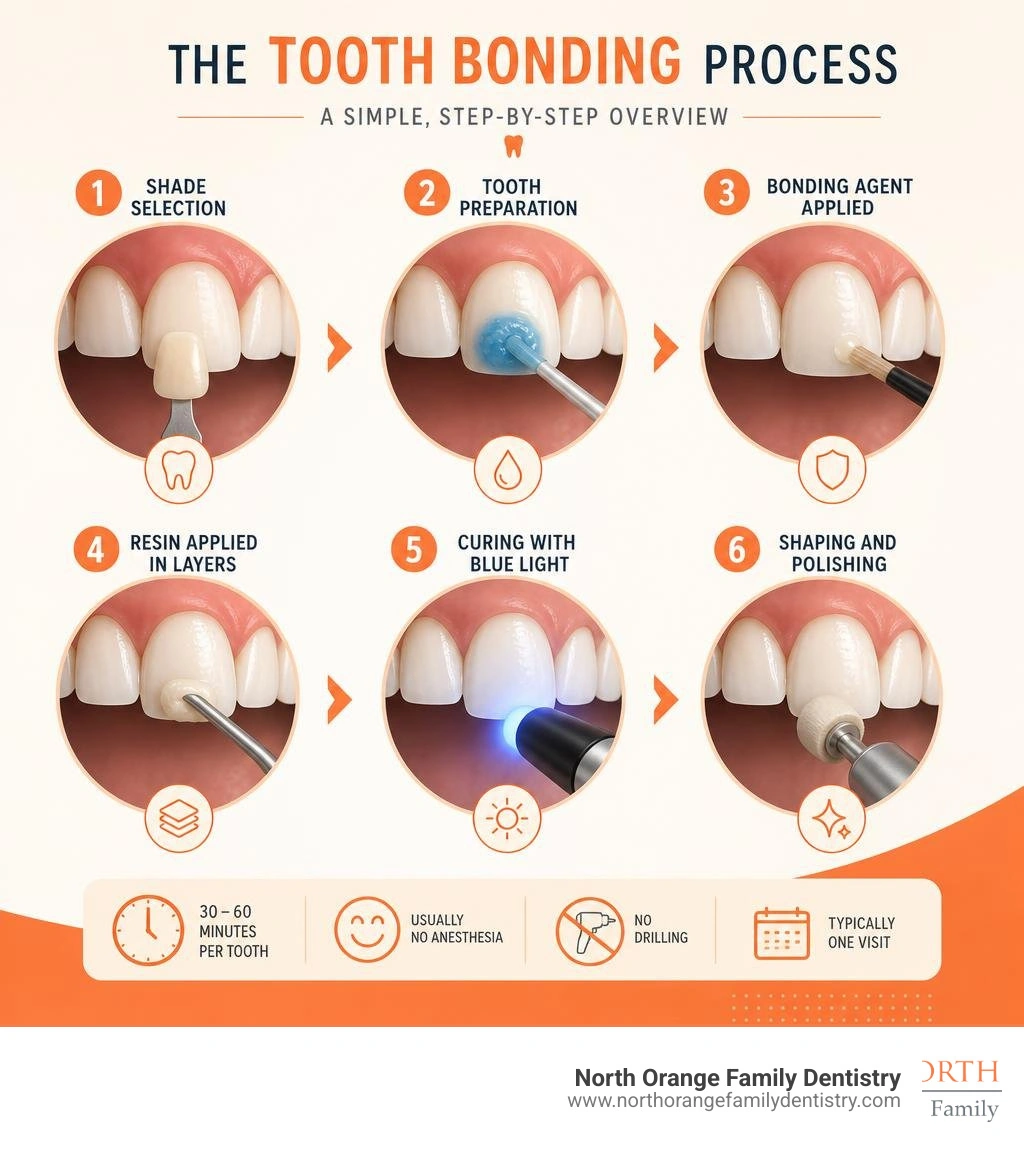
Here is a quick overview of how it works:
- Shade selection - Your dentist matches a composite resin color to your natural teeth
- Tooth preparation - The surface is lightly etched with a mild acid gel to help the resin stick
- Bonding agent applied - A liquid primer is brushed on to create a strong bond
- Resin applied in layers - Tooth-colored composite is sculpted directly onto the tooth
- Curing with blue light - Each layer is hardened using a special LED curing light
- Shaping and polishing - The dentist refines the shape and buffs it to a natural finish
The whole process takes about 30 to 60 minutes per tooth and usually requires no anesthesia and no drilling.
If you have been putting off fixing a tooth because you assumed it would be painful, expensive, or take multiple visits — dental bonding might be exactly the low-commitment option you have been looking for.
This guide walks you through every step so you know exactly what to expect before you sit in the chair.
Tooth bonding process helpful reading:
What is Dental Bonding and How Does It Compare to Veneers?
When you look in the mirror, do you notice a minor cosmetic flaw that keeps you from smiling fully? You are not alone. Many of our patients in Delaware, Ohio, come to us searching for a quick, reliable way to refresh their smiles. Two of the most popular options in cosmetic dentistry and tooth restoration are dental bonding and porcelain veneers.
To start, let's look at What is Dental Bonding in its simplest terms. Often referred to as cosmetic bonding, this procedure uses a tooth-colored composite resin (the same material used in about 72% of modern dental restorations) to repair minor structural or aesthetic issues. According to the Cleveland Clinic's guide on What is Dental Bonding & What To Expect, this versatile material directly adheres to your natural tooth, acting like a durable, sculptable clay that we can shape to perfection.

Dental Bonding vs. Veneers: Key Differences
While both treatments can dramatically transform your smile, they do so in completely different ways. Understanding the differences is crucial before you make an investment in your teeth.
- Material: Bonding utilizes a composite resin applied directly to the tooth. Veneers are ultra-thin, custom-made shells crafted in a dental laboratory, usually from high-grade porcelain.
- Enamel Removal: Porcelain veneers require us to shave down a small portion of your natural tooth enamel (sometimes up to 30%) to make room for the shell. Bonding, on the other hand, requires little to no enamel removal.
- Reversibility: Because we do not have to permanently alter your natural enamel for bonding, the tooth bonding process is entirely reversible. Veneers are a lifelong commitment; once that enamel is gone, those teeth will always need to be covered by veneers or crowns.
- Time Commitment: Bonding is completed chairside in a single visit. Veneers typically require at least two appointments spread across a couple of weeks while the lab fabricates your custom shells.
For a deeper dive into how these two treatments stack up, take a look at our detailed breakdown of Dental Bonding Versus Veneers.
Who Performs the Procedure?
Most direct cosmetic bonding procedures are performed right in our office by your general dentist. Because we regularly work with composite resin for restorations, we have honed the artistic eye and technical precision needed to sculpt natural-looking results.
In highly complex cases—such as extensive reconstructive work or severe bite issues—a prosthodontist (a restorative specialist with advanced training in tooth replacement and cosmetic reconstruction) may be brought in. However, for the vast majority of chips, gaps, and minor cracks, our experienced general dentists can easily complete your treatment in our comfortable Lewis Center office.
The Step-by-Step Tooth Bonding Process
Now, let's demystify what actually happens when you sit in the dental chair. The beauty of direct bonding is its simplicity. It is an elegant, non-invasive clinical protocol that blends science and art.
We have outlined the journey below so you can visualize exactly how we rebuild your smile, step by step. If you want a foundational look at the mechanics, check out our Complete Guide How Dental Bonding Works.
Preparing for the Tooth Bonding Process
The first step is all about preparation and color matching. We do not just grab any white material; we use a physical and digital shade guide to match the composite resin to your surrounding teeth. Natural teeth are not a single solid color—they have distinct layers, translucencies, and variations. To ensure a seamless blend, we often use a multi-shade layering technique, choosing an opaque base to mimic deep dentin, a body shade, and a translucent enamel shade for the outer edge.
Next, we prepare the tooth surface. We gently clean the tooth and isolate it from saliva using a dental dam or a specialized dry-field system, as moisture is the absolute enemy of a strong bond. Once dry, we apply a mild etching gel (typically a 35% to 37% phosphoric acid) to the enamel for about 15 seconds. This microscopic conditioning process roughens the surface, creating tiny pores that allow the bonding agent to cling to the tooth structure. We then rinse the etchant thoroughly and dry the tooth. If you are curious about the advanced clinical specifications of this step, you can review the technical guidelines in this Orthodontic direct bonding protocol guide.
Applying and Sculpting the Composite Resin in the Tooth Bonding Process
With the tooth prepared, we brush on a liquid bonding agent (primer) that flows into those microscopic pores we just created. We use a gentle burst of air to distribute it evenly and then cure it with a high-intensity blue curing light. This creates a solid anchor.
Now, the artistry begins:
- Layering: We apply the composite resin in thin, precise increments (usually 1.5 to 2mm at a time).
- Isolation: We use a thin, clear plastic film called a dental matrix to protect the adjacent teeth, ensuring the resin does not accidentally stick to your neighboring teeth.
- Curing: We blast each layer with our specialized UV light for 10 to 20 seconds to completely harden the material.
- Sculpting: Once the final layer is cured, we use fine dental burs to shape, contour, and smooth the resin so it matches the natural anatomy of your tooth.
- Polishing: We finish the procedure using progressively finer polishing discs and diamond polishing paste. This step, which can take 15 to 30 minutes, gives the restoration an enamel-like, stain-resistant gloss.
What to Expect: Appointment Length, Pain, and Longevity
One of the most common questions we hear is: "Will this hurt, and how much of my afternoon will it take up?"
The short answer is that the tooth bonding process is incredibly gentle. For purely cosmetic fixes, such as closing a small gap or repairing a chipped edge, the procedure is completely painless, and anesthesia is usually not required. You will feel some water, air, and light pressure, but no pain. We only use local numbing if we are treating a deep cavity or bonding very close to a sensitive tooth nerve. For more details on what to expect physically, read our Dental Bonding Pain Guide.
In terms of appointment duration, expect the process to take 30 to 60 minutes per tooth. If you are having multiple teeth bonded, we can often complete the entire transformation in a single visit.
As for longevity, dental bonding typically lasts between 3 and 10 years before it needs a minor touch-up or replacement. The lifespan of your restoration is highly dependent on the location of the bonding, your bite alignment, and your personal habits. To learn more about maximizing the lifespan of your new smile, check out our resource on How Long Do Dental Bonding Last.
Benefits, Risks, and Aftercare of Bonded Teeth
Like any dental procedure, cosmetic bonding has its unique balance of advantages and limitations.
The Benefits
- Incredible Convenience: Walk in with a chipped tooth, walk out with a flawless smile an hour later.
- Conservative Treatment: We preserve almost all of your natural, healthy enamel.
- Reversible and Flexible: If you decide to upgrade to porcelain veneers or crowns down the road, we can easily remove the composite material.
- Versatility: It is an excellent solution for everything from minor chips to Tooth Bonding for Gaps.
The Risks and Limitations
- Stain Resistance: While modern composite resin is highly advanced, it is still more porous than natural enamel or porcelain. It can stain over time if exposed to heavy amounts of coffee, tea, red wine, or tobacco.
- Chipping: Resin is strong, but it is not indestructible. Biting directly into hard objects can cause the material to chip or break.
- No Whitening Response: Composite resin does not change color with teeth whitening treatments. If you plan to whiten your teeth, we always recommend doing so before your bonding appointment so we can match the resin to your newly brightened shade.
Aftercare and Maintenance Tips
Caring for your bonded teeth is remarkably simple. You do not need any special tools—just excellent daily oral hygiene:
- Brush and Floss Daily: Brush twice a day with a non-abrasive fluoride toothpaste and floss gently every night.
- Avoid Staining Culprits: Try to limit dark beverages, especially for the first 48 hours after your procedure while the resin fully stabilizes.
- Ditch Bad Habits: Do not use your teeth as tools to open packages, and avoid biting your fingernails, chewing on pens, or crunching on ice.
- Wear a Night Guard: If you clench or grind your teeth at night, a custom night guard is essential to protect your bonding from structural failure.
- Keep Regular Cleanings: Visit us every six months for a professional cleaning and polish, which helps restore the original gloss of your bonded teeth.
Frequently Asked Questions About Tooth Bonding
To help you feel fully informed, we have compiled answers to some of the most common questions our patients ask.
How much does dental bonding cost and is it covered by insurance?
The cost of dental bonding varies depending on the complexity of the restoration and whether it is classified as cosmetic or restorative. If we are bonding a tooth to repair structural damage, decay, or a painful crack, dental insurance will often cover 50% to 80% of the cost. If the procedure is purely cosmetic—such as closing a tiny gap you simply do not like—insurance rarely covers it.
To help make your smile goals achievable without financial stress, we offer an in-house Dental Wellness Plan for our patients without insurance. This plan allows individuals and families to receive their routine preventive care and get significant discounts on restorative treatments like bonding for an affordable yearly rate. For a comprehensive look at costs, you can read our Dental Bonding Cost Guide 2026.
When is dental bonding not suitable and what are the alternatives?
While bonding is fantastic for minor repairs, it is not a cure-all. It is generally not suitable for:
- Severe Tooth Decay: Teeth with large cavities need the structural reinforcement of a dental crown.
- Major Alignment Issues: Large gaps or severely crowded teeth are better addressed with orthodontic treatments like Invisalign.
- Heavy Grinding: Chronic grinders will quickly wear down or snap off composite resin.
If bonding is not the right fit, we offer several high-quality alternatives, including porcelain veneers, custom dental crowns, and orthodontic alignment.
Is dental bonding permanent?
No, dental bonding is not permanent, but it is long-lasting. Over time, the material will naturally wear down or stain, requiring a refresh or replacement. However, because we do not permanently grind down your natural tooth enamel, the procedure is considered reversible. You can read more about this in our guide: Is Dental Bonding Permanent.
Conclusion
The tooth bonding process is a remarkably efficient, comfortable, and conservative way to hand yourself a massive confidence boost in under an hour. Whether you are dealing with a minor chip from an accidental bump or looking to close a small gap, direct bonding offers beautiful, natural-looking results without the need for invasive dental work.
At North Orange Family Dentistry, we are proud to serve families across Delaware County, Columbus, Lewis Center, Powell, and Orange, Ohio. Led by Dr. Kyle Bogan—a Fellow of both the Academy of General Dentistry and the International College of Dentists—our warm, modern practice is dedicated to delivering five-star experiences that fit your family's budget.
If you do not have dental insurance, we invite you to ask about our in-house Dental Wellness Plan to keep your care affordable. And because life happens, we also offer same-day emergency dental appointments most of the time to get you smiling again as quickly as possible. From advanced cosmetic care to cutting-edge laser treatments for TMJ pain, we are here to support your oral health at every stage of life.
Ready to take the next step toward your dream smile? Transform your smile with Tooth Bonding and schedule your consultation with us today!
What the Tooth Bonding Process Actually Involves (And Why It Matters)
The tooth bonding process is one of the simplest, most affordable ways to fix a chipped, cracked, discolored, or gapped tooth — often in a single appointment.
Here is a quick overview of how it works:
- Shade selection - Your dentist matches a composite resin color to your natural teeth
- Tooth preparation - The surface is lightly etched with a mild acid gel to help the resin stick
- Bonding agent applied - A liquid primer is brushed on to create a strong bond
- Resin applied in layers - Tooth-colored composite is sculpted directly onto the tooth
- Curing with blue light - Each layer is hardened using a special LED curing light
- Shaping and polishing - The dentist refines the shape and buffs it to a natural finish
The whole process takes about 30 to 60 minutes per tooth and usually requires no anesthesia and no drilling.
If you have been putting off fixing a tooth because you assumed it would be painful, expensive, or take multiple visits — dental bonding might be exactly the low-commitment option you have been looking for.
This guide walks you through every step so you know exactly what to expect before you sit in the chair.
Tooth bonding process helpful reading:
What is Dental Bonding and How Does It Compare to Veneers?
When you look in the mirror, do you notice a minor cosmetic flaw that keeps you from smiling fully? You are not alone. Many of our patients in Delaware, Ohio, come to us searching for a quick, reliable way to refresh their smiles. Two of the most popular options in cosmetic dentistry and tooth restoration are dental bonding and porcelain veneers.
To start, let's look at What is Dental Bonding in its simplest terms. Often referred to as cosmetic bonding, this procedure uses a tooth-colored composite resin (the same material used in about 72% of modern dental restorations) to repair minor structural or aesthetic issues. According to the Cleveland Clinic's guide on What is Dental Bonding & What To Expect, this versatile material directly adheres to your natural tooth, acting like a durable, sculptable clay that we can shape to perfection.
Dental Bonding vs. Veneers: Key Differences
While both treatments can dramatically transform your smile, they do so in completely different ways. Understanding the differences is crucial before you make an investment in your teeth.
- Material: Bonding utilizes a composite resin applied directly to the tooth. Veneers are ultra-thin, custom-made shells crafted in a dental laboratory, usually from high-grade porcelain.
- Enamel Removal: Porcelain veneers require us to shave down a small portion of your natural tooth enamel (sometimes up to 30%) to make room for the shell. Bonding, on the other hand, requires little to no enamel removal.
- Reversibility: Because we do not have to permanently alter your natural enamel for bonding, the tooth bonding process is entirely reversible. Veneers are a lifelong commitment; once that enamel is gone, those teeth will always need to be covered by veneers or crowns.
- Time Commitment: Bonding is completed chairside in a single visit. Veneers typically require at least two appointments spread across a couple of weeks while the lab fabricates your custom shells.
For a deeper dive into how these two treatments stack up, take a look at our detailed breakdown of Dental Bonding Versus Veneers.
Who Performs the Procedure?
Most direct cosmetic bonding procedures are performed right in our office by your general dentist. Because we regularly work with composite resin for restorations, we have honed the artistic eye and technical precision needed to sculpt natural-looking results.
In highly complex cases—such as extensive reconstructive work or severe bite issues—a prosthodontist (a restorative specialist with advanced training in tooth replacement and cosmetic reconstruction) may be brought in. However, for the vast majority of chips, gaps, and minor cracks, our experienced general dentists can easily complete your treatment in our comfortable Lewis Center office.
The Step-by-Step Tooth Bonding Process
Now, let's demystify what actually happens when you sit in the dental chair. The beauty of direct bonding is its simplicity. It is an elegant, non-invasive clinical protocol that blends science and art.
We have outlined the journey below so you can visualize exactly how we rebuild your smile, step by step. If you want a foundational look at the mechanics, check out our Complete Guide How Dental Bonding Works.
Preparing for the Tooth Bonding Process
The first step is all about preparation and color matching. We do not just grab any white material; we use a physical and digital shade guide to match the composite resin to your surrounding teeth. Natural teeth are not a single solid color—they have distinct layers, translucencies, and variations. To ensure a seamless blend, we often use a multi-shade layering technique, choosing an opaque base to mimic deep dentin, a body shade, and a translucent enamel shade for the outer edge.
Next, we prepare the tooth surface. We gently clean the tooth and isolate it from saliva using a dental dam or a specialized dry-field system, as moisture is the absolute enemy of a strong bond. Once dry, we apply a mild etching gel (typically a 35% to 37% phosphoric acid) to the enamel for about 15 seconds. This microscopic conditioning process roughens the surface, creating tiny pores that allow the bonding agent to cling to the tooth structure. We then rinse the etchant thoroughly and dry the tooth. If you are curious about the advanced clinical specifications of this step, you can review the technical guidelines in this Orthodontic direct bonding protocol guide.
Applying and Sculpting the Composite Resin in the Tooth Bonding Process
With the tooth prepared, we brush on a liquid bonding agent (primer) that flows into those microscopic pores we just created. We use a gentle burst of air to distribute it evenly and then cure it with a high-intensity blue curing light. This creates a solid anchor.
Now, the artistry begins:
- Layering: We apply the composite resin in thin, precise increments (usually 1.5 to 2mm at a time).
- Isolation: We use a thin, clear plastic film called a dental matrix to protect the adjacent teeth, ensuring the resin does not accidentally stick to your neighboring teeth.
- Curing: We blast each layer with our specialized UV light for 10 to 20 seconds to completely harden the material.
- Sculpting: Once the final layer is cured, we use fine dental burs to shape, contour, and smooth the resin so it matches the natural anatomy of your tooth.
- Polishing: We finish the procedure using progressively finer polishing discs and diamond polishing paste. This step, which can take 15 to 30 minutes, gives the restoration an enamel-like, stain-resistant gloss.
What to Expect: Appointment Length, Pain, and Longevity
One of the most common questions we hear is: "Will this hurt, and how much of my afternoon will it take up?"
The short answer is that the tooth bonding process is incredibly gentle. For purely cosmetic fixes, such as closing a small gap or repairing a chipped edge, the procedure is completely painless, and anesthesia is usually not required. You will feel some water, air, and light pressure, but no pain. We only use local numbing if we are treating a deep cavity or bonding very close to a sensitive tooth nerve. For more details on what to expect physically, read our Dental Bonding Pain Guide.
In terms of appointment duration, expect the process to take 30 to 60 minutes per tooth. If you are having multiple teeth bonded, we can often complete the entire transformation in a single visit.
As for longevity, dental bonding typically lasts between 3 and 10 years before it needs a minor touch-up or replacement. The lifespan of your restoration is highly dependent on the location of the bonding, your bite alignment, and your personal habits. To learn more about maximizing the lifespan of your new smile, check out our resource on How Long Do Dental Bonding Last.
Benefits, Risks, and Aftercare of Bonded Teeth
Like any dental procedure, cosmetic bonding has its unique balance of advantages and limitations.
The Benefits
- Incredible Convenience: Walk in with a chipped tooth, walk out with a flawless smile an hour later.
- Conservative Treatment: We preserve almost all of your natural, healthy enamel.
- Reversible and Flexible: If you decide to upgrade to porcelain veneers or crowns down the road, we can easily remove the composite material.
- Versatility: It is an excellent solution for everything from minor chips to Tooth Bonding for Gaps.
The Risks and Limitations
- Stain Resistance: While modern composite resin is highly advanced, it is still more porous than natural enamel or porcelain. It can stain over time if exposed to heavy amounts of coffee, tea, red wine, or tobacco.
- Chipping: Resin is strong, but it is not indestructible. Biting directly into hard objects can cause the material to chip or break.
- No Whitening Response: Composite resin does not change color with teeth whitening treatments. If you plan to whiten your teeth, we always recommend doing so before your bonding appointment so we can match the resin to your newly brightened shade.
Aftercare and Maintenance Tips
Caring for your bonded teeth is remarkably simple. You do not need any special tools—just excellent daily oral hygiene:
- Brush and Floss Daily: Brush twice a day with a non-abrasive fluoride toothpaste and floss gently every night.
- Avoid Staining Culprits: Try to limit dark beverages, especially for the first 48 hours after your procedure while the resin fully stabilizes.
- Ditch Bad Habits: Do not use your teeth as tools to open packages, and avoid biting your fingernails, chewing on pens, or crunching on ice.
- Wear a Night Guard: If you clench or grind your teeth at night, a custom night guard is essential to protect your bonding from structural failure.
- Keep Regular Cleanings: Visit us every six months for a professional cleaning and polish, which helps restore the original gloss of your bonded teeth.
Frequently Asked Questions About Tooth Bonding
To help you feel fully informed, we have compiled answers to some of the most common questions our patients ask.
How much does dental bonding cost and is it covered by insurance?
The cost of dental bonding varies depending on the complexity of the restoration and whether it is classified as cosmetic or restorative. If we are bonding a tooth to repair structural damage, decay, or a painful crack, dental insurance will often cover 50% to 80% of the cost. If the procedure is purely cosmetic—such as closing a tiny gap you simply do not like—insurance rarely covers it.
To help make your smile goals achievable without financial stress, we offer an in-house Dental Wellness Plan for our patients without insurance. This plan allows individuals and families to receive their routine preventive care and get significant discounts on restorative treatments like bonding for an affordable yearly rate. For a comprehensive look at costs, you can read our Dental Bonding Cost Guide 2026.
When is dental bonding not suitable and what are the alternatives?
While bonding is fantastic for minor repairs, it is not a cure-all. It is generally not suitable for:
- Severe Tooth Decay: Teeth with large cavities need the structural reinforcement of a dental crown.
- Major Alignment Issues: Large gaps or severely crowded teeth are better addressed with orthodontic treatments like Invisalign.
- Heavy Grinding: Chronic grinders will quickly wear down or snap off composite resin.
If bonding is not the right fit, we offer several high-quality alternatives, including porcelain veneers, custom dental crowns, and orthodontic alignment.
Is dental bonding permanent?
No, dental bonding is not permanent, but it is long-lasting. Over time, the material will naturally wear down or stain, requiring a refresh or replacement. However, because we do not permanently grind down your natural tooth enamel, the procedure is considered reversible. You can read more about this in our guide: Is Dental Bonding Permanent.
Conclusion
The tooth bonding process is a remarkably efficient, comfortable, and conservative way to hand yourself a massive confidence boost in under an hour. Whether you are dealing with a minor chip from an accidental bump or looking to close a small gap, direct bonding offers beautiful, natural-looking results without the need for invasive dental work.
At North Orange Family Dentistry, we are proud to serve families across Delaware County, Columbus, Lewis Center, Powell, and Orange, Ohio. Led by Dr. Kyle Bogan—a Fellow of both the Academy of General Dentistry and the International College of Dentists—our warm, modern practice is dedicated to delivering five-star experiences that fit your family's budget.
If you do not have dental insurance, we invite you to ask about our in-house Dental Wellness Plan to keep your care affordable. And because life happens, we also offer same-day emergency dental appointments most of the time to get you smiling again as quickly as possible. From advanced cosmetic care to cutting-edge laser treatments for TMJ pain, we are here to support your oral health at every stage of life.
Ready to take the next step toward your dream smile? Transform your smile with Tooth Bonding and schedule your consultation with us today!
Contact Us
Have any questions? Want to learn more?

