
Straighten Up Your Smile with Composite Bonding for Crooked Teeth
Discover composite bonding crooked tooth fixes for minor misalignments. Quick, non-invasive smile transformation at North Orange Family Dentistry.
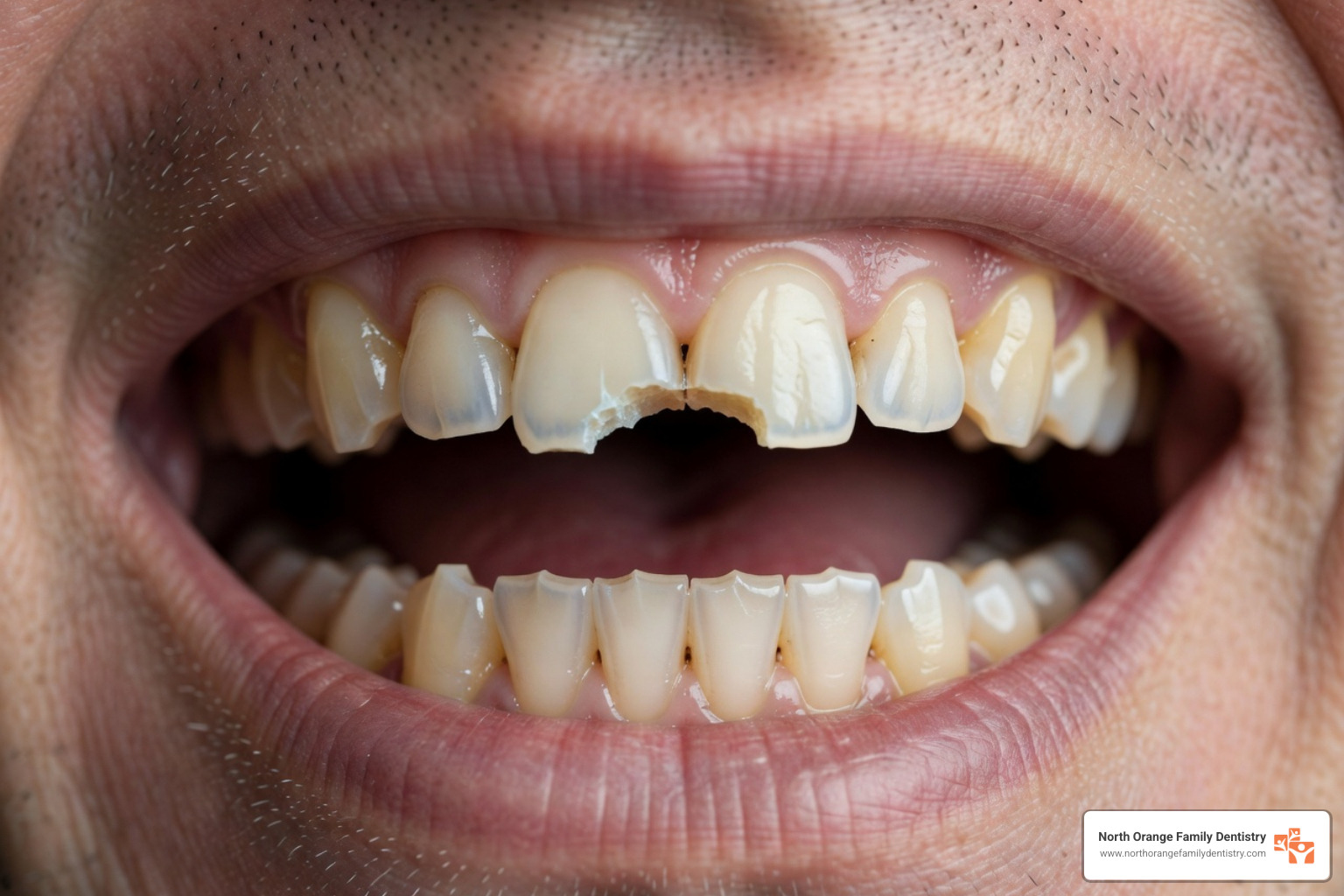


Crooked Teeth? Here's What Composite Bonding Can Actually Do
Composite bonding for a crooked tooth is a minimally invasive cosmetic procedure where a tooth-colored resin is applied directly to the tooth surface to reshape it — creating the appearance of straighter, more even teeth without moving them.
Quick answer: Can composite bonding fix crooked teeth?
- Yes, for mild cases — small rotations, minor overlaps, uneven edges, and small gaps can all be improved with bonding
- No, for severe cases — significant crowding, bite problems, or large misalignments need orthodontic treatment like Invisalign
- It's cosmetic, not structural — bonding reshapes how teeth look, it does not physically move them
- Fast results — the procedure is often completed in a single visit
- Reversible and non-invasive — no drilling or enamel removal required in most cases
If you've been hiding your smile in photos or avoiding showing your teeth, you're far from alone. Studies suggest the vast majority of people feel self-conscious about how their teeth look. The good news? For many people with mildly crooked teeth, composite bonding offers a same-day, affordable path to a smile they feel proud of.
This guide breaks down exactly how it works, who it's right for, and how it compares to other options like Invisalign or veneers — so you can make a confident, informed decision.

What is Composite Bonding and How Does it Work?
At its core, what is dental bonding? It is a cosmetic dental procedure where we use a tooth-colored composite resin—a durable plastic material—to enhance the appearance of your teeth. Unlike crowns or veneers, which are often fabricated in a lab, bonding is a "chairside" procedure. This means we sculpt the material directly onto your teeth during your appointment.
When addressing a composite bonding crooked tooth concern, we aren't actually moving the root of the tooth. Instead, we are performing "additive dentistry." By strategically adding resin to the recessed areas of a rotated tooth or extending the edges of a shorter tooth, we create a visual illusion of alignment. It is much like using wood filler to level an uneven surface before painting; we fill in the "dips" caused by misalignment to create a smooth, straight-looking finish.
This tooth bonding technique is incredibly versatile. It can mask minor rotations, close small gaps (diastemas), and even out teeth that appear crooked because they are chipped or irregularly shaped. Because the resin is available in a vast array of shades, we can match it perfectly to your natural enamel, ensuring the transition between your tooth and the bonding is invisible to the naked eye.
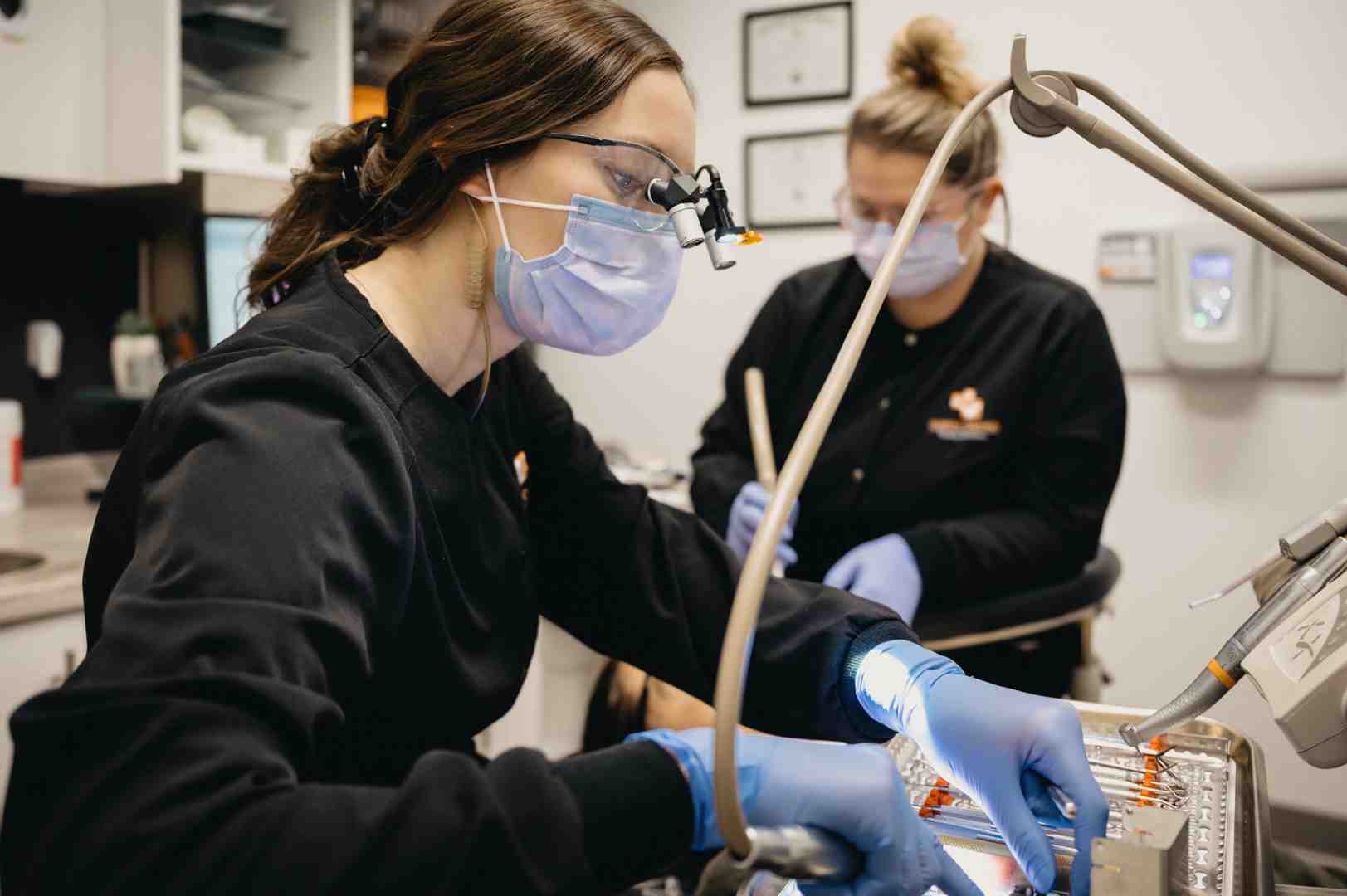
The Science Behind a Composite Bonding Crooked Tooth Transformation
The magic of tooth bonding lies in the chemical and micro-mechanical bond created between the resin and your natural enamel. The process is precise and follows a specific scientific protocol:
- Preparation: We start by cleaning the tooth thoroughly. In most cases, no drilling is required, making this a very conservative option.
- Etching: We apply a mild acidic conditioning gel to the tooth surface for about 15 seconds. This creates microscopic "pores" in the enamel, giving the bonding agent something to grip onto.
- Priming and Bonding: A liquid bonding agent is applied, which flows into those microscopic pores.
- Layering: We apply the composite resin in thin layers. For a composite bonding crooked tooth fix, we might add more material to one side of a tooth than the other to "straighten" its outward appearance.
- Curing: A specialized UV light is used to "cure" or harden each layer of resin instantly.
- Sculpting and Polishing: Once the material is hard, we artistically sculpt it to the final desired shape and polish it to a high-gloss sheen that mimics the light-reflecting properties of natural teeth.
Addressing Misalignment: Is a Composite Bonding Crooked Tooth Fix Right for You?
One of the most common questions we hear at North Orange Family Dentistry is whether bonding can truly replace braces. The answer depends entirely on the degree of misalignment. If you have a single tooth that is slightly pushed back or a small gap that makes your smile look "off," bonding is an excellent, immediate solution.
We often use this method to straighten crooked teeth cosmetically by filling in the gaps that make teeth look jagged. You can see the dramatic difference this makes in dental bonding before after galleries, where "instant orthodontics" transforms a smile in under an hour.
Ideal candidates for this procedure are patients with:
- Minor rotations (where a tooth is slightly turned).
- Small gaps between front teeth.
- Teeth that are functionally straight but have uneven edges.
- Good overall oral health (no active gum disease or major decay).
When a Composite Bonding Crooked Tooth Approach Isn't Enough
While we love the versatility of bonding, it does have its limitations. It is a cosmetic "masking" agent, not a structural corrector. If your teeth are severely crowded, overlapping significantly, or if you have complex bite issues like a deep overbite or underbite, bonding may not be the best choice.
In cases of severe misalignment, applying enough resin to make the teeth look straight can result in teeth that look unnaturally bulky or thick. Furthermore, if the underlying cause of your crooked teeth is a narrow arch or jaw misalignment, you may need clear aligners for teeth to move the roots into the correct positions. This is not just about looks—proper alignment makes it easier to clean your teeth, reducing the risk of periodontal disease and decay in hard-to-reach areas.
Comparing Bonding to Veneers and Orthodontics
Choosing the right path for your smile involves weighing speed, cost, and longevity. Bonding is often the "entry point" for cosmetic dentistry because it is fast and affordable, but it’s helpful to see how it stacks up against other popular treatments.
When we look at dental bonding versus veneers, the primary difference is the material and the preparation. Porcelain veneers are thin shells made in a laboratory. They are more stain-resistant and durable than bonding, but they usually require the permanent removal of a small amount of enamel. Bonding, on the other hand, preserves your natural tooth structure.
Many patients find that they can transform your smile with tooth bonding and veneers by combining the two—perhaps using veneers for the most visible front teeth and bonding for minor adjustments on the adjacent teeth.
Choosing Between Invisalign and a Composite Bonding Crooked Tooth Fix
If your goal is a perfect, long-lasting Hollywood smile, you might find that a two-step approach is best. We often recommend Invisalign to handle the heavy lifting—moving the teeth into their proper functional positions. Once the teeth are straight, we can use composite bonding to perform the "fine-tuning," such as smoothing out a chipped edge or perfecting the tooth's proportions.
Using cosmetic dentistry to erase imperfections after orthodontic treatment ensures that your smile is not just straight, but also radiant and symmetrical.
Durability, Cost, and Aftercare for Your New Smile
How long will your new smile last? While dental bonding is not permanent, it is quite durable. On average, composite bonding lasts between 5 to 10 years. Its lifespan depends heavily on your lifestyle and how well you care for your teeth. Because the resin is a porous material, it can stain over time from coffee, tea, red wine, or tobacco—just like your natural teeth.
Regarding the dental bonding cost in Ohio, it remains one of the most cost-effective ways to upgrade your appearance. To make these services accessible to everyone in the Delaware and Lewis Center communities, we offer an in-house Dental Wellness Plan. This plan is specifically designed for our patients without insurance, allowing individuals and families to receive their necessary preventive care and discounts on cosmetic treatments like bonding for a manageable yearly fee.
To maintain your results, follow this full guide to composite bonding for crooked teeth:
- Avoid "Biting" Hard Objects: Don't use your bonded teeth to open packages, bite your nails, or chew on ice. The resin can chip under extreme pressure.
- Stain Management: Rinse your mouth with water after drinking staining beverages.
- Oral Hygiene: Brush twice daily and floss once daily. While the resin can't decay, the tooth underneath it certainly can!
- Regular Check-ups: Visit us every six months so we can polish the bonding and ensure it remains securely attached.
Frequently Asked Questions about Bonding for Crooked Teeth
Is composite bonding painful?
Not at all! In the vast majority of cases, composite bonding is completely painless and requires no local anesthesia. Since we are adding material to the surface of the tooth rather than drilling into the sensitive inner layers, most patients find the procedure quite comfortable. You might feel some minor pressure during the sculpting phase, but that’s it.
Can bonding close gaps between crooked teeth?
Yes! Closing a "diastema" (the medical term for a gap) is one of the most common uses for bonding. By slightly widening the two teeth on either side of the gap, we can create a more uniform, gap-free smile in a single visit.
How long does the procedure take?
One of the biggest perks of bonding is the speed. We can typically complete a single tooth in 30 to 60 minutes. If you are having multiple teeth bonded to fix a crooked appearance, you can walk in with a smile you're hiding and walk out about two hours later with a smile you can't wait to show off.
Conclusion
At North Orange Family Dentistry, we believe every patient deserves a five-star dental experience that fits their lifestyle and budget. Led by Dr. Kyle Bogan—an FICD Fellow representing the top 3% of dentists worldwide—our team is dedicated to providing advanced, comfortable care for the whole family.
Whether you are looking for a quick composite bonding crooked tooth fix, considering Invisalign to move your teeth, or need a same-day emergency appointment, we are here to help. We are proud to serve the Delaware, Lewis Center, and Powell communities with cutting-edge technology, including laser treatments for TMJ pain and periodontal health.
Ready to see what's possible for your smile? Transform your smile with tooth bonding and discover the confidence that comes with a straight, healthy-looking set of teeth. Give us a call or visit us at our Lewis Center office today!
Crooked Teeth? Here's What Composite Bonding Can Actually Do
Composite bonding for a crooked tooth is a minimally invasive cosmetic procedure where a tooth-colored resin is applied directly to the tooth surface to reshape it — creating the appearance of straighter, more even teeth without moving them.
Quick answer: Can composite bonding fix crooked teeth?
- Yes, for mild cases — small rotations, minor overlaps, uneven edges, and small gaps can all be improved with bonding
- No, for severe cases — significant crowding, bite problems, or large misalignments need orthodontic treatment like Invisalign
- It's cosmetic, not structural — bonding reshapes how teeth look, it does not physically move them
- Fast results — the procedure is often completed in a single visit
- Reversible and non-invasive — no drilling or enamel removal required in most cases
If you've been hiding your smile in photos or avoiding showing your teeth, you're far from alone. Studies suggest the vast majority of people feel self-conscious about how their teeth look. The good news? For many people with mildly crooked teeth, composite bonding offers a same-day, affordable path to a smile they feel proud of.
This guide breaks down exactly how it works, who it's right for, and how it compares to other options like Invisalign or veneers — so you can make a confident, informed decision.
What is Composite Bonding and How Does it Work?
At its core, what is dental bonding? It is a cosmetic dental procedure where we use a tooth-colored composite resin—a durable plastic material—to enhance the appearance of your teeth. Unlike crowns or veneers, which are often fabricated in a lab, bonding is a "chairside" procedure. This means we sculpt the material directly onto your teeth during your appointment.
When addressing a composite bonding crooked tooth concern, we aren't actually moving the root of the tooth. Instead, we are performing "additive dentistry." By strategically adding resin to the recessed areas of a rotated tooth or extending the edges of a shorter tooth, we create a visual illusion of alignment. It is much like using wood filler to level an uneven surface before painting; we fill in the "dips" caused by misalignment to create a smooth, straight-looking finish.
This tooth bonding technique is incredibly versatile. It can mask minor rotations, close small gaps (diastemas), and even out teeth that appear crooked because they are chipped or irregularly shaped. Because the resin is available in a vast array of shades, we can match it perfectly to your natural enamel, ensuring the transition between your tooth and the bonding is invisible to the naked eye.
The Science Behind a Composite Bonding Crooked Tooth Transformation
The magic of tooth bonding lies in the chemical and micro-mechanical bond created between the resin and your natural enamel. The process is precise and follows a specific scientific protocol:
- Preparation: We start by cleaning the tooth thoroughly. In most cases, no drilling is required, making this a very conservative option.
- Etching: We apply a mild acidic conditioning gel to the tooth surface for about 15 seconds. This creates microscopic "pores" in the enamel, giving the bonding agent something to grip onto.
- Priming and Bonding: A liquid bonding agent is applied, which flows into those microscopic pores.
- Layering: We apply the composite resin in thin layers. For a composite bonding crooked tooth fix, we might add more material to one side of a tooth than the other to "straighten" its outward appearance.
- Curing: A specialized UV light is used to "cure" or harden each layer of resin instantly.
- Sculpting and Polishing: Once the material is hard, we artistically sculpt it to the final desired shape and polish it to a high-gloss sheen that mimics the light-reflecting properties of natural teeth.
Addressing Misalignment: Is a Composite Bonding Crooked Tooth Fix Right for You?
One of the most common questions we hear at North Orange Family Dentistry is whether bonding can truly replace braces. The answer depends entirely on the degree of misalignment. If you have a single tooth that is slightly pushed back or a small gap that makes your smile look "off," bonding is an excellent, immediate solution.
We often use this method to straighten crooked teeth cosmetically by filling in the gaps that make teeth look jagged. You can see the dramatic difference this makes in dental bonding before after galleries, where "instant orthodontics" transforms a smile in under an hour.
Ideal candidates for this procedure are patients with:
- Minor rotations (where a tooth is slightly turned).
- Small gaps between front teeth.
- Teeth that are functionally straight but have uneven edges.
- Good overall oral health (no active gum disease or major decay).
When a Composite Bonding Crooked Tooth Approach Isn't Enough
While we love the versatility of bonding, it does have its limitations. It is a cosmetic "masking" agent, not a structural corrector. If your teeth are severely crowded, overlapping significantly, or if you have complex bite issues like a deep overbite or underbite, bonding may not be the best choice.
In cases of severe misalignment, applying enough resin to make the teeth look straight can result in teeth that look unnaturally bulky or thick. Furthermore, if the underlying cause of your crooked teeth is a narrow arch or jaw misalignment, you may need clear aligners for teeth to move the roots into the correct positions. This is not just about looks—proper alignment makes it easier to clean your teeth, reducing the risk of periodontal disease and decay in hard-to-reach areas.
Comparing Bonding to Veneers and Orthodontics
Choosing the right path for your smile involves weighing speed, cost, and longevity. Bonding is often the "entry point" for cosmetic dentistry because it is fast and affordable, but it’s helpful to see how it stacks up against other popular treatments.
When we look at dental bonding versus veneers, the primary difference is the material and the preparation. Porcelain veneers are thin shells made in a laboratory. They are more stain-resistant and durable than bonding, but they usually require the permanent removal of a small amount of enamel. Bonding, on the other hand, preserves your natural tooth structure.
Many patients find that they can transform your smile with tooth bonding and veneers by combining the two—perhaps using veneers for the most visible front teeth and bonding for minor adjustments on the adjacent teeth.
Choosing Between Invisalign and a Composite Bonding Crooked Tooth Fix
If your goal is a perfect, long-lasting Hollywood smile, you might find that a two-step approach is best. We often recommend Invisalign to handle the heavy lifting—moving the teeth into their proper functional positions. Once the teeth are straight, we can use composite bonding to perform the "fine-tuning," such as smoothing out a chipped edge or perfecting the tooth's proportions.
Using cosmetic dentistry to erase imperfections after orthodontic treatment ensures that your smile is not just straight, but also radiant and symmetrical.
Durability, Cost, and Aftercare for Your New Smile
How long will your new smile last? While dental bonding is not permanent, it is quite durable. On average, composite bonding lasts between 5 to 10 years. Its lifespan depends heavily on your lifestyle and how well you care for your teeth. Because the resin is a porous material, it can stain over time from coffee, tea, red wine, or tobacco—just like your natural teeth.
Regarding the dental bonding cost in Ohio, it remains one of the most cost-effective ways to upgrade your appearance. To make these services accessible to everyone in the Delaware and Lewis Center communities, we offer an in-house Dental Wellness Plan. This plan is specifically designed for our patients without insurance, allowing individuals and families to receive their necessary preventive care and discounts on cosmetic treatments like bonding for a manageable yearly fee.
To maintain your results, follow this full guide to composite bonding for crooked teeth:
- Avoid "Biting" Hard Objects: Don't use your bonded teeth to open packages, bite your nails, or chew on ice. The resin can chip under extreme pressure.
- Stain Management: Rinse your mouth with water after drinking staining beverages.
- Oral Hygiene: Brush twice daily and floss once daily. While the resin can't decay, the tooth underneath it certainly can!
- Regular Check-ups: Visit us every six months so we can polish the bonding and ensure it remains securely attached.
Frequently Asked Questions about Bonding for Crooked Teeth
Is composite bonding painful?
Not at all! In the vast majority of cases, composite bonding is completely painless and requires no local anesthesia. Since we are adding material to the surface of the tooth rather than drilling into the sensitive inner layers, most patients find the procedure quite comfortable. You might feel some minor pressure during the sculpting phase, but that’s it.
Can bonding close gaps between crooked teeth?
Yes! Closing a "diastema" (the medical term for a gap) is one of the most common uses for bonding. By slightly widening the two teeth on either side of the gap, we can create a more uniform, gap-free smile in a single visit.
How long does the procedure take?
One of the biggest perks of bonding is the speed. We can typically complete a single tooth in 30 to 60 minutes. If you are having multiple teeth bonded to fix a crooked appearance, you can walk in with a smile you're hiding and walk out about two hours later with a smile you can't wait to show off.
Conclusion
At North Orange Family Dentistry, we believe every patient deserves a five-star dental experience that fits their lifestyle and budget. Led by Dr. Kyle Bogan—an FICD Fellow representing the top 3% of dentists worldwide—our team is dedicated to providing advanced, comfortable care for the whole family.
Whether you are looking for a quick composite bonding crooked tooth fix, considering Invisalign to move your teeth, or need a same-day emergency appointment, we are here to help. We are proud to serve the Delaware, Lewis Center, and Powell communities with cutting-edge technology, including laser treatments for TMJ pain and periodontal health.
Ready to see what's possible for your smile? Transform your smile with tooth bonding and discover the confidence that comes with a straight, healthy-looking set of teeth. Give us a call or visit us at our Lewis Center office today!
Contact Us
Have any questions? Want to learn more?

