
Temporary Tooth Caps: What to Expect While You Wait for the Real Deal
Learn what a temporary tooth cap protects, how to care for it, and when to seek help from North Orange Family Dentistry.


What Is a Temporary Tooth Cap and Why Does It Matter?
A temporary tooth cap is a short-term dental crown placed over a prepared tooth while your permanent crown is being made in a lab. Here's a quick overview of what you need to know:
Quick facts about temporary tooth caps:
QuestionAnswerWhat is it?A short-term crown that protects a prepared toothHow long does it last?Typically 2 to 3 weeksWhat is it made of?Usually acrylic, composite resin, or methacrylateCan I eat normally?No — avoid hard, sticky, and crunchy foodsWhat if it falls off?Contact your dentist right away
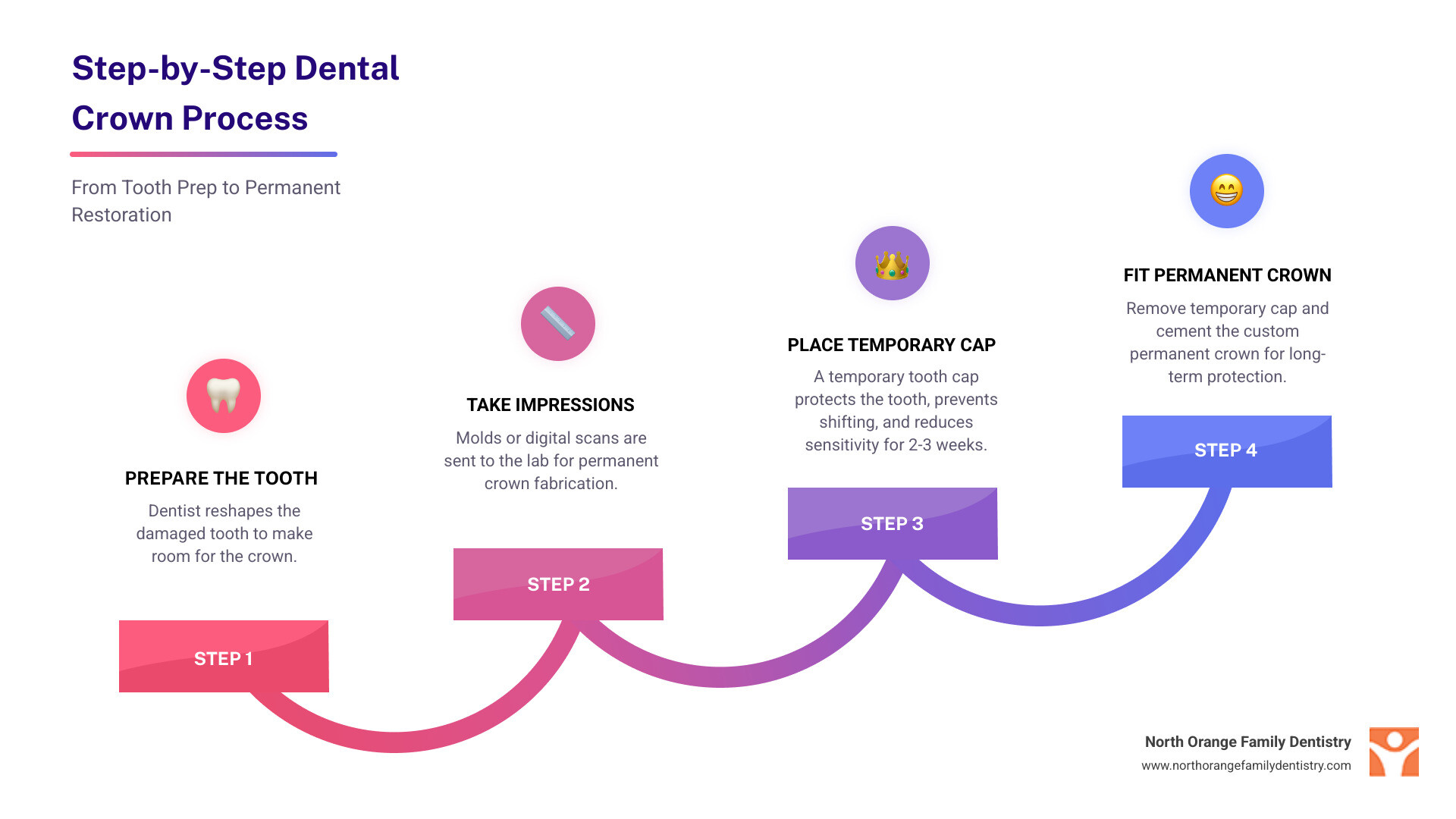
Getting a dental crown is a two-visit process. On your first visit, your dentist shapes the tooth and places a temporary cap. Your permanent crown is custom-made in a dental lab and takes about two to three weeks. During that time, the temporary cap does a very important job.
It protects your prepared tooth from:
- Bacteria and decay
- Temperature sensitivity
- Damage from biting pressure
- Shifting of nearby teeth
Think of it as a placeholder that keeps everything stable and comfortable while you wait.
A lot of people are surprised by how much a temporary tooth cap affects their daily routine — from what they eat to how they brush. That's exactly why knowing what to expect makes such a big difference.
I'm Dr. Kyle Bogan, founder of North Orange Family Dentistry and a Fellow in both the International College of Dentists and the Academy of General Dentistry, putting me in the top 3% of dentists worldwide — and placing and managing the temporary tooth cap is something I guide patients through every day. I'll walk you through everything you need to know to keep your temporary crown intact and your smile protected until your permanent restoration is ready.
Temporary tooth cap vocab to learn:
Understanding the Role of a Temporary Tooth Cap
When we prepare a tooth for a dental-crown, we have to remove a significant portion of the natural tooth structure to make room for the new "cap." This leaves the inner parts of your tooth, including the sensitive dentin and the pulp, more exposed than usual. The temporary tooth cap acts as a vital shield during this interim period.
Beyond just being a "cover," the temporary crown serves several technical purposes:
- Pulp Protection: It shields the nerve of the tooth from physical and chemical stimuli, such as the sugar in your morning coffee or the chill of an ice cube.
- Sensitivity Management: Without this barrier, the prepared tooth would be incredibly sensitive to temperature and air.
- Spacing Maintenance: Teeth like to move. If we left the space empty, the neighboring teeth might tilt or the tooth above might "extrude" (grow downward) into the gap. The temporary cap ensures that the custom-made permanent crown will actually fit when it arrives from the lab.
- Occlusal Alignment: It helps maintain your bite. If your teeth aren't hitting correctly, it can lead to jaw pain or even TMJ disorders.
- Aesthetics: Especially for front teeth, a temporary tooth cap ensures you don't have to hide your smile while the lab works its magic.
For more details on how we use these in our practice, check out our understanding-dental-crown-services-what-you-need-to-know guide.
Materials and Durability of a Temporary Tooth Cap
You might wonder why we don't just use the permanent material right away. Permanent crowns are made of high-strength ceramics like porcelain or zirconia, which require intense heat and precision milling in a specialized lab. The temporary tooth cap, however, needs to be made quickly right here in our Lewis Center office.
Common materials include:
- Acrylic: A type of plastic that is easy to mold and shape.
- Composite Resin: Similar to the material used for tooth-colored fillings.
- Methacrylate: A durable resin often used for front-tooth temporaries.
- Stainless Steel: Occasionally used for back molars, especially in children, because of its extreme durability.
These materials are designed to be "good enough" for about 2 to 3 weeks. They are not meant for the long haul. Because they are held in place with temporary cement (designed to be easily removed by us later), they are naturally more fragile than the final product. To learn more about the anatomy of the tooth we are protecting, see our page on the crown-of-tooth.
The Importance of Professional Temporary Crown Placement
While you might see DIY "tooth repair kits" or temporary tooth cap products on sites like Amazon or at local drugstores, there is a massive difference between a professional temporary and a store-bought one.
Professional placement ensures:
- A Custom Fit: We take an impression of your tooth to ensure the temporary mimics your natural tooth shape. A poor fit can lead to "food traps," gum irritation, or the tooth shifting out of place.
- Bite Calibration: We check that the temporary isn't "too tall." If a crown is even a fraction of a millimeter too high, every time you bite down, you are bruising the ligament around the tooth, which causes significant pain.
- Safe Materials: We use dental-grade resins and cements that are non-toxic and biocompatible.
Using a porcelain-tooth-cap-cost analysis, it's clear that the small investment in a professional temporary saves you from the high cost of fixing a damaged tooth later.
How to Care for and Manage Your Temporary Restoration
Since the cement we use for a temporary tooth cap is designed to let go eventually, you have to be a little extra careful with what you put in your mouth. Think of your temporary crown as a guest in your mouth—treat it with hospitality, but don't expect it to do heavy lifting!
The "No-Fly" List for Foods:
- Sticky Foods: Caramel, taffy, and even some types of chewing gum can literally pull the crown right off your tooth.
- Hard Foods: Raw carrots, ice cubes, and hard candies can crack the acrylic material.
- Crunchy Snacks: Pretzels and tough crusty bread can wedge themselves under the edge of the cap and loosen the seal.
We recommend sticking to a softer diet. Think pasta, cooked vegetables, fish, and eggs. If you must eat something slightly firm, try to chew on the opposite side of your mouth. For more on managing your dental budget during this time, see our resource on dental-crown-cost-without-insurance.
Best Practices for Daily Maintenance
Keeping the area clean is vital. If bacteria get trapped under the temporary tooth cap, it can lead to decay or gum inflammation, making the placement of your permanent crown much more difficult.
Brushing: Use a soft-bristle toothbrush and be gentle. You want to clean the gum line without "scrubbing" the crown so hard that you dislodge it.
Flossing (The Golden Rule): This is where most people lose their temporary crowns!
- Slide the floss down between the teeth as usual.
- Clean the area.
- DO NOT pull the floss back up.
- Instead, let go of one end of the floss and slide it out sideways. Pulling upward creates a "hook" effect that can pop the crown right off.
Maintaining high standards of oral-hygiene is the best way to ensure the permanent crown fits perfectly into a healthy environment.
What to Do if Your Cap Falls Off or Breaks
First of all: Don't panic. This happens more often than you'd think. If your temporary tooth cap comes loose, here is your game plan:
- Find the crown: If you swallowed it, call us (it will usually pass safely, but we need to know). If you have it, rinse it off gently.
- Call North Orange Family Dentistry: We prioritize emergency dental treatments and can usually see you the same day to re-cement it.
- Temporary Home Fix: If it’s the weekend and you can't get to us immediately, you can use a tiny dab of toothpaste or over-the-counter dental adhesive (like Dentemp) to "stick" it back on. This is only a stop-gap! Do not use superglue or any non-dental adhesive.
- Keep it moist: If you can't get it back on, keep the crown in a small container with a little water or milk and bring it with you to your appointment.
For immediate assistance, visit our contact page.
When to Seek Professional Dental Care
While some minor sensitivity to cold is normal for a day or two after your first appointment, certain symptoms shouldn't be ignored. You should call us if you experience:
- Throbbing Pain: This could indicate an infection or that the "pulp" of the tooth is unhappy.
- Gum Swelling: A sign of irritation or potential abscess.
- A "High" Bite: If it feels like you're hitting that tooth before any others, it needs a quick adjustment to prevent jaw pain.
- Allergic Reaction: Though rare, if you notice significant redness or itching in the gums around the methacrylate material, let us know.
We want your experience to be as comfortable as possible. You can read more about the advantages-and-disadvantages-of-dental-crowns to understand the full scope of the treatment.
Affordable Solutions at North Orange Family Dentistry
At North Orange Family Dentistry, we believe that high-quality care should be accessible to everyone in Lewis Center and Delaware, OH. We know that the average-cost-of-dental-crowns can be a concern, especially if you are balancing other family expenses.
To help our patients without insurance, we offer a Dental Wellness Plan. This plan is designed specifically for individuals and families to get the yearly care they need—including exams and cleanings—at a discounted price. It’s our way of making sure you don't have to choose between your budget and your smile.
Beyond crowns, Dr. Kyle Bogan and our team offer a full range of services, including:
- Advanced Technology: We use digital impressions and even laser treatments for TMJ pain and periodontal disease.
- Emergency Care: We often offer same-day appointments for those "oh no!" moments when a cap falls off.
- Comprehensive Options: From dental-implants (averaging about $4500 per tooth) to Invisalign and digital dentures, we handle it all.
Whether you need a cost-of-crown-tooth estimate or a tooth-crown-cost-with-insurance-guide, our team is here to provide a five-star experience.
Ready to secure your smile? Whether you're waiting for a permanent crown or need a routine check-up, we're here for you in Lewis Center.
Schedule your appointment with North Orange Family Dentistry today!
What Is a Temporary Tooth Cap and Why Does It Matter?
A temporary tooth cap is a short-term dental crown placed over a prepared tooth while your permanent crown is being made in a lab. Here's a quick overview of what you need to know:
Quick facts about temporary tooth caps:
QuestionAnswerWhat is it?A short-term crown that protects a prepared toothHow long does it last?Typically 2 to 3 weeksWhat is it made of?Usually acrylic, composite resin, or methacrylateCan I eat normally?No — avoid hard, sticky, and crunchy foodsWhat if it falls off?Contact your dentist right away
Getting a dental crown is a two-visit process. On your first visit, your dentist shapes the tooth and places a temporary cap. Your permanent crown is custom-made in a dental lab and takes about two to three weeks. During that time, the temporary cap does a very important job.
It protects your prepared tooth from:
- Bacteria and decay
- Temperature sensitivity
- Damage from biting pressure
- Shifting of nearby teeth
Think of it as a placeholder that keeps everything stable and comfortable while you wait.
A lot of people are surprised by how much a temporary tooth cap affects their daily routine — from what they eat to how they brush. That's exactly why knowing what to expect makes such a big difference.
I'm Dr. Kyle Bogan, founder of North Orange Family Dentistry and a Fellow in both the International College of Dentists and the Academy of General Dentistry, putting me in the top 3% of dentists worldwide — and placing and managing the temporary tooth cap is something I guide patients through every day. I'll walk you through everything you need to know to keep your temporary crown intact and your smile protected until your permanent restoration is ready.
Temporary tooth cap vocab to learn:
Understanding the Role of a Temporary Tooth Cap
When we prepare a tooth for a dental-crown, we have to remove a significant portion of the natural tooth structure to make room for the new "cap." This leaves the inner parts of your tooth, including the sensitive dentin and the pulp, more exposed than usual. The temporary tooth cap acts as a vital shield during this interim period.
Beyond just being a "cover," the temporary crown serves several technical purposes:
- Pulp Protection: It shields the nerve of the tooth from physical and chemical stimuli, such as the sugar in your morning coffee or the chill of an ice cube.
- Sensitivity Management: Without this barrier, the prepared tooth would be incredibly sensitive to temperature and air.
- Spacing Maintenance: Teeth like to move. If we left the space empty, the neighboring teeth might tilt or the tooth above might "extrude" (grow downward) into the gap. The temporary cap ensures that the custom-made permanent crown will actually fit when it arrives from the lab.
- Occlusal Alignment: It helps maintain your bite. If your teeth aren't hitting correctly, it can lead to jaw pain or even TMJ disorders.
- Aesthetics: Especially for front teeth, a temporary tooth cap ensures you don't have to hide your smile while the lab works its magic.
For more details on how we use these in our practice, check out our understanding-dental-crown-services-what-you-need-to-know guide.
Materials and Durability of a Temporary Tooth Cap
You might wonder why we don't just use the permanent material right away. Permanent crowns are made of high-strength ceramics like porcelain or zirconia, which require intense heat and precision milling in a specialized lab. The temporary tooth cap, however, needs to be made quickly right here in our Lewis Center office.
Common materials include:
- Acrylic: A type of plastic that is easy to mold and shape.
- Composite Resin: Similar to the material used for tooth-colored fillings.
- Methacrylate: A durable resin often used for front-tooth temporaries.
- Stainless Steel: Occasionally used for back molars, especially in children, because of its extreme durability.
These materials are designed to be "good enough" for about 2 to 3 weeks. They are not meant for the long haul. Because they are held in place with temporary cement (designed to be easily removed by us later), they are naturally more fragile than the final product. To learn more about the anatomy of the tooth we are protecting, see our page on the crown-of-tooth.
The Importance of Professional Temporary Crown Placement
While you might see DIY "tooth repair kits" or temporary tooth cap products on sites like Amazon or at local drugstores, there is a massive difference between a professional temporary and a store-bought one.
Professional placement ensures:
- A Custom Fit: We take an impression of your tooth to ensure the temporary mimics your natural tooth shape. A poor fit can lead to "food traps," gum irritation, or the tooth shifting out of place.
- Bite Calibration: We check that the temporary isn't "too tall." If a crown is even a fraction of a millimeter too high, every time you bite down, you are bruising the ligament around the tooth, which causes significant pain.
- Safe Materials: We use dental-grade resins and cements that are non-toxic and biocompatible.
Using a porcelain-tooth-cap-cost analysis, it's clear that the small investment in a professional temporary saves you from the high cost of fixing a damaged tooth later.
How to Care for and Manage Your Temporary Restoration
Since the cement we use for a temporary tooth cap is designed to let go eventually, you have to be a little extra careful with what you put in your mouth. Think of your temporary crown as a guest in your mouth—treat it with hospitality, but don't expect it to do heavy lifting!
The "No-Fly" List for Foods:
- Sticky Foods: Caramel, taffy, and even some types of chewing gum can literally pull the crown right off your tooth.
- Hard Foods: Raw carrots, ice cubes, and hard candies can crack the acrylic material.
- Crunchy Snacks: Pretzels and tough crusty bread can wedge themselves under the edge of the cap and loosen the seal.
We recommend sticking to a softer diet. Think pasta, cooked vegetables, fish, and eggs. If you must eat something slightly firm, try to chew on the opposite side of your mouth. For more on managing your dental budget during this time, see our resource on dental-crown-cost-without-insurance.
Best Practices for Daily Maintenance
Keeping the area clean is vital. If bacteria get trapped under the temporary tooth cap, it can lead to decay or gum inflammation, making the placement of your permanent crown much more difficult.
Brushing: Use a soft-bristle toothbrush and be gentle. You want to clean the gum line without "scrubbing" the crown so hard that you dislodge it.
Flossing (The Golden Rule): This is where most people lose their temporary crowns!
- Slide the floss down between the teeth as usual.
- Clean the area.
- DO NOT pull the floss back up.
- Instead, let go of one end of the floss and slide it out sideways. Pulling upward creates a "hook" effect that can pop the crown right off.
Maintaining high standards of oral-hygiene is the best way to ensure the permanent crown fits perfectly into a healthy environment.
What to Do if Your Cap Falls Off or Breaks
First of all: Don't panic. This happens more often than you'd think. If your temporary tooth cap comes loose, here is your game plan:
- Find the crown: If you swallowed it, call us (it will usually pass safely, but we need to know). If you have it, rinse it off gently.
- Call North Orange Family Dentistry: We prioritize emergency dental treatments and can usually see you the same day to re-cement it.
- Temporary Home Fix: If it’s the weekend and you can't get to us immediately, you can use a tiny dab of toothpaste or over-the-counter dental adhesive (like Dentemp) to "stick" it back on. This is only a stop-gap! Do not use superglue or any non-dental adhesive.
- Keep it moist: If you can't get it back on, keep the crown in a small container with a little water or milk and bring it with you to your appointment.
For immediate assistance, visit our contact page.
When to Seek Professional Dental Care
While some minor sensitivity to cold is normal for a day or two after your first appointment, certain symptoms shouldn't be ignored. You should call us if you experience:
- Throbbing Pain: This could indicate an infection or that the "pulp" of the tooth is unhappy.
- Gum Swelling: A sign of irritation or potential abscess.
- A "High" Bite: If it feels like you're hitting that tooth before any others, it needs a quick adjustment to prevent jaw pain.
- Allergic Reaction: Though rare, if you notice significant redness or itching in the gums around the methacrylate material, let us know.
We want your experience to be as comfortable as possible. You can read more about the advantages-and-disadvantages-of-dental-crowns to understand the full scope of the treatment.
Affordable Solutions at North Orange Family Dentistry
At North Orange Family Dentistry, we believe that high-quality care should be accessible to everyone in Lewis Center and Delaware, OH. We know that the average-cost-of-dental-crowns can be a concern, especially if you are balancing other family expenses.
To help our patients without insurance, we offer a Dental Wellness Plan. This plan is designed specifically for individuals and families to get the yearly care they need—including exams and cleanings—at a discounted price. It’s our way of making sure you don't have to choose between your budget and your smile.
Beyond crowns, Dr. Kyle Bogan and our team offer a full range of services, including:
- Advanced Technology: We use digital impressions and even laser treatments for TMJ pain and periodontal disease.
- Emergency Care: We often offer same-day appointments for those "oh no!" moments when a cap falls off.
- Comprehensive Options: From dental-implants (averaging about $4500 per tooth) to Invisalign and digital dentures, we handle it all.
Whether you need a cost-of-crown-tooth estimate or a tooth-crown-cost-with-insurance-guide, our team is here to provide a five-star experience.
Ready to secure your smile? Whether you're waiting for a permanent crown or need a routine check-up, we're here for you in Lewis Center.
Schedule your appointment with North Orange Family Dentistry today!
Contact Us
Have any questions? Want to learn more?

