
Beyond the Cap: Understanding the Dental Crown
Discover everything about the crown of tooth, from types and procedure to aftercare and longevity. Restore your smile confidently!


What is the Crown of a Tooth?
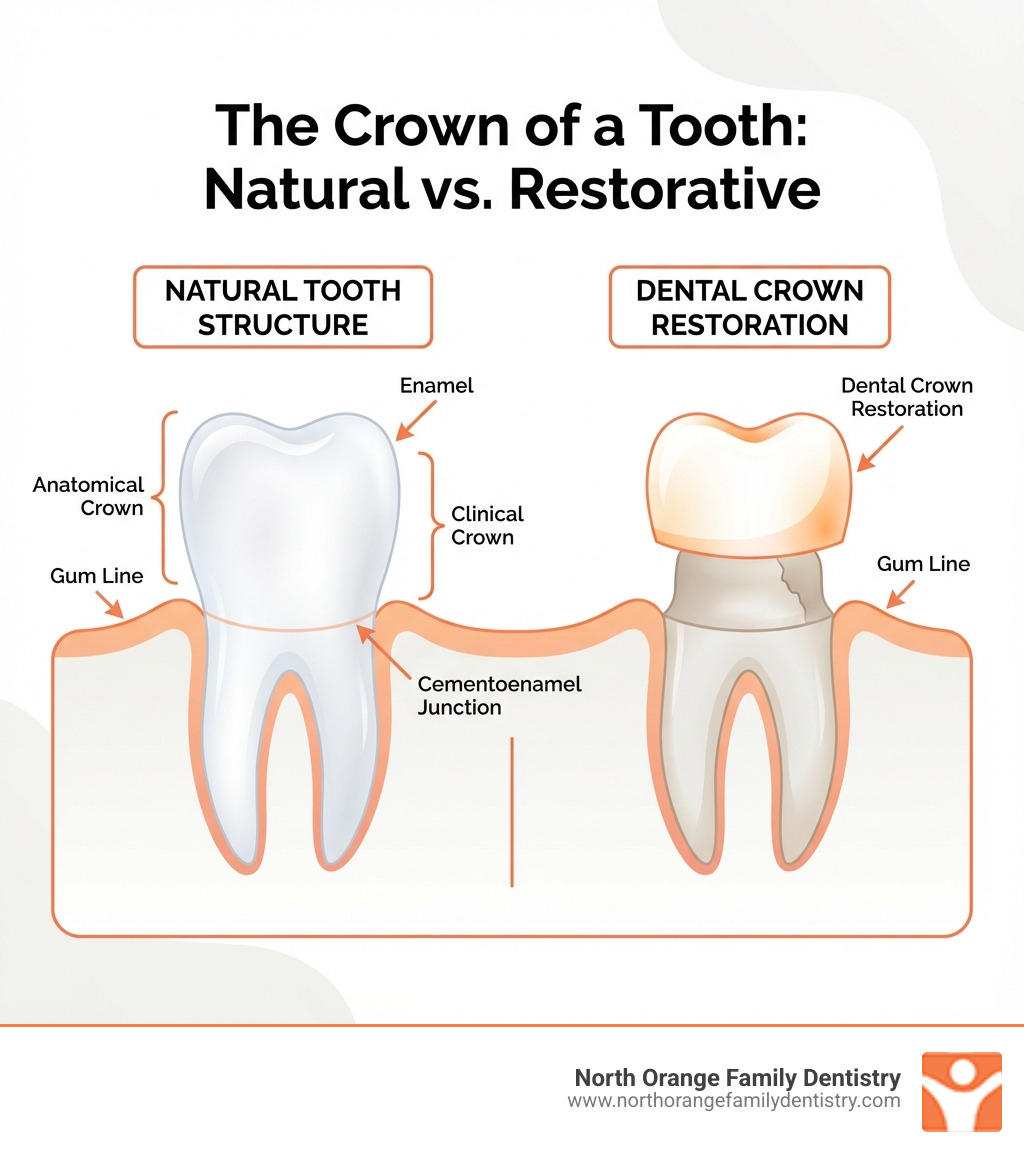
The term crown of tooth refers to two things in dentistry: the visible part of your natural tooth and a custom-made cap used to restore a damaged tooth.
Quick Definition:
- Natural Crown (Anatomical): The part of your tooth covered by enamel.
- Clinical Crown: The portion of your tooth you can see above your gums.
- Dental Crown (Restoration): A custom-made cap that covers a damaged tooth to restore its shape, strength, and appearance.
Why This Matters to You
When dentists talk about "crowns," they usually mean the dental restoration—a tooth-shaped cap that can save a damaged tooth and restore your smile. These restorations can last 5-15 years or more with proper care. A dental crown might be recommended for a large cavity, a cracked tooth, or after root canal therapy.
Modern dental crowns are stronger and more natural-looking than ever. Materials like porcelain and zirconia can be matched to your natural tooth color, making them virtually invisible.
I'm Dr. Kyle Bogan, and at North Orange Family Dentistry, we help patients in the Lewis Center and Delaware area understand their options for restoring the crown of tooth, ensuring both functional and aesthetic needs are met.
Your Complete Guide to the Dental Crown of Tooth
A dental crown of tooth is a versatile and reliable solution for many dental problems. From repairing a large cavity to improving the look of your smile, crowns restore a tooth's strength, function, and appearance. Understanding why you might need one, the types available, and what to expect can help you make an informed decision about your oral health.
What are the different types of dental crowns available and their materials?
Modern dentistry offers several types of dental crowns, and we'll help you choose the best one for your needs, considering the tooth's location, your bite, and your aesthetic goals.
Crown MaterialKey CharacteristicsPorcelain/CeramicExcellent aesthetics, ideal for front teeth. Zirconia is a very strong ceramic option.Porcelain-Fused-to-Metal (PFM)Strong metal base with a tooth-colored porcelain exterior. A durable choice for any tooth.Metal AlloysExtremely durable and resistant to wear, but their metallic color makes them best for back molars.All-ResinA more affordable but less durable option, often used for temporary crowns.Same-Day CrownsUsing advanced CAD/CAM technology, we can design, create, and place a permanent ceramic crown in a single visit.
What are the different types of dental crowns available and their materials?
Modern dentistry offers a variety of dental crown materials, each with unique properties suitable for different situations. We'll help you choose the best option based on the tooth's location, your bite, aesthetic preferences, and budget.
- Porcelain Crowns: These are highly aesthetic, mimicking the translucency of natural tooth enamel. They are an excellent choice for front teeth where appearance is paramount.
- Ceramic Crowns (All-Ceramic): Similar to porcelain, all-ceramic crowns are metal-free and provide excellent aesthetics. They are strong and a good option for visible teeth. Zirconium dioxide, a type of ceramic, is increasingly popular due to its exceptional durability.
- Zirconia Crowns: Known for their extreme durability and strength, zirconia crowns are ideal for molars and back teeth that endure heavy chewing forces. They are also gentle on opposing teeth. Some zirconia crowns can be made and fitted on the same day using CAD/CAM technology.
- Porcelain-Fused-to-Metal (PFM) Crowns: These crowns offer a blend of strength and aesthetics. A metal alloy base provides durability, while a porcelain layer covers it for a natural appearance. PFM crowns are a reliable choice for both front and back teeth.
- Metal Crowns: Made from alloys like gold, palladium, nickel, or chromium, metal crowns are incredibly strong and resistant to wear. They rarely chip or break and require minimal tooth preparation. While highly durable, their metallic color makes them less suitable for visible teeth.
- All-Resin Crowns: These are typically less expensive than other types but are also more prone to wear and fracture. They are often used as temporary crowns.
- Same-Day Crowns: Thanks to advanced CAD/CAM (Computer-Aided Design/Computer-Aided Manufacturing) technology, we can sometimes design and mill a permanent crown in our office during a single visit. This eliminates the need for a temporary crown and a second appointment, making the process more convenient for you.
What are the common reasons a person might need a dental crown?
A dental crown is a versatile restoration used to address a variety of dental issues. We often recommend a crown of tooth to:
- Repair Extensive Decay: When a cavity is too large for a filling.
- Strengthen a Cracked or Fractured Tooth: To hold the tooth together and prevent further damage.
- Restore Severely Worn Teeth: From grinding (bruxism) or acid erosion.
- Protect a Tooth After Root Canal Treatment: A root-canaled tooth is more brittle and needs protection.
- Support a Large Filling: When an old filling is large and the remaining tooth is weak.
- Improve Aesthetics: To cover a severely discolored or misshapen tooth.
- Anchor a Dental Bridge: Crowns on adjacent teeth hold a bridge in place.
- Complete a Dental Implant: A crown serves as the replacement tooth on an implant post.
Crowns restore a tooth's function and appearance, protecting it from further problems and boosting your confidence.
What does the dental crown procedure involve, from preparation to placement?
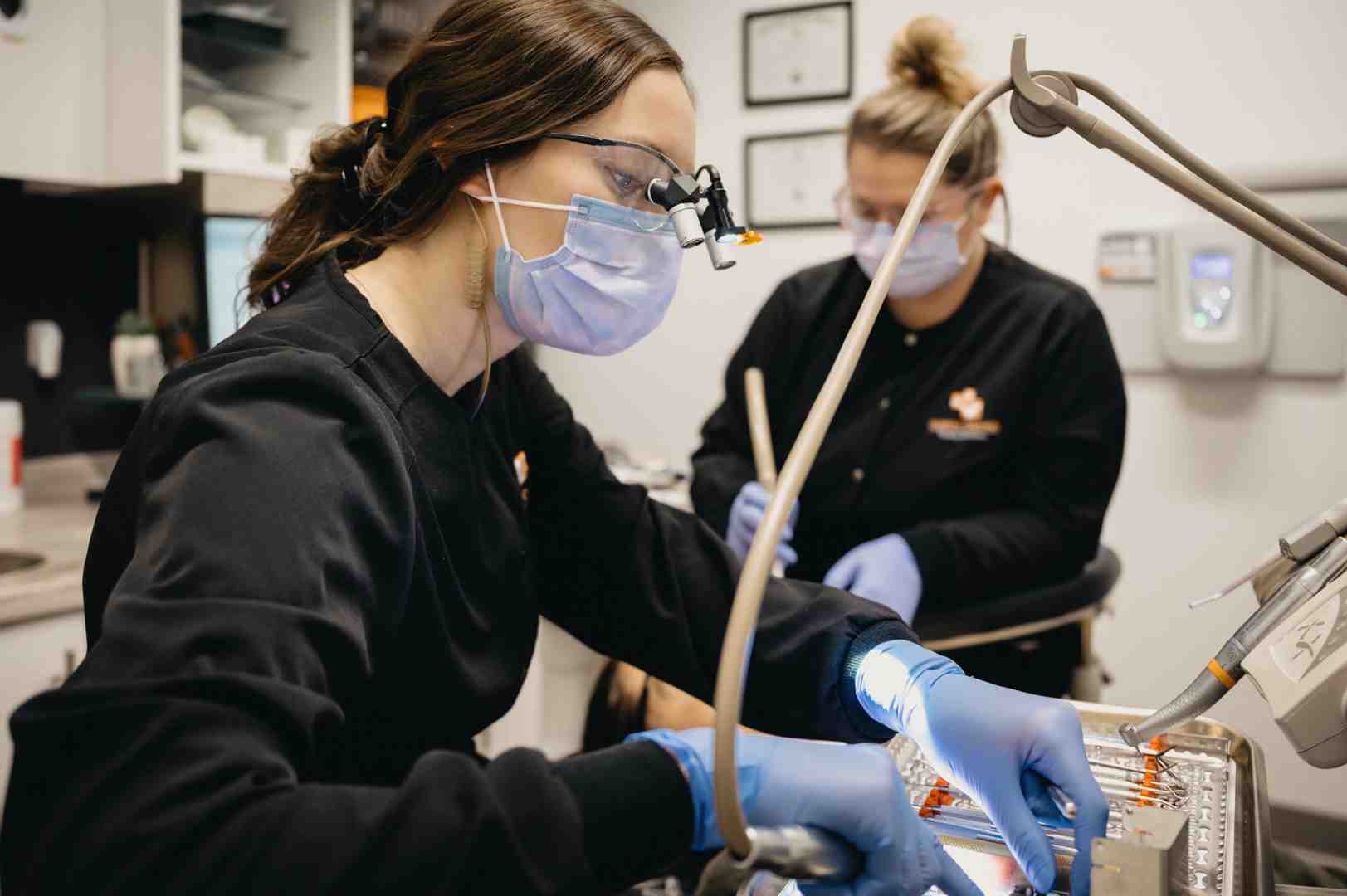
Getting a dental crown of tooth is a straightforward process that typically takes two visits, though our same-day crown technology can often complete it in one.
First Visit: Preparation and Impressions
- Numbing and Shaping: We'll numb the area and then carefully reshape the tooth to create the ideal foundation for the crown.
- Impressions: We take a precise impression or digital scan of the prepared tooth. This model is used to create your custom crown.
- Temporary Crown: A temporary crown is placed to protect the tooth until your permanent one is ready.
Second Visit: Permanent Crown Placement
- Fitting: We remove the temporary crown and place the new one, checking the fit, bite, and color.
- Bonding: Once you're happy with the result, we permanently bond the crown of tooth using a strong dental cement.
Our priority is to ensure you are comfortable throughout the process and delighted with your new, durable restoration.
What is the expected recovery process after getting a dental crown?
Recovery after a dental crown of tooth procedure is typically quick. You may experience some temporary numbness from the anesthetic and mild sensitivity to hot or cold for a few days, which is normal. Your gums might also be slightly sore. Over-the-counter pain relievers can help manage any discomfort.
Potential Complications or Risks Associated with Dental Crowns
While uncommon, potential issues can include:
- A loose or lost crown: If the cement washes out, contact us to have it re-secured.
- Chipping: Porcelain crowns can sometimes chip. Avoid chewing on ice or other very hard items.
- Sensitivity: If sensitivity is severe or persists, it may indicate the bite needs a minor adjustment.
- Decay: The tooth under the crown can still get a cavity at the gumline, so excellent hygiene is crucial.
Proper Aftercare
To ensure your dental crown of tooth lasts as long as possible, proper aftercare is crucial:
- Oral Hygiene: Brush twice a day and floss daily, paying special attention to the area where the crown meets the gum.
- Foods to Avoid: For the first few days, avoid very sticky or hard foods. Long-term, avoid biting on extremely hard objects like ice or popcorn kernels.
- Protect Against Grinding: If you grind your teeth, we may recommend a custom night-guard to protect your crown.
- Regular Check-ups: Continue with your regular dental check-ups and cleanings so we can monitor the condition of your crown.
For more information on potential complications, you can refer to Scientific research on dental crown complications. To learn more about our general dental services and how we can support your oral health, visit our Dental Crowns page.
How should dental crowns be cared for to ensure longevity?
Caring for your dental crown of tooth is key to its longevity. With proper maintenance, a crown can last for 15 years or more. The most important steps are maintaining excellent oral hygiene, avoiding chewing on hard or sticky foods, wearing a night-guard if you grind your teeth, and attending regular dental check-ups.
While minor sensitivity is normal after getting a new crown, please contact our office if you experience any of the following:
- Severe or persistent pain.
- Your bite feels "off" or uneven when you chew.
- The crown feels loose or comes off completely.
- You notice a chip or fracture in the crown.
- Your gums around the crown are persistently swollen or bleeding.
Prompt attention to these issues can prevent more significant problems and ensure the long-term success of your restoration.
What are the potential complications or risks associated with dental crowns?
The cost of a dental crown of tooth can vary depending on the material used and the complexity of the case. Many dental insurance plans provide coverage for crowns, as they are a necessary restorative procedure. At North Orange Family Dentistry, we are committed to making care affordable. We will help you understand your insurance benefits and also offer a Dental Wellness Plan for patients without insurance, which provides discounts on services like crowns.
What are the alternatives to dental crowns?
While a dental crown of tooth is often the best solution, we will always discuss all viable options with you. Depending on the situation, alternatives may include:
- Inlays and Onlays: Also known as partial crowns, these are used when damage is not extensive enough to require a full crown. They conserve more of the natural tooth structure.
- Dental Veneers: These thin porcelain shells cover the front of a tooth and are an excellent choice for cosmetic improvements like correcting stains or minor chips on front teeth.
- Dental Bonding: A tooth-colored resin is applied to repair minor chips, gaps, or discoloration. It's a conservative and cost-effective option.
- Large Fillings: If a cavity is not too large, a filling may be sufficient. However, for larger areas, a crown is often needed to prevent the tooth from fracturing.
- Tooth Extraction and Dental Implant: For a tooth that is too damaged to be saved, extraction followed by a dental implant is the gold standard for replacement. An implant is a titanium post that acts as a new root, which is then topped with a crown. At North Orange Family Dentistry, we perform endosteal dental implants, and the average cost for a single tooth implant (including the crown) is about $4500.
How long do dental crowns typically last?
A long-lasting crown of tooth starts with a perfect fit. At North Orange Family Dentistry, we use advanced digital scanning and CAD/CAM technology. This allows us to create highly accurate 3D models of your teeth, eliminating the need for messy traditional impression materials. This precision ensures your new crown fits perfectly, feels comfortable, and is sealed securely to protect the underlying tooth, contributing significantly to its longevity. For many cases, this technology even allows us to create and place your crown in a single visit.
Understanding the Natural Crown of Tooth: Anatomy and Anomalies
Beyond dental restorations, the term crown of tooth also refers to the natural, visible part of your tooth. Understanding its basic structure helps in appreciating how dental work aims to mimic it.
- Anatomical vs. Clinical Crown: The anatomical crown is the part covered by enamel, while the clinical crown is what you see above the gum line. The clinical crown can appear longer if gums recede.
- Tooth Structure: The crown consists of three main layers:
- Enamel: The hard, white outer layer that protects the tooth.
- Dentin: The layer beneath the enamel that makes up the bulk of the tooth.
- Pulp: The innermost part containing nerves and blood vessels.
- Types of Teeth: The shape of the crown varies by function. Incisors are for cutting, canines for tearing, and premolars and molars for grinding.
Occasionally, developmental anomalies can affect a tooth's shape, such as fusion (two teeth joining) or microdontia (abnormally small teeth). Our team is experienced in identifying and managing these variations to ensure your overall oral health. For more information on maintaining oral health, you can visit Information on caring for your teeth from health.gov.au.
Restore Your Smile with Confidence
Making the Right Choice for Your Dental Health
Choosing the right treatment for a damaged crown of tooth is a significant decision. At North Orange Family Dentistry, we are committed to providing personalized, affordable dental care that restores your smile's health, function, and beauty.
A dental crown can protect a vulnerable tooth, improve your ability to chew, and give you a smile you're proud of. Dr. Kyle Bogan and our highly awarded team use advanced technology, including dental lasers and same-day crown fabrication, to ensure a five-star experience for every patient in Lewis Center and Delaware.
We believe excellent care should be accessible. For patients without insurance, our Dental Wellness Plan offers a cost-effective way to manage your family's dental needs. We also provide emergency dental treatments, often with same-day appointments, to address urgent issues quickly.
If you're considering a dental crown or have any concerns about your oral health, we invite you to experience the North Orange Family Dentistry difference.
Schedule a consultation for a Dental Crown today and let us help you restore your smile with confidence.
What is the Crown of a Tooth?
The term crown of tooth refers to two things in dentistry: the visible part of your natural tooth and a custom-made cap used to restore a damaged tooth.
Quick Definition:
- Natural Crown (Anatomical): The part of your tooth covered by enamel.
- Clinical Crown: The portion of your tooth you can see above your gums.
- Dental Crown (Restoration): A custom-made cap that covers a damaged tooth to restore its shape, strength, and appearance.
Why This Matters to You
When dentists talk about "crowns," they usually mean the dental restoration—a tooth-shaped cap that can save a damaged tooth and restore your smile. These restorations can last 5-15 years or more with proper care. A dental crown might be recommended for a large cavity, a cracked tooth, or after root canal therapy.
Modern dental crowns are stronger and more natural-looking than ever. Materials like porcelain and zirconia can be matched to your natural tooth color, making them virtually invisible.
I'm Dr. Kyle Bogan, and at North Orange Family Dentistry, we help patients in the Lewis Center and Delaware area understand their options for restoring the crown of tooth, ensuring both functional and aesthetic needs are met.
Your Complete Guide to the Dental Crown of Tooth
A dental crown of tooth is a versatile and reliable solution for many dental problems. From repairing a large cavity to improving the look of your smile, crowns restore a tooth's strength, function, and appearance. Understanding why you might need one, the types available, and what to expect can help you make an informed decision about your oral health.
What are the different types of dental crowns available and their materials?
Modern dentistry offers several types of dental crowns, and we'll help you choose the best one for your needs, considering the tooth's location, your bite, and your aesthetic goals.
Crown MaterialKey CharacteristicsPorcelain/CeramicExcellent aesthetics, ideal for front teeth. Zirconia is a very strong ceramic option.Porcelain-Fused-to-Metal (PFM)Strong metal base with a tooth-colored porcelain exterior. A durable choice for any tooth.Metal AlloysExtremely durable and resistant to wear, but their metallic color makes them best for back molars.All-ResinA more affordable but less durable option, often used for temporary crowns.Same-Day CrownsUsing advanced CAD/CAM technology, we can design, create, and place a permanent ceramic crown in a single visit.
What are the different types of dental crowns available and their materials?
Modern dentistry offers a variety of dental crown materials, each with unique properties suitable for different situations. We'll help you choose the best option based on the tooth's location, your bite, aesthetic preferences, and budget.
- Porcelain Crowns: These are highly aesthetic, mimicking the translucency of natural tooth enamel. They are an excellent choice for front teeth where appearance is paramount.
- Ceramic Crowns (All-Ceramic): Similar to porcelain, all-ceramic crowns are metal-free and provide excellent aesthetics. They are strong and a good option for visible teeth. Zirconium dioxide, a type of ceramic, is increasingly popular due to its exceptional durability.
- Zirconia Crowns: Known for their extreme durability and strength, zirconia crowns are ideal for molars and back teeth that endure heavy chewing forces. They are also gentle on opposing teeth. Some zirconia crowns can be made and fitted on the same day using CAD/CAM technology.
- Porcelain-Fused-to-Metal (PFM) Crowns: These crowns offer a blend of strength and aesthetics. A metal alloy base provides durability, while a porcelain layer covers it for a natural appearance. PFM crowns are a reliable choice for both front and back teeth.
- Metal Crowns: Made from alloys like gold, palladium, nickel, or chromium, metal crowns are incredibly strong and resistant to wear. They rarely chip or break and require minimal tooth preparation. While highly durable, their metallic color makes them less suitable for visible teeth.
- All-Resin Crowns: These are typically less expensive than other types but are also more prone to wear and fracture. They are often used as temporary crowns.
- Same-Day Crowns: Thanks to advanced CAD/CAM (Computer-Aided Design/Computer-Aided Manufacturing) technology, we can sometimes design and mill a permanent crown in our office during a single visit. This eliminates the need for a temporary crown and a second appointment, making the process more convenient for you.
What are the common reasons a person might need a dental crown?
A dental crown is a versatile restoration used to address a variety of dental issues. We often recommend a crown of tooth to:
- Repair Extensive Decay: When a cavity is too large for a filling.
- Strengthen a Cracked or Fractured Tooth: To hold the tooth together and prevent further damage.
- Restore Severely Worn Teeth: From grinding (bruxism) or acid erosion.
- Protect a Tooth After Root Canal Treatment: A root-canaled tooth is more brittle and needs protection.
- Support a Large Filling: When an old filling is large and the remaining tooth is weak.
- Improve Aesthetics: To cover a severely discolored or misshapen tooth.
- Anchor a Dental Bridge: Crowns on adjacent teeth hold a bridge in place.
- Complete a Dental Implant: A crown serves as the replacement tooth on an implant post.
Crowns restore a tooth's function and appearance, protecting it from further problems and boosting your confidence.
What does the dental crown procedure involve, from preparation to placement?
Getting a dental crown of tooth is a straightforward process that typically takes two visits, though our same-day crown technology can often complete it in one.
First Visit: Preparation and Impressions
- Numbing and Shaping: We'll numb the area and then carefully reshape the tooth to create the ideal foundation for the crown.
- Impressions: We take a precise impression or digital scan of the prepared tooth. This model is used to create your custom crown.
- Temporary Crown: A temporary crown is placed to protect the tooth until your permanent one is ready.
Second Visit: Permanent Crown Placement
- Fitting: We remove the temporary crown and place the new one, checking the fit, bite, and color.
- Bonding: Once you're happy with the result, we permanently bond the crown of tooth using a strong dental cement.
Our priority is to ensure you are comfortable throughout the process and delighted with your new, durable restoration.
What is the expected recovery process after getting a dental crown?
Recovery after a dental crown of tooth procedure is typically quick. You may experience some temporary numbness from the anesthetic and mild sensitivity to hot or cold for a few days, which is normal. Your gums might also be slightly sore. Over-the-counter pain relievers can help manage any discomfort.
Potential Complications or Risks Associated with Dental Crowns
While uncommon, potential issues can include:
- A loose or lost crown: If the cement washes out, contact us to have it re-secured.
- Chipping: Porcelain crowns can sometimes chip. Avoid chewing on ice or other very hard items.
- Sensitivity: If sensitivity is severe or persists, it may indicate the bite needs a minor adjustment.
- Decay: The tooth under the crown can still get a cavity at the gumline, so excellent hygiene is crucial.
Proper Aftercare
To ensure your dental crown of tooth lasts as long as possible, proper aftercare is crucial:
- Oral Hygiene: Brush twice a day and floss daily, paying special attention to the area where the crown meets the gum.
- Foods to Avoid: For the first few days, avoid very sticky or hard foods. Long-term, avoid biting on extremely hard objects like ice or popcorn kernels.
- Protect Against Grinding: If you grind your teeth, we may recommend a custom night-guard to protect your crown.
- Regular Check-ups: Continue with your regular dental check-ups and cleanings so we can monitor the condition of your crown.
For more information on potential complications, you can refer to Scientific research on dental crown complications. To learn more about our general dental services and how we can support your oral health, visit our Dental Crowns page.
How should dental crowns be cared for to ensure longevity?
Caring for your dental crown of tooth is key to its longevity. With proper maintenance, a crown can last for 15 years or more. The most important steps are maintaining excellent oral hygiene, avoiding chewing on hard or sticky foods, wearing a night-guard if you grind your teeth, and attending regular dental check-ups.
While minor sensitivity is normal after getting a new crown, please contact our office if you experience any of the following:
- Severe or persistent pain.
- Your bite feels "off" or uneven when you chew.
- The crown feels loose or comes off completely.
- You notice a chip or fracture in the crown.
- Your gums around the crown are persistently swollen or bleeding.
Prompt attention to these issues can prevent more significant problems and ensure the long-term success of your restoration.
What are the potential complications or risks associated with dental crowns?
The cost of a dental crown of tooth can vary depending on the material used and the complexity of the case. Many dental insurance plans provide coverage for crowns, as they are a necessary restorative procedure. At North Orange Family Dentistry, we are committed to making care affordable. We will help you understand your insurance benefits and also offer a Dental Wellness Plan for patients without insurance, which provides discounts on services like crowns.
What are the alternatives to dental crowns?
While a dental crown of tooth is often the best solution, we will always discuss all viable options with you. Depending on the situation, alternatives may include:
- Inlays and Onlays: Also known as partial crowns, these are used when damage is not extensive enough to require a full crown. They conserve more of the natural tooth structure.
- Dental Veneers: These thin porcelain shells cover the front of a tooth and are an excellent choice for cosmetic improvements like correcting stains or minor chips on front teeth.
- Dental Bonding: A tooth-colored resin is applied to repair minor chips, gaps, or discoloration. It's a conservative and cost-effective option.
- Large Fillings: If a cavity is not too large, a filling may be sufficient. However, for larger areas, a crown is often needed to prevent the tooth from fracturing.
- Tooth Extraction and Dental Implant: For a tooth that is too damaged to be saved, extraction followed by a dental implant is the gold standard for replacement. An implant is a titanium post that acts as a new root, which is then topped with a crown. At North Orange Family Dentistry, we perform endosteal dental implants, and the average cost for a single tooth implant (including the crown) is about $4500.
How long do dental crowns typically last?
A long-lasting crown of tooth starts with a perfect fit. At North Orange Family Dentistry, we use advanced digital scanning and CAD/CAM technology. This allows us to create highly accurate 3D models of your teeth, eliminating the need for messy traditional impression materials. This precision ensures your new crown fits perfectly, feels comfortable, and is sealed securely to protect the underlying tooth, contributing significantly to its longevity. For many cases, this technology even allows us to create and place your crown in a single visit.
Understanding the Natural Crown of Tooth: Anatomy and Anomalies
Beyond dental restorations, the term crown of tooth also refers to the natural, visible part of your tooth. Understanding its basic structure helps in appreciating how dental work aims to mimic it.
- Anatomical vs. Clinical Crown: The anatomical crown is the part covered by enamel, while the clinical crown is what you see above the gum line. The clinical crown can appear longer if gums recede.
- Tooth Structure: The crown consists of three main layers:
- Enamel: The hard, white outer layer that protects the tooth.
- Dentin: The layer beneath the enamel that makes up the bulk of the tooth.
- Pulp: The innermost part containing nerves and blood vessels.
- Types of Teeth: The shape of the crown varies by function. Incisors are for cutting, canines for tearing, and premolars and molars for grinding.
Occasionally, developmental anomalies can affect a tooth's shape, such as fusion (two teeth joining) or microdontia (abnormally small teeth). Our team is experienced in identifying and managing these variations to ensure your overall oral health. For more information on maintaining oral health, you can visit Information on caring for your teeth from health.gov.au.
Restore Your Smile with Confidence
Making the Right Choice for Your Dental Health
Choosing the right treatment for a damaged crown of tooth is a significant decision. At North Orange Family Dentistry, we are committed to providing personalized, affordable dental care that restores your smile's health, function, and beauty.
A dental crown can protect a vulnerable tooth, improve your ability to chew, and give you a smile you're proud of. Dr. Kyle Bogan and our highly awarded team use advanced technology, including dental lasers and same-day crown fabrication, to ensure a five-star experience for every patient in Lewis Center and Delaware.
We believe excellent care should be accessible. For patients without insurance, our Dental Wellness Plan offers a cost-effective way to manage your family's dental needs. We also provide emergency dental treatments, often with same-day appointments, to address urgent issues quickly.
If you're considering a dental crown or have any concerns about your oral health, we invite you to experience the North Orange Family Dentistry difference.
Schedule a consultation for a Dental Crown today and let us help you restore your smile with confidence.
Contact Us
Have any questions? Want to learn more?

