
The Complete Guide to Dental Plans That Cover Braces
The Complete Guide to Dental Plans That Cover Braces - Learn about dental plans that cover braces


Why Finding the Right Dental Plan for Braces Matters More Than You Think
Dental plans that cover braces can mean the difference between starting orthodontic treatment this year — or putting it off indefinitely because the cost feels out of reach.
Here's a quick answer for those who want the highlights:
Dental plans most likely to cover braces (as of July 2026):
- Delta Dental Plus Ortho — covers both adults and children; 50% coverage up to a $1,500 lifetime maximum
- UnitedHealthcare Premier Plus — covers dependents under age 19; 50% coverage up to a $1,000 lifetime maximum after a 12-month waiting period
- Premera Adult Dental Optima (Enhanced Orthodontia) — covers adult braces; 50% cost share up to a $1,500 lifetime maximum
- PPO plans generally — offer the most orthodontic benefits compared to DHMO plans
What most plans have in common:
- Coverage is typically 50% of orthodontic costs
- Most plans have a lifetime maximum (not annual) — usually $1,000 to $1,500
- Many plans exclude adults entirely, covering only children under 18 or 19
- Expect a 12-month waiting period before orthodontic benefits kick in
Braces can cost anywhere from $5,350 to $12,000 without insurance. That's a significant financial commitment for any family. And yet many people sign up for a dental plan assuming it covers braces — only to find out it doesn't, or that the coverage is far more limited than expected.
The reality is that orthodontic coverage is one of the most misunderstood areas of dental insurance. Age limits, lifetime caps, waiting periods, and "medically necessary" requirements all affect whether your plan actually pays — and how much.
This guide breaks down the most competitive dental plans that include orthodontic benefits, compares what they actually cover, and helps you make a smarter decision for yourself or your family.
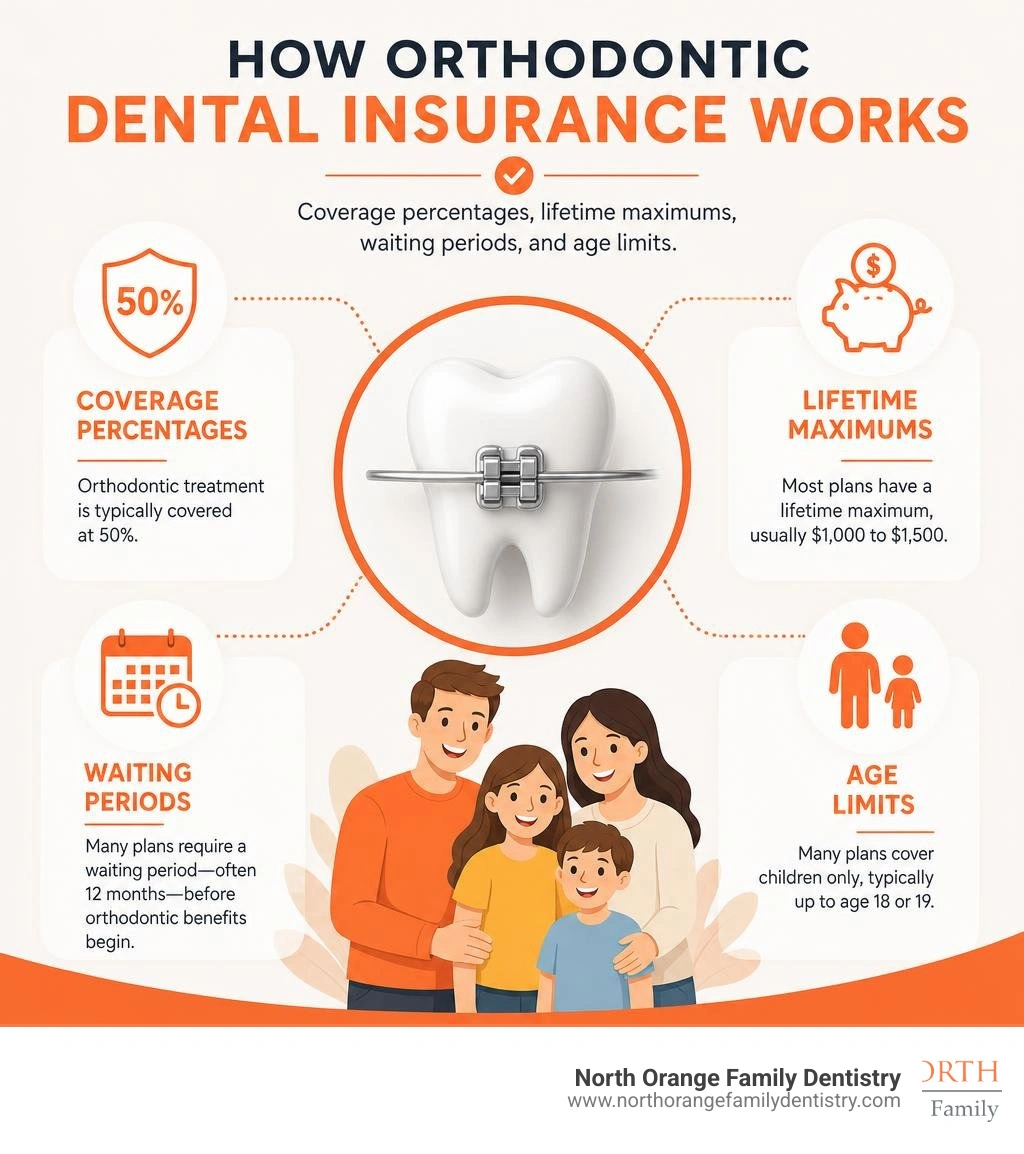
Quick look at dental plans that cover braces:
How Do Dental Plans That Cover Braces Actually Work?
When you buy standard dental insurance, your plan is usually built around preventive care like cleanings, fillings, and crowns. Orthodontic benefits, however, are treated as a completely separate category. If you look closely at your policy details, you will see that orthodontic care has its own set of rules.
Unlike general dental benefits, which reset every calendar year, orthodontic coverage almost always uses a lifetime maximum. This means the insurance company will pay a set amount toward your braces once per lifetime. For example, if your plan has a $1,500 orthodontic lifetime maximum and your treatment costs $5,000, the insurance company pays $1,500, and you are responsible for the remaining $3,500. Once that $1,500 is used, it is gone forever, even if you switch to a different employer under the same insurance provider.
To understand the full scope of how these plans work, you should consult a comprehensive dental insurance guide. Most policies require a deductible specifically for orthodontics, which is completely separate from your annual standard deductible. Additionally, many plans enforce strict age limits, often restricting orthodontic coverage to dependents under the age of 18 or 19.
Understanding these nuances is crucial because Orthodontic care - Dental Insurance Coverage for Braces typically highlights that waiting periods of 12 months are incredibly common. During this waiting period, you must pay your monthly premiums, but the insurance company will not pay a single dollar toward active orthodontic treatment.
Comparing the Best Dental Plans That Cover Braces
Finding the right coverage means looking at the structure of different plan types. Generally, you will choose between a Preferred Provider Organization (PPO) plan and a Dental Health Maintenance Organization (DHMO) plan.
PPO plans are highly popular because they give you the freedom to choose your own provider, though you will save the most money by staying in-network. DHMO plans are usually less expensive monthly but limit you to a very tight network of dentists and orthodontists. When looking at Affordability. Quality. Simplicity. , we see that basic family plans often cover pediatric orthodontics but leave adult braces completely out of the equation.
Let's look closely at how some of the most popular national plans stack up.
Delta Dental Plus Ortho: One of the Top Dental Plans That Cover Braces
The Delta Dental Plus Ortho plan is a standout option in the market because it is specifically built for individuals and families who know they will need braces or clear aligners.
- Coverage Level: It covers 50% of your orthodontic treatment costs.
- Lifetime Maximum: It features a $1,500 lifetime maximum per person.
- Unique Feature: It offers a "Shared Maximum Benefit" pool, which allows family members to pool unused benefits together (up to a certain limit) to help offset costs if one family member has exceptionally high treatment expenses.
- Age Limits: Unlike many plans, it covers both adults and children, with dependent coverage extending up to age 25.
For more details on how to navigate these specific plans, you can read about Orthodontic Coverage for Braces, Clear Aligners and More| Delta Dental – Plus Ortho | Delta Dental Of Washington . If you are looking to understand how this fits into your overall dental budget, checking out dental coverage for braces is an excellent next step.
UnitedHealthcare Premier Plus: Pediatric Orthodontic Coverage
If you are shopping for your children and do not need adult coverage, the UnitedHealthcare Premier Plus plan is a solid contender.
- Eligible Patients: Orthodontic coverage is strictly limited to covered dependents under the age of 19.
- Coverage Level: The plan pays 50% of covered orthodontic services.
- Lifetime Maximum: It offers a $1,000 lifetime maximum per eligible dependent.
- Waiting Period: There is a mandatory 12-month waiting period before orthodontic benefits begin.
- Deductible: It requires an additional $150 lifetime orthodontic deductible.
To review the full policy details and exclusions, you can access the Dental Premier Plans for Individuals and Families | UnitedHealthOne brochure.
Premera Adult Dental Optima: Specialized Adult Orthodontia
For adults who missed out on braces during childhood or have experienced shifting teeth later in life, finding an adult-inclusive plan is paramount. The Premera Adult Dental Optima plan is specifically designed to address this gap.
- Eligible Patients: Specifically includes adult orthodontic treatment.
- Coverage Level: Offers a 50% cost share for both diagnostics and device installation.
- Lifetime Maximum: Features a separate $1,500 lifetime maximum for orthodontia, which does not count against your standard $2,000 annual maximum.
You can view the exact policy structure in the Adult Dental Optima 2000 Enhanced Orthodontia Small Group Benefit Highlights . For more tips on finding plans that do not exclude grown-ups, explore our guide on orthodontic coverage for adults.
Key Factors to Consider When Choosing Orthodontic Coverage
Before you sign on the dotted line, you must realize that not all dental networks are created equal. In-network providers have contractually agreed to accept lower fees from the insurance company. If you visit an out-of-network orthodontist, they can bill you for the difference between their retail rate and what your insurance covers — a practice known as "balance billing."
As detailed in Your dentist, your choice , staying in-network is the single best way to protect your wallet. We always advise our patients to request a pre-treatment estimate from their insurer before beginning any orthodontic work to avoid unpleasant financial surprises.

Evaluating Dental Plans That Cover Braces for Adults vs. Children
The differences between adult and child orthodontic coverage are stark. Many family plans sold on the health insurance marketplace include "pediatric dental essential health benefits," which cover braces for kids under 19. However, these plans often have a massive catch: they only cover braces if they are deemed "medically necessary" rather than cosmetic.

Adults looking for clear aligners or traditional braces are usually met with outright exclusions on basic plans. If you are wondering, does insurance cover invisalign, the answer depends heavily on whether your plan includes adult orthodontia as a standard benefit. If it does, clear aligners are typically covered at the same 50% rate as metal braces, up to your lifetime maximum.
Understanding Waiting Periods and Network Restrictions
A waiting period is the insurance company's way of preventing people from signing up for a plan, immediately getting $5,000 worth of braces, and canceling the policy the next month.
When researching ohio dental insurance plans, you will find that a 12-month waiting period for orthodontic care is standard. However, staying within a robust network of credentialed orthodontists ensures you receive pre-negotiated discount rates, which can save you money even while you wait for your active benefits to kick in. Working with a local dental office that understands these regional networks can help you maximize your benefits and plan your treatment timeline effectively.
What Are the Average Out-of-Pocket Costs for Braces?
If you choose to pay for orthodontic treatment without traditional insurance, the numbers can look intimidating.

Here is what you can expect on average:
- Standard Metal Braces: $1,800 to $8,500
- Invisalign Treatment: $1,100 to $9,500
- Total Average Cost Without Insurance: $5,350 to $12,000
If you are specifically considering clear aligners, reading about how much is invisalign out of pocket can help you budget effectively.
But what if you do not have traditional dental insurance, or your plan excludes braces entirely? At North Orange Family Dentistry, we believe high-quality dental care should be accessible to everyone in Delaware County. That is why we offer our own in-house Dental Wellness Plan.
Designed specifically for individuals and families without insurance, our Dental Wellness Plan allows you to receive your essential yearly preventive care — including cleanings, exams, and X-rays — for a discounted price, while also granting you significant discounts on other dental services. It is a simple, transparent way to keep your family's smiles healthy without dealing with the headaches of traditional insurance companies.
Frequently Asked Questions About Orthodontic Insurance
Does dental insurance cover Invisalign or clear aligners?
Yes, many modern dental plans that include orthodontic coverage will cover clear aligners like Invisalign under the same terms as traditional braces. However, the treatment must be managed by a licensed dentist or orthodontist. To find plans that specifically include this, check out our guide on dental plans that cover invisalign.
Can orthodontic waiting periods be waived?
Sometimes! If you are transitioning from a prior dental plan that had orthodontic coverage, and you have had no more than a 63-day gap in coverage, many insurance companies will waive the 12-month waiting period. You will need to obtain a "credible coverage letter" from your previous insurer to prove continuous coverage.
What qualifies as medically necessary braces?
Braces are considered medically necessary when a severe bite misalignment causes functional problems, such as difficulty chewing, speaking, or breathing. Conditions like severe overbites, underbites, cleft palates, or extreme jaw crowding typically qualify, but they always require prior authorization from your insurance provider.
Conclusion: Finding Affordable Orthodontic Care in Ohio
Navigating dental plans that cover braces can feel overwhelming, but you do not have to do it alone. Whether you are trying to maximize your PPO insurance benefits or are looking for a reliable alternative, we are here to help.
At North Orange Family Dentistry, located in Delaware, Ohio (serving the Lewis Center, Powell, and greater Columbus metro areas), Dr. Kyle Bogan and our team are dedicated to providing a five-star dental experience. We offer a comprehensive suite of services, from routine oral hygiene and wellness check-ups to cosmetic veneers, teeth whitening, tooth bonding, and crowns.
We also specialize in advanced treatments, including:
- Invisalign clear aligners for a discreet, beautifully aligned smile.
- Laser treatments for TMJ pain relief, canker sore healing, and periodontal disease therapy.
- Perio Protect, a cutting-edge, non-surgical treatment for gum disease using custom at-home trays.
- Endosteal Dental Implants, costing an average of $4,500 per tooth, to restore your smile's function and beauty.
- Digital Dentures and comfortable root canal therapy.
If you experience a dental emergency, we are here for you. We provide emergency dental treatments and are able to see patients on the same day most of the time.
If you do not have insurance, remember to ask us about our in-house North Orange Family Dentistry Wellness Plan. It is designed to help you and your family get the high-quality care you need at a price that fits your budget.
Ready to take the next step toward a healthier, straighter smile? Contact us today to schedule your consultation!
Why Finding the Right Dental Plan for Braces Matters More Than You Think
Dental plans that cover braces can mean the difference between starting orthodontic treatment this year — or putting it off indefinitely because the cost feels out of reach.
Here's a quick answer for those who want the highlights:
Dental plans most likely to cover braces (as of July 2026):
- Delta Dental Plus Ortho — covers both adults and children; 50% coverage up to a $1,500 lifetime maximum
- UnitedHealthcare Premier Plus — covers dependents under age 19; 50% coverage up to a $1,000 lifetime maximum after a 12-month waiting period
- Premera Adult Dental Optima (Enhanced Orthodontia) — covers adult braces; 50% cost share up to a $1,500 lifetime maximum
- PPO plans generally — offer the most orthodontic benefits compared to DHMO plans
What most plans have in common:
- Coverage is typically 50% of orthodontic costs
- Most plans have a lifetime maximum (not annual) — usually $1,000 to $1,500
- Many plans exclude adults entirely, covering only children under 18 or 19
- Expect a 12-month waiting period before orthodontic benefits kick in
Braces can cost anywhere from $5,350 to $12,000 without insurance. That's a significant financial commitment for any family. And yet many people sign up for a dental plan assuming it covers braces — only to find out it doesn't, or that the coverage is far more limited than expected.
The reality is that orthodontic coverage is one of the most misunderstood areas of dental insurance. Age limits, lifetime caps, waiting periods, and "medically necessary" requirements all affect whether your plan actually pays — and how much.
This guide breaks down the most competitive dental plans that include orthodontic benefits, compares what they actually cover, and helps you make a smarter decision for yourself or your family.
Quick look at dental plans that cover braces:
How Do Dental Plans That Cover Braces Actually Work?
When you buy standard dental insurance, your plan is usually built around preventive care like cleanings, fillings, and crowns. Orthodontic benefits, however, are treated as a completely separate category. If you look closely at your policy details, you will see that orthodontic care has its own set of rules.
Unlike general dental benefits, which reset every calendar year, orthodontic coverage almost always uses a lifetime maximum. This means the insurance company will pay a set amount toward your braces once per lifetime. For example, if your plan has a $1,500 orthodontic lifetime maximum and your treatment costs $5,000, the insurance company pays $1,500, and you are responsible for the remaining $3,500. Once that $1,500 is used, it is gone forever, even if you switch to a different employer under the same insurance provider.
To understand the full scope of how these plans work, you should consult a comprehensive dental insurance guide. Most policies require a deductible specifically for orthodontics, which is completely separate from your annual standard deductible. Additionally, many plans enforce strict age limits, often restricting orthodontic coverage to dependents under the age of 18 or 19.
Understanding these nuances is crucial because Orthodontic care - Dental Insurance Coverage for Braces typically highlights that waiting periods of 12 months are incredibly common. During this waiting period, you must pay your monthly premiums, but the insurance company will not pay a single dollar toward active orthodontic treatment.
Comparing the Best Dental Plans That Cover Braces
Finding the right coverage means looking at the structure of different plan types. Generally, you will choose between a Preferred Provider Organization (PPO) plan and a Dental Health Maintenance Organization (DHMO) plan.
PPO plans are highly popular because they give you the freedom to choose your own provider, though you will save the most money by staying in-network. DHMO plans are usually less expensive monthly but limit you to a very tight network of dentists and orthodontists. When looking at Affordability. Quality. Simplicity. , we see that basic family plans often cover pediatric orthodontics but leave adult braces completely out of the equation.
Let's look closely at how some of the most popular national plans stack up.
Delta Dental Plus Ortho: One of the Top Dental Plans That Cover Braces
The Delta Dental Plus Ortho plan is a standout option in the market because it is specifically built for individuals and families who know they will need braces or clear aligners.
- Coverage Level: It covers 50% of your orthodontic treatment costs.
- Lifetime Maximum: It features a $1,500 lifetime maximum per person.
- Unique Feature: It offers a "Shared Maximum Benefit" pool, which allows family members to pool unused benefits together (up to a certain limit) to help offset costs if one family member has exceptionally high treatment expenses.
- Age Limits: Unlike many plans, it covers both adults and children, with dependent coverage extending up to age 25.
For more details on how to navigate these specific plans, you can read about Orthodontic Coverage for Braces, Clear Aligners and More| Delta Dental – Plus Ortho | Delta Dental Of Washington . If you are looking to understand how this fits into your overall dental budget, checking out dental coverage for braces is an excellent next step.
UnitedHealthcare Premier Plus: Pediatric Orthodontic Coverage
If you are shopping for your children and do not need adult coverage, the UnitedHealthcare Premier Plus plan is a solid contender.
- Eligible Patients: Orthodontic coverage is strictly limited to covered dependents under the age of 19.
- Coverage Level: The plan pays 50% of covered orthodontic services.
- Lifetime Maximum: It offers a $1,000 lifetime maximum per eligible dependent.
- Waiting Period: There is a mandatory 12-month waiting period before orthodontic benefits begin.
- Deductible: It requires an additional $150 lifetime orthodontic deductible.
To review the full policy details and exclusions, you can access the Dental Premier Plans for Individuals and Families | UnitedHealthOne brochure.
Premera Adult Dental Optima: Specialized Adult Orthodontia
For adults who missed out on braces during childhood or have experienced shifting teeth later in life, finding an adult-inclusive plan is paramount. The Premera Adult Dental Optima plan is specifically designed to address this gap.
- Eligible Patients: Specifically includes adult orthodontic treatment.
- Coverage Level: Offers a 50% cost share for both diagnostics and device installation.
- Lifetime Maximum: Features a separate $1,500 lifetime maximum for orthodontia, which does not count against your standard $2,000 annual maximum.
You can view the exact policy structure in the Adult Dental Optima 2000 Enhanced Orthodontia Small Group Benefit Highlights . For more tips on finding plans that do not exclude grown-ups, explore our guide on orthodontic coverage for adults.
Key Factors to Consider When Choosing Orthodontic Coverage
Before you sign on the dotted line, you must realize that not all dental networks are created equal. In-network providers have contractually agreed to accept lower fees from the insurance company. If you visit an out-of-network orthodontist, they can bill you for the difference between their retail rate and what your insurance covers — a practice known as "balance billing."
As detailed in Your dentist, your choice , staying in-network is the single best way to protect your wallet. We always advise our patients to request a pre-treatment estimate from their insurer before beginning any orthodontic work to avoid unpleasant financial surprises.
Evaluating Dental Plans That Cover Braces for Adults vs. Children
The differences between adult and child orthodontic coverage are stark. Many family plans sold on the health insurance marketplace include "pediatric dental essential health benefits," which cover braces for kids under 19. However, these plans often have a massive catch: they only cover braces if they are deemed "medically necessary" rather than cosmetic.
Adults looking for clear aligners or traditional braces are usually met with outright exclusions on basic plans. If you are wondering, does insurance cover invisalign, the answer depends heavily on whether your plan includes adult orthodontia as a standard benefit. If it does, clear aligners are typically covered at the same 50% rate as metal braces, up to your lifetime maximum.
Understanding Waiting Periods and Network Restrictions
A waiting period is the insurance company's way of preventing people from signing up for a plan, immediately getting $5,000 worth of braces, and canceling the policy the next month.
When researching ohio dental insurance plans, you will find that a 12-month waiting period for orthodontic care is standard. However, staying within a robust network of credentialed orthodontists ensures you receive pre-negotiated discount rates, which can save you money even while you wait for your active benefits to kick in. Working with a local dental office that understands these regional networks can help you maximize your benefits and plan your treatment timeline effectively.
What Are the Average Out-of-Pocket Costs for Braces?
If you choose to pay for orthodontic treatment without traditional insurance, the numbers can look intimidating.
Here is what you can expect on average:
- Standard Metal Braces: $1,800 to $8,500
- Invisalign Treatment: $1,100 to $9,500
- Total Average Cost Without Insurance: $5,350 to $12,000
If you are specifically considering clear aligners, reading about how much is invisalign out of pocket can help you budget effectively.
But what if you do not have traditional dental insurance, or your plan excludes braces entirely? At North Orange Family Dentistry, we believe high-quality dental care should be accessible to everyone in Delaware County. That is why we offer our own in-house Dental Wellness Plan.
Designed specifically for individuals and families without insurance, our Dental Wellness Plan allows you to receive your essential yearly preventive care — including cleanings, exams, and X-rays — for a discounted price, while also granting you significant discounts on other dental services. It is a simple, transparent way to keep your family's smiles healthy without dealing with the headaches of traditional insurance companies.
Frequently Asked Questions About Orthodontic Insurance
Does dental insurance cover Invisalign or clear aligners?
Yes, many modern dental plans that include orthodontic coverage will cover clear aligners like Invisalign under the same terms as traditional braces. However, the treatment must be managed by a licensed dentist or orthodontist. To find plans that specifically include this, check out our guide on dental plans that cover invisalign.
Can orthodontic waiting periods be waived?
Sometimes! If you are transitioning from a prior dental plan that had orthodontic coverage, and you have had no more than a 63-day gap in coverage, many insurance companies will waive the 12-month waiting period. You will need to obtain a "credible coverage letter" from your previous insurer to prove continuous coverage.
What qualifies as medically necessary braces?
Braces are considered medically necessary when a severe bite misalignment causes functional problems, such as difficulty chewing, speaking, or breathing. Conditions like severe overbites, underbites, cleft palates, or extreme jaw crowding typically qualify, but they always require prior authorization from your insurance provider.
Conclusion: Finding Affordable Orthodontic Care in Ohio
Navigating dental plans that cover braces can feel overwhelming, but you do not have to do it alone. Whether you are trying to maximize your PPO insurance benefits or are looking for a reliable alternative, we are here to help.
At North Orange Family Dentistry, located in Delaware, Ohio (serving the Lewis Center, Powell, and greater Columbus metro areas), Dr. Kyle Bogan and our team are dedicated to providing a five-star dental experience. We offer a comprehensive suite of services, from routine oral hygiene and wellness check-ups to cosmetic veneers, teeth whitening, tooth bonding, and crowns.
We also specialize in advanced treatments, including:
- Invisalign clear aligners for a discreet, beautifully aligned smile.
- Laser treatments for TMJ pain relief, canker sore healing, and periodontal disease therapy.
- Perio Protect, a cutting-edge, non-surgical treatment for gum disease using custom at-home trays.
- Endosteal Dental Implants, costing an average of $4,500 per tooth, to restore your smile's function and beauty.
- Digital Dentures and comfortable root canal therapy.
If you experience a dental emergency, we are here for you. We provide emergency dental treatments and are able to see patients on the same day most of the time.
If you do not have insurance, remember to ask us about our in-house North Orange Family Dentistry Wellness Plan. It is designed to help you and your family get the high-quality care you need at a price that fits your budget.
Ready to take the next step toward a healthier, straighter smile? Contact us today to schedule your consultation!
Contact Us
Have any questions? Want to learn more?

