
The Ins and Outs of Cosmetic Tooth Bonding Procedure
Discover how the cosmetic tooth bonding procedure repairs chips, gaps, and discoloration in a single visit for a confident smile.


A Smile Fix in a Single Visit: What You Need to Know About Cosmetic Tooth Bonding
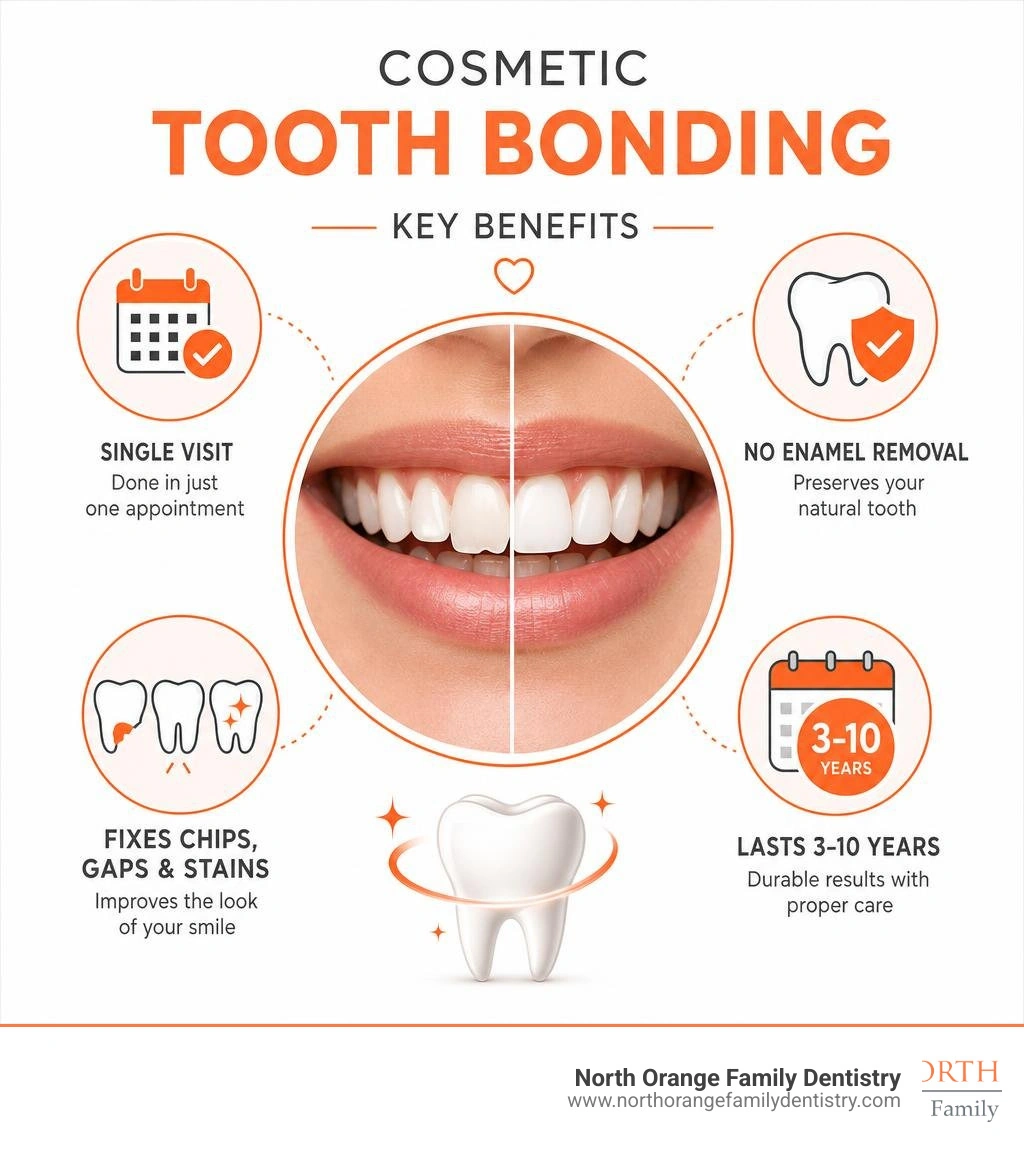
The cosmetic tooth bonding procedure is one of the fastest, most affordable ways to improve your smile — and it can usually be done in just one appointment.
Here's a quick overview of what it involves:
- A tooth-colored composite resin is applied directly to your tooth
- The resin is shaped and sculpted to fix chips, gaps, discoloration, or uneven edges
- A special curing light hardens the resin in seconds
- The tooth is polished to blend naturally with the rest of your smile
- The whole process takes 30 to 60 minutes per tooth — no lab work, no multiple visits
It's one of the least invasive cosmetic dental treatments available. Unlike veneers or crowns, bonding typically requires no removal of healthy enamel and rarely needs anesthesia.
Small imperfections — a chipped front tooth, a stubborn stain, a gap you've always been self-conscious about — can make a big difference in how confident you feel about your smile. Bonding is designed to fix exactly those kinds of issues, quickly and comfortably.
In this guide, we'll walk you through everything: how the procedure works, what it can and can't fix, how long it lasts, and whether it's the right choice for you.
Explore more about cosmetic tooth bonding procedure:
What is a Cosmetic Tooth Bonding Procedure?
At its core, a cosmetic tooth bonding procedure is a conservative dental treatment where a durable, tooth-colored composite resin is applied directly to your enamel. The term "bonding" comes from the way the material physically and chemically attaches to your natural tooth structure.
To understand What Is Dental Bonding, it helps to look at the material itself. The composite resin used is a high-grade mixture of plastic matrix (typically 15% to 30%) and fine glass or ceramic filler particles (60% to 80%). Today, we use advanced nanohybrid composites, which combine incredibly tiny nano-sized particles for a high-gloss finish with larger particles for structural strength. This unique blend allows the resin to reflect light just like natural tooth enamel, making the restoration virtually invisible to the naked eye.
This non-invasive approach makes it a highly popular alternative to more aggressive cosmetic treatments. For a deeper look at what to expect, you can read the Cleveland Clinic’s guide on What is Dental Bonding & What To Expect .
How the Cosmetic Tooth Bonding Procedure Works
The magic of bonding lies in modern adhesive dentistry. We do not rely on deep drilling or mechanical locks to keep the material in place. Instead, we create a microscopic chemical and mechanical bridge between your enamel and the composite resin.
First, we apply a mild, blue-tinted phosphoric acid etching gel (usually 35% to 37% strength) to the tooth surface for about 15 to 20 seconds. This gently roughens the enamel on a microscopic level, creating tiny pores. Next, we rinse the gel and apply a liquid bonding agent. This liquid flows into those microscopic pores. When we cure it with a specialized blue LED light, it hardens instantly, forming what dentists call a "hybrid layer." This layer acts as a permanent, high-strength double-sided tape, allowing us to build up layers of composite resin that stay firmly locked in place. Learn more in our Complete Guide How Dental Bonding Works.
Dental Issues Solved by Tooth Bonding
Bonding is incredibly versatile. Because we sculpt the resin chairside in real-time, we can address a wide variety of cosmetic and structural concerns in a single visit:
- Chipped or Cracked Teeth: Whether from a sports injury or an accidental run-in with a hard piece of food, minor chips on front teeth are the most common reason patients seek bonding.
- Diastemas (Gaps): We can widen teeth slightly to close small, distracting gaps of 1 to 3 millimeters without needing years of braces.
- Stubborn Discoloration: When professional teeth whitening can't lift deep, internal stains (such as those caused by trauma or certain childhood medications), we can mask the discoloration with a thin layer of resin.
- Misshapen or Short Teeth: If a tooth is naturally smaller, pointed, or worn down from years of grinding, we can reshape it to match its neighbors.
- Exposed Tooth Roots: When gum recession exposes the sensitive lower root of your tooth, we can apply a protective layer of composite (often called a Class V restoration) to stop hot-and-cold sensitivity in its tracks.
For more details on how bonding resolves these structural issues, check out the overview on What Is Teeth Bonding | Colgate® .
Dental Bonding vs. Veneers and Crowns
When you are looking to refresh your smile, you will likely compare bonding with porcelain veneers and dental crowns. Each option has its own place in restorative and cosmetic dentistry, but they differ significantly in terms of enamel preservation, cost, and longevity.

Porcelain veneers are thin, custom-made shells crafted in a dental laboratory that slip over the front of your teeth. While they are incredibly beautiful and stain-resistant, they usually require the permanent removal of up to 30% of your natural, healthy tooth enamel so they do not look bulky. This means veneers are an irreversible commitment.
Crowns, on the other hand, cover the entire tooth like a protective cap. They are excellent for teeth with major decay or structural damage, but they require even more extensive tooth preparation.
In contrast, a cosmetic tooth bonding procedure is highly conservative. We rarely have to remove any natural enamel, and the process is entirely reversible. If you ever decide to transition to veneers later in life, your underlying teeth remain completely intact. Additionally, bonding is completed in a single visit and is much more budget-friendly upfront than lab-fabricated porcelain.
To help you weigh these options further, read our comparison on Dental Bonding Versus Veneers.
Step-by-Step: What to Expect During Your Appointment
One of the best things about dental bonding is how straightforward the appointment is. There is no need for temporary teeth, messy physical impressions, or waiting weeks for a laboratory to mail back your restoration.

Most bonding visits take between 30 to 90 minutes per tooth, depending on the complexity of the repair. If you are having multiple teeth bonded, we can often complete the entire transformation in a single morning or afternoon. For a comprehensive overview of the timeline, explore our Tooth Bonding Process Complete Guide.
Preparing for Your Cosmetic Tooth Bonding Procedure
Preparation is remarkably simple. Because we do not have to drill deep into the sensitive inner layers of the tooth, the vast majority of cosmetic bonding procedures are completely pain-free and require absolutely no local anesthesia. You can drive yourself to our office, sit back comfortably in the chair, and walk out ready to resume your normal day immediately afterward.
We start by thoroughly cleaning the tooth to remove any plaque or surface debris. Then, we use a physical shade guide to analyze the unique color, translucency, and undertones of your natural teeth. By selecting and layering multiple shades of composite resin, we can mimic the natural gradient of a real tooth—which is typically darker near the gumline and more translucent near the biting edge.
The Step-by-Step Bonding Process
Once we have selected your custom shades, the physical application begins:
- Isolation: We carefully isolate the target tooth using specialized dental barriers to keep saliva and moisture away. A dry environment is critical for a strong chemical bond.
- Conditioning: We apply the mild etching gel to the enamel, rinse it clean, and pat the tooth dry.
- Adhesive Application: We brush on the liquid bonding agent and use a specialized blue curing light to harden it in a matter of seconds.
- Layering and Sculpting: We apply the composite resin in thin, precise layers (usually 1.5 to 2 millimeters at a time). We meticulously sculpt the putty-like material into the ideal shape, recreating natural ridges and contours.
- Curing: We cure each layer with the blue light, turning the soft resin into a rock-hard restoration.
- Finishing and Polishing: Once the final shape is locked in, we use ultra-fine polishing discs and a specialized diamond polishing paste to smooth any rough edges and buff the resin to a beautiful, enamel-like sheen.
Benefits, Risks, and Longevity of Dental Bonding
Like any dental treatment, cosmetic bonding comes with its own unique set of advantages and limitations.
Composite resin is used in approximately 72% of all dental restorations today due to its safety, versatility, and excellent aesthetic properties. However, while composite resin is highly durable, it is not quite as hard or stain-resistant as natural enamel or laboratory-grade porcelain.
Over time, habits like biting your fingernails, chewing on ice, or using your teeth to open packages can cause the bonded edges to chip or wear down. Additionally, because composite is slightly porous, it can absorb stains over time from dark liquids like black coffee, red wine, and tea.
Fortunately, extending the lifespan of your bonding is simple. By practicing excellent daily oral hygiene, wearing a custom night guard if you tend to grind your teeth, and visiting us regularly for professional cleanings, you can keep your smile looking bright. During your routine checkups, we can easily polish away surface stains or touch up minor wear. For a detailed breakdown of what to expect long-term, read our guide on How Long Do Dental Bonding Last.
Cost, Insurance, and Affordability Options
When planning your smile makeover, understanding the financial side is key. The cost of a cosmetic tooth bonding procedure can vary depending on the complexity of the repair, the number of teeth being treated, and whether the primary purpose is restorative or purely cosmetic. You can find more detail in our Dental Bonding Cost Guide 2026.
If you have dental insurance, your coverage will typically depend on the reason for the procedure. Insurance companies generally classify bonding under two categories:
- Restorative Bonding: If the bonding is used to fill a cavity, repair a tooth damaged by physical trauma, or protect an exposed root, PPO insurance plans often cover 50% to 80% of the cost.
- Cosmetic Bonding: If the procedure is done purely to improve your appearance—such as closing a small gap or reshaping a healthy tooth—insurance rarely covers it.
For our patients who do not have dental insurance, we believe that high-quality, beautiful dentistry should still fit comfortably into your family's budget. To make your care accessible, we offer an in-house Dental Wellness Plan. This plan is designed specifically for uninsured individuals and families, allowing you to receive your essential yearly preventive care, cleanings, and exams for a simple, discounted price, while also providing valuable discounts on cosmetic and restorative treatments like bonding.
Frequently Asked Questions About Dental Bonding
We hear many of the same questions from patients considering a smile touch-up. Here are quick, direct answers to help you understand what to expect.
How long does dental bonding last?
On average, dental bonding lasts between 3 and 10 years before requiring minor touch-ups or replacement. Its actual lifespan depends heavily on the location of the bonding (front teeth experience less chewing pressure than back teeth) and your personal oral habits.
Is dental bonding painful?
No! The procedure is virtually painless. Because we are bonding the material directly to the surface of your enamel, we rarely need to alter the sensitive inner layers of the tooth. Most patients do not require any local anesthesia and experience zero post-operative discomfort. If you want to learn more about patient comfort, read our Dental Bonding Pain Guide.
Can bonded teeth be whitened?
No. Unlike natural tooth enamel, composite resin is non-porous and will not respond to professional teeth whitening gels. If you are planning to whiten your smile, we always recommend completing your whitening treatments first. Once your natural teeth reach your desired shade, we can match the composite resin perfectly to your new, brighter smile.
Conclusion
A beautiful, confident smile does not have to require months of orthodontic treatment or extensive, invasive dental procedures. A cosmetic tooth bonding procedure offers a quick, comfortable, and highly artistic solution to erase minor imperfections in a single visit.
At North Orange Family Dentistry, we are dedicated to providing a comfortable, personalized, and advanced experience for your entire family. Led by Dr. Kyle Bogan—a Fellow of both the Academy of General Dentistry and the International College of Dentists (placing him in the top 3% of dentists worldwide)—our modern facility in Delaware, Ohio, is equipped with cutting-edge technology to help you achieve your goals. Whether you are visiting us from Lewis Center, Powell, or Orange, OH, we treat every patient like a member of our own family.
If you are ready to explore how tooth bonding can transform your smile, we invite you to schedule a consultation with us today. For those without dental insurance, be sure to ask about our in-house Dental Wellness Plan to keep your care affordable.
To take the next step toward a smile you love, visit our Advanced Dentistry Tooth Bonding page or call our office to book your appointment!
A Smile Fix in a Single Visit: What You Need to Know About Cosmetic Tooth Bonding
The cosmetic tooth bonding procedure is one of the fastest, most affordable ways to improve your smile — and it can usually be done in just one appointment.
Here's a quick overview of what it involves:
- A tooth-colored composite resin is applied directly to your tooth
- The resin is shaped and sculpted to fix chips, gaps, discoloration, or uneven edges
- A special curing light hardens the resin in seconds
- The tooth is polished to blend naturally with the rest of your smile
- The whole process takes 30 to 60 minutes per tooth — no lab work, no multiple visits
It's one of the least invasive cosmetic dental treatments available. Unlike veneers or crowns, bonding typically requires no removal of healthy enamel and rarely needs anesthesia.
Small imperfections — a chipped front tooth, a stubborn stain, a gap you've always been self-conscious about — can make a big difference in how confident you feel about your smile. Bonding is designed to fix exactly those kinds of issues, quickly and comfortably.
In this guide, we'll walk you through everything: how the procedure works, what it can and can't fix, how long it lasts, and whether it's the right choice for you.
Explore more about cosmetic tooth bonding procedure:
What is a Cosmetic Tooth Bonding Procedure?
At its core, a cosmetic tooth bonding procedure is a conservative dental treatment where a durable, tooth-colored composite resin is applied directly to your enamel. The term "bonding" comes from the way the material physically and chemically attaches to your natural tooth structure.
To understand What Is Dental Bonding, it helps to look at the material itself. The composite resin used is a high-grade mixture of plastic matrix (typically 15% to 30%) and fine glass or ceramic filler particles (60% to 80%). Today, we use advanced nanohybrid composites, which combine incredibly tiny nano-sized particles for a high-gloss finish with larger particles for structural strength. This unique blend allows the resin to reflect light just like natural tooth enamel, making the restoration virtually invisible to the naked eye.
This non-invasive approach makes it a highly popular alternative to more aggressive cosmetic treatments. For a deeper look at what to expect, you can read the Cleveland Clinic’s guide on What is Dental Bonding & What To Expect .
How the Cosmetic Tooth Bonding Procedure Works
The magic of bonding lies in modern adhesive dentistry. We do not rely on deep drilling or mechanical locks to keep the material in place. Instead, we create a microscopic chemical and mechanical bridge between your enamel and the composite resin.
First, we apply a mild, blue-tinted phosphoric acid etching gel (usually 35% to 37% strength) to the tooth surface for about 15 to 20 seconds. This gently roughens the enamel on a microscopic level, creating tiny pores. Next, we rinse the gel and apply a liquid bonding agent. This liquid flows into those microscopic pores. When we cure it with a specialized blue LED light, it hardens instantly, forming what dentists call a "hybrid layer." This layer acts as a permanent, high-strength double-sided tape, allowing us to build up layers of composite resin that stay firmly locked in place. Learn more in our Complete Guide How Dental Bonding Works.
Dental Issues Solved by Tooth Bonding
Bonding is incredibly versatile. Because we sculpt the resin chairside in real-time, we can address a wide variety of cosmetic and structural concerns in a single visit:
- Chipped or Cracked Teeth: Whether from a sports injury or an accidental run-in with a hard piece of food, minor chips on front teeth are the most common reason patients seek bonding.
- Diastemas (Gaps): We can widen teeth slightly to close small, distracting gaps of 1 to 3 millimeters without needing years of braces.
- Stubborn Discoloration: When professional teeth whitening can't lift deep, internal stains (such as those caused by trauma or certain childhood medications), we can mask the discoloration with a thin layer of resin.
- Misshapen or Short Teeth: If a tooth is naturally smaller, pointed, or worn down from years of grinding, we can reshape it to match its neighbors.
- Exposed Tooth Roots: When gum recession exposes the sensitive lower root of your tooth, we can apply a protective layer of composite (often called a Class V restoration) to stop hot-and-cold sensitivity in its tracks.
For more details on how bonding resolves these structural issues, check out the overview on What Is Teeth Bonding | Colgate® .
Dental Bonding vs. Veneers and Crowns
When you are looking to refresh your smile, you will likely compare bonding with porcelain veneers and dental crowns. Each option has its own place in restorative and cosmetic dentistry, but they differ significantly in terms of enamel preservation, cost, and longevity.
Porcelain veneers are thin, custom-made shells crafted in a dental laboratory that slip over the front of your teeth. While they are incredibly beautiful and stain-resistant, they usually require the permanent removal of up to 30% of your natural, healthy tooth enamel so they do not look bulky. This means veneers are an irreversible commitment.
Crowns, on the other hand, cover the entire tooth like a protective cap. They are excellent for teeth with major decay or structural damage, but they require even more extensive tooth preparation.
In contrast, a cosmetic tooth bonding procedure is highly conservative. We rarely have to remove any natural enamel, and the process is entirely reversible. If you ever decide to transition to veneers later in life, your underlying teeth remain completely intact. Additionally, bonding is completed in a single visit and is much more budget-friendly upfront than lab-fabricated porcelain.
To help you weigh these options further, read our comparison on Dental Bonding Versus Veneers.
Step-by-Step: What to Expect During Your Appointment
One of the best things about dental bonding is how straightforward the appointment is. There is no need for temporary teeth, messy physical impressions, or waiting weeks for a laboratory to mail back your restoration.
Most bonding visits take between 30 to 90 minutes per tooth, depending on the complexity of the repair. If you are having multiple teeth bonded, we can often complete the entire transformation in a single morning or afternoon. For a comprehensive overview of the timeline, explore our Tooth Bonding Process Complete Guide.
Preparing for Your Cosmetic Tooth Bonding Procedure
Preparation is remarkably simple. Because we do not have to drill deep into the sensitive inner layers of the tooth, the vast majority of cosmetic bonding procedures are completely pain-free and require absolutely no local anesthesia. You can drive yourself to our office, sit back comfortably in the chair, and walk out ready to resume your normal day immediately afterward.
We start by thoroughly cleaning the tooth to remove any plaque or surface debris. Then, we use a physical shade guide to analyze the unique color, translucency, and undertones of your natural teeth. By selecting and layering multiple shades of composite resin, we can mimic the natural gradient of a real tooth—which is typically darker near the gumline and more translucent near the biting edge.
The Step-by-Step Bonding Process
Once we have selected your custom shades, the physical application begins:
- Isolation: We carefully isolate the target tooth using specialized dental barriers to keep saliva and moisture away. A dry environment is critical for a strong chemical bond.
- Conditioning: We apply the mild etching gel to the enamel, rinse it clean, and pat the tooth dry.
- Adhesive Application: We brush on the liquid bonding agent and use a specialized blue curing light to harden it in a matter of seconds.
- Layering and Sculpting: We apply the composite resin in thin, precise layers (usually 1.5 to 2 millimeters at a time). We meticulously sculpt the putty-like material into the ideal shape, recreating natural ridges and contours.
- Curing: We cure each layer with the blue light, turning the soft resin into a rock-hard restoration.
- Finishing and Polishing: Once the final shape is locked in, we use ultra-fine polishing discs and a specialized diamond polishing paste to smooth any rough edges and buff the resin to a beautiful, enamel-like sheen.
Benefits, Risks, and Longevity of Dental Bonding
Like any dental treatment, cosmetic bonding comes with its own unique set of advantages and limitations.
Composite resin is used in approximately 72% of all dental restorations today due to its safety, versatility, and excellent aesthetic properties. However, while composite resin is highly durable, it is not quite as hard or stain-resistant as natural enamel or laboratory-grade porcelain.
Over time, habits like biting your fingernails, chewing on ice, or using your teeth to open packages can cause the bonded edges to chip or wear down. Additionally, because composite is slightly porous, it can absorb stains over time from dark liquids like black coffee, red wine, and tea.
Fortunately, extending the lifespan of your bonding is simple. By practicing excellent daily oral hygiene, wearing a custom night guard if you tend to grind your teeth, and visiting us regularly for professional cleanings, you can keep your smile looking bright. During your routine checkups, we can easily polish away surface stains or touch up minor wear. For a detailed breakdown of what to expect long-term, read our guide on How Long Do Dental Bonding Last.
Cost, Insurance, and Affordability Options
When planning your smile makeover, understanding the financial side is key. The cost of a cosmetic tooth bonding procedure can vary depending on the complexity of the repair, the number of teeth being treated, and whether the primary purpose is restorative or purely cosmetic. You can find more detail in our Dental Bonding Cost Guide 2026.
If you have dental insurance, your coverage will typically depend on the reason for the procedure. Insurance companies generally classify bonding under two categories:
- Restorative Bonding: If the bonding is used to fill a cavity, repair a tooth damaged by physical trauma, or protect an exposed root, PPO insurance plans often cover 50% to 80% of the cost.
- Cosmetic Bonding: If the procedure is done purely to improve your appearance—such as closing a small gap or reshaping a healthy tooth—insurance rarely covers it.
For our patients who do not have dental insurance, we believe that high-quality, beautiful dentistry should still fit comfortably into your family's budget. To make your care accessible, we offer an in-house Dental Wellness Plan. This plan is designed specifically for uninsured individuals and families, allowing you to receive your essential yearly preventive care, cleanings, and exams for a simple, discounted price, while also providing valuable discounts on cosmetic and restorative treatments like bonding.
Frequently Asked Questions About Dental Bonding
We hear many of the same questions from patients considering a smile touch-up. Here are quick, direct answers to help you understand what to expect.
How long does dental bonding last?
On average, dental bonding lasts between 3 and 10 years before requiring minor touch-ups or replacement. Its actual lifespan depends heavily on the location of the bonding (front teeth experience less chewing pressure than back teeth) and your personal oral habits.
Is dental bonding painful?
No! The procedure is virtually painless. Because we are bonding the material directly to the surface of your enamel, we rarely need to alter the sensitive inner layers of the tooth. Most patients do not require any local anesthesia and experience zero post-operative discomfort. If you want to learn more about patient comfort, read our Dental Bonding Pain Guide.
Can bonded teeth be whitened?
No. Unlike natural tooth enamel, composite resin is non-porous and will not respond to professional teeth whitening gels. If you are planning to whiten your smile, we always recommend completing your whitening treatments first. Once your natural teeth reach your desired shade, we can match the composite resin perfectly to your new, brighter smile.
Conclusion
A beautiful, confident smile does not have to require months of orthodontic treatment or extensive, invasive dental procedures. A cosmetic tooth bonding procedure offers a quick, comfortable, and highly artistic solution to erase minor imperfections in a single visit.
At North Orange Family Dentistry, we are dedicated to providing a comfortable, personalized, and advanced experience for your entire family. Led by Dr. Kyle Bogan—a Fellow of both the Academy of General Dentistry and the International College of Dentists (placing him in the top 3% of dentists worldwide)—our modern facility in Delaware, Ohio, is equipped with cutting-edge technology to help you achieve your goals. Whether you are visiting us from Lewis Center, Powell, or Orange, OH, we treat every patient like a member of our own family.
If you are ready to explore how tooth bonding can transform your smile, we invite you to schedule a consultation with us today. For those without dental insurance, be sure to ask about our in-house Dental Wellness Plan to keep your care affordable.
To take the next step toward a smile you love, visit our Advanced Dentistry Tooth Bonding page or call our office to book your appointment!
Contact Us
Have any questions? Want to learn more?

