
Beginner's Guide to Composite Veneer
Discover how a composite veneer transforms your smile with same-day, conservative treatment at North Orange Family Dentistry.



Is a Composite Veneer Right for Your Smile?
A composite veneer is a thin layer of tooth-colored resin bonded directly to the front of a tooth to improve its shape, color, or size — all in a single dental visit, with little to no enamel removal.
If you're weighing your options, here's a quick snapshot:
- What it is: A tooth-colored resin shell applied chairside to fix chips, gaps, stains, or misshapen teeth
- How long it takes: Usually one appointment
- How long it lasts: Typically 5–7 years, up to 10 with good care
- Who it's best for: Adults with minor cosmetic concerns who want a fast, affordable, conservative fix
- Main trade-off: Not as durable or stain-resistant as porcelain, but easier to repair and gentler on your tooth
If you've been thinking about improving your smile but feel unsure where to start, you're not alone. A lot of people spend months — sometimes years — wondering whether veneers are worth it, which type makes sense, and what the whole process actually involves.
This guide breaks it all down in plain language so you can walk into a consultation at North Orange Family Dentistry feeling informed and confident — not overwhelmed.
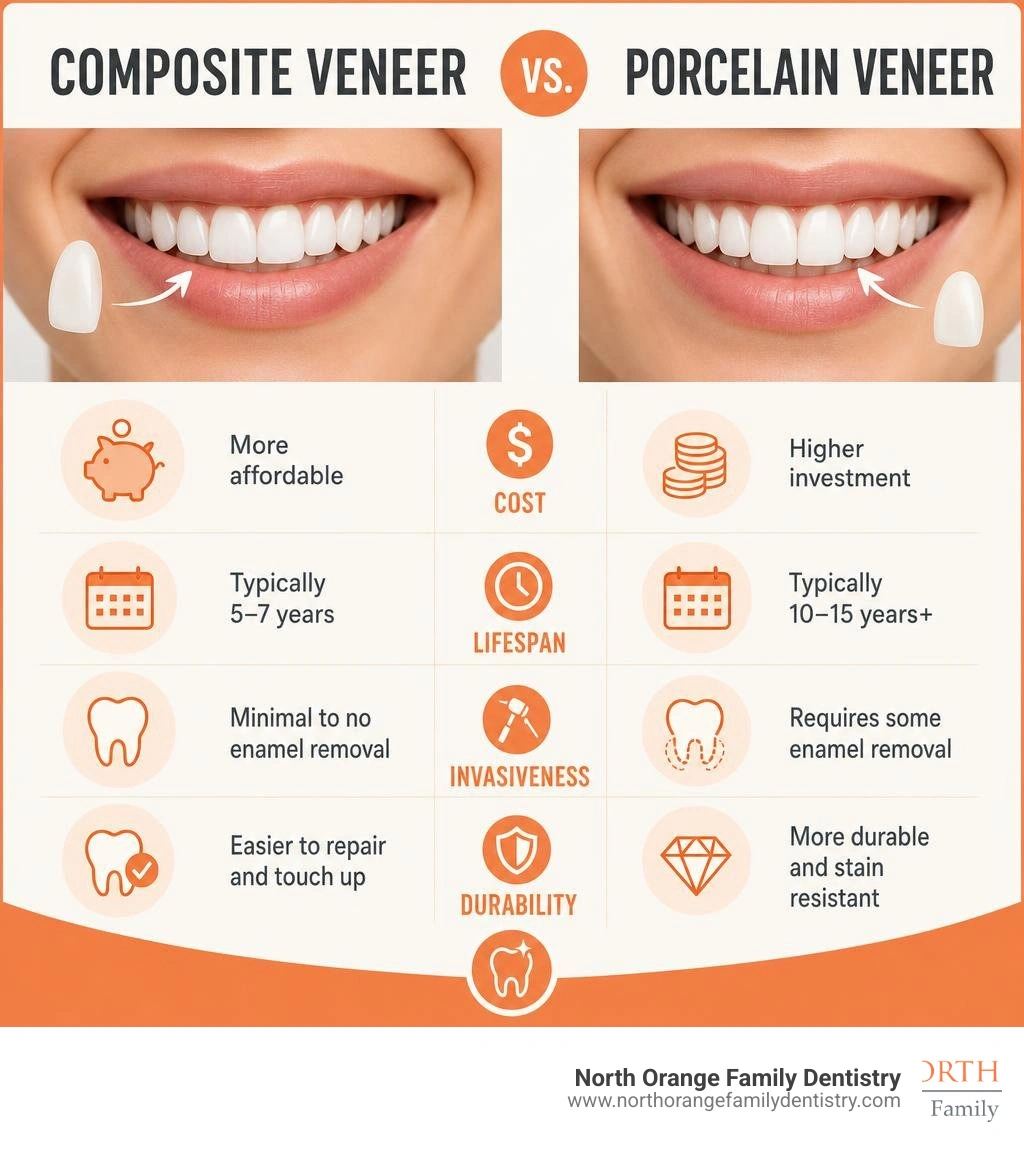
Composite veneer vocab to learn:
What Is a Composite Veneer and How Does It Work?
A composite veneer is a custom-made restoration crafted from a specialized dental composite resin. This material is a high-tech blend of organic plastic polymers and ultra-fine glass or ceramic particles. The glass gives the resin its strength and subtle shine, while the plastic allows us to shape and sculpt it perfectly to match your natural teeth.
Unlike restorations that are made in a separate dental laboratory, we can apply and shape direct composite veneers right in our office. According to clinical insights in Direct resin composite veneers: An extensive review, this class of cosmetic treatment has become incredibly popular because it allows for immediate, beautiful results while preserving as much of your natural tooth structure as possible.
Composite Resin vs. Porcelain
When looking into cosmetic upgrades, you will inevitably compare composite resin with porcelain ceramic. Both materials can create a stunning smile, but they work quite differently:
- Aesthetics and Light Reflection: Porcelain is famous for mimicking the light-reflecting properties of natural tooth enamel almost perfectly. Composite resin looks remarkably natural as well, but it has a slightly different luster.
- Durability and Lifespan: Porcelain is highly resistant to wear and can easily last 10 to 15 years (or longer). Composite is a softer material, meaning it is more prone to minor wear over time.
- Treatment Style: You can read more about how these styles compare in our guide on Veneers vs Dental Bonding What's the Difference. While porcelain requires removing a thin layer of enamel and waiting for a lab to create the shells, direct composite is applied directly to your tooth, shaped by hand, and cured on the spot.
For a deeper dive into how dentists evaluate these materials clinically, the Porcelain vs. Composite Veneers: Clinical Guide for Dentists | IDEA outlines how composite acts as a highly conservative, "additive" option that protects the tooth's natural biomechanics.
The Benefits of Choosing a Composite Veneer
Choosing a composite veneer comes with several distinct advantages:
- Cost-Effectiveness: They are significantly more affordable upfront than porcelain restorations.
- Same-Day Transformation: In most cases, you can walk in with cosmetic imperfections and walk out a few hours later with a brand-new smile.
- Enamel Preservation: Because the material is added directly to the tooth, we rarely need to shave down your natural enamel. This makes the treatment exceptionally gentle.
- Easy Repairability: If you accidentally chip a porcelain veneer, the entire shell usually has to be replaced. If you chip a composite veneer, we can easily patch and polish it in our office in a single quick visit.
To explore more advantages, check out our Dental Veneers Benefits Ultimate Guide.
Drawbacks and Limitations
While we love the versatility of composite resin, it is important to have realistic expectations:
- Staining Susceptibility: Unlike porcelain, which is completely non-porous, composite resin can absorb stains over time from coffee, tea, red wine, and dark berries.
- Chipping Risk: Because the material is softer than ceramic, biting on hard objects or grinding your teeth can lead to minor chips.
- Shorter Lifespan: You will likely need to refresh or replace your composite restorations sooner than you would porcelain ones.
- Cosmetic Limits: For severe discoloration or major structural alignment issues, porcelain or orthodontic treatments may still be the superior choice.
Candidacy, Longevity, and Care for Resin Veneers

Before jumping into treatment, we always perform a thorough oral health check. We want to ensure your underlying teeth and gums are healthy, clean, and free of decay before we begin any cosmetic enhancements.
Who Is the Ideal Candidate for a Composite Veneer?
You are likely an excellent candidate for a composite veneer if you are looking to correct:
- Minor chips or cracks on your front teeth
- Small, distracting gaps between teeth (diastemas)
- Slightly misshapen, pointed, or unevenly sized teeth
- Mild to moderate surface stains that do not respond well to traditional teeth whitening
If you only have one tooth that is bothering you, a single-tooth restoration is entirely possible. You can read how we handle these cases in our Single Tooth Veneers Complete Guide.
How Long Do Composite Veneers Last?
On average, a composite veneer will last between 5 and 7 years. However, with meticulous home care and regular professional cleanings, many patients enjoy their restorations for up to 10 years.
As highlighted in Direct Composite Veneers for Esthetic, Conservative Dentistry | Compendium, advanced modern nanohybrid composites have significantly improved wear resistance and color stability over the years, helping them stay bright and strong far longer than older generations of resin.
Maintenance and Daily Care Tips
Taking care of your new smile is simple, but it does require some mindful habits:
- Use Non-Abrasive Toothpaste: Avoid charcoal or harsh whitening toothpastes, as they can scratch the polished surface of the resin and make it look dull.
- Floss Daily: Keep the margins around your veneers clean to prevent decay at the edges.
- Avoid Biting Hard Objects: Do not use your teeth as tools, and avoid chewing on ice, fingernails, or hard plastic pens.
- Limit Staining Drinks: If you cannot live without your morning coffee or tea, try drinking it through a straw or rinsing your mouth with water immediately afterward.
The Step-by-Step Procedure and Cost Expectations
One of the best things about getting a composite veneer is how straightforward and comfortable the clinical process is.
The Clinical Placement Process
Here is what you can expect during your appointment:
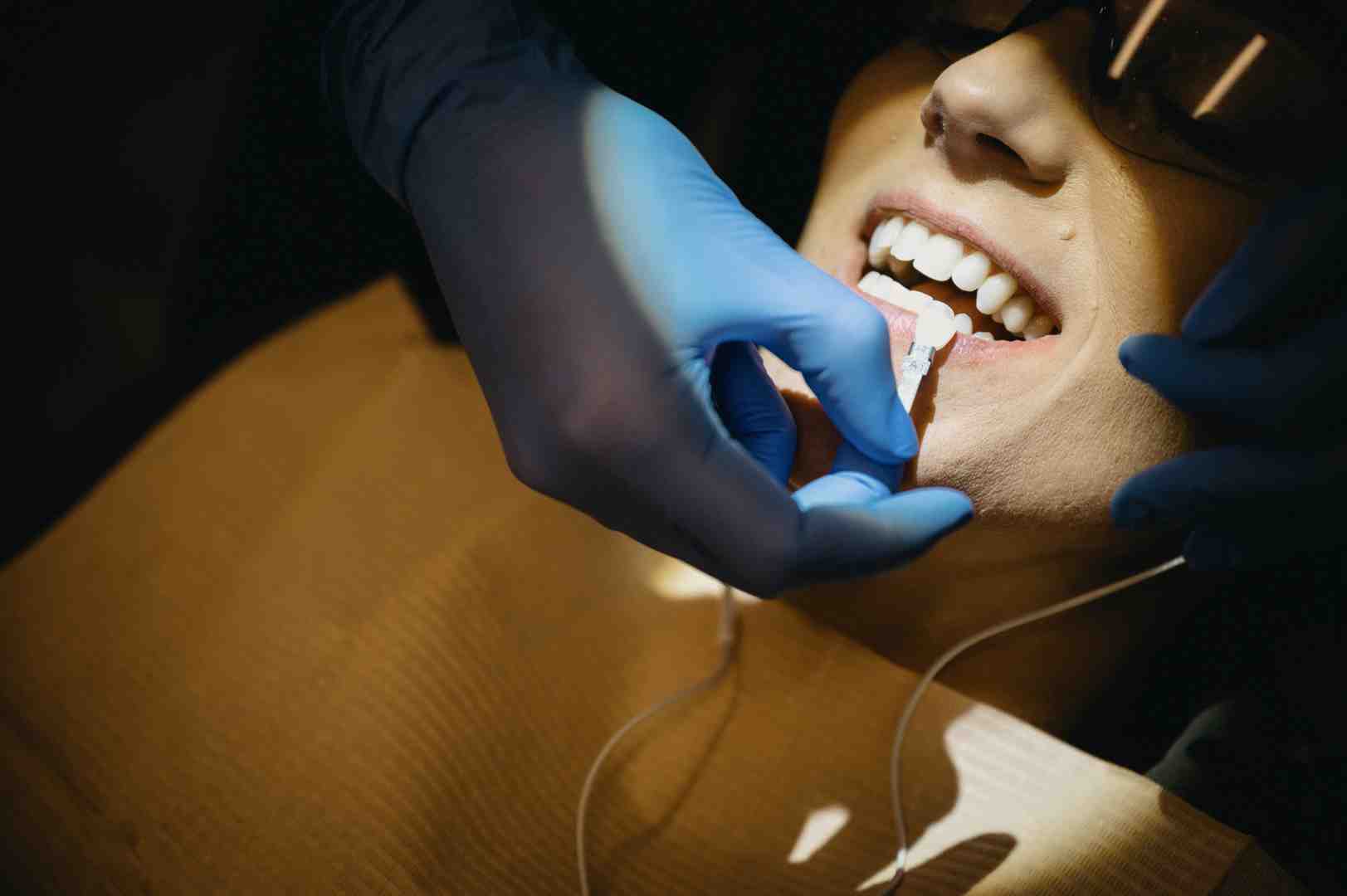
- Shade Selection: We use a physical shade guide to select the exact resin colors that will blend seamlessly with your surrounding teeth.
- Tooth Preparation: We gently clean the tooth. In most cases, no drilling or enamel removal is necessary. We apply a mild etching gel to create microscopic texture on the surface, which helps the adhesive bond securely.
- Adhesive Bonding: We apply a liquid bonding agent and cure it with a specialized high-intensity light.
- Sculpting: We carefully apply the composite resin in thin layers, shaping and sculpting it by hand to build the perfect tooth anatomy.
- Curing and Polishing: Once the shape is perfect, we use the curing light to harden the resin. Finally, we use fine-grit polishing discs and diamond paste to buff the veneer to a beautiful, natural-looking shine.
To learn more about the overall process, read our Dental Veneers Complete Guide.
Cost and Insurance Considerations
Generally, composite veneers cost between $250 and $1,500 per tooth nationwide, making them a highly accessible choice compared to porcelain. Because veneers are classified as cosmetic dentistry, dental insurance plans typically do not cover them. However, if we are using the bonding material to repair a structurally damaged or chipped tooth, a portion of the treatment might be covered. You can learn more details in our Dental Veneers Cost Complete Guide.
To help make your dream smile fit comfortably into your budget, we offer an in-house Dental Wellness Plan for our patients without dental insurance. This plan allows individuals and families to receive their necessary yearly preventive dental care for a discounted price, alongside discounts on cosmetic and restorative treatments.
Frequently Asked Questions About Composite Veneers
Can composite veneers be whitened?
No, composite resin materials cannot be chemically whitened once they are placed. If you want to brighten the overall shade of your smile, we highly recommend undergoing a professional teeth whitening treatment first. Once your natural teeth reach your desired brightness, we can match the new composite veneer to that lighter shade. Learn more about coordinating these treatments in our guide on Cosmetic Dentistry Veneers.
Are composite veneers reversible?
Yes! Because we perform minimal to no enamel removal during the preparation phase, the process is considered highly reversible. If you ever decide to transition to porcelain veneers in the future, or if you want the composite safely removed, a dentist can carefully polish the resin off to reveal your intact natural enamel underneath. Discover how bonding and veneers preserve your options in Transform Your Smile with Tooth Bonding and Veneers.
What are prefabricated composite veneers?
Prefabricated composite veneers, such as the BRILLIANT COMPONEER ® system, represent an exciting mid-point between direct bonding and traditional veneers. These are ultra-thin, pre-shaped composite shells manufactured under high pressure and temperature in a laboratory, which gives them exceptional density and strength.
As detailed in the Composite veneering system | Online catalog, these shells can be as thin as 0.3 mm. They offer incredible gloss retention and can be bonded to your teeth in a single session. To read a real-life clinical application of this streamlined system, you can explore this Prefabricated resin veneer: A case report of a simplified restorative technique.
Conclusion
A beautiful, confident smile doesn't have to require weeks of waiting or extensive enamel removal. Whether you want to fix a single distracting chip or completely refresh your front teeth, a custom-designed composite veneer offers a fast, conservative, and beautiful solution.
At North Orange Family Dentistry, we are proud to serve families across Delaware, Lewis Center, Powell, and the greater Columbus, Ohio area. Led by Dr. Kyle Bogan — a Fellow of both the Academy of General Dentistry and the International College of Dentists — our warm, modern practice is dedicated to delivering five-star dental care that fits your lifestyle and budget.
Ready to explore your options? Schedule a consultation for dental veneers with us today, and let's partner together to build a smile you'll love showing off!
Is a Composite Veneer Right for Your Smile?
A composite veneer is a thin layer of tooth-colored resin bonded directly to the front of a tooth to improve its shape, color, or size — all in a single dental visit, with little to no enamel removal.
If you're weighing your options, here's a quick snapshot:
- What it is: A tooth-colored resin shell applied chairside to fix chips, gaps, stains, or misshapen teeth
- How long it takes: Usually one appointment
- How long it lasts: Typically 5–7 years, up to 10 with good care
- Who it's best for: Adults with minor cosmetic concerns who want a fast, affordable, conservative fix
- Main trade-off: Not as durable or stain-resistant as porcelain, but easier to repair and gentler on your tooth
If you've been thinking about improving your smile but feel unsure where to start, you're not alone. A lot of people spend months — sometimes years — wondering whether veneers are worth it, which type makes sense, and what the whole process actually involves.
This guide breaks it all down in plain language so you can walk into a consultation at North Orange Family Dentistry feeling informed and confident — not overwhelmed.
Composite veneer vocab to learn:
What Is a Composite Veneer and How Does It Work?
A composite veneer is a custom-made restoration crafted from a specialized dental composite resin. This material is a high-tech blend of organic plastic polymers and ultra-fine glass or ceramic particles. The glass gives the resin its strength and subtle shine, while the plastic allows us to shape and sculpt it perfectly to match your natural teeth.
Unlike restorations that are made in a separate dental laboratory, we can apply and shape direct composite veneers right in our office. According to clinical insights in Direct resin composite veneers: An extensive review, this class of cosmetic treatment has become incredibly popular because it allows for immediate, beautiful results while preserving as much of your natural tooth structure as possible.
Composite Resin vs. Porcelain
When looking into cosmetic upgrades, you will inevitably compare composite resin with porcelain ceramic. Both materials can create a stunning smile, but they work quite differently:
- Aesthetics and Light Reflection: Porcelain is famous for mimicking the light-reflecting properties of natural tooth enamel almost perfectly. Composite resin looks remarkably natural as well, but it has a slightly different luster.
- Durability and Lifespan: Porcelain is highly resistant to wear and can easily last 10 to 15 years (or longer). Composite is a softer material, meaning it is more prone to minor wear over time.
- Treatment Style: You can read more about how these styles compare in our guide on Veneers vs Dental Bonding What's the Difference. While porcelain requires removing a thin layer of enamel and waiting for a lab to create the shells, direct composite is applied directly to your tooth, shaped by hand, and cured on the spot.
For a deeper dive into how dentists evaluate these materials clinically, the Porcelain vs. Composite Veneers: Clinical Guide for Dentists | IDEA outlines how composite acts as a highly conservative, "additive" option that protects the tooth's natural biomechanics.
The Benefits of Choosing a Composite Veneer
Choosing a composite veneer comes with several distinct advantages:
- Cost-Effectiveness: They are significantly more affordable upfront than porcelain restorations.
- Same-Day Transformation: In most cases, you can walk in with cosmetic imperfections and walk out a few hours later with a brand-new smile.
- Enamel Preservation: Because the material is added directly to the tooth, we rarely need to shave down your natural enamel. This makes the treatment exceptionally gentle.
- Easy Repairability: If you accidentally chip a porcelain veneer, the entire shell usually has to be replaced. If you chip a composite veneer, we can easily patch and polish it in our office in a single quick visit.
To explore more advantages, check out our Dental Veneers Benefits Ultimate Guide.
Drawbacks and Limitations
While we love the versatility of composite resin, it is important to have realistic expectations:
- Staining Susceptibility: Unlike porcelain, which is completely non-porous, composite resin can absorb stains over time from coffee, tea, red wine, and dark berries.
- Chipping Risk: Because the material is softer than ceramic, biting on hard objects or grinding your teeth can lead to minor chips.
- Shorter Lifespan: You will likely need to refresh or replace your composite restorations sooner than you would porcelain ones.
- Cosmetic Limits: For severe discoloration or major structural alignment issues, porcelain or orthodontic treatments may still be the superior choice.
Candidacy, Longevity, and Care for Resin Veneers
Before jumping into treatment, we always perform a thorough oral health check. We want to ensure your underlying teeth and gums are healthy, clean, and free of decay before we begin any cosmetic enhancements.
Who Is the Ideal Candidate for a Composite Veneer?
You are likely an excellent candidate for a composite veneer if you are looking to correct:
- Minor chips or cracks on your front teeth
- Small, distracting gaps between teeth (diastemas)
- Slightly misshapen, pointed, or unevenly sized teeth
- Mild to moderate surface stains that do not respond well to traditional teeth whitening
If you only have one tooth that is bothering you, a single-tooth restoration is entirely possible. You can read how we handle these cases in our Single Tooth Veneers Complete Guide.
How Long Do Composite Veneers Last?
On average, a composite veneer will last between 5 and 7 years. However, with meticulous home care and regular professional cleanings, many patients enjoy their restorations for up to 10 years.
As highlighted in Direct Composite Veneers for Esthetic, Conservative Dentistry | Compendium, advanced modern nanohybrid composites have significantly improved wear resistance and color stability over the years, helping them stay bright and strong far longer than older generations of resin.
Maintenance and Daily Care Tips
Taking care of your new smile is simple, but it does require some mindful habits:
- Use Non-Abrasive Toothpaste: Avoid charcoal or harsh whitening toothpastes, as they can scratch the polished surface of the resin and make it look dull.
- Floss Daily: Keep the margins around your veneers clean to prevent decay at the edges.
- Avoid Biting Hard Objects: Do not use your teeth as tools, and avoid chewing on ice, fingernails, or hard plastic pens.
- Limit Staining Drinks: If you cannot live without your morning coffee or tea, try drinking it through a straw or rinsing your mouth with water immediately afterward.
The Step-by-Step Procedure and Cost Expectations
One of the best things about getting a composite veneer is how straightforward and comfortable the clinical process is.
The Clinical Placement Process
Here is what you can expect during your appointment:
- Shade Selection: We use a physical shade guide to select the exact resin colors that will blend seamlessly with your surrounding teeth.
- Tooth Preparation: We gently clean the tooth. In most cases, no drilling or enamel removal is necessary. We apply a mild etching gel to create microscopic texture on the surface, which helps the adhesive bond securely.
- Adhesive Bonding: We apply a liquid bonding agent and cure it with a specialized high-intensity light.
- Sculpting: We carefully apply the composite resin in thin layers, shaping and sculpting it by hand to build the perfect tooth anatomy.
- Curing and Polishing: Once the shape is perfect, we use the curing light to harden the resin. Finally, we use fine-grit polishing discs and diamond paste to buff the veneer to a beautiful, natural-looking shine.
To learn more about the overall process, read our Dental Veneers Complete Guide.
Cost and Insurance Considerations
Generally, composite veneers cost between $250 and $1,500 per tooth nationwide, making them a highly accessible choice compared to porcelain. Because veneers are classified as cosmetic dentistry, dental insurance plans typically do not cover them. However, if we are using the bonding material to repair a structurally damaged or chipped tooth, a portion of the treatment might be covered. You can learn more details in our Dental Veneers Cost Complete Guide.
To help make your dream smile fit comfortably into your budget, we offer an in-house Dental Wellness Plan for our patients without dental insurance. This plan allows individuals and families to receive their necessary yearly preventive dental care for a discounted price, alongside discounts on cosmetic and restorative treatments.
Frequently Asked Questions About Composite Veneers
Can composite veneers be whitened?
No, composite resin materials cannot be chemically whitened once they are placed. If you want to brighten the overall shade of your smile, we highly recommend undergoing a professional teeth whitening treatment first. Once your natural teeth reach your desired brightness, we can match the new composite veneer to that lighter shade. Learn more about coordinating these treatments in our guide on Cosmetic Dentistry Veneers.
Are composite veneers reversible?
Yes! Because we perform minimal to no enamel removal during the preparation phase, the process is considered highly reversible. If you ever decide to transition to porcelain veneers in the future, or if you want the composite safely removed, a dentist can carefully polish the resin off to reveal your intact natural enamel underneath. Discover how bonding and veneers preserve your options in Transform Your Smile with Tooth Bonding and Veneers.
What are prefabricated composite veneers?
Prefabricated composite veneers, such as the BRILLIANT COMPONEER ® system, represent an exciting mid-point between direct bonding and traditional veneers. These are ultra-thin, pre-shaped composite shells manufactured under high pressure and temperature in a laboratory, which gives them exceptional density and strength.
As detailed in the Composite veneering system | Online catalog, these shells can be as thin as 0.3 mm. They offer incredible gloss retention and can be bonded to your teeth in a single session. To read a real-life clinical application of this streamlined system, you can explore this Prefabricated resin veneer: A case report of a simplified restorative technique.
Conclusion
A beautiful, confident smile doesn't have to require weeks of waiting or extensive enamel removal. Whether you want to fix a single distracting chip or completely refresh your front teeth, a custom-designed composite veneer offers a fast, conservative, and beautiful solution.
At North Orange Family Dentistry, we are proud to serve families across Delaware, Lewis Center, Powell, and the greater Columbus, Ohio area. Led by Dr. Kyle Bogan — a Fellow of both the Academy of General Dentistry and the International College of Dentists — our warm, modern practice is dedicated to delivering five-star dental care that fits your lifestyle and budget.
Ready to explore your options? Schedule a consultation for dental veneers with us today, and let's partner together to build a smile you'll love showing off!
Contact Us
Have any questions? Want to learn more?

