
What You Should Expect When Correcting an Overbite with Aligners
Can clear aligners fix an overbite? Learn how Invisalign corrects dental overbites, treatment timelines, and what to expect from your smile journey.



Can Clear Aligners Fix an Overbite?
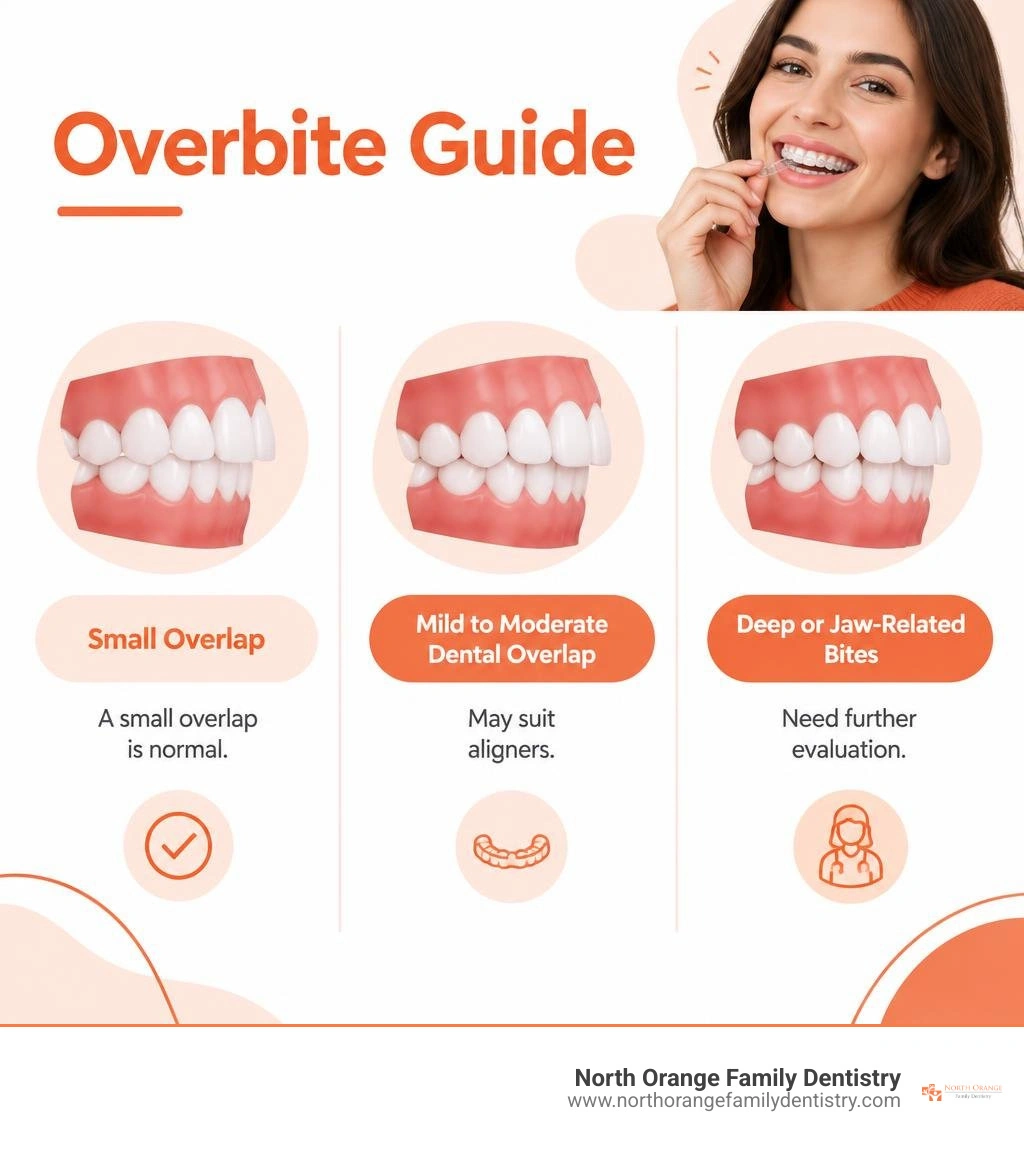
Yes, clear aligners can fix many mild to moderate overbites. They work best when the extra overlap comes from tooth position. A dentist can check your bite, tell you whether aligners are a good fit, and explain what treatment may involve.
An overbite is how far your upper front teeth cover your lower front teeth vertically. If the overlap is deep or the cause is the position of your jaws, aligners alone may not be enough. The first step is a bite exam—not a promise based on how your smile looks in a photo.
Key can clear aligners fix an overbite vocabulary:
Can Clear Aligners Fix an Overbite? Mechanisms and Capabilities
To understand how modern aligner systems address a deep bite, we have to look at the mechanics of tooth movement. When treating an overbite, our primary goal is to correct excessive vertical overlap. In a healthy bite, the upper front teeth overlap the lower front teeth by about 1 to 2 millimeters. When that overlap reaches 3 to 5 millimeters or more, it places abnormal stress on your teeth and jaw joint.
Aligners correct this vertical discrepancy through two coordinated movements:
- Anterior Intrusion: Gently pushing the upper and lower front teeth vertically back into the jawbone.
- Posterior Extrusion: Slightly elevating the back molars to help open the bite.
- Leveling the Curve of Spee: Flattening the natural upward curve of the lower arch to create an even, stable plane of occlusion.
According to The Efficacy of Clear Aligners in Leveling the Curve of Spee: A Systematic Review, custom thermoplastic trays can achieve meaningful vertical leveling, especially when paired with specialized attachments. Modern clear aligners apply continuous, calibrated micro-forces that guide your teeth into ideal alignment without the friction associated with traditional wires.
How Dental Versus Skeletal Overbites Determine Treatment Success
The underlying cause of your overbite dictates how successful aligner treatment will be. Overbites fall into two broad categories:
- Dental Overbite: The jawbones are properly aligned, but the teeth erupted improperly or tilted inward, creating excess overlap. Aligners excel at correcting dental overbites by tipping, rotating, and intruding teeth.
- Skeletal Overbite (Class II Discrepancy): The upper jaw is positioned too far forward, or the lower jaw (mandible) is underdeveloped and set too far back.
While aligners can mask minor skeletal imbalances by repositioning teeth, severe skeletal discrepancies may require orthopedic appliances, surgical orthodontics, or hybrid therapies.
Clinical Predictability: When Can Clear Aligners Fix an Overbite Effectively?
Research published in The effectiveness of clear aligners in levelling the curve of Spee and related maxillofacial factors in patients with a deep overbite shows that clear aligners achieve a leveling effectiveness of 71.8% ± 19.0% in deep overbite cases, producing an average reduction in the curve of Spee of approximately 0.901 mm.
Advanced materials like multi-layer polyurethane (such as SmartTrack) deliver more consistent, gentle pressure over time compared to older plastic trays. Digital planning software allows clinicians to map out every tooth movement. However, because real biological tissues respond with slight variability—studies note clinical accuracy often ranges between 41% and 62% for complex vertical shifts—experienced oversight is essential to plan overcorrections and refinements.
Step-by-Step Treatment Process for Overbite Correction

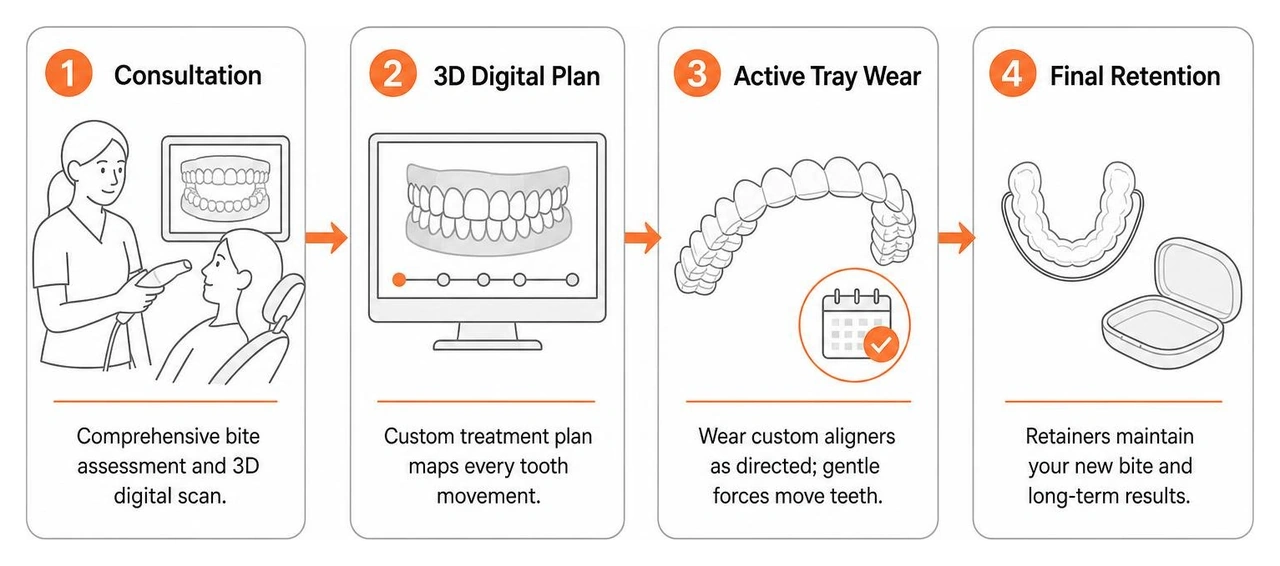
Correcting your bite with clear aligners is a structured, collaborative process designed to ensure comfort and precision from start to finish.
Initial Consultation and 3D Digital Smile Planning
Your journey begins with a comprehensive bite assessment. We use advanced intraoral scanners to capture a high-resolution 3D digital impression of your teeth and jaws—no messy, goopy putty required.
Using this digital model, we create a step-by-step virtual roadmap showing how your teeth will move week by week. This digital plan determines the exact number of custom trays required, helping you explore different types of invisalign and treatment paths before your first set of trays is even manufactured.
Active Wear Protocol, Attachments, and Progress Refinements
Once your trays arrive, your active treatment begins:
- Daily Wear Protocol: Aligners must be worn for 20 to 22 hours each day, removed only for eating, drinking anything other than water, and brushing.
- SmartForce Attachments: Small, tooth-colored composite shapes bonded to specific teeth give the aligners leverage to perform complex movements like intrusion and rotation.
- Bite Ramps: Built-in plastic ledges on the back of the upper front aligners prevent your back teeth from clenching together, allowing lower front teeth to intrude and back molars to settle freely.
- Intermaxillary Elastics: Small rubber bands connected to precision hooks on your aligners to help guide the lower jaw forward and resolve bite discrepancies.
- Tray Changes and Refinements: You will switch to a fresh set of trays every 1 to 2 weeks. Toward the end of your initial series, a quick refinement scan captures any fine adjustments needed to perfect your occlusion.
Clear Aligner Benefits for Overbite Treatment
Choosing clear aligners offers significant lifestyle and oral health advantages over traditional metal brackets:
- Discreet Appearance: The clear material makes your orthodontic care virtually invisible during meetings, social events, and daily conversations.
- Superior Oral Hygiene: Because trays are removable, you can brush and floss normally, dramatically reducing plaque accumulation, gingival inflammation, and white-spot lesions.
- Soft-Tissue Comfort: Smooth plastic edges eliminate the sharp pokey wires, loose brackets, and cheek ulcers common with fixed appliances.
- No Food Restrictions: Enjoy apples, nuts, popcorn, and crunchy favorites without worrying about breaking hardware.
Alongside aligner therapy, our practice utilizes advanced laser treatments for TMJ pain, rapid canker sore healing, and non-invasive periodontal therapy, giving you a comprehensive wellness toolkit to keep your mouth comfortable during orthodontic movements.
Treatment Duration and Compliance Factors
Treatment timelines depend directly on your initial bite depth and daily discipline:
- Mild Overbite: Typically resolved in 4 to 6 months.
- Moderate Overbite: Usually requires between 6 and 18 months of active wear.
- Compliance Factor: Aligners only work when they are in your mouth. Leaving trays out for extended periods delays tooth tracking and extends your overall timeline.
Managing Severe Overbite Cases: When Can Clear Aligners Fix an Overbite with Adjuncts?
A deep overbite where the upper teeth overlap the lower teeth by more than 5 mm affects roughly 13% of adults and 20% of children. Treating severe cases with aligners often involves auxiliary mechanics, such as temporary anchorage devices (TADs), specialized elastics, or interproximal reduction (IPR) to create needed space. In cases of severe skeletal discrepancy, aligners can be used before and after corrective jaw surgery.
Cost, Retention, and Maintaining Your Corrected Bite
A comprehensive investment in your smile protects your teeth from abnormal wear, fractures, and joint strain down the road.
Post-Treatment Retention Protocols
Once active tooth movement is complete, your bone and surrounding periodontal ligaments need time to stabilize. Wearing a custom clear aligner retainer protects your investment by holding teeth firmly in place.
Initially, you may wear retainers full-time for a few weeks before transitioning to nighttime-only wear. Consistent retention prevents natural age-related relapse and ensures your healthy bite lasts a lifetime.
Managing Treatment Costs and Affordable Care Options
Orthodontic coverage varies by dental benefit provider, with many plans offering a lifetime orthodontic allowance. To ensure high-quality care remains accessible, we offer an in-house Dental Wellness Plan for uninsured individuals and families, allowing you to receive routine preventive care and diagnostic checkups at discounted rates.
Frequently Asked Questions About Clear Aligners and Overbites
How long does it take for clear aligners to fix an overbite?
Most mild to moderate overbites take between 6 and 18 months to correct. Minor dental overlap can often be resolved in as few as 4 to 6 months, provided you wear your aligners for the prescribed 20 to 22 hours each day.
Are clear aligners suitable for both adults and teenagers with an overbite?
Yes. Clear aligners work effectively for both teens and adults. Adult bone remodels predictably under controlled aligner pressure, while teen aligners often include compliance indicators to ensure trays are worn consistently.
Can clear aligners fix a 100% deep bite?
Yes, many severe deep bites can be treated with aligners, especially when combined with bite ramps, attachments, and elastics. However, if the 100% overlap is caused by a severe skeletal jaw imbalance, combined surgical or multi-phase orthodontic treatment may be recommended.
Conclusion
Correcting an overbite improves your facial profile, protects your enamel from premature wear, relieves unnecessary stress on your jaw joints, and gives you a radiant, confident smile.
Achieving the best outcome starts with a thorough evaluation by an experienced dental team. If you are ready to explore your options, schedule a consultation for Invisalign clear aligners with us at North Orange Family Dentistry. We will evaluate your bite dynamics, answer your questions, and build a personalized plan to deliver the healthy, functional smile you deserve.
Can Clear Aligners Fix an Overbite?
Yes, clear aligners can fix many mild to moderate overbites. They work best when the extra overlap comes from tooth position. A dentist can check your bite, tell you whether aligners are a good fit, and explain what treatment may involve.
An overbite is how far your upper front teeth cover your lower front teeth vertically. If the overlap is deep or the cause is the position of your jaws, aligners alone may not be enough. The first step is a bite exam—not a promise based on how your smile looks in a photo.
Key can clear aligners fix an overbite vocabulary:
Can Clear Aligners Fix an Overbite? Mechanisms and Capabilities
To understand how modern aligner systems address a deep bite, we have to look at the mechanics of tooth movement. When treating an overbite, our primary goal is to correct excessive vertical overlap. In a healthy bite, the upper front teeth overlap the lower front teeth by about 1 to 2 millimeters. When that overlap reaches 3 to 5 millimeters or more, it places abnormal stress on your teeth and jaw joint.
Aligners correct this vertical discrepancy through two coordinated movements:
- Anterior Intrusion: Gently pushing the upper and lower front teeth vertically back into the jawbone.
- Posterior Extrusion: Slightly elevating the back molars to help open the bite.
- Leveling the Curve of Spee: Flattening the natural upward curve of the lower arch to create an even, stable plane of occlusion.
According to The Efficacy of Clear Aligners in Leveling the Curve of Spee: A Systematic Review, custom thermoplastic trays can achieve meaningful vertical leveling, especially when paired with specialized attachments. Modern clear aligners apply continuous, calibrated micro-forces that guide your teeth into ideal alignment without the friction associated with traditional wires.
How Dental Versus Skeletal Overbites Determine Treatment Success
The underlying cause of your overbite dictates how successful aligner treatment will be. Overbites fall into two broad categories:
- Dental Overbite: The jawbones are properly aligned, but the teeth erupted improperly or tilted inward, creating excess overlap. Aligners excel at correcting dental overbites by tipping, rotating, and intruding teeth.
- Skeletal Overbite (Class II Discrepancy): The upper jaw is positioned too far forward, or the lower jaw (mandible) is underdeveloped and set too far back.
While aligners can mask minor skeletal imbalances by repositioning teeth, severe skeletal discrepancies may require orthopedic appliances, surgical orthodontics, or hybrid therapies.
Clinical Predictability: When Can Clear Aligners Fix an Overbite Effectively?
Research published in The effectiveness of clear aligners in levelling the curve of Spee and related maxillofacial factors in patients with a deep overbite shows that clear aligners achieve a leveling effectiveness of 71.8% ± 19.0% in deep overbite cases, producing an average reduction in the curve of Spee of approximately 0.901 mm.
Advanced materials like multi-layer polyurethane (such as SmartTrack) deliver more consistent, gentle pressure over time compared to older plastic trays. Digital planning software allows clinicians to map out every tooth movement. However, because real biological tissues respond with slight variability—studies note clinical accuracy often ranges between 41% and 62% for complex vertical shifts—experienced oversight is essential to plan overcorrections and refinements.
Step-by-Step Treatment Process for Overbite Correction
Correcting your bite with clear aligners is a structured, collaborative process designed to ensure comfort and precision from start to finish.
Initial Consultation and 3D Digital Smile Planning
Your journey begins with a comprehensive bite assessment. We use advanced intraoral scanners to capture a high-resolution 3D digital impression of your teeth and jaws—no messy, goopy putty required.
Using this digital model, we create a step-by-step virtual roadmap showing how your teeth will move week by week. This digital plan determines the exact number of custom trays required, helping you explore different types of invisalign and treatment paths before your first set of trays is even manufactured.
Active Wear Protocol, Attachments, and Progress Refinements
Once your trays arrive, your active treatment begins:
- Daily Wear Protocol: Aligners must be worn for 20 to 22 hours each day, removed only for eating, drinking anything other than water, and brushing.
- SmartForce Attachments: Small, tooth-colored composite shapes bonded to specific teeth give the aligners leverage to perform complex movements like intrusion and rotation.
- Bite Ramps: Built-in plastic ledges on the back of the upper front aligners prevent your back teeth from clenching together, allowing lower front teeth to intrude and back molars to settle freely.
- Intermaxillary Elastics: Small rubber bands connected to precision hooks on your aligners to help guide the lower jaw forward and resolve bite discrepancies.
- Tray Changes and Refinements: You will switch to a fresh set of trays every 1 to 2 weeks. Toward the end of your initial series, a quick refinement scan captures any fine adjustments needed to perfect your occlusion.
Clear Aligner Benefits for Overbite Treatment
Choosing clear aligners offers significant lifestyle and oral health advantages over traditional metal brackets:
- Discreet Appearance: The clear material makes your orthodontic care virtually invisible during meetings, social events, and daily conversations.
- Superior Oral Hygiene: Because trays are removable, you can brush and floss normally, dramatically reducing plaque accumulation, gingival inflammation, and white-spot lesions.
- Soft-Tissue Comfort: Smooth plastic edges eliminate the sharp pokey wires, loose brackets, and cheek ulcers common with fixed appliances.
- No Food Restrictions: Enjoy apples, nuts, popcorn, and crunchy favorites without worrying about breaking hardware.
Alongside aligner therapy, our practice utilizes advanced laser treatments for TMJ pain, rapid canker sore healing, and non-invasive periodontal therapy, giving you a comprehensive wellness toolkit to keep your mouth comfortable during orthodontic movements.
Treatment Duration and Compliance Factors
Treatment timelines depend directly on your initial bite depth and daily discipline:
- Mild Overbite: Typically resolved in 4 to 6 months.
- Moderate Overbite: Usually requires between 6 and 18 months of active wear.
- Compliance Factor: Aligners only work when they are in your mouth. Leaving trays out for extended periods delays tooth tracking and extends your overall timeline.
Managing Severe Overbite Cases: When Can Clear Aligners Fix an Overbite with Adjuncts?
A deep overbite where the upper teeth overlap the lower teeth by more than 5 mm affects roughly 13% of adults and 20% of children. Treating severe cases with aligners often involves auxiliary mechanics, such as temporary anchorage devices (TADs), specialized elastics, or interproximal reduction (IPR) to create needed space. In cases of severe skeletal discrepancy, aligners can be used before and after corrective jaw surgery.
Cost, Retention, and Maintaining Your Corrected Bite
A comprehensive investment in your smile protects your teeth from abnormal wear, fractures, and joint strain down the road.
Post-Treatment Retention Protocols
Once active tooth movement is complete, your bone and surrounding periodontal ligaments need time to stabilize. Wearing a custom clear aligner retainer protects your investment by holding teeth firmly in place.
Initially, you may wear retainers full-time for a few weeks before transitioning to nighttime-only wear. Consistent retention prevents natural age-related relapse and ensures your healthy bite lasts a lifetime.
Managing Treatment Costs and Affordable Care Options
Orthodontic coverage varies by dental benefit provider, with many plans offering a lifetime orthodontic allowance. To ensure high-quality care remains accessible, we offer an in-house Dental Wellness Plan for uninsured individuals and families, allowing you to receive routine preventive care and diagnostic checkups at discounted rates.
Frequently Asked Questions About Clear Aligners and Overbites
How long does it take for clear aligners to fix an overbite?
Most mild to moderate overbites take between 6 and 18 months to correct. Minor dental overlap can often be resolved in as few as 4 to 6 months, provided you wear your aligners for the prescribed 20 to 22 hours each day.
Are clear aligners suitable for both adults and teenagers with an overbite?
Yes. Clear aligners work effectively for both teens and adults. Adult bone remodels predictably under controlled aligner pressure, while teen aligners often include compliance indicators to ensure trays are worn consistently.
Can clear aligners fix a 100% deep bite?
Yes, many severe deep bites can be treated with aligners, especially when combined with bite ramps, attachments, and elastics. However, if the 100% overlap is caused by a severe skeletal jaw imbalance, combined surgical or multi-phase orthodontic treatment may be recommended.
Conclusion
Correcting an overbite improves your facial profile, protects your enamel from premature wear, relieves unnecessary stress on your jaw joints, and gives you a radiant, confident smile.
Achieving the best outcome starts with a thorough evaluation by an experienced dental team. If you are ready to explore your options, schedule a consultation for Invisalign clear aligners with us at North Orange Family Dentistry. We will evaluate your bite dynamics, answer your questions, and build a personalized plan to deliver the healthy, functional smile you deserve.
Contact Us
Have any questions? Want to learn more?

