
Nighttime Retainers: Comfort, Care, and Why You Need Them
Master sleeping with retainers for a lasting smile. Discover types, cleaning, & how to prevent relapse after braces.


Your Smile's Nightly Guardian
Sleeping with retainers is not just recommended—it's essential for maintaining your straight smile after orthodontic treatment. Here's what you need to know:
Quick Answer: Should You Sleep With Retainers?
- Yes, you should sleep with retainers in most cases, especially after braces or Invisalign treatment.
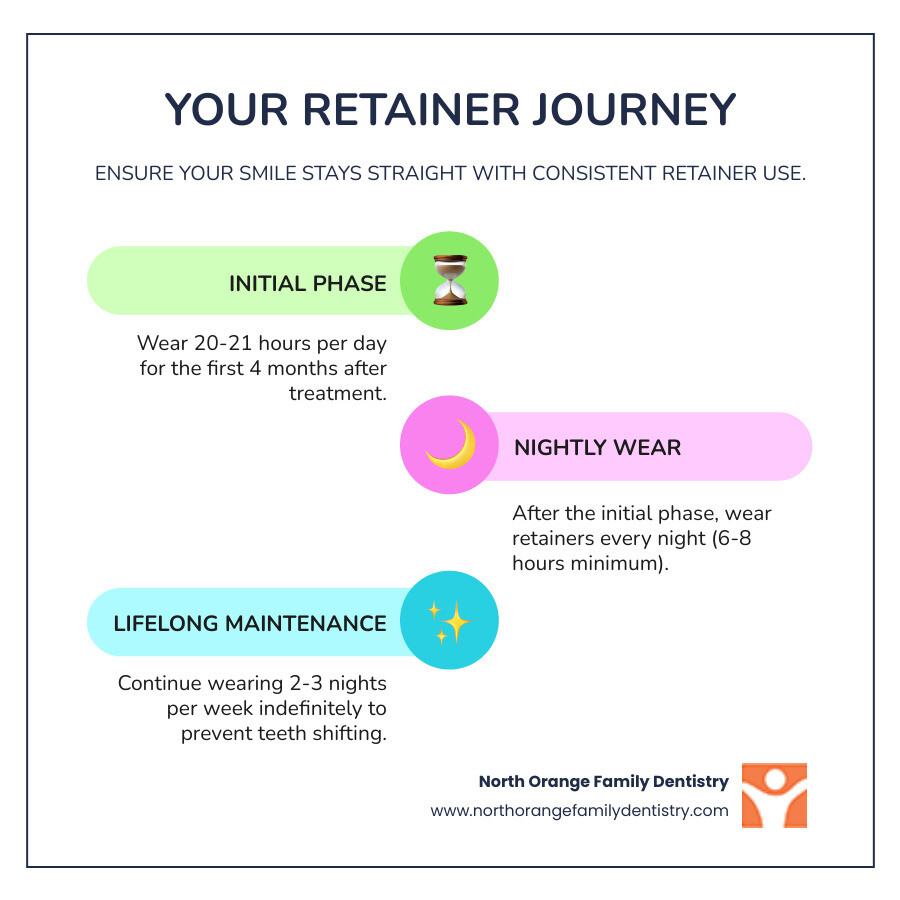
- Initial phase: Wear 20-21 hours per day for the first 4 months.
- Long-term maintenance: Wear every night while sleeping (6-8 hours minimum).
- Lifelong commitment: Continue wearing 2-3 nights per week indefinitely to prevent teeth from shifting back.
- Types suitable for nighttime: Hawley retainers, clear (Essix) retainers, and fixed/bonded retainers are all designed for sleep wear.
The day you get your braces off is exciting, but the work isn't over. Keeping your teeth straight requires commitment, as they have a natural tendency to shift back to their original positions—a process called orthodontic relapse. Without consistent retainer wear, especially at night, the investment you made in your smile can literally shift away while you sleep.
Think of your retainer as your smile's silent guardian. While you rest, it holds your teeth in their corrected positions, counteracting the natural forces that cause shifting. Whether you've just finished Invisalign or had braces years ago, nighttime retainer wear is crucial.
As Dr. Kyle Bogan, I've guided hundreds of families through orthodontic retention and understand the challenges of maintaining results. At North Orange Family Dentistry, we help patients develop sustainable routines that protect their smiles for life.
This guide will walk you through everything you need to know—from why nighttime wear matters to solving common problems like pain or discomfort. You'll learn the best cleaning practices, how to make retainer wear a habit, and when to seek professional help.
The Ultimate Guide to Sleeping with Retainers
Why Your Smile Depends on Nightly Retainer Use
You've invested time and effort into your new smile, and sleeping with retainers is the key to protecting it. It's a cornerstone of long-term oral health and maintaining your orthodontic results.
Counteracting Orthodontic Relapse
After braces or Invisalign treatment, your teeth, gums, and bone need time to stabilize in their new positions. Without a retainer, your teeth have a natural tendency to drift back towards their original alignment—a process called orthodontic relapse. Your retainer acts as a "nightly guardian," providing the gentle pressure needed to hold your teeth in place while your mouth adapts.
Protecting Against Daily Forces
Even after your teeth have settled, they can still shift due to aging, natural changes, and daily forces from chewing. Many people also grind or clench their teeth at night (bruxism), which can move teeth over time. Sleeping with retainers provides a protective barrier against these forces, ensuring your teeth remain perfectly aligned.
Maintaining Oral Health and Your Investment
Properly aligned teeth are easier to clean, reducing your risk of cavities and gum disease. A stable bite also supports proper jaw function. Consistent nighttime retainer wear is the most effective way to protect the time and money you invested in your smile, ensuring it lasts a lifetime.
Types of Retainers and Their Nighttime Role
When it comes to retainers, there isn't a one-size-fits-all solution. Different types offer unique benefits, and your orthodontist will recommend the best option for your specific needs. However, the goal remains the same: to keep your teeth in their corrected positions, especially while you're sleeping with retainers.
Here’s a comparison of the most common types:
| Retainer Type | Description - | Pros & Cons for Nighttime Wear - -| Hawley Retainer | A removable retainer composed of a metal wire that wraps around the front teeth and a plastic or acrylic base that rests against the roof of the mouth or the inside of the lower arch. | Generally very durable and effective at holding teeth in place. Some find the acrylic base bulky or the wire irritating, making it less comfortable for some while sleeping. || Essix (Clear) Retainer | A removable retainer made of transparent plastic that fits snugly over the entire arch of teeth. Similar in appearance to clear aligners. | Popular for their discreet appearance and comfort. Essix retainers are designed for long-term, nightly use. They are generally comfortable for sleeping with retainers, but can feel tight if not worn consistently. They may need replacement every 1-2 years. || Fixed/Bonded Retainer | A thin wire permanently cemented to the back (lingual side) of the front teeth (typically canine to canine) on either the upper or lower arch. | Designed for continuous wear and are safe to sleep with as they are always in place. They are invisible from the front and require no daily removal or insertion. However, they can be more challenging to clean thoroughly, requiring diligent flossing to prevent plaque buildup. |
At North Orange Family Dentistry, we work with you to determine the best type of retainer to safeguard your smile. While fixed retainers offer the convenience of being always in place, many patients will also be prescribed a removable retainer (like an Essix or Hawley) for added stability, especially for the upper arch or if specific shifting tendencies need to be addressed. Even with a fixed retainer, your orthodontist might recommend a removable one for nighttime use to prevent shifting in other areas of your mouth.
For more information on these clear options, explore our resources on Clear Aligners and Retainers.
Creating a Healthy Routine for Sleeping with Retainers
Making sleeping with retainers a consistent habit is key to preserving your orthodontic results. It might feel strange at first, but it will soon become as routine as brushing your teeth.
Best Cleaning Practices: Keep Your Retainer Fresh and Your Mouth Healthy
Proper hygiene is crucial, as retainers can accumulate bacteria. Neglecting cleaning can lead to bad breath, cavities, and gum disease.
Here’s a list of cleaning dos and don’ts:
- DO clean your retainers daily with a soft toothbrush and mild soap.
- DO rinse thoroughly with lukewarm water.
- DO consider using specialized cleaning tablets for a deeper clean.
- DO keep your retainer case clean.
- DON'T use abrasive toothpaste, which can scratch the plastic.
- DON'T use hot water, as it can warp the retainer.
- DON'T use harsh chemicals like bleach.
Habit-Forming Tips: Making Nighttime Wear Second Nature
With a few simple strategies, you can make sleeping with retainers a seamless part of your day:
- Integrate it with your oral hygiene routine: Clean your retainer right after you brush and floss.
- Keep your retainer case by your bedside: A visual reminder helps.
- Set a nightly reminder: Use your phone to help until the habit sticks.
- Be patient with yourself: It can take a few weeks for your mouth to adjust to the feeling of the retainer. Any initial dry mouth or excess saliva usually subsides.
Following these tips will help make nighttime retainer wear an automatic part of your routine, ensuring your smile stays straight and healthy.
Solving Common Problems: Pain, Fit, and Long-Term Wear
Even with the best intentions, you might encounter some issues when sleeping with retainers. Most common problems have simple solutions.
Retainer Pain: What It Means and What to Do
If your retainer hurts, it's usually a sign that your teeth have shifted or the retainer is damaged.
- Teeth Have Shifted: A tight, uncomfortable fit often means you haven't been wearing your retainer consistently. If the discomfort is minor, try wearing it full-time (20-22 hours/day) for a few days to see if your teeth gently move back into place.
- Retainer is Damaged: Heat, accidents, or general wear can distort your retainer's shape. A damaged retainer won't fit correctly and can cause pain.
When to See Your Orthodontist
If pain persists, is severe, or you can't get the retainer to fit, contact us immediately. A new retainer may be needed. If the shifting is significant, an orthodontic "tune-up" might be necessary. We also offer emergency dental treatments for urgent issues.
Common Mistakes to Avoid
- Inconsistent Wear: Skipping nights allows teeth to shift.
- Improper Storage: Always use your case to prevent damage or loss.
- Wrong Cleaning Methods: Hot water and abrasive toothpaste will damage your retainer.
- Biting Retainers into Place: Use your fingers to gently press the retainer into place to avoid cracks or distortion.
- Ignoring Dry Mouth: Sip water before bed. If dry mouth persists, let us know, as it can increase cavity risk.
How Long Should Retainers Be Worn at Night? Is It Ever Okay to Stop?
The short answer is: retainer wear is a lifelong commitment.
- Initial Phase (First 4 months): Wear your retainer 20-21 hours per day.
- Transition Phase (After 1.5 years): Transition to wearing it every night while sleeping (at least 6-8 hours).
- Long-Term Maintenance (Indefinitely): Wear your retainer at least 2-3 nights per week for life to prevent shifting. For most people, it's never okay to stop completely.
Proper wear and care are the only ways to guarantee your new smile lasts forever. If you have a fixed retainer, learn more about how to floss with a fixed retainer to maintain optimal hygiene.
Protecting Your Smile for a Lifetime
Your journey to a beautiful smile doesn't end when your braces or Invisalign treatment is complete. It transitions into the crucial retention phase. Sleeping with retainers is the key to safeguarding your investment and ensuring your smile stays straight for years to come.
As we've covered, a lifelong commitment to your retainer is the best way to prevent orthodontic relapse and maintain the smile you worked so hard to achieve. Consistent wear, proper cleaning, and regular check-ups are essential.
At North Orange Family Dentistry, we offer personalized, affordable dental services for all ages in Lewis Center, Delaware, and throughout Ohio. For patients without insurance, our Dental Wellness Plan helps make essential yearly care more accessible.
If you've stopped wearing your retainer, don't be discouraged. The most important step is to start again. Contact our dental office to see if your teeth have shifted and if a new retainer is needed. We help patients get back on track with their post-treatment care every day.
Your smile is a reflection of your health and confidence. Let us help you protect it.
CTA: Ready to ensure your smile stays perfect? Schedule a consultation with us today to discuss your retainer needs or address any concerns. Learn more about our Invisalign and retainer services.
Your Smile's Nightly Guardian
Sleeping with retainers is not just recommended—it's essential for maintaining your straight smile after orthodontic treatment. Here's what you need to know:
Quick Answer: Should You Sleep With Retainers?
- Yes, you should sleep with retainers in most cases, especially after braces or Invisalign treatment.
- Initial phase: Wear 20-21 hours per day for the first 4 months.
- Long-term maintenance: Wear every night while sleeping (6-8 hours minimum).
- Lifelong commitment: Continue wearing 2-3 nights per week indefinitely to prevent teeth from shifting back.
- Types suitable for nighttime: Hawley retainers, clear (Essix) retainers, and fixed/bonded retainers are all designed for sleep wear.
The day you get your braces off is exciting, but the work isn't over. Keeping your teeth straight requires commitment, as they have a natural tendency to shift back to their original positions—a process called orthodontic relapse. Without consistent retainer wear, especially at night, the investment you made in your smile can literally shift away while you sleep.
Think of your retainer as your smile's silent guardian. While you rest, it holds your teeth in their corrected positions, counteracting the natural forces that cause shifting. Whether you've just finished Invisalign or had braces years ago, nighttime retainer wear is crucial.
As Dr. Kyle Bogan, I've guided hundreds of families through orthodontic retention and understand the challenges of maintaining results. At North Orange Family Dentistry, we help patients develop sustainable routines that protect their smiles for life.
This guide will walk you through everything you need to know—from why nighttime wear matters to solving common problems like pain or discomfort. You'll learn the best cleaning practices, how to make retainer wear a habit, and when to seek professional help.
The Ultimate Guide to Sleeping with Retainers
Why Your Smile Depends on Nightly Retainer Use
You've invested time and effort into your new smile, and sleeping with retainers is the key to protecting it. It's a cornerstone of long-term oral health and maintaining your orthodontic results.
Counteracting Orthodontic Relapse
After braces or Invisalign treatment, your teeth, gums, and bone need time to stabilize in their new positions. Without a retainer, your teeth have a natural tendency to drift back towards their original alignment—a process called orthodontic relapse. Your retainer acts as a "nightly guardian," providing the gentle pressure needed to hold your teeth in place while your mouth adapts.
Protecting Against Daily Forces
Even after your teeth have settled, they can still shift due to aging, natural changes, and daily forces from chewing. Many people also grind or clench their teeth at night (bruxism), which can move teeth over time. Sleeping with retainers provides a protective barrier against these forces, ensuring your teeth remain perfectly aligned.
Maintaining Oral Health and Your Investment
Properly aligned teeth are easier to clean, reducing your risk of cavities and gum disease. A stable bite also supports proper jaw function. Consistent nighttime retainer wear is the most effective way to protect the time and money you invested in your smile, ensuring it lasts a lifetime.
Types of Retainers and Their Nighttime Role
When it comes to retainers, there isn't a one-size-fits-all solution. Different types offer unique benefits, and your orthodontist will recommend the best option for your specific needs. However, the goal remains the same: to keep your teeth in their corrected positions, especially while you're sleeping with retainers.
Here’s a comparison of the most common types:
| Retainer Type | Description - | Pros & Cons for Nighttime Wear - -| Hawley Retainer | A removable retainer composed of a metal wire that wraps around the front teeth and a plastic or acrylic base that rests against the roof of the mouth or the inside of the lower arch. | Generally very durable and effective at holding teeth in place. Some find the acrylic base bulky or the wire irritating, making it less comfortable for some while sleeping. || Essix (Clear) Retainer | A removable retainer made of transparent plastic that fits snugly over the entire arch of teeth. Similar in appearance to clear aligners. | Popular for their discreet appearance and comfort. Essix retainers are designed for long-term, nightly use. They are generally comfortable for sleeping with retainers, but can feel tight if not worn consistently. They may need replacement every 1-2 years. || Fixed/Bonded Retainer | A thin wire permanently cemented to the back (lingual side) of the front teeth (typically canine to canine) on either the upper or lower arch. | Designed for continuous wear and are safe to sleep with as they are always in place. They are invisible from the front and require no daily removal or insertion. However, they can be more challenging to clean thoroughly, requiring diligent flossing to prevent plaque buildup. |
At North Orange Family Dentistry, we work with you to determine the best type of retainer to safeguard your smile. While fixed retainers offer the convenience of being always in place, many patients will also be prescribed a removable retainer (like an Essix or Hawley) for added stability, especially for the upper arch or if specific shifting tendencies need to be addressed. Even with a fixed retainer, your orthodontist might recommend a removable one for nighttime use to prevent shifting in other areas of your mouth.
For more information on these clear options, explore our resources on Clear Aligners and Retainers.
Creating a Healthy Routine for Sleeping with Retainers
Making sleeping with retainers a consistent habit is key to preserving your orthodontic results. It might feel strange at first, but it will soon become as routine as brushing your teeth.
Best Cleaning Practices: Keep Your Retainer Fresh and Your Mouth Healthy
Proper hygiene is crucial, as retainers can accumulate bacteria. Neglecting cleaning can lead to bad breath, cavities, and gum disease.
Here’s a list of cleaning dos and don’ts:
- DO clean your retainers daily with a soft toothbrush and mild soap.
- DO rinse thoroughly with lukewarm water.
- DO consider using specialized cleaning tablets for a deeper clean.
- DO keep your retainer case clean.
- DON'T use abrasive toothpaste, which can scratch the plastic.
- DON'T use hot water, as it can warp the retainer.
- DON'T use harsh chemicals like bleach.
Habit-Forming Tips: Making Nighttime Wear Second Nature
With a few simple strategies, you can make sleeping with retainers a seamless part of your day:
- Integrate it with your oral hygiene routine: Clean your retainer right after you brush and floss.
- Keep your retainer case by your bedside: A visual reminder helps.
- Set a nightly reminder: Use your phone to help until the habit sticks.
- Be patient with yourself: It can take a few weeks for your mouth to adjust to the feeling of the retainer. Any initial dry mouth or excess saliva usually subsides.
Following these tips will help make nighttime retainer wear an automatic part of your routine, ensuring your smile stays straight and healthy.
Solving Common Problems: Pain, Fit, and Long-Term Wear
Even with the best intentions, you might encounter some issues when sleeping with retainers. Most common problems have simple solutions.
Retainer Pain: What It Means and What to Do
If your retainer hurts, it's usually a sign that your teeth have shifted or the retainer is damaged.
- Teeth Have Shifted: A tight, uncomfortable fit often means you haven't been wearing your retainer consistently. If the discomfort is minor, try wearing it full-time (20-22 hours/day) for a few days to see if your teeth gently move back into place.
- Retainer is Damaged: Heat, accidents, or general wear can distort your retainer's shape. A damaged retainer won't fit correctly and can cause pain.
When to See Your Orthodontist
If pain persists, is severe, or you can't get the retainer to fit, contact us immediately. A new retainer may be needed. If the shifting is significant, an orthodontic "tune-up" might be necessary. We also offer emergency dental treatments for urgent issues.
Common Mistakes to Avoid
- Inconsistent Wear: Skipping nights allows teeth to shift.
- Improper Storage: Always use your case to prevent damage or loss.
- Wrong Cleaning Methods: Hot water and abrasive toothpaste will damage your retainer.
- Biting Retainers into Place: Use your fingers to gently press the retainer into place to avoid cracks or distortion.
- Ignoring Dry Mouth: Sip water before bed. If dry mouth persists, let us know, as it can increase cavity risk.
How Long Should Retainers Be Worn at Night? Is It Ever Okay to Stop?
The short answer is: retainer wear is a lifelong commitment.
- Initial Phase (First 4 months): Wear your retainer 20-21 hours per day.
- Transition Phase (After 1.5 years): Transition to wearing it every night while sleeping (at least 6-8 hours).
- Long-Term Maintenance (Indefinitely): Wear your retainer at least 2-3 nights per week for life to prevent shifting. For most people, it's never okay to stop completely.
Proper wear and care are the only ways to guarantee your new smile lasts forever. If you have a fixed retainer, learn more about how to floss with a fixed retainer to maintain optimal hygiene.
Protecting Your Smile for a Lifetime
Your journey to a beautiful smile doesn't end when your braces or Invisalign treatment is complete. It transitions into the crucial retention phase. Sleeping with retainers is the key to safeguarding your investment and ensuring your smile stays straight for years to come.
As we've covered, a lifelong commitment to your retainer is the best way to prevent orthodontic relapse and maintain the smile you worked so hard to achieve. Consistent wear, proper cleaning, and regular check-ups are essential.
At North Orange Family Dentistry, we offer personalized, affordable dental services for all ages in Lewis Center, Delaware, and throughout Ohio. For patients without insurance, our Dental Wellness Plan helps make essential yearly care more accessible.
If you've stopped wearing your retainer, don't be discouraged. The most important step is to start again. Contact our dental office to see if your teeth have shifted and if a new retainer is needed. We help patients get back on track with their post-treatment care every day.
Your smile is a reflection of your health and confidence. Let us help you protect it.
CTA: Ready to ensure your smile stays perfect? Schedule a consultation with us today to discuss your retainer needs or address any concerns. Learn more about our Invisalign and retainer services.
Contact Us
Have any questions? Want to learn more?

