
Getting Back Your Bite: A Guide to Recovery After Root Canal Procedures
Recover fast with our guide to recovery after root canal: manage pain, diet tips, warning signs & long-term care for a smooth healing.


Understanding the Recovery After Root Canal Timeline
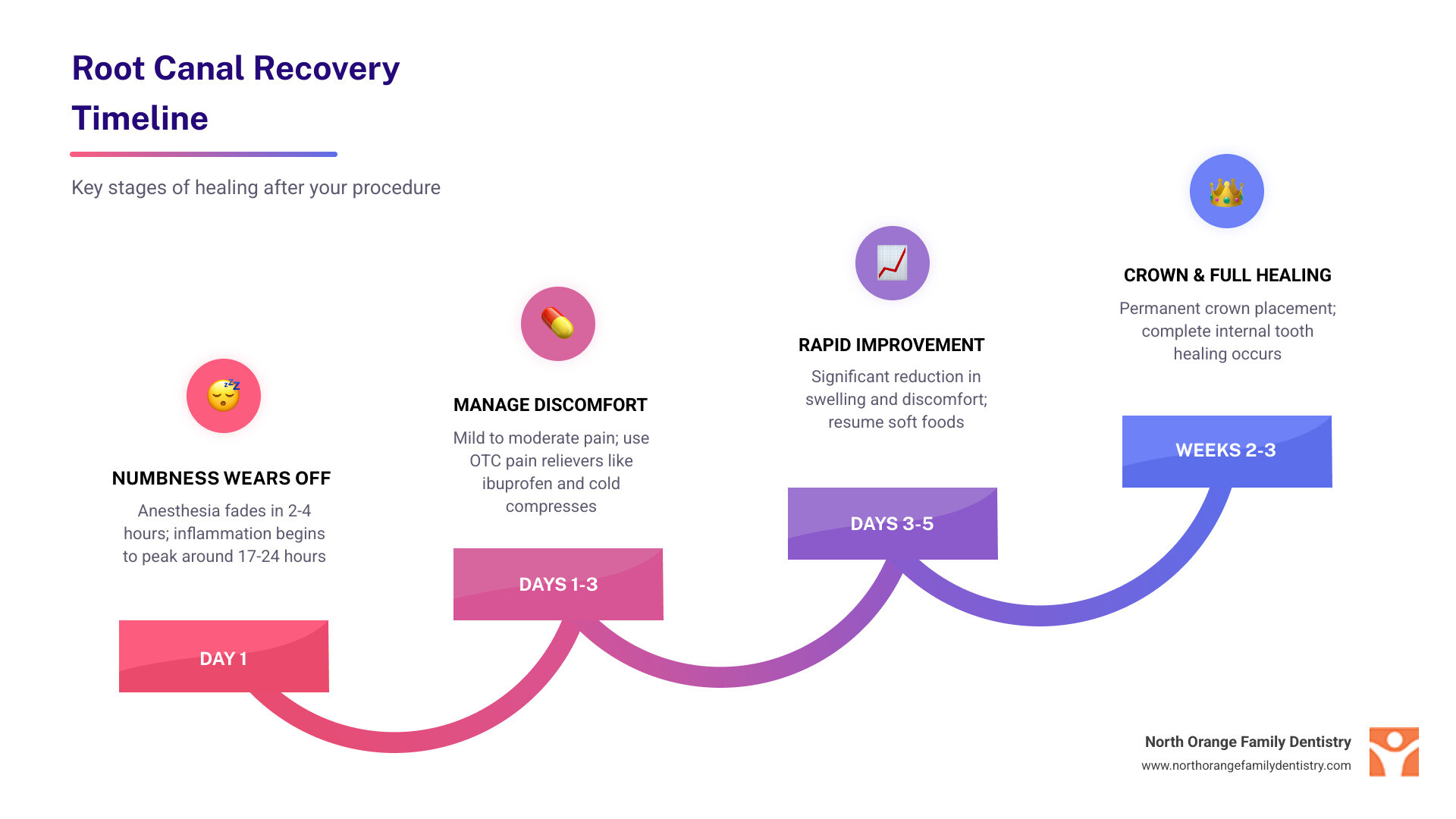
Recovery after root canal typically takes 3-5 days for most patients, with initial discomfort peaking within the first 24-48 hours and gradually improving. Here's what you need to know about your healing timeline:
Quick Recovery Timeline:
- First 2-4 hours: Numbness from anesthesia wears off
- 17-24 hours: Inflammation peaks, then begins to subside
- Days 1-3: Mild to moderate discomfort, manageable with over-the-counter pain relievers
- Days 3-5: Significant improvement in comfort
- 2-3 weeks: Follow-up appointment for permanent crown placement
- Several weeks: Complete internal healing
More than 15 million root canals are performed each year in the United States, with a success rate of 90-95%. The procedure removes infected pulp from inside your tooth, cleans the root canals, and seals them to prevent future infection. While the idea of a root canal might sound intimidating, modern techniques and proper aftercare make recovery straightforward for most patients.
The good news? Most people are surprised by how manageable their recovery is. The key is knowing what to expect and following the right steps during each phase of healing.
As Dr. Kyle Bogan, I've guided countless families through successful root canal recoveries at North Orange Family Dentistry, helping patients understand that proper aftercare is just as important as the procedure itself for ensuring long-term tooth health. With over two decades of experience in advanced family dental care, I've seen how following the right recovery protocol makes all the difference in achieving a comfortable, complication-free recovery after root canal treatment.
What to Expect During Your Recovery After Root Canal
When we talk about a root canal procedure explained, we often focus on the hour spent in the dental chair. However, the days following the procedure are where the real "magic" of healing happens. With more than 15 million of these procedures performed annually, the dental community has refined aftercare into a science.
According to scientific research on root canal treatment, the success rate for a functional, healthy tooth after treatment is between 90% and 95%. This high success rate is largely dependent on how well the patient manages the healing phase. At North Orange Family Dentistry, we believe that an informed patient is a happy patient. Understanding the biological process—how your body clears out inflammation and integrates the dental materials—can turn a stressful week into a productive period of rest and restoration.
Immediate Steps for Recovery After Root Canal (First 48 Hours)
The first 48 hours are the most critical window for your recovery after root canal. When you leave our office in Lewis Center, your mouth will likely still be numb. This numbness generally lasts between 2 and 4 hours.
During this time, it is vital to avoid eating or drinking hot liquids. We’ve seen many patients accidentally bite their cheek or tongue because they couldn't feel them! Once the anesthesia wears off, you may notice the area feels a bit tender. This is completely normal.
One of the most important root canal services insights we share is that inflammation actually peaks between 17 and 24 hours after the procedure. This is a natural response by your immune system as it begins to heal the tissues surrounding the tooth root. You can find more details on this biological response in the scientific research on post-treatment inflammation. To manage this peak, we recommend staying ahead of the discomfort by following your prescribed medication schedule immediately, rather than waiting for the pain to become severe.
Managing Pain and Discomfort at Home
Managing discomfort doesn't always require heavy-duty prescriptions. In fact, most of our patients find that over-the-counter options work beautifully. Ibuprofen (Advil or Motrin) and acetaminophen (Tylenol) are the "gold standard" for post-operative care.
Some patients worry, asking, "Are root canals bad for you?" because of the temporary soreness. The answer is a resounding "no." The soreness is simply the result of the ligaments around the tooth being slightly irritated during the cleaning process.
Here are our top tips for home management:
- Cold Compresses: Apply an ice pack to the outside of your cheek for 15-20 minutes at a time during the first 24 hours. This helps constrict blood vessels and reduce swelling.
- Salt Water Rinses: Starting 24 hours after the procedure, gently rinse with warm salt water. This keeps the area clean and draws out excess fluid from the gums.
- Elevate Your Head: When sleeping, use an extra pillow to keep your head elevated. This prevents blood from pooling in the jaw area, which can reduce throbbing sensations.
For more information on why these methods work, you can check out the scientific research on post-operative pain management.
Dietary Dos and Don’ts for a Smooth Recovery
Your diet plays a massive role in recovery after root canal. The goal is to avoid putting pressure on the treated tooth while the temporary filling or crown is in place.
The "Yes" List (Soft and Nutritious):
- Mashed potatoes or sweet potatoes (the ultimate comfort food!)
- Yogurt and cottage cheese
- Smoothies (but don't use a straw—the suction can be irritating)
- Scrambled eggs
- Lukewarm soups and broths
- Hummus and soft avocado
The "No" List (Avoid for at least a week):
- Crunchy foods: Chips, nuts, and popcorn can crack a temporary filling.
- Sticky foods: Caramel or gum can literally pull the filling right out of the tooth.
- Hard breads: Crusty baguettes require too much chewing force.
- Extreme temperatures: Very hot coffee or ice-cold water might trigger sensitivity in the surrounding nerves.
We always suggest chewing on the opposite side of your mouth until your permanent crown is placed. This gives the treated tooth a much-needed "vacation" while it heals.
When to Contact Your Dentist: Recognizing Complications
While complications are rare, it’s important to know the difference between "normal healing" and "time to call the doctor." At North Orange Family Dentistry, we prioritize your safety. If you are ever in doubt about your dental root canal recovery, we are just a phone call away.
SymptomNormal RecoveryWarning Sign (Call Us!)PainMild to moderate; improves after 3 daysSevere; getting worse over timeSwellingSlight puffiness near the toothVisible swelling in the cheek or neckBiteMay feel "different" due to temporary fillingFeels like the tooth is "too tall" or unevenFeverNoneTemperature over 101°FReactionMinor tendernessHives, rash, or difficulty breathing (Allergic reaction)
If your temporary filling falls out entirely, give us a call. While it’s not always a "midnight emergency," we do want to replace it quickly to prevent bacteria from entering the cleaned canals.
Long-Term Success and Full Recovery After Root Canal
The procedure isn't truly "finished" until the permanent restoration is placed. After the internal work is done, the tooth is often more brittle than a natural tooth. This is why a permanent crown is almost always recommended, especially for molars that handle heavy chewing loads.
Typically, we schedule the crown placement about 2-3 weeks after the initial procedure. This gap allows us to ensure all inflammation has subsided and the tooth is ready for its permanent "shield." If you're wondering how long do root canals take to fully resolve, the answer is usually about a month from the first appointment to the final crown fitting.
During this time, you might see a root canal specialist, also known as an endodontist, if your tooth has complex root anatomy. Whether you see Dr. Bogan or a specialist, the goal remains the same: preserving your natural smile for a lifetime.
Ensuring Lasting Oral Health in Lewis Center
At North Orange Family Dentistry, we don't just fix teeth; we care for people. Dr. Kyle Bogan and our entire team are dedicated to providing a five-star experience that makes even complex procedures like a root canal feel manageable and stress-free.
We understand that dental emergencies don't always happen during convenient hours. That’s why we offer emergency dental treatments and are often able to see patients on the same day. If you’re experiencing sudden pain, don’t wait—getting a root canal early can often save a tooth that might otherwise need extraction.
Beyond root canals, we are proud to offer advanced technology for your comfort, including:
- Laser Treatments: We feature laser therapy for TMJ pain relief, faster canker sore healing, and non-invasive periodontal disease treatment.
- Dental Wellness Plan: For our friends and neighbors in Lewis Center and Delaware without insurance, our Dental Wellness Plan provides a way to get necessary yearly care (including cleanings and exams) for a discounted price. It’s our way of making high-quality dentistry affordable for everyone.
- Restorative Excellence: If a tooth cannot be saved, we offer endosteal dental implants (averaging about $4,500 per tooth) to restore your bite and confidence.
Whether you need a routine wellness check-up, Invisalign, or help with TMJ pain, we are here for you. Our goal is to ensure your recovery after root canal is just the beginning of a long, healthy relationship with your smile.
Ready to get back your bite? Contact North Orange Family Dentistry today to schedule your consultation or follow-up. We look forward to seeing you in our Lewis Center office!
Understanding the Recovery After Root Canal Timeline
Recovery after root canal typically takes 3-5 days for most patients, with initial discomfort peaking within the first 24-48 hours and gradually improving. Here's what you need to know about your healing timeline:
Quick Recovery Timeline:
- First 2-4 hours: Numbness from anesthesia wears off
- 17-24 hours: Inflammation peaks, then begins to subside
- Days 1-3: Mild to moderate discomfort, manageable with over-the-counter pain relievers
- Days 3-5: Significant improvement in comfort
- 2-3 weeks: Follow-up appointment for permanent crown placement
- Several weeks: Complete internal healing
More than 15 million root canals are performed each year in the United States, with a success rate of 90-95%. The procedure removes infected pulp from inside your tooth, cleans the root canals, and seals them to prevent future infection. While the idea of a root canal might sound intimidating, modern techniques and proper aftercare make recovery straightforward for most patients.
The good news? Most people are surprised by how manageable their recovery is. The key is knowing what to expect and following the right steps during each phase of healing.
As Dr. Kyle Bogan, I've guided countless families through successful root canal recoveries at North Orange Family Dentistry, helping patients understand that proper aftercare is just as important as the procedure itself for ensuring long-term tooth health. With over two decades of experience in advanced family dental care, I've seen how following the right recovery protocol makes all the difference in achieving a comfortable, complication-free recovery after root canal treatment.
What to Expect During Your Recovery After Root Canal
When we talk about a root canal procedure explained, we often focus on the hour spent in the dental chair. However, the days following the procedure are where the real "magic" of healing happens. With more than 15 million of these procedures performed annually, the dental community has refined aftercare into a science.
According to scientific research on root canal treatment, the success rate for a functional, healthy tooth after treatment is between 90% and 95%. This high success rate is largely dependent on how well the patient manages the healing phase. At North Orange Family Dentistry, we believe that an informed patient is a happy patient. Understanding the biological process—how your body clears out inflammation and integrates the dental materials—can turn a stressful week into a productive period of rest and restoration.
Immediate Steps for Recovery After Root Canal (First 48 Hours)
The first 48 hours are the most critical window for your recovery after root canal. When you leave our office in Lewis Center, your mouth will likely still be numb. This numbness generally lasts between 2 and 4 hours.
During this time, it is vital to avoid eating or drinking hot liquids. We’ve seen many patients accidentally bite their cheek or tongue because they couldn't feel them! Once the anesthesia wears off, you may notice the area feels a bit tender. This is completely normal.
One of the most important root canal services insights we share is that inflammation actually peaks between 17 and 24 hours after the procedure. This is a natural response by your immune system as it begins to heal the tissues surrounding the tooth root. You can find more details on this biological response in the scientific research on post-treatment inflammation. To manage this peak, we recommend staying ahead of the discomfort by following your prescribed medication schedule immediately, rather than waiting for the pain to become severe.
Managing Pain and Discomfort at Home
Managing discomfort doesn't always require heavy-duty prescriptions. In fact, most of our patients find that over-the-counter options work beautifully. Ibuprofen (Advil or Motrin) and acetaminophen (Tylenol) are the "gold standard" for post-operative care.
Some patients worry, asking, "Are root canals bad for you?" because of the temporary soreness. The answer is a resounding "no." The soreness is simply the result of the ligaments around the tooth being slightly irritated during the cleaning process.
Here are our top tips for home management:
- Cold Compresses: Apply an ice pack to the outside of your cheek for 15-20 minutes at a time during the first 24 hours. This helps constrict blood vessels and reduce swelling.
- Salt Water Rinses: Starting 24 hours after the procedure, gently rinse with warm salt water. This keeps the area clean and draws out excess fluid from the gums.
- Elevate Your Head: When sleeping, use an extra pillow to keep your head elevated. This prevents blood from pooling in the jaw area, which can reduce throbbing sensations.
For more information on why these methods work, you can check out the scientific research on post-operative pain management.
Dietary Dos and Don’ts for a Smooth Recovery
Your diet plays a massive role in recovery after root canal. The goal is to avoid putting pressure on the treated tooth while the temporary filling or crown is in place.
The "Yes" List (Soft and Nutritious):
- Mashed potatoes or sweet potatoes (the ultimate comfort food!)
- Yogurt and cottage cheese
- Smoothies (but don't use a straw—the suction can be irritating)
- Scrambled eggs
- Lukewarm soups and broths
- Hummus and soft avocado
The "No" List (Avoid for at least a week):
- Crunchy foods: Chips, nuts, and popcorn can crack a temporary filling.
- Sticky foods: Caramel or gum can literally pull the filling right out of the tooth.
- Hard breads: Crusty baguettes require too much chewing force.
- Extreme temperatures: Very hot coffee or ice-cold water might trigger sensitivity in the surrounding nerves.
We always suggest chewing on the opposite side of your mouth until your permanent crown is placed. This gives the treated tooth a much-needed "vacation" while it heals.
When to Contact Your Dentist: Recognizing Complications
While complications are rare, it’s important to know the difference between "normal healing" and "time to call the doctor." At North Orange Family Dentistry, we prioritize your safety. If you are ever in doubt about your dental root canal recovery, we are just a phone call away.
SymptomNormal RecoveryWarning Sign (Call Us!)PainMild to moderate; improves after 3 daysSevere; getting worse over timeSwellingSlight puffiness near the toothVisible swelling in the cheek or neckBiteMay feel "different" due to temporary fillingFeels like the tooth is "too tall" or unevenFeverNoneTemperature over 101°FReactionMinor tendernessHives, rash, or difficulty breathing (Allergic reaction)
If your temporary filling falls out entirely, give us a call. While it’s not always a "midnight emergency," we do want to replace it quickly to prevent bacteria from entering the cleaned canals.
Long-Term Success and Full Recovery After Root Canal
The procedure isn't truly "finished" until the permanent restoration is placed. After the internal work is done, the tooth is often more brittle than a natural tooth. This is why a permanent crown is almost always recommended, especially for molars that handle heavy chewing loads.
Typically, we schedule the crown placement about 2-3 weeks after the initial procedure. This gap allows us to ensure all inflammation has subsided and the tooth is ready for its permanent "shield." If you're wondering how long do root canals take to fully resolve, the answer is usually about a month from the first appointment to the final crown fitting.
During this time, you might see a root canal specialist, also known as an endodontist, if your tooth has complex root anatomy. Whether you see Dr. Bogan or a specialist, the goal remains the same: preserving your natural smile for a lifetime.
Ensuring Lasting Oral Health in Lewis Center
At North Orange Family Dentistry, we don't just fix teeth; we care for people. Dr. Kyle Bogan and our entire team are dedicated to providing a five-star experience that makes even complex procedures like a root canal feel manageable and stress-free.
We understand that dental emergencies don't always happen during convenient hours. That’s why we offer emergency dental treatments and are often able to see patients on the same day. If you’re experiencing sudden pain, don’t wait—getting a root canal early can often save a tooth that might otherwise need extraction.
Beyond root canals, we are proud to offer advanced technology for your comfort, including:
- Laser Treatments: We feature laser therapy for TMJ pain relief, faster canker sore healing, and non-invasive periodontal disease treatment.
- Dental Wellness Plan: For our friends and neighbors in Lewis Center and Delaware without insurance, our Dental Wellness Plan provides a way to get necessary yearly care (including cleanings and exams) for a discounted price. It’s our way of making high-quality dentistry affordable for everyone.
- Restorative Excellence: If a tooth cannot be saved, we offer endosteal dental implants (averaging about $4,500 per tooth) to restore your bite and confidence.
Whether you need a routine wellness check-up, Invisalign, or help with TMJ pain, we are here for you. Our goal is to ensure your recovery after root canal is just the beginning of a long, healthy relationship with your smile.
Ready to get back your bite? Contact North Orange Family Dentistry today to schedule your consultation or follow-up. We look forward to seeing you in our Lewis Center office!
Contact Us
Have any questions? Want to learn more?

