
Unpacking the Root Canal: A Simple Explanation
Demystify the dental root canal! Learn why it's needed, what to expect, recovery, benefits & common myths. Save your natural tooth.


Understanding the Basics of Root Canal Treatment
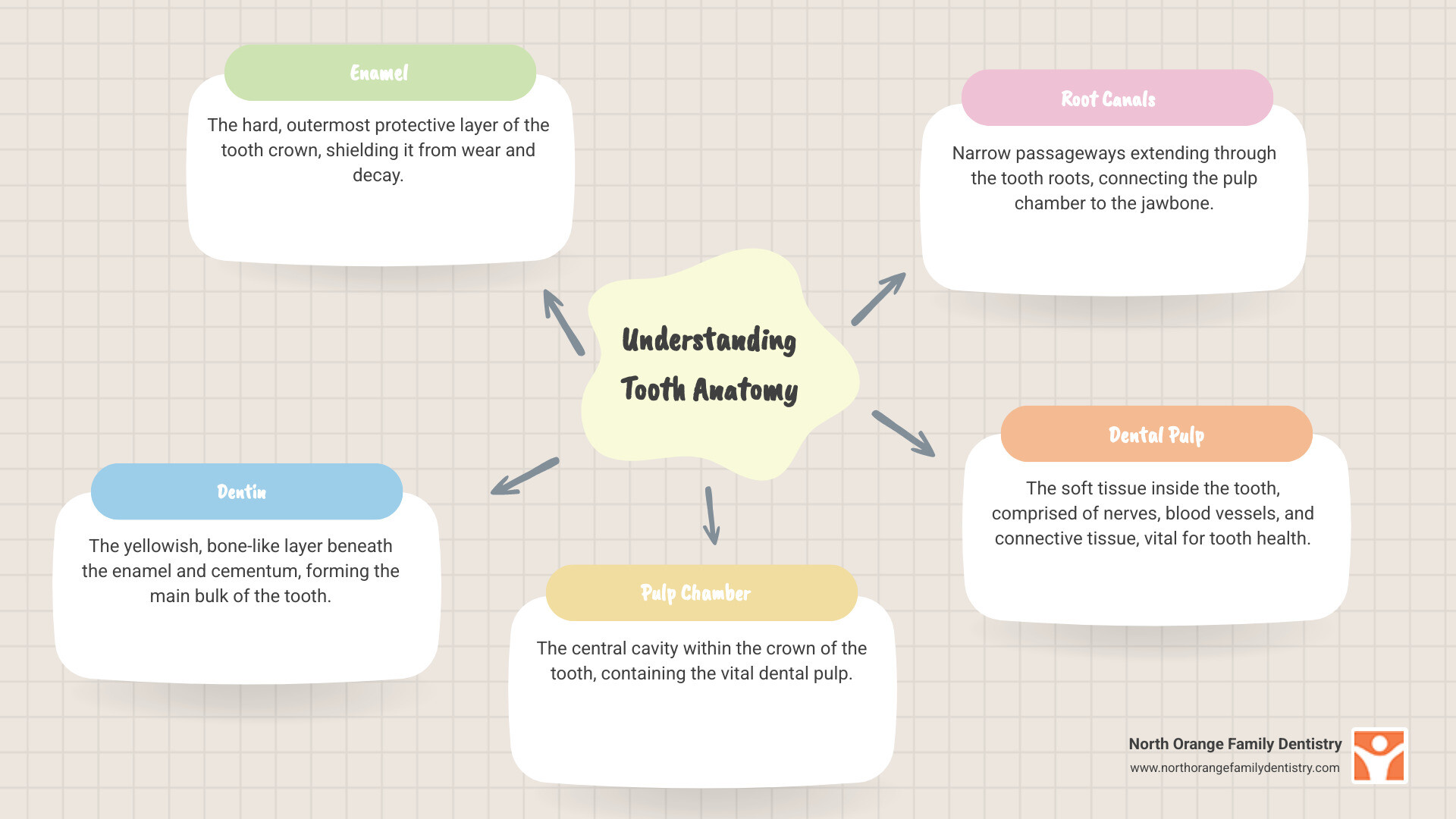
A dental root canal is a procedure to save a natural tooth by removing infected or damaged pulp—the soft tissue containing nerves and blood vessels. The inside of the tooth is then cleaned, disinfected, filled, and sealed to prevent further infection.
Quick Facts:
- What it treats: Infected or inflamed tooth pulp from deep decay, cracks, or repeated dental work.
- How common: Over 15 million root canals are performed annually in the U.S.
- Success rate: Properly treated teeth have a 97% long-term success rate.
- Purpose: To eliminate pain, stop infection, and save your natural tooth from extraction.
Despite its reputation in movies, modern root canal therapy is typically no more uncomfortable than getting a filling. Thanks to effective anesthesia and advanced techniques, most patients are comfortable during the procedure.
When bacteria enter the inner pulp of your tooth, it can cause a painful infection. If left untreated, this infection can lead to an abscess, bone loss, or the loss of the tooth itself. A root canal removes the source of the infection, relieving your pain and saving the tooth. Keeping your natural tooth is always the best option for chewing, appearance, and overall oral health.
Dr. Kyle Bogan and the team at North Orange Family Dentistry use modern technology to make root canal treatment as comfortable and successful as possible for families in the Delaware and Lewis Center area.
The Complete Guide to a Dental Root Canal Procedure
Knowing what to expect from a dental root canal can ease any anxiety. This procedure has saved millions of teeth and provided relief from serious pain. Here’s a walkthrough of the entire process, from warning signs to recovery.
Signs You Might Need a Root Canal
When the pulp inside your tooth is infected, your body often sends clear signals. Recognizing them early makes treatment easier. Look out for:
- Severe, persistent tooth pain: A sharp, throbbing pain when you bite down or a constant ache that disrupts your sleep is a major red flag.
- Lingering sensitivity to hot or cold: If pain from hot or cold foods sticks around long after you've finished eating or drinking, the pulp may be damaged.
- Swollen or tender gums: Infection inside the tooth can cause the surrounding gum tissue to become puffy, sore, or discolored.
- A pimple on the gums: This small, pus-filled bump is a sign of an abscess, a serious infection requiring immediate attention. Learn more about Dental Abscess Symptoms.
- A cracked or chipped tooth: Even if it doesn't hurt, a crack provides an entry point for bacteria to infect the pulp.
- Tooth discoloration: A tooth that turns gray or dark yellow may indicate internal damage to the pulp.
Sometimes, a tooth needs a root canal without showing any symptoms, which is why regular check-ups are so important. If you're experiencing severe pain, don't wait. We offer same-day emergency dental care to provide fast relief. Understanding Why Do My Teeth Hurt is the first step, and our Emergency Dentist Lewis Center services are here for you.

What to Expect: The Step-by-Step Process
With modern techniques, a dental root canal is often as comfortable as getting a filling. At North Orange Family Dentistry, your comfort is our priority. Here’s what the process involves:
- Numbing and Preparation: We start by taking X-rays to assess the tooth's root structure. Then, we apply local anesthesia to completely numb the tooth and surrounding area. For anxious patients, we offer strategies to help you relax. See our guide on Conquering the Dental Chair: Effective Strategies to Manage Dental Anxiety.
- Isolation: A small rubber sheet called a dental dam is placed around the tooth. This keeps the area clean and dry during the procedure.
- Access and Cleaning: We create a small access opening in the tooth to reach the pulp chamber. Using tiny, specialized instruments, we carefully remove the infected pulp and bacteria. The inner canals are then cleaned, shaped, and disinfected with an irrigating solution.
- Filling the Canals: Once clean, the canals are filled with a biocompatible, rubber-like material called gutta-percha. This, along with a dental sealer, seals the canals to prevent reinfection.
- Sealing and Restoration: A temporary filling is placed to protect the tooth. The final step is a permanent restoration, usually a crown for back teeth, which restores the tooth's strength and function. This is crucial for the long-term success of your root canal.
Most root canals take 60 to 90 minutes and can be done in one or two visits. Our commitment to Pain-Free Dental Care ensures a comfortable experience. You can also view Educational videos on root canal treatment to see the process.
Recovery and Aftercare
After your dental root canal, some mild soreness for a few days is normal. Here’s how to ensure a smooth recovery:
- Manage Discomfort: Over-the-counter pain relievers like ibuprofen are usually sufficient. We will provide a prescription if needed.
- Wait for Numbness to Fade: Avoid eating until the anesthesia wears off to prevent biting your cheek or tongue.
- Practice Good Oral Hygiene: Continue brushing and flossing daily, but be gentle around the treated tooth initially.
- Eat Soft Foods: Stick to foods like yogurt, smoothies, pasta, and scrambled eggs for a few days. The Cleveland Clinic offers more ideas on what to eat after oral surgery.
- Avoid Chewing on the Tooth: Do not chew on the treated tooth until the permanent crown or filling is in place.
- Attend Follow-Up Appointments: These are essential for placing the final restoration and ensuring your tooth heals properly.
Recovery typically takes less than a week. Call us if you experience severe pain or swelling.
Benefits of a Dental Root Canal
A dental root canal is about preserving your natural tooth. The key benefits include:
- Pain Relief: It eliminates the infection causing your toothache.
- Efficient Chewing: Saving your tooth maintains your natural bite and chewing ability.
- Natural Appearance: A restored tooth blends seamlessly with your smile.
- Protecting Other Teeth: It prevents neighboring teeth from shifting into an empty space.
- Avoiding Tooth Loss: It's a less invasive and more cost-effective solution over time than extraction and replacement.
- Supporting Overall Health: It stops the spread of infection from the tooth to the rest of your body.
Your Root Canal Questions Answered
It's natural to have questions—and maybe a few worries—about a dental root canal. Much of the fear surrounding this procedure comes from outdated information and myths. Let's set the record straight.
Debunking Myths and Addressing Concerns about a Dental Root Canal
Let's tackle the most common misconceptions about root canals head-on.
Myth: Root canals are extremely painful.Truth: This is the biggest myth. The procedure is performed to relieve the severe pain caused by an infection. With modern anesthesia, a dental root canal is typically no more uncomfortable than getting a filling. Our focus on Pain-Free Dental Care ensures your comfort.
Myth: A root canal "kills" the tooth.Truth: The procedure removes the infected pulp, but the tooth remains alive and functional, nourished by surrounding tissues. It can chew, look, and work just like any other tooth.
Myth: Root canals are linked to cancer or other illnesses.Truth: This claim is based on long-discredited research from the 1920s. There is no credible scientific evidence linking root canal treatment to any systemic disease. The American Association of Endodontists confirms that the procedure is safe. If you're wondering, Are Root Canals Bad For You?, the answer is no—leaving an infection untreated is the real health risk.
Myth: It's better to just pull the tooth.Truth: Saving your natural tooth is always the best option. Extraction can lead to shifting teeth, bone loss, and the need for more expensive replacements like a dental implant or bridge. A root canal preserves your natural smile and bite.
Cost, Specialists, and Long-Term Outlook
Understanding the practical side of a dental root canal helps you make confident decisions.
Cost and Affordability: The cost varies depending on the tooth's complexity—molars with multiple canals cost more than front teeth. Most dental insurance plans cover endodontic treatment. For patients without insurance, we offer the North Orange Family Dentistry's Dental Wellness Plan, which provides access to yearly care and discounts on treatments at an affordable price.
Specialists: General dentists are trained to perform root canals. However, for highly complex cases, we may refer you to an endodontist, a Root Canal Specialist who has extra training in treating the inside of teeth.
Long-Term Outlook: The prognosis is excellent. With a proper restoration (like a crown), a root canal-treated tooth can last a lifetime. Studies show a long-term success rate of 97%. Good oral hygiene and regular check-ups are key to ensuring this longevity.
Alternatives to Root Canal: The main alternative is tooth extraction. While this removes the infection, it creates a gap that can cause other dental problems. The missing tooth would then ideally be replaced with a dental implant, bridge, or partial denture. Maintaining your natural tooth with a root canal is generally the most conservative and cost-effective solution over the long term. Learn more about our advanced Root Canal services and how we can help you save your tooth.
Why Choose North Orange Family Dentistry for Your Root Canal?
When you need a dental root canal, the right dental team makes all the difference. At North Orange Family Dentistry in Lewis Center, Ohio, we are dedicated to making your treatment as comfortable, effective, and stress-free as possible.
Here’s why patients trust us with their care:
Advanced Technology & Compassionate Care: We combine state-of-the-art diagnostic and treatment technology with the gentle, experienced care of Dr. Kyle Bogan. This means your procedure is more precise, efficient, and comfortable.
Emergency Availability: Tooth pain can't wait. We offer same-day emergency dental services to provide fast relief when you need it most.
Focus on Comfort: We are committed to pain-free dentistry. With modern anesthesia and a team that prioritizes your well-being, we are changing the narrative on root canals. We also offer strategies to help anxious patients feel at ease.
Innovative Laser Treatments: We are proud to feature advanced laser technology for treating TMJ pain, canker sores, and periodontal disease, offering less invasive options with faster healing.
Comprehensive Services: We are your dental home for all your needs, from routine oral hygiene and wellness checkups to Invisalign, dental implants, teeth whitening, crowns, and Botox.
Affordable Care: Quality dental care should be accessible. For those without dental insurance, our Dental Wellness Plan offers discounts on treatments like root canals and covers yearly preventative care for an affordable price.
We don't just treat teeth—we build lasting relationships and partner with you for your long-term oral health. If you are experiencing tooth pain, let us help you save your natural tooth and restore your smile.
Understanding the Basics of Root Canal Treatment
A dental root canal is a procedure to save a natural tooth by removing infected or damaged pulp—the soft tissue containing nerves and blood vessels. The inside of the tooth is then cleaned, disinfected, filled, and sealed to prevent further infection.
Quick Facts:
- What it treats: Infected or inflamed tooth pulp from deep decay, cracks, or repeated dental work.
- How common: Over 15 million root canals are performed annually in the U.S.
- Success rate: Properly treated teeth have a 97% long-term success rate.
- Purpose: To eliminate pain, stop infection, and save your natural tooth from extraction.
Despite its reputation in movies, modern root canal therapy is typically no more uncomfortable than getting a filling. Thanks to effective anesthesia and advanced techniques, most patients are comfortable during the procedure.
When bacteria enter the inner pulp of your tooth, it can cause a painful infection. If left untreated, this infection can lead to an abscess, bone loss, or the loss of the tooth itself. A root canal removes the source of the infection, relieving your pain and saving the tooth. Keeping your natural tooth is always the best option for chewing, appearance, and overall oral health.
Dr. Kyle Bogan and the team at North Orange Family Dentistry use modern technology to make root canal treatment as comfortable and successful as possible for families in the Delaware and Lewis Center area.
The Complete Guide to a Dental Root Canal Procedure
Knowing what to expect from a dental root canal can ease any anxiety. This procedure has saved millions of teeth and provided relief from serious pain. Here’s a walkthrough of the entire process, from warning signs to recovery.
Signs You Might Need a Root Canal
When the pulp inside your tooth is infected, your body often sends clear signals. Recognizing them early makes treatment easier. Look out for:
- Severe, persistent tooth pain: A sharp, throbbing pain when you bite down or a constant ache that disrupts your sleep is a major red flag.
- Lingering sensitivity to hot or cold: If pain from hot or cold foods sticks around long after you've finished eating or drinking, the pulp may be damaged.
- Swollen or tender gums: Infection inside the tooth can cause the surrounding gum tissue to become puffy, sore, or discolored.
- A pimple on the gums: This small, pus-filled bump is a sign of an abscess, a serious infection requiring immediate attention. Learn more about Dental Abscess Symptoms.
- A cracked or chipped tooth: Even if it doesn't hurt, a crack provides an entry point for bacteria to infect the pulp.
- Tooth discoloration: A tooth that turns gray or dark yellow may indicate internal damage to the pulp.
Sometimes, a tooth needs a root canal without showing any symptoms, which is why regular check-ups are so important. If you're experiencing severe pain, don't wait. We offer same-day emergency dental care to provide fast relief. Understanding Why Do My Teeth Hurt is the first step, and our Emergency Dentist Lewis Center services are here for you.
What to Expect: The Step-by-Step Process
With modern techniques, a dental root canal is often as comfortable as getting a filling. At North Orange Family Dentistry, your comfort is our priority. Here’s what the process involves:
- Numbing and Preparation: We start by taking X-rays to assess the tooth's root structure. Then, we apply local anesthesia to completely numb the tooth and surrounding area. For anxious patients, we offer strategies to help you relax. See our guide on Conquering the Dental Chair: Effective Strategies to Manage Dental Anxiety.
- Isolation: A small rubber sheet called a dental dam is placed around the tooth. This keeps the area clean and dry during the procedure.
- Access and Cleaning: We create a small access opening in the tooth to reach the pulp chamber. Using tiny, specialized instruments, we carefully remove the infected pulp and bacteria. The inner canals are then cleaned, shaped, and disinfected with an irrigating solution.
- Filling the Canals: Once clean, the canals are filled with a biocompatible, rubber-like material called gutta-percha. This, along with a dental sealer, seals the canals to prevent reinfection.
- Sealing and Restoration: A temporary filling is placed to protect the tooth. The final step is a permanent restoration, usually a crown for back teeth, which restores the tooth's strength and function. This is crucial for the long-term success of your root canal.
Most root canals take 60 to 90 minutes and can be done in one or two visits. Our commitment to Pain-Free Dental Care ensures a comfortable experience. You can also view Educational videos on root canal treatment to see the process.
Recovery and Aftercare
After your dental root canal, some mild soreness for a few days is normal. Here’s how to ensure a smooth recovery:
- Manage Discomfort: Over-the-counter pain relievers like ibuprofen are usually sufficient. We will provide a prescription if needed.
- Wait for Numbness to Fade: Avoid eating until the anesthesia wears off to prevent biting your cheek or tongue.
- Practice Good Oral Hygiene: Continue brushing and flossing daily, but be gentle around the treated tooth initially.
- Eat Soft Foods: Stick to foods like yogurt, smoothies, pasta, and scrambled eggs for a few days. The Cleveland Clinic offers more ideas on what to eat after oral surgery.
- Avoid Chewing on the Tooth: Do not chew on the treated tooth until the permanent crown or filling is in place.
- Attend Follow-Up Appointments: These are essential for placing the final restoration and ensuring your tooth heals properly.
Recovery typically takes less than a week. Call us if you experience severe pain or swelling.
Benefits of a Dental Root Canal
A dental root canal is about preserving your natural tooth. The key benefits include:
- Pain Relief: It eliminates the infection causing your toothache.
- Efficient Chewing: Saving your tooth maintains your natural bite and chewing ability.
- Natural Appearance: A restored tooth blends seamlessly with your smile.
- Protecting Other Teeth: It prevents neighboring teeth from shifting into an empty space.
- Avoiding Tooth Loss: It's a less invasive and more cost-effective solution over time than extraction and replacement.
- Supporting Overall Health: It stops the spread of infection from the tooth to the rest of your body.
Your Root Canal Questions Answered
It's natural to have questions—and maybe a few worries—about a dental root canal. Much of the fear surrounding this procedure comes from outdated information and myths. Let's set the record straight.
Debunking Myths and Addressing Concerns about a Dental Root Canal
Let's tackle the most common misconceptions about root canals head-on.
Myth: Root canals are extremely painful.Truth: This is the biggest myth. The procedure is performed to relieve the severe pain caused by an infection. With modern anesthesia, a dental root canal is typically no more uncomfortable than getting a filling. Our focus on Pain-Free Dental Care ensures your comfort.
Myth: A root canal "kills" the tooth.Truth: The procedure removes the infected pulp, but the tooth remains alive and functional, nourished by surrounding tissues. It can chew, look, and work just like any other tooth.
Myth: Root canals are linked to cancer or other illnesses.Truth: This claim is based on long-discredited research from the 1920s. There is no credible scientific evidence linking root canal treatment to any systemic disease. The American Association of Endodontists confirms that the procedure is safe. If you're wondering, Are Root Canals Bad For You?, the answer is no—leaving an infection untreated is the real health risk.
Myth: It's better to just pull the tooth.Truth: Saving your natural tooth is always the best option. Extraction can lead to shifting teeth, bone loss, and the need for more expensive replacements like a dental implant or bridge. A root canal preserves your natural smile and bite.
Cost, Specialists, and Long-Term Outlook
Understanding the practical side of a dental root canal helps you make confident decisions.
Cost and Affordability: The cost varies depending on the tooth's complexity—molars with multiple canals cost more than front teeth. Most dental insurance plans cover endodontic treatment. For patients without insurance, we offer the North Orange Family Dentistry's Dental Wellness Plan, which provides access to yearly care and discounts on treatments at an affordable price.
Specialists: General dentists are trained to perform root canals. However, for highly complex cases, we may refer you to an endodontist, a Root Canal Specialist who has extra training in treating the inside of teeth.
Long-Term Outlook: The prognosis is excellent. With a proper restoration (like a crown), a root canal-treated tooth can last a lifetime. Studies show a long-term success rate of 97%. Good oral hygiene and regular check-ups are key to ensuring this longevity.
Alternatives to Root Canal: The main alternative is tooth extraction. While this removes the infection, it creates a gap that can cause other dental problems. The missing tooth would then ideally be replaced with a dental implant, bridge, or partial denture. Maintaining your natural tooth with a root canal is generally the most conservative and cost-effective solution over the long term. Learn more about our advanced Root Canal services and how we can help you save your tooth.
Why Choose North Orange Family Dentistry for Your Root Canal?
When you need a dental root canal, the right dental team makes all the difference. At North Orange Family Dentistry in Lewis Center, Ohio, we are dedicated to making your treatment as comfortable, effective, and stress-free as possible.
Here’s why patients trust us with their care:
Advanced Technology & Compassionate Care: We combine state-of-the-art diagnostic and treatment technology with the gentle, experienced care of Dr. Kyle Bogan. This means your procedure is more precise, efficient, and comfortable.
Emergency Availability: Tooth pain can't wait. We offer same-day emergency dental services to provide fast relief when you need it most.
Focus on Comfort: We are committed to pain-free dentistry. With modern anesthesia and a team that prioritizes your well-being, we are changing the narrative on root canals. We also offer strategies to help anxious patients feel at ease.
Innovative Laser Treatments: We are proud to feature advanced laser technology for treating TMJ pain, canker sores, and periodontal disease, offering less invasive options with faster healing.
Comprehensive Services: We are your dental home for all your needs, from routine oral hygiene and wellness checkups to Invisalign, dental implants, teeth whitening, crowns, and Botox.
Affordable Care: Quality dental care should be accessible. For those without dental insurance, our Dental Wellness Plan offers discounts on treatments like root canals and covers yearly preventative care for an affordable price.
We don't just treat teeth—we build lasting relationships and partner with you for your long-term oral health. If you are experiencing tooth pain, let us help you save your natural tooth and restore your smile.
Contact Us
Have any questions? Want to learn more?

