
The Definitive Guide to Dental Crown Procedure
Learn about the dental crown procedure from start to finish, including same-day options, materials, and recovery. Schedule your consultation today.


What Is a Dental Crown and Why Is It Needed?
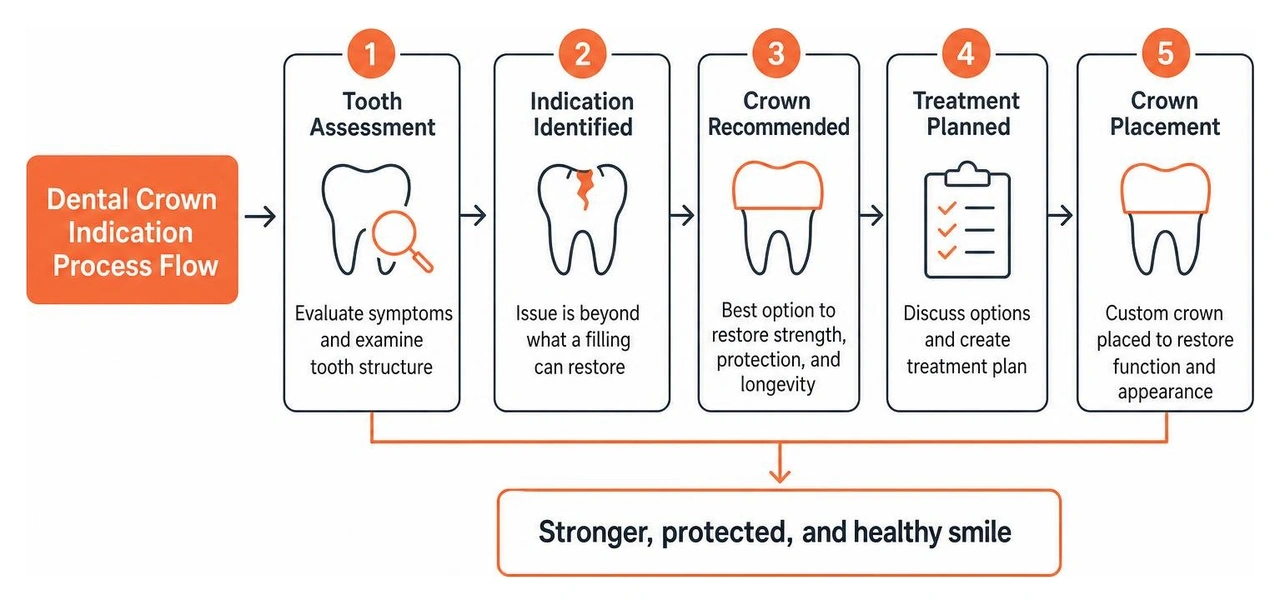
A dental crown, often called a tooth cap, is a custom-fitted dental restoration designed to completely encase the entire visible portion of a compromised tooth above the gumline. When a natural tooth experiences significant structural breakdown, a standard filling or composite restoration may no longer provide sufficient support. In these situations, placing a full-coverage crown restores the tooth's original shape, strength, functionality, and aesthetic appearance, allowing you to chew and speak with complete confidence.
Common clinical reasons for placing a custom dental crown include:
- Deep tooth decay that has severely undermined the structural integrity of the surrounding enamel and dentin walls
- A cracked tooth, fractured structure, or split enamel that is highly vulnerable to further breakages under normal chewing pressure
- Essential structural protection following a root canal procedure, which prevents the brittle, endodontically treated tooth from fracturing
- Severe tooth enamel wear caused by chronic nocturnal bruxism (teeth grinding), clenching, or aggressive acid erosion
- Supporting large filling replacements when very little original natural tooth structure remains intact
When sudden, severe tooth pain or unexpectedly broken teeth catch you off guard, we offer same-day emergency dental appointments to alleviate discomfort and protect your oral health immediately. Delaying necessary treatment for a structurally compromised tooth significantly increases the risk of complete tooth failure, which could eventually require a full tooth extraction. To explore the pros and cons of this treatment option in depth, read our breakdown of the advantages and disadvantages of dental crowns. For additional medical background on basic crown concepts and protocols, review MedlinePlus guidelines on dental crowns.
Choosing the Right Dental Crown Material
Selecting the appropriate material for your dental crown depends on several key clinical factors, including the precise location of the tooth in your mouth, daily functional biting demands, gum tissue health, and your personal cosmetic preferences. Learn more about porcelain dental crowns and review the Cleveland Clinic summary of dental crown types for further details.
Here are the primary material options available in modern restorative dentistry:
- All-Porcelain / All-Ceramic: Highly recommended for visible front teeth due to their exceptional natural translucency, life-like shade matching capabilities, and biocompatibility with surrounding soft tissue.
- Zirconia: An exceptionally strong and durable ceramic material capable of withstanding heavy biting forces on back molars while still providing superior aesthetic results and chip resistance.
- Porcelain-Fused-to-Metal (PFM): Combines underlying metal structural strength with a tooth-colored porcelain exterior; highly durable for both front and back teeth, though natural gum line recession over time may eventually reveal a thin, dark underlying metal line.
- Gold Alloy: Extremely gentle on opposing natural enamel with high longevity and structural integrity, making it a highly reliable, functional choice for unseen back molars.
What Happens During a Dental Crown Procedure?
Whether completing a traditional two-visit treatment workflow or opting for a single-visit restorative option, a dental crown procedure is a highly predictable, streamlined, and comfortable experience. Our step-by-step process prioritizes your personal comfort from start to finish, utilizing effective local anesthesia to ensure a pain-free treatment.
First Visit Protocol in a Traditional Dental Crown Procedure
During the initial appointment (which typically lasts between 60 to 90 minutes), our dental team carefully prepares the affected tooth to receive its new restoration:
- Numbing: A local anesthetic is carefully administered to thoroughly numb the tooth, surrounding gums, and nearby soft tissues, ensuring complete comfort throughout the entire preparation process.
- Tooth Reshaping: We meticulously trim approximately 1.0 to 2.5 mm of natural enamel and dentin from the sides and chewing surface of the tooth. This reshapes the structure, eliminating decay while creating necessary space for the custom crown to sit flush with adjacent teeth.
- Core Buildup: If significant natural tooth structure was previously destroyed by extensive decay or trauma, we place a high-strength composite core buildup material to rebuild a solid foundation.
- Impression & Shade Selection: We take a precise digital intraoral scan or physical impression of the prepared tooth and surrounding dental arch. We also select an exact shade match corresponding to your surrounding natural teeth under clinical lighting.
- Temporary Placement: We secure a protective temporary tooth cap using temporary cement to protect the prepared tooth while our dental laboratory crafts your custom permanent crown over a period of 10 to 15 business days.
Same-Day CAD/CAM Dental Crown Procedure Options

For eligible candidates, advanced computer-aided design and computer-aided manufacturing (CAD/CAM) technology allows us to design, fabricate, and place custom ceramic crowns in a single clinical visit. Using a high-precision intraoral scanning wand, we capture a 3D digital image of your prepared tooth without messy impression materials. Specialized software designs the restoration, and an in-office milling machine carves the crown from a solid ceramic block in under 20 minutes—completely eliminating the need for a temporary crown or a second appointment.
Second Visit Protocol: Final Crown Delivery
The final delivery appointment typically takes roughly 30 to 60 minutes:
- Temporary Removal: The temporary crown is carefully removed, and the underlying prepared tooth is thoroughly cleaned and sanitized.
- Try-In & Fit Verification: We inspect the restoration margins, contact points, surface texture, and shade match under natural light to guarantee a seamless match.
- Bite Adjustment: We evaluate how the restoration contacts your opposing teeth during normal chewing movements and make fine micro-adjustments as needed.
- Permanent Cementation: Once fit and aesthetics are fully verified, we apply high-strength permanent resin or glass ionomer cement to permanently bond the ultimate crown of tooth structure into place.
Care, Recovery, and Long-Term Maintenance
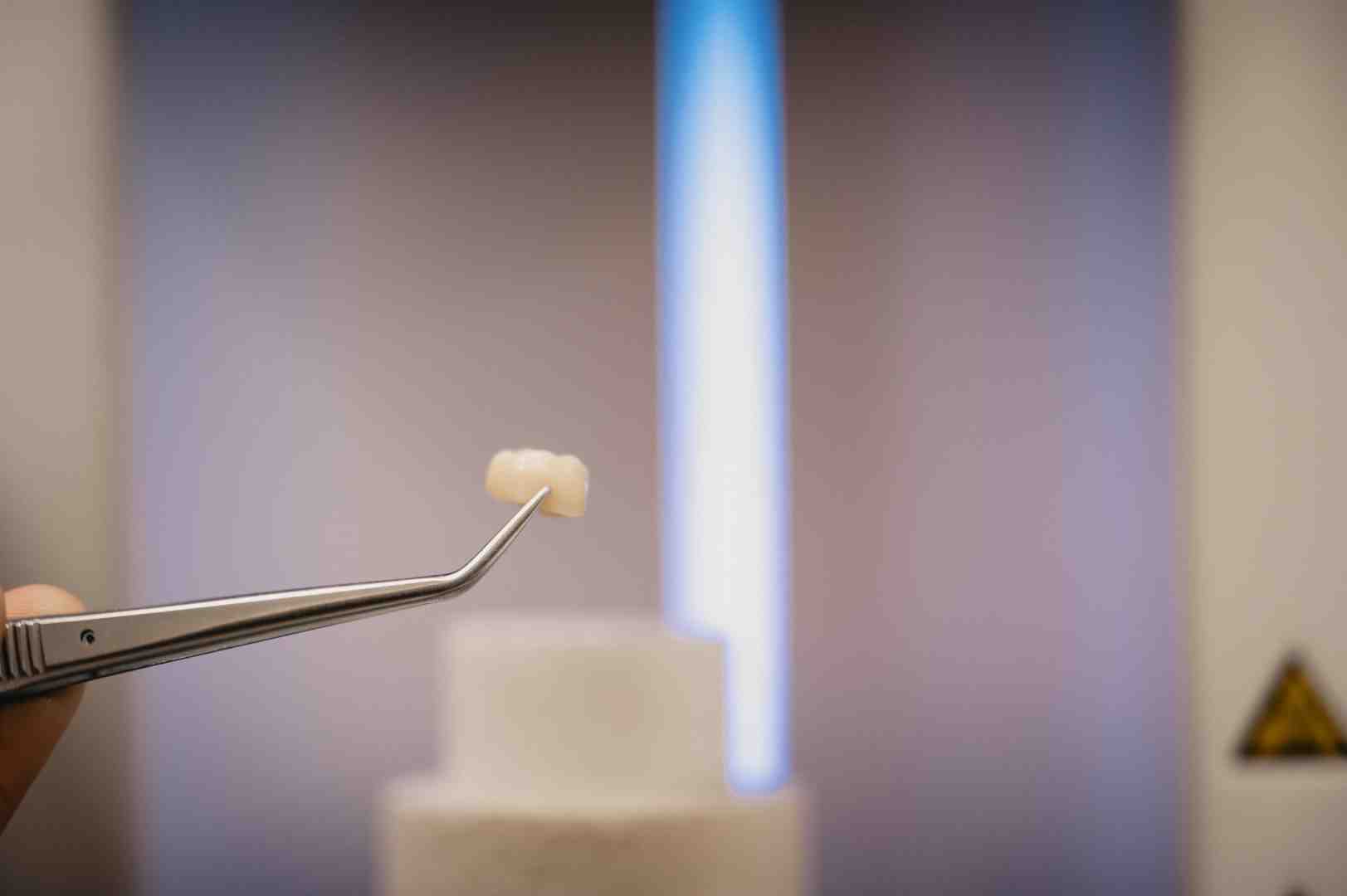
Following the placement of your permanent dental crown, mild gum tenderness or slight temperature sensitivity to cold and hot items may occur for a few days as the nerve settles. You can easily manage this temporary discomfort with over-the-counter pain relievers such as ibuprofen or acetaminophen as advised by your dentist.
Managing a Temporary Crown and Immediate Recovery
While wearing a temporary crown between visits, following proper oral care guidelines prevents accidental dislodgment or damage:
- Avoid sticky or chewy foods like chewing gum, caramel, taffy, and gummy candies that can pull the temporary cement free.
- Avoid biting directly into extra-hard foods like ice cubes, raw nuts, hard candies, or tough crusts using the temporary tooth.
- When flossing around the temporary crown, gently slide the floss out sideways from between your teeth instead of snapping it upward, which can unseat the temporary restoration.
If your temporary crown comes loose or pops off entirely, contact our office right away so we can safely recement it. Never attempt to use household adhesives or superglue to reattach a dislodged dental crown.
Longevity, Complications, and Foods to Avoid
Clinical studies and statistics show that a well-crafted dental crown typically lasts between 10 to 15 years, and can easily last upwards of 30 years with diligent, consistent home care and routine professional checkups. Porcelain-fused-to-metal crowns, for instance, demonstrate survival rates well above 90% at 10 years.
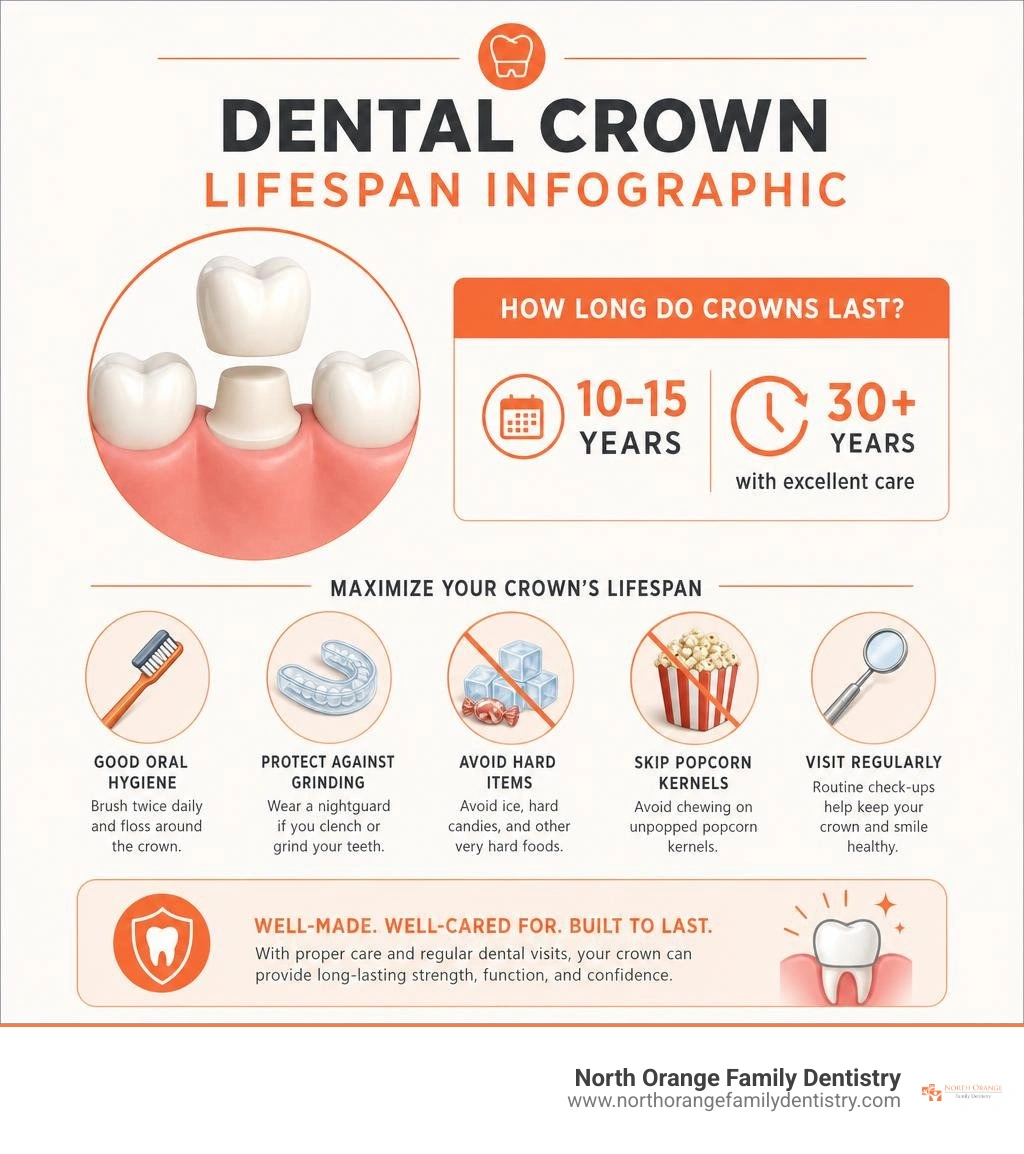
To maximize the lifespan of your permanent restoration:
- Maintain excellent daily oral hygiene by brushing twice daily with fluoride toothpaste and flossing around crown margins to prevent recurrent decay beneath the restoration line.
- Wear a custom-fitted nightguard if you suffer from bruxism or clench your teeth while sleeping to protect ceramic porcelain from fracturing.
- Refrain from chewing on hard objects such as ice, hard candies, unpopped popcorn kernels, or non-food objects like pens and fingernails.
Crown Costs, Financial Coverage, and Treatment Alternatives
The total out-of-pocket financial investment for a dental crown varies based on the specific material selected, the location of the tooth in your mouth, and the overall clinical complexity of the procedure. Most standard dental insurance plans cover approximately 50% of medically necessary crown procedures after annual deductibles are satisfied.
For additional detailed cost breakdowns and financial information, explore our comprehensive guides on the cost of crown complete guide 2026, tooth crown cost with insurance guide, and dental crown cost without insurance.
For patients without dental insurance, making high-quality dental care accessible and budget-friendly is a top priority. We offer our in-house Dental Wellness Plan, which is specifically designed for individuals and families without insurance, allowing them to receive comprehensive yearly dental care, routine preventive treatments, and restorative savings for a discounted price.
Evaluating Dental Restorative Alternatives
Depending on the overall structural health and vitality of your natural tooth, alternative restorative treatment options may be evaluated during your initial consultation:
- Dental Veneers: Ideal for cosmetic enhancements that are limited primarily to the front surfaces of visible teeth without heavy structural breakdown.
- Tooth Bonding: Best suited for minor aesthetic chips, small gaps, or small structural corrections where minimal enamel loss has occurred.
- Inlays & Onlays: Also known as partial crowns, these custom restorations preserve healthy natural enamel when a full-coverage crown is not strictly necessary.
- Endosteal Dental Implants: If a compromised tooth is completely non-restorable and requires extraction, an endosteal dental implant provides a permanent, standalone replacement option at an average cost of about $4500 per tooth.
To learn more about all of your restorative choices, consult our comprehensive alternatives to dental crowns overview or read our informative dental crowns near me guide.
Conclusion
A dental crown procedure remains one of the most reliable, time-tested restorative solutions for preserving damaged natural teeth, restoring efficient chewing function, and renewing your confidence in your smile. At North Orange Family Dentistry, our primary mission is to deliver a comfortable, five-star dental experience tailored specifically to your family's individual budget and oral health needs.
Our full suite of modern dental services includes Invisalign, laser treatments for TMJ pain, teeth whitening, endosteal dental implants, tooth bonding, veneers, crowns, root canals, oral hygiene & wellness checkups, and digital dentures.
As part of our unwavering commitment to advanced patient comfort and cutting-edge technology, we feature specialized laser treatments for TMJ pain, fast canker sore healing, and non-surgical periodontal disease management—offering unique care options for our local community. If you suspect you have a cracked, weak, or severely decayed tooth, don't wait for pain to escalate. Schedule Your Dental Crown Consultation at North Orange Family Dentistry today!
What Is a Dental Crown and Why Is It Needed?
A dental crown, often called a tooth cap, is a custom-fitted dental restoration designed to completely encase the entire visible portion of a compromised tooth above the gumline. When a natural tooth experiences significant structural breakdown, a standard filling or composite restoration may no longer provide sufficient support. In these situations, placing a full-coverage crown restores the tooth's original shape, strength, functionality, and aesthetic appearance, allowing you to chew and speak with complete confidence.
Common clinical reasons for placing a custom dental crown include:
- Deep tooth decay that has severely undermined the structural integrity of the surrounding enamel and dentin walls
- A cracked tooth, fractured structure, or split enamel that is highly vulnerable to further breakages under normal chewing pressure
- Essential structural protection following a root canal procedure, which prevents the brittle, endodontically treated tooth from fracturing
- Severe tooth enamel wear caused by chronic nocturnal bruxism (teeth grinding), clenching, or aggressive acid erosion
- Supporting large filling replacements when very little original natural tooth structure remains intact
When sudden, severe tooth pain or unexpectedly broken teeth catch you off guard, we offer same-day emergency dental appointments to alleviate discomfort and protect your oral health immediately. Delaying necessary treatment for a structurally compromised tooth significantly increases the risk of complete tooth failure, which could eventually require a full tooth extraction. To explore the pros and cons of this treatment option in depth, read our breakdown of the advantages and disadvantages of dental crowns. For additional medical background on basic crown concepts and protocols, review MedlinePlus guidelines on dental crowns.
Choosing the Right Dental Crown Material
Selecting the appropriate material for your dental crown depends on several key clinical factors, including the precise location of the tooth in your mouth, daily functional biting demands, gum tissue health, and your personal cosmetic preferences. Learn more about porcelain dental crowns and review the Cleveland Clinic summary of dental crown types for further details.
Here are the primary material options available in modern restorative dentistry:
- All-Porcelain / All-Ceramic: Highly recommended for visible front teeth due to their exceptional natural translucency, life-like shade matching capabilities, and biocompatibility with surrounding soft tissue.
- Zirconia: An exceptionally strong and durable ceramic material capable of withstanding heavy biting forces on back molars while still providing superior aesthetic results and chip resistance.
- Porcelain-Fused-to-Metal (PFM): Combines underlying metal structural strength with a tooth-colored porcelain exterior; highly durable for both front and back teeth, though natural gum line recession over time may eventually reveal a thin, dark underlying metal line.
- Gold Alloy: Extremely gentle on opposing natural enamel with high longevity and structural integrity, making it a highly reliable, functional choice for unseen back molars.
What Happens During a Dental Crown Procedure?
Whether completing a traditional two-visit treatment workflow or opting for a single-visit restorative option, a dental crown procedure is a highly predictable, streamlined, and comfortable experience. Our step-by-step process prioritizes your personal comfort from start to finish, utilizing effective local anesthesia to ensure a pain-free treatment.
First Visit Protocol in a Traditional Dental Crown Procedure
During the initial appointment (which typically lasts between 60 to 90 minutes), our dental team carefully prepares the affected tooth to receive its new restoration:
- Numbing: A local anesthetic is carefully administered to thoroughly numb the tooth, surrounding gums, and nearby soft tissues, ensuring complete comfort throughout the entire preparation process.
- Tooth Reshaping: We meticulously trim approximately 1.0 to 2.5 mm of natural enamel and dentin from the sides and chewing surface of the tooth. This reshapes the structure, eliminating decay while creating necessary space for the custom crown to sit flush with adjacent teeth.
- Core Buildup: If significant natural tooth structure was previously destroyed by extensive decay or trauma, we place a high-strength composite core buildup material to rebuild a solid foundation.
- Impression & Shade Selection: We take a precise digital intraoral scan or physical impression of the prepared tooth and surrounding dental arch. We also select an exact shade match corresponding to your surrounding natural teeth under clinical lighting.
- Temporary Placement: We secure a protective temporary tooth cap using temporary cement to protect the prepared tooth while our dental laboratory crafts your custom permanent crown over a period of 10 to 15 business days.
Same-Day CAD/CAM Dental Crown Procedure Options
For eligible candidates, advanced computer-aided design and computer-aided manufacturing (CAD/CAM) technology allows us to design, fabricate, and place custom ceramic crowns in a single clinical visit. Using a high-precision intraoral scanning wand, we capture a 3D digital image of your prepared tooth without messy impression materials. Specialized software designs the restoration, and an in-office milling machine carves the crown from a solid ceramic block in under 20 minutes—completely eliminating the need for a temporary crown or a second appointment.
Second Visit Protocol: Final Crown Delivery
The final delivery appointment typically takes roughly 30 to 60 minutes:
- Temporary Removal: The temporary crown is carefully removed, and the underlying prepared tooth is thoroughly cleaned and sanitized.
- Try-In & Fit Verification: We inspect the restoration margins, contact points, surface texture, and shade match under natural light to guarantee a seamless match.
- Bite Adjustment: We evaluate how the restoration contacts your opposing teeth during normal chewing movements and make fine micro-adjustments as needed.
- Permanent Cementation: Once fit and aesthetics are fully verified, we apply high-strength permanent resin or glass ionomer cement to permanently bond the ultimate crown of tooth structure into place.
Care, Recovery, and Long-Term Maintenance
Following the placement of your permanent dental crown, mild gum tenderness or slight temperature sensitivity to cold and hot items may occur for a few days as the nerve settles. You can easily manage this temporary discomfort with over-the-counter pain relievers such as ibuprofen or acetaminophen as advised by your dentist.
Managing a Temporary Crown and Immediate Recovery
While wearing a temporary crown between visits, following proper oral care guidelines prevents accidental dislodgment or damage:
- Avoid sticky or chewy foods like chewing gum, caramel, taffy, and gummy candies that can pull the temporary cement free.
- Avoid biting directly into extra-hard foods like ice cubes, raw nuts, hard candies, or tough crusts using the temporary tooth.
- When flossing around the temporary crown, gently slide the floss out sideways from between your teeth instead of snapping it upward, which can unseat the temporary restoration.
If your temporary crown comes loose or pops off entirely, contact our office right away so we can safely recement it. Never attempt to use household adhesives or superglue to reattach a dislodged dental crown.
Longevity, Complications, and Foods to Avoid
Clinical studies and statistics show that a well-crafted dental crown typically lasts between 10 to 15 years, and can easily last upwards of 30 years with diligent, consistent home care and routine professional checkups. Porcelain-fused-to-metal crowns, for instance, demonstrate survival rates well above 90% at 10 years.
To maximize the lifespan of your permanent restoration:
- Maintain excellent daily oral hygiene by brushing twice daily with fluoride toothpaste and flossing around crown margins to prevent recurrent decay beneath the restoration line.
- Wear a custom-fitted nightguard if you suffer from bruxism or clench your teeth while sleeping to protect ceramic porcelain from fracturing.
- Refrain from chewing on hard objects such as ice, hard candies, unpopped popcorn kernels, or non-food objects like pens and fingernails.
Crown Costs, Financial Coverage, and Treatment Alternatives
The total out-of-pocket financial investment for a dental crown varies based on the specific material selected, the location of the tooth in your mouth, and the overall clinical complexity of the procedure. Most standard dental insurance plans cover approximately 50% of medically necessary crown procedures after annual deductibles are satisfied.
For additional detailed cost breakdowns and financial information, explore our comprehensive guides on the cost of crown complete guide 2026, tooth crown cost with insurance guide, and dental crown cost without insurance.
For patients without dental insurance, making high-quality dental care accessible and budget-friendly is a top priority. We offer our in-house Dental Wellness Plan, which is specifically designed for individuals and families without insurance, allowing them to receive comprehensive yearly dental care, routine preventive treatments, and restorative savings for a discounted price.
Evaluating Dental Restorative Alternatives
Depending on the overall structural health and vitality of your natural tooth, alternative restorative treatment options may be evaluated during your initial consultation:
- Dental Veneers: Ideal for cosmetic enhancements that are limited primarily to the front surfaces of visible teeth without heavy structural breakdown.
- Tooth Bonding: Best suited for minor aesthetic chips, small gaps, or small structural corrections where minimal enamel loss has occurred.
- Inlays & Onlays: Also known as partial crowns, these custom restorations preserve healthy natural enamel when a full-coverage crown is not strictly necessary.
- Endosteal Dental Implants: If a compromised tooth is completely non-restorable and requires extraction, an endosteal dental implant provides a permanent, standalone replacement option at an average cost of about $4500 per tooth.
To learn more about all of your restorative choices, consult our comprehensive alternatives to dental crowns overview or read our informative dental crowns near me guide.
Conclusion
A dental crown procedure remains one of the most reliable, time-tested restorative solutions for preserving damaged natural teeth, restoring efficient chewing function, and renewing your confidence in your smile. At North Orange Family Dentistry, our primary mission is to deliver a comfortable, five-star dental experience tailored specifically to your family's individual budget and oral health needs.
Our full suite of modern dental services includes Invisalign, laser treatments for TMJ pain, teeth whitening, endosteal dental implants, tooth bonding, veneers, crowns, root canals, oral hygiene & wellness checkups, and digital dentures.
As part of our unwavering commitment to advanced patient comfort and cutting-edge technology, we feature specialized laser treatments for TMJ pain, fast canker sore healing, and non-surgical periodontal disease management—offering unique care options for our local community. If you suspect you have a cracked, weak, or severely decayed tooth, don't wait for pain to escalate. Schedule Your Dental Crown Consultation at North Orange Family Dentistry today!
Contact Us
Have any questions? Want to learn more?

