
Chipped Tooth Troubles and How Modern Dentistry Can Help
Learn what to do when you chip the tooth, from emergency care to modern restorative solutions like bonding and veneers.


Chipped a Tooth? Protect It First
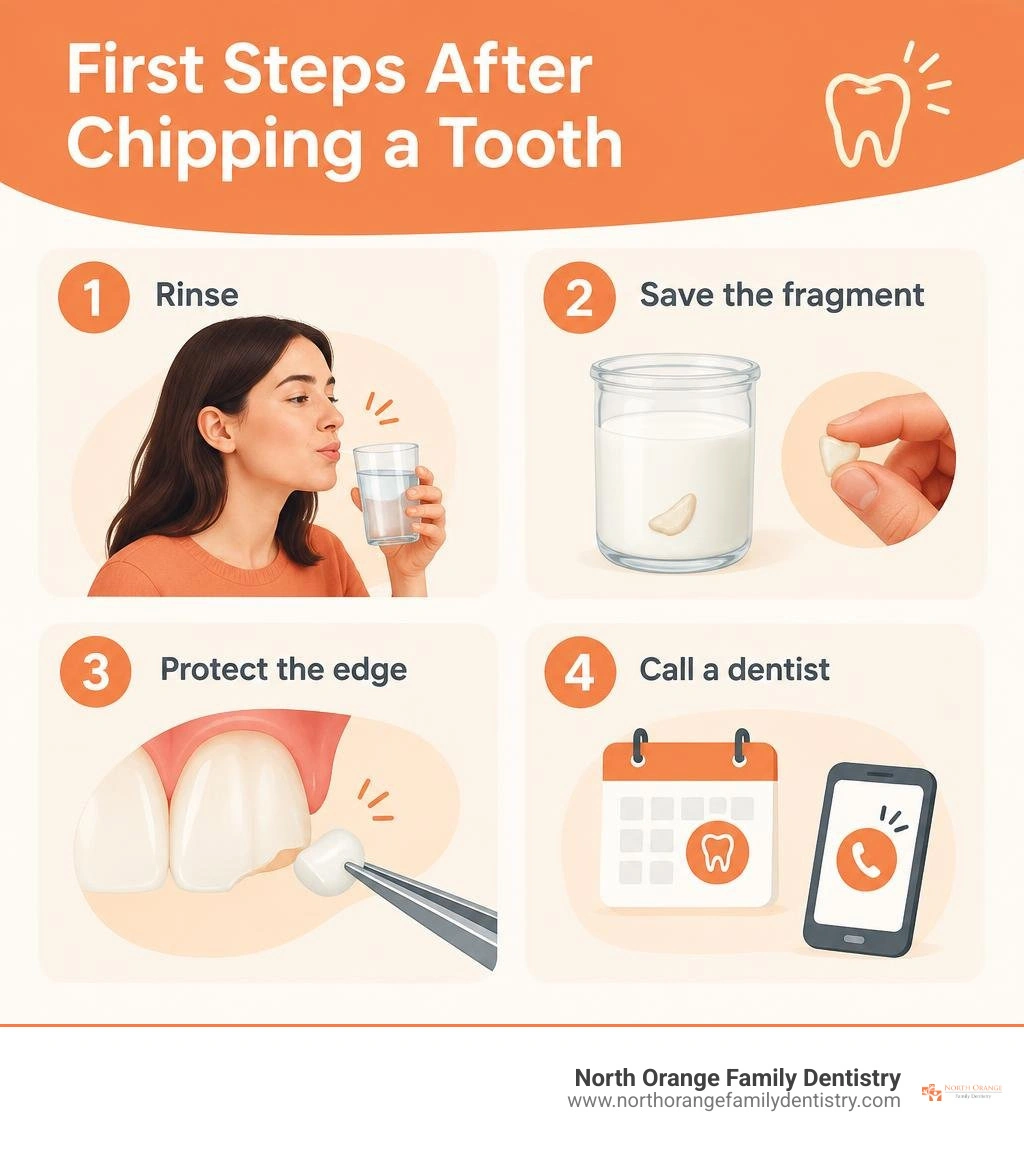
If you chip a tooth, rinse your mouth with warm water and save any broken piece in milk or saliva. Cover a sharp edge with dental wax, eat soft foods, and avoid chewing on that tooth. Call a dentist even if it does not hurt. A small chip can be hard to judge at home.
Seek urgent dental care if you have severe pain, swelling, bleeding that will not stop, or a loose or displaced tooth. North Orange Family Dentistry can often offer same-day emergency appointments for patients in the Delaware and Lewis Center area.
Similar topics to chip the tooth:
What to Do Immediately When You Chip the Tooth
Accidents happen in a split second. You might bite down on an unpopped popcorn kernel, take an accidental elbow during a weekend basketball game, or suddenly feel a jagged edge with your tongue. When you chip a tooth, knowing what to do right away keeps a minor issue from becoming a major headache.
Here is your immediate action plan:
- Locate and save any broken fragments: If a piece of your tooth broke off, pick it up carefully. Place it in a small container of cow's milk or your own saliva (by spitting into a clean cup). Do not let the piece dry out, and never scrub it with soap or chemicals. Dentists can sometimes bond the natural fragment right back into place!
- Rinse with warm water: Gently swish warm salt water to clean away debris and soothe your gum tissue.
- Protect your mouth from sharp edges: A jagged tooth edge can slice your tongue or inner cheek. Place a small dab of orthodontic wax, paraffin wax, or even a piece of sugar-free chewing gum over the rough spot.
- Control swelling and minor discomfort: If you experienced facial impact, apply a cold compress to your cheek for 10 to 15 minutes at a time.
- Adjust your diet temporarily: Stick to soft foods like yogurt, eggs, or applesauce, and strictly avoid biting down with the damaged tooth.
- Call for an appointment: As highlighted by the ADA guide on dental emergency care, prompt professional evaluation is essential. If you live in Lewis Center, Delaware, Orange, or Powell, our team can help you find an Emergency Dentist appointment. We provide emergency dental treatments and can see patients same-day most of the time (with our last appointment of the day scheduled at 3:00 pm).
Emergency vs. Non-Emergency: Assessing the Severity of Tooth Damage
Not every dental fracture requires an immediate sprint to the dental chair within minutes, but some situations definitely do.
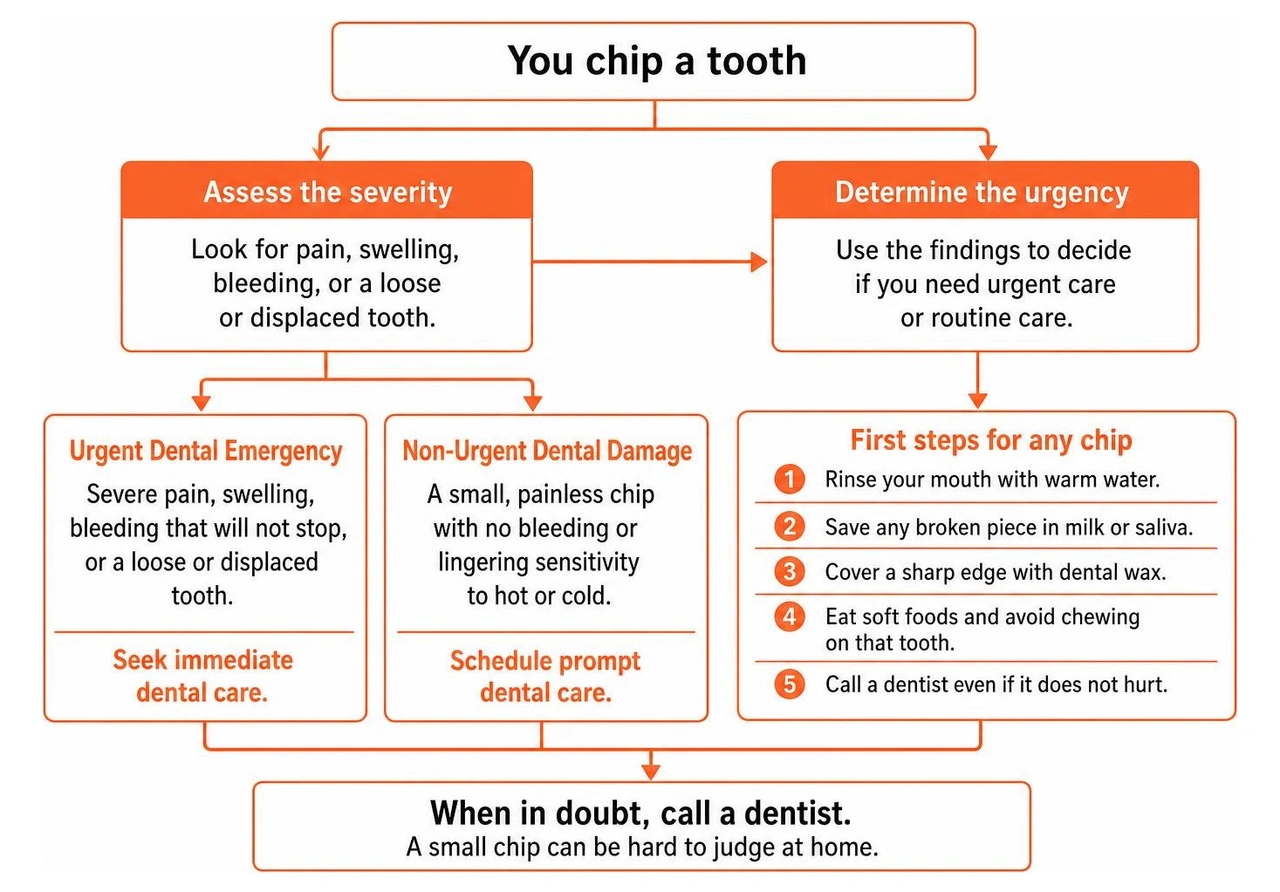
Understanding the severity helps you decide whether you need immediate same-day care or if your visit can wait until normal working hours:
- Urgent Dental Emergencies: Severe throbbing pain, visible bleeding coming from inside the tooth, noticeable swelling in the gums or jaw, or an avulsed (completely knocked-out) permanent tooth. A permanent tooth that is reimplanted within 30 minutes has the highest chance of success. In these situations, seek immediate dental care.
- Non-Urgent Dental Damage: A small, painless enamel chip along the edge of a front incisor or molar, where there is no bleeding or lingering sensitivity to hot or cold. While this is not a middle-of-the-night crisis, it still requires prompt attention before sharp edges cut soft tissues or bacteria sneak into underlying tooth layers.
According to MedlinePlus medical guidance on broken teeth, painless structural damage should still be repaired by a dentist to prevent tongue lacerations and protect vulnerable inner dentin. For a deeper breakdown of structural fracture types, check out our Broken Tooth Repair Complete Guide.
Modern Restorative Solutions to Repair Dental Fractures
Today's dental techniques make restoring damaged teeth quick, comfortable, and remarkably lifelike. Depending on how much enamel is missing and whether internal nerves are involved, your dentist has several dependable options to rebuild your smile.
As detailed in the Cleveland Clinic review of chipped tooth repair options, treatment depends on whether the fracture is purely cosmetic or structurally deep.
Composite Bonding for Fast Smile Restoration
For minor to moderate chips, Tooth Bonding offers an ideal single-visit fix. We apply a mild etching gel to prepare the enamel, layer on a tooth-colored composite resin, artfully sculpt it to match your natural tooth contours, and harden it using a specialized curing light.
Bonding seamlessly blends with your smile, restores sharp chewing edges, and protects underlying dentin. If you want to learn all the nuances of this procedure, explore our Dental Bonding Complete Guide.
Porcelain Veneers for Front Tooth Aesthetics
When a front tooth suffers a more prominent fracture or cosmetic flaw, Chipped Tooth Veneers provide exceptional aesthetic strength and durability. Veneers are custom-crafted, ultra-thin shells of dental porcelain designed to cover the front surface of your tooth. Placing a veneer involves gently removing a microscopic layer of surface enamel (usually 0.3 to 1.2 mm) so the custom porcelain fits seamlessly and stays durable for years.
Full-Coverage Crowns and Root Canal Therapy
If a large portion of a molar breaks off, or if an old restoration fails, a crown provides 360-degree protection. A dental crown acts as a protective cap that covers the entire visible portion of the tooth, distributing bite forces evenly to prevent future fractures.
If the fracture extends deep into the dental pulp where delicate nerves and blood vessels live, bacteria can trigger inflammation or infection. In those cases, gentle root canal therapy clears out the damaged tissue and seals the root canal before a permanent crown is placed.
Causes and Prevention: Protecting Your Enamel from Damage
Enamel is the hardest mineralized substance in the human body, but it is not indestructible. Knowing what puts your teeth at risk makes prevention simple.
Key risk factors include:
- Age: You are more likely to chip your teeth if you are over age 50, as enamel naturally thins and withstands decades of cumulative chewing wear.
- Large Existing Restorations: Having a large filling increases your risk of chipping a tooth because less natural, flexible tooth structure remains to support high bite loads.
- Teeth Grinding (Bruxism): Clenching and grinding during sleep places hundreds of pounds of pressure on your enamel, creating micro-fissures over time.
- Acid Erosion: Conditions like chronic acid reflux (GERD) soften outer enamel, making it easier for everyday chewing to snap an edge.
Common Everyday Habits That Chip the Tooth
Many dental fractures happen during routine daily activities rather than high-impact sports collisions:
- Chewing on ice cubes or hard candies
- Biting down unexpectedly on olive pits or unpopped popcorn kernels
- Using teeth as tools to tear open plastic packaging, cut thread, or hold metal items
- Chronic daytime jaw clenching during stressful moments
Wearing a custom-made athletic mouthguard during sports and using a nightguard for sleep grinding are two of the best investments you can make to protect your smile.
Why You Shouldn't Ignore When You Chip the Tooth
It can be tempting to ignore a minor fracture that does not hurt. However, enamel cannot regenerate once damaged. Leaving a chipped tooth untreated opens the door to several complications:
- Bacterial Invasion & Decay: Chipping strips away the sealed outer barrier, exposing porous dentin to oral bacteria and plaque acids.
- Progressive Cracks: A minor surface defect creates a focal stress point. One hard bite can turn a superficial chip into a deep, vertical split that reaches the root.
- Bite Misalignment & Soft Tissue Trauma: Uneven edges alter how your upper and lower teeth meet, causing jaw fatigue, while sharp points repeatedly irritate your lips and cheeks.
Seeking timely Chipped Tooth Repair protects the longevity of your natural tooth and keeps treatment simple and affordable.
Frequently Asked Questions About Chipped Teeth
Can a small chip with no pain cause serious dental problems?
Yes. Even completely painless chips can expose underlying dentin tubules. Without the protective shield of outer enamel, bacteria can seep toward the inner nerve over time, leading to silent decay, temperature sensitivity, and larger structural fractures down the road.
How is a chipped tooth different from a cracked tooth?
A chipped tooth involves a distinct piece of enamel breaking away from the tooth body, leaving an uneven or jagged edge. A cracked tooth involves a hairline fracture or fissure line extending vertically down into the body or root of the tooth, which often produces sharp pain when chewing or releasing bite pressure.
Can I safely smooth down a sharp enamel edge at home?
No, never attempt to file or smooth a chipped tooth at home with nail files, emery boards, or tools. Doing so strips away healthy enamel, introduces microscopic fractures, and risks introducing dangerous bacteria directly to the inner pulp. Your dentist can safely smooth or bond the area in just a few minutes using sterile, calibrated instruments.
Preserving Your Smile with North Orange Family Dentistry
A chipped tooth might catch you by surprise, but modern restorative dentistry makes getting your smile back simple, comfortable, and seamless. Whether you need gentle enamel smoothing, tooth-colored composite bonding, or restorative dental crowns, addressing the issue early preserves your natural tooth structure for decades to come.
At North Orange Family Dentistry, Dr. Kyle Bogan and our experienced team are dedicated to providing five-star, comprehensive dental care for patients of all ages across Delaware, Lewis Center, Orange, and Powell. We leverage modern technology—including gentle laser treatments for TMJ pain, canker sore healing, and periodontal care—to ensure your visits are relaxing and effective.
If you do not have traditional dental insurance, we make high-quality preventative and restorative care accessible through our in-house Dental Wellness Plan, allowing individuals and families to receive yearly preventative care and discounted treatments without insurance hassles. If you or a loved one experiences a chipped tooth, contact us today to schedule your evaluation and restore your healthy, confident smile!
Chipped a Tooth? Protect It First
If you chip a tooth, rinse your mouth with warm water and save any broken piece in milk or saliva. Cover a sharp edge with dental wax, eat soft foods, and avoid chewing on that tooth. Call a dentist even if it does not hurt. A small chip can be hard to judge at home.
Seek urgent dental care if you have severe pain, swelling, bleeding that will not stop, or a loose or displaced tooth. North Orange Family Dentistry can often offer same-day emergency appointments for patients in the Delaware and Lewis Center area.
Similar topics to chip the tooth:
What to Do Immediately When You Chip the Tooth
Accidents happen in a split second. You might bite down on an unpopped popcorn kernel, take an accidental elbow during a weekend basketball game, or suddenly feel a jagged edge with your tongue. When you chip a tooth, knowing what to do right away keeps a minor issue from becoming a major headache.
Here is your immediate action plan:
- Locate and save any broken fragments: If a piece of your tooth broke off, pick it up carefully. Place it in a small container of cow's milk or your own saliva (by spitting into a clean cup). Do not let the piece dry out, and never scrub it with soap or chemicals. Dentists can sometimes bond the natural fragment right back into place!
- Rinse with warm water: Gently swish warm salt water to clean away debris and soothe your gum tissue.
- Protect your mouth from sharp edges: A jagged tooth edge can slice your tongue or inner cheek. Place a small dab of orthodontic wax, paraffin wax, or even a piece of sugar-free chewing gum over the rough spot.
- Control swelling and minor discomfort: If you experienced facial impact, apply a cold compress to your cheek for 10 to 15 minutes at a time.
- Adjust your diet temporarily: Stick to soft foods like yogurt, eggs, or applesauce, and strictly avoid biting down with the damaged tooth.
- Call for an appointment: As highlighted by the ADA guide on dental emergency care, prompt professional evaluation is essential. If you live in Lewis Center, Delaware, Orange, or Powell, our team can help you find an Emergency Dentist appointment. We provide emergency dental treatments and can see patients same-day most of the time (with our last appointment of the day scheduled at 3:00 pm).
Emergency vs. Non-Emergency: Assessing the Severity of Tooth Damage
Not every dental fracture requires an immediate sprint to the dental chair within minutes, but some situations definitely do.
Understanding the severity helps you decide whether you need immediate same-day care or if your visit can wait until normal working hours:
- Urgent Dental Emergencies: Severe throbbing pain, visible bleeding coming from inside the tooth, noticeable swelling in the gums or jaw, or an avulsed (completely knocked-out) permanent tooth. A permanent tooth that is reimplanted within 30 minutes has the highest chance of success. In these situations, seek immediate dental care.
- Non-Urgent Dental Damage: A small, painless enamel chip along the edge of a front incisor or molar, where there is no bleeding or lingering sensitivity to hot or cold. While this is not a middle-of-the-night crisis, it still requires prompt attention before sharp edges cut soft tissues or bacteria sneak into underlying tooth layers.
According to MedlinePlus medical guidance on broken teeth, painless structural damage should still be repaired by a dentist to prevent tongue lacerations and protect vulnerable inner dentin. For a deeper breakdown of structural fracture types, check out our Broken Tooth Repair Complete Guide.
Modern Restorative Solutions to Repair Dental Fractures
Today's dental techniques make restoring damaged teeth quick, comfortable, and remarkably lifelike. Depending on how much enamel is missing and whether internal nerves are involved, your dentist has several dependable options to rebuild your smile.
As detailed in the Cleveland Clinic review of chipped tooth repair options, treatment depends on whether the fracture is purely cosmetic or structurally deep.
Composite Bonding for Fast Smile Restoration
For minor to moderate chips, Tooth Bonding offers an ideal single-visit fix. We apply a mild etching gel to prepare the enamel, layer on a tooth-colored composite resin, artfully sculpt it to match your natural tooth contours, and harden it using a specialized curing light.
Bonding seamlessly blends with your smile, restores sharp chewing edges, and protects underlying dentin. If you want to learn all the nuances of this procedure, explore our Dental Bonding Complete Guide.
Porcelain Veneers for Front Tooth Aesthetics
When a front tooth suffers a more prominent fracture or cosmetic flaw, Chipped Tooth Veneers provide exceptional aesthetic strength and durability. Veneers are custom-crafted, ultra-thin shells of dental porcelain designed to cover the front surface of your tooth. Placing a veneer involves gently removing a microscopic layer of surface enamel (usually 0.3 to 1.2 mm) so the custom porcelain fits seamlessly and stays durable for years.
Full-Coverage Crowns and Root Canal Therapy
If a large portion of a molar breaks off, or if an old restoration fails, a crown provides 360-degree protection. A dental crown acts as a protective cap that covers the entire visible portion of the tooth, distributing bite forces evenly to prevent future fractures.
If the fracture extends deep into the dental pulp where delicate nerves and blood vessels live, bacteria can trigger inflammation or infection. In those cases, gentle root canal therapy clears out the damaged tissue and seals the root canal before a permanent crown is placed.
Causes and Prevention: Protecting Your Enamel from Damage
Enamel is the hardest mineralized substance in the human body, but it is not indestructible. Knowing what puts your teeth at risk makes prevention simple.
Key risk factors include:
- Age: You are more likely to chip your teeth if you are over age 50, as enamel naturally thins and withstands decades of cumulative chewing wear.
- Large Existing Restorations: Having a large filling increases your risk of chipping a tooth because less natural, flexible tooth structure remains to support high bite loads.
- Teeth Grinding (Bruxism): Clenching and grinding during sleep places hundreds of pounds of pressure on your enamel, creating micro-fissures over time.
- Acid Erosion: Conditions like chronic acid reflux (GERD) soften outer enamel, making it easier for everyday chewing to snap an edge.
Common Everyday Habits That Chip the Tooth
Many dental fractures happen during routine daily activities rather than high-impact sports collisions:
- Chewing on ice cubes or hard candies
- Biting down unexpectedly on olive pits or unpopped popcorn kernels
- Using teeth as tools to tear open plastic packaging, cut thread, or hold metal items
- Chronic daytime jaw clenching during stressful moments
Wearing a custom-made athletic mouthguard during sports and using a nightguard for sleep grinding are two of the best investments you can make to protect your smile.
Why You Shouldn't Ignore When You Chip the Tooth
It can be tempting to ignore a minor fracture that does not hurt. However, enamel cannot regenerate once damaged. Leaving a chipped tooth untreated opens the door to several complications:
- Bacterial Invasion & Decay: Chipping strips away the sealed outer barrier, exposing porous dentin to oral bacteria and plaque acids.
- Progressive Cracks: A minor surface defect creates a focal stress point. One hard bite can turn a superficial chip into a deep, vertical split that reaches the root.
- Bite Misalignment & Soft Tissue Trauma: Uneven edges alter how your upper and lower teeth meet, causing jaw fatigue, while sharp points repeatedly irritate your lips and cheeks.
Seeking timely Chipped Tooth Repair protects the longevity of your natural tooth and keeps treatment simple and affordable.
Frequently Asked Questions About Chipped Teeth
Can a small chip with no pain cause serious dental problems?
Yes. Even completely painless chips can expose underlying dentin tubules. Without the protective shield of outer enamel, bacteria can seep toward the inner nerve over time, leading to silent decay, temperature sensitivity, and larger structural fractures down the road.
How is a chipped tooth different from a cracked tooth?
A chipped tooth involves a distinct piece of enamel breaking away from the tooth body, leaving an uneven or jagged edge. A cracked tooth involves a hairline fracture or fissure line extending vertically down into the body or root of the tooth, which often produces sharp pain when chewing or releasing bite pressure.
Can I safely smooth down a sharp enamel edge at home?
No, never attempt to file or smooth a chipped tooth at home with nail files, emery boards, or tools. Doing so strips away healthy enamel, introduces microscopic fractures, and risks introducing dangerous bacteria directly to the inner pulp. Your dentist can safely smooth or bond the area in just a few minutes using sterile, calibrated instruments.
Preserving Your Smile with North Orange Family Dentistry
A chipped tooth might catch you by surprise, but modern restorative dentistry makes getting your smile back simple, comfortable, and seamless. Whether you need gentle enamel smoothing, tooth-colored composite bonding, or restorative dental crowns, addressing the issue early preserves your natural tooth structure for decades to come.
At North Orange Family Dentistry, Dr. Kyle Bogan and our experienced team are dedicated to providing five-star, comprehensive dental care for patients of all ages across Delaware, Lewis Center, Orange, and Powell. We leverage modern technology—including gentle laser treatments for TMJ pain, canker sore healing, and periodontal care—to ensure your visits are relaxing and effective.
If you do not have traditional dental insurance, we make high-quality preventative and restorative care accessible through our in-house Dental Wellness Plan, allowing individuals and families to receive yearly preventative care and discounted treatments without insurance hassles. If you or a loved one experiences a chipped tooth, contact us today to schedule your evaluation and restore your healthy, confident smile!
Contact Us
Have any questions? Want to learn more?

