
The Best Foods High in Phosphorus for Beginners
Boost your health! Explore essential foods high in phosphorus for strong bones, energy, and a healthy smile. Get diet tips.


Why Understanding Foods High in Phosphorus Matters for Your Family's Health
Foods high in phosphorus are essential for your health. This mineral is crucial for building strong bones and teeth, producing energy, and maintaining healthy cells. Top natural sources include:
Top Foods High in Phosphorus:
- Dairy Products: Romano cheese (760 mg per oz), milk (261 mg per cup)
- Meats & Poultry: Chicken liver (442 mg per 3.5 oz), chicken/turkey (230 mg per 3.5 oz)
- Seafood: Sardines (490 mg per 3.5 oz), salmon (244-247 mg per 2.5 oz)
- Seeds & Nuts: Pumpkin seeds (676 mg per 1/4 cup), sunflower seeds (375-393 mg per 1/4 cup)
- Legumes: Lentils (356 mg per cup), soybeans (421 mg per cup)
- Whole Grains: Bran flakes (344 mg per serving), quinoa (281 mg per cup)
Most of your body's phosphorus is in your bones and teeth, where it partners with calcium for strength. However, not all phosphorus is the same. Natural phosphorus from whole foods is absorbed at a rate of 40-70%. In contrast, processed foods contain phosphate additives that your body can absorb at rates greater than 90%.
This distinction is important for bone strength, energy production (as part of ATP), and cell health. The recommended daily value is 1,250 mg for adults and children over 4, a target most Americans meet through diet.
As Dr. Kyle Bogan at North Orange Family Dentistry, I've seen how nutrition impacts oral health for families in Delaware and Lewis Center. Understanding foods high in phosphorus is a key part of maintaining strong teeth and healthy gums.
What is Phosphorus and Why is it Essential for Your Health?
Phosphorus is an essential mineral found in every cell, playing a vital role in numerous bodily functions. It's a fundamental building block for health, contributing to everything from your skeleton to your genetic code.
The Many Roles of Phosphorus in Your Body
Here are some of the most important jobs phosphorus performs:
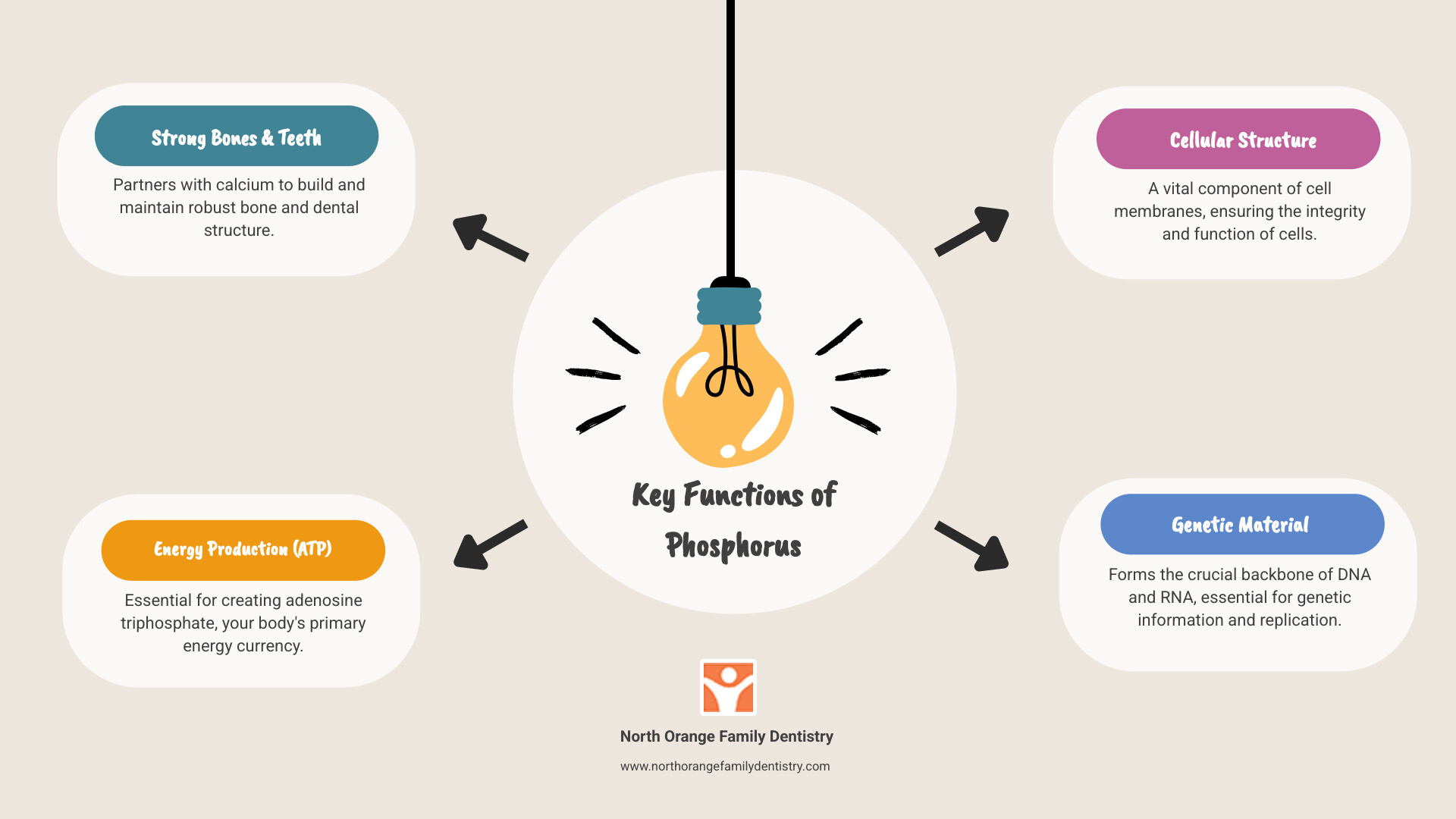
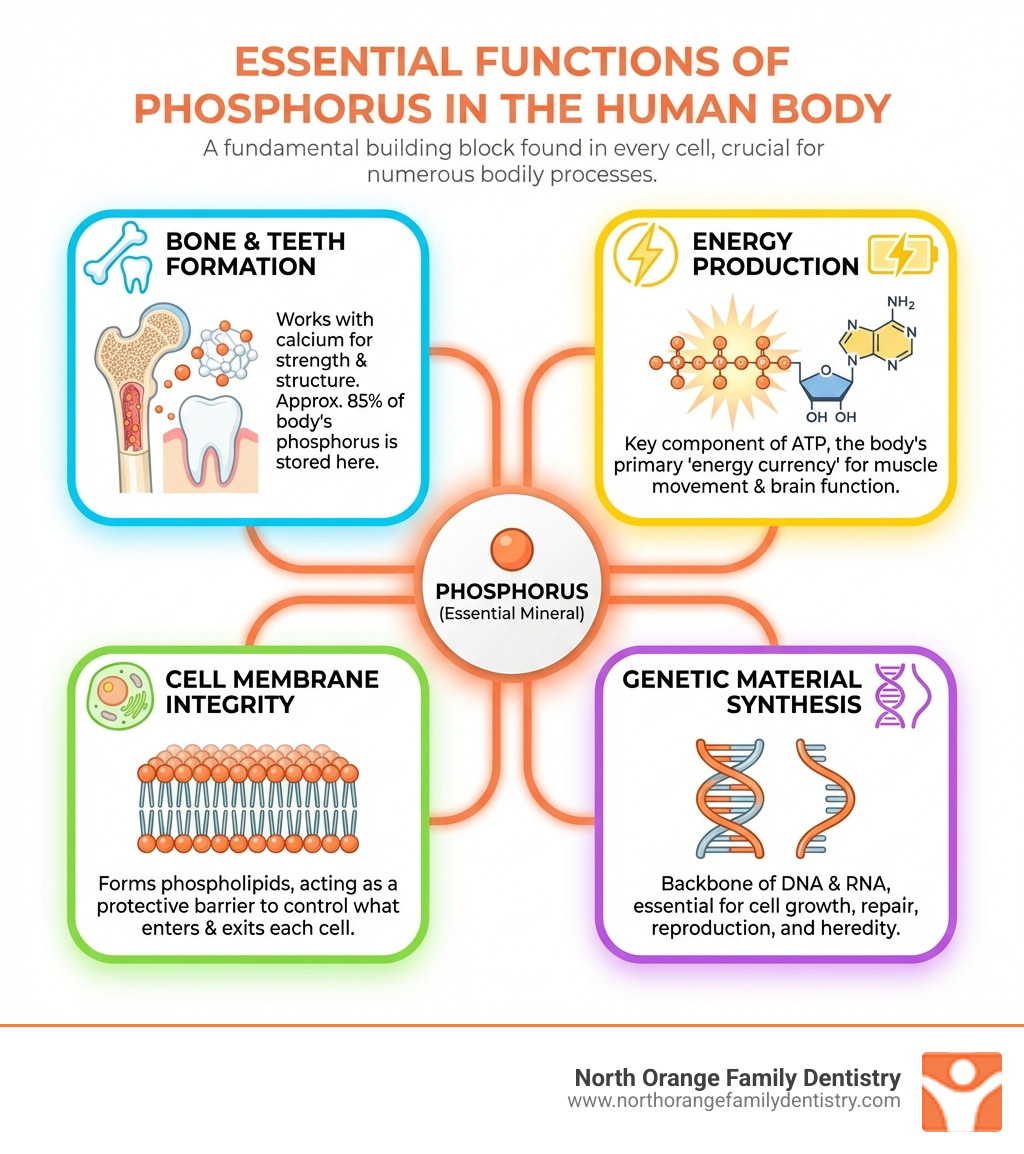
- Building Strong Bones and Teeth: About 85% of your body's phosphorus is in your bones and teeth. It works closely with calcium to create the strong mineral structure that ensures bone density and protects tooth enamel. You can learn more in our guide on Nutrients for Strong Teeth.
- Creating Energy (ATP): Phosphorus is a key part of adenosine triphosphate (ATP), the "energy currency" that powers every muscle contraction, thought, and heartbeat.
- Cell Structure and DNA: As a component of phospholipids, it forms cell membranes that protect and regulate our cells. It also forms the backbone of DNA and RNA, making it essential for cell growth, repair, and reproduction.
- Maintaining Balance: Phosphorus also helps activate enzymes and maintain the body's proper acid-base balance.
Recommended Daily Intake
The Recommended Dietary Allowance (RDA) for most adults is 700 mg per day, while the Daily Value (DV) used for food labels is 1,250 mg. The good news is that most Americans easily consume enough phosphorus through their diet, often exceeding the RDA without any special effort.
A Comprehensive Guide to Foods High in Phosphorus
This essential mineral is abundant in many delicious and nutritious foods. Understanding the best natural sources, and how to spot hidden additives, is key to a balanced diet.
Top Natural Foods High in Phosphorus
Incorporating a variety of these foods can help you meet your daily needs, supporting everything from strong teeth to robust energy levels. Here are some of the best natural sources:
- Chicken and Turkey: A 3.5-ounce serving of roasted chicken or turkey contains around 230 mg of phosphorus.
- Pork: A 3.5-ounce portion of cooked pork provides about 197 mg.
- Organ Meats: These are nutrient-dense, with chicken liver offering 442 mg per 3.5-ounce serving.
- Seafood: Sardines are a standout, with 490 mg per 3.5-ounce serving. Salmon, pollock, and scallops are also excellent choices.
- Dairy: Dairy is a top contributor. Romano cheese has a massive 760 mg per ounce, while a cup of milk provides 261 mg.
- Sunflower and Pumpkin Seeds: A quarter cup of pumpkin seeds can have up to 676 mg, while sunflower seeds offer around 375-393 mg.
- Nuts: Brazil nuts lead the pack with 206 mg per ounce. Almonds, cashews, and pistachios are also good sources.
- Whole Grains: Spelt (291 mg per cooked cup) and oats (180 mg per cooked cup) are great options. Other excellent sources include quinoa (281 mg per cup) and bran flakes (344 mg per serving).
- Beans and Lentils: A cup of boiled lentils contains 356 mg, with other beans like chickpeas and pinto beans providing over 250 mg per cup.
- Soy products: Mature soybeans offer 421 mg per cup, and fermented soy like tempeh is also a rich source.
The phosphorus in grains, seeds, and nuts is stored as phytic acid, which is hard to digest. Soaking, sprouting, or fermenting these foods can break down phytic acid and make the phosphorus more available.
Understanding Phosphate Additives in Processed Foods
The phosphorus naturally found in whole foods is called organic phosphorus. In contrast, inorganic phosphorus refers to phosphates added during processing. The key difference is absorption: your body absorbs 40-70% of organic phosphorus but over 90% of inorganic phosphate additives.
These additives are used to improve taste, texture, and shelf life in products like fast food, colas, processed meats, and baked goods. The average person may consume an extra 155 mg to 1,000 mg of phosphorus daily from these sources. To spot them, read the ingredient list and look for words containing "PHOS," such as:
- Dicalcium phosphate
- Disodium phosphate
- Phosphoric acid
- Sodium tripolyphosphate
- Tetrasodium pyrophosphate
Lower-Phosphorus Swaps for a Balanced Diet
For most healthy people, consuming foods high in phosphorus is beneficial. However, for those who need to moderate their intake, simple swaps can make a big difference without sacrificing nutrition.
Here's a handy table comparing high-phosphorus foods with lower-phosphorus alternatives:
Food CategoryHigh-Phosphorus ChoiceLower-Phosphorus AlternativeBeveragesDark Colas, Bottled Iced Teas, Cocoa, Milk-based drinksWater, Coffee, Tea (home-brewed), Lemonade, Ginger Ale, Root Beer, Apple Juice, Cranberry JuiceDairyHard Cheeses (Romano, Cheddar), Milk, Ice Cream, CustardCottage Cheese, Vegan Cheese, Rice Milk (unenriched), Almond Milk, Sherbet, PopsiclesGrainsBran Flakes, Whole Grain Breads, Oatmeal, Brown RiceWhite Bread (60% whole wheat is okay), White Rice, Corn Flakes, Rice Krispies, White Pasta, Cream of WheatProteinOrgan Meats (Liver), Sardines, Oysters, Processed MeatsChicken, Turkey, Fish (fresh, not canned with bones), Beef, Eggs, Lamb, PorkSnacksProcessed Snacks, Chocolate Candy, Caramel, Oat Bran MuffinsFresh Fruits (Apples, Berries, Grapes), Fresh Vegetables (Carrots, Cucumbers), Rice Cakes, Unsalted Pretzels, Unsalted Popcorn, Sugar Cookies
A balanced diet is key to overall wellness and dental health. For more guidance, explore our tips on the Best Diet for Healthy Teeth and Gums.
Managing Phosphorus: Health Risks and Professional Guidance
While phosphorus is essential, too much can pose risks, especially for certain individuals. Understanding this balance is key to maintaining your health.
The Risks of Too Much Phosphorus
For healthy people, the kidneys are excellent at filtering excess phosphorus. However, for individuals with kidney disease, this system fails, leading to high blood phosphorus levels (hyperphosphatemia). This condition can be serious, causing the body to pull calcium from bones, making them weak and brittle. Over time, this can increase the risk of bone loss and cardiovascular problems.
People with kidney disease are often advised to limit their phosphorus intake to 800-1000 mg per day and must be particularly careful to avoid processed foods with phosphate additives. If you have kidney disease, always follow the dietary plan provided by your healthcare team. You can find more information in the KDOQI guidelines for CKD.
Medications That Interact with Phosphorus Levels
Certain medications can also affect your body's phosphorus levels:
- Antacids: Some antacids containing calcium carbonate or aluminum hydroxide can decrease phosphorus absorption.
- Laxatives: Certain laxatives contain sodium phosphate and can dangerously increase blood phosphate levels, especially if misused.
- Phosphate Binders: For those with high phosphorus, doctors may prescribe these medications to take with meals to block phosphorus absorption from food.
Always discuss your medications and supplements with your doctor to understand any potential interactions.
How Your Diet and Foods High in Phosphorus Impact Your Smile
At North Orange Family Dentistry, we know a healthy smile starts from within. The connection between your diet and oral health is profound, and foods high in phosphorus are vital for our patients in Lewis Center and Delaware, Ohio.
Just like calcium, phosphorus is a crucial building block for strong teeth and a healthy jawbone. A diet rich in this mineral helps maintain the tooth enamel that protects against decay and ensures your jaw is strong enough to support your teeth. This is especially important for the success of procedures like dental implants.
Our team is dedicated to helping you connect your diet to your dental health. During our oral hygiene and wellness check-ups, we provide personalized advice to support your smile. We also offer advanced solutions that benefit from a body supported by good nutrition:
- Dental Implants: A strong jawbone is critical for a successful implant. A single-tooth implant typically costs around $4500.
- Advanced Laser Treatments: We use cutting-edge lasers for TMJ pain, canker sore healing, and periodontal disease treatment.
- Emergency Care: We are here for you when you need it most. In a dental emergency, we can almost always see you the same day.
We believe quality dental care should be accessible. For patients without insurance, our Dental Wellness Plan offers a way to get yearly dental care at a discounted price.
A balanced diet rich in natural foods high in phosphorus is an investment in your long-term health and your smile. We're here to help you achieve both. Learn more about Oral Health Nutrition on our website.
Why Understanding Foods High in Phosphorus Matters for Your Family's Health
Foods high in phosphorus are essential for your health. This mineral is crucial for building strong bones and teeth, producing energy, and maintaining healthy cells. Top natural sources include:
Top Foods High in Phosphorus:
- Dairy Products: Romano cheese (760 mg per oz), milk (261 mg per cup)
- Meats & Poultry: Chicken liver (442 mg per 3.5 oz), chicken/turkey (230 mg per 3.5 oz)
- Seafood: Sardines (490 mg per 3.5 oz), salmon (244-247 mg per 2.5 oz)
- Seeds & Nuts: Pumpkin seeds (676 mg per 1/4 cup), sunflower seeds (375-393 mg per 1/4 cup)
- Legumes: Lentils (356 mg per cup), soybeans (421 mg per cup)
- Whole Grains: Bran flakes (344 mg per serving), quinoa (281 mg per cup)
Most of your body's phosphorus is in your bones and teeth, where it partners with calcium for strength. However, not all phosphorus is the same. Natural phosphorus from whole foods is absorbed at a rate of 40-70%. In contrast, processed foods contain phosphate additives that your body can absorb at rates greater than 90%.
This distinction is important for bone strength, energy production (as part of ATP), and cell health. The recommended daily value is 1,250 mg for adults and children over 4, a target most Americans meet through diet.
As Dr. Kyle Bogan at North Orange Family Dentistry, I've seen how nutrition impacts oral health for families in Delaware and Lewis Center. Understanding foods high in phosphorus is a key part of maintaining strong teeth and healthy gums.
What is Phosphorus and Why is it Essential for Your Health?
Phosphorus is an essential mineral found in every cell, playing a vital role in numerous bodily functions. It's a fundamental building block for health, contributing to everything from your skeleton to your genetic code.
The Many Roles of Phosphorus in Your Body
Here are some of the most important jobs phosphorus performs:
- Building Strong Bones and Teeth: About 85% of your body's phosphorus is in your bones and teeth. It works closely with calcium to create the strong mineral structure that ensures bone density and protects tooth enamel. You can learn more in our guide on Nutrients for Strong Teeth.
- Creating Energy (ATP): Phosphorus is a key part of adenosine triphosphate (ATP), the "energy currency" that powers every muscle contraction, thought, and heartbeat.
- Cell Structure and DNA: As a component of phospholipids, it forms cell membranes that protect and regulate our cells. It also forms the backbone of DNA and RNA, making it essential for cell growth, repair, and reproduction.
- Maintaining Balance: Phosphorus also helps activate enzymes and maintain the body's proper acid-base balance.
Recommended Daily Intake
The Recommended Dietary Allowance (RDA) for most adults is 700 mg per day, while the Daily Value (DV) used for food labels is 1,250 mg. The good news is that most Americans easily consume enough phosphorus through their diet, often exceeding the RDA without any special effort.
A Comprehensive Guide to Foods High in Phosphorus
This essential mineral is abundant in many delicious and nutritious foods. Understanding the best natural sources, and how to spot hidden additives, is key to a balanced diet.
Top Natural Foods High in Phosphorus
Incorporating a variety of these foods can help you meet your daily needs, supporting everything from strong teeth to robust energy levels. Here are some of the best natural sources:
- Chicken and Turkey: A 3.5-ounce serving of roasted chicken or turkey contains around 230 mg of phosphorus.
- Pork: A 3.5-ounce portion of cooked pork provides about 197 mg.
- Organ Meats: These are nutrient-dense, with chicken liver offering 442 mg per 3.5-ounce serving.
- Seafood: Sardines are a standout, with 490 mg per 3.5-ounce serving. Salmon, pollock, and scallops are also excellent choices.
- Dairy: Dairy is a top contributor. Romano cheese has a massive 760 mg per ounce, while a cup of milk provides 261 mg.
- Sunflower and Pumpkin Seeds: A quarter cup of pumpkin seeds can have up to 676 mg, while sunflower seeds offer around 375-393 mg.
- Nuts: Brazil nuts lead the pack with 206 mg per ounce. Almonds, cashews, and pistachios are also good sources.
- Whole Grains: Spelt (291 mg per cooked cup) and oats (180 mg per cooked cup) are great options. Other excellent sources include quinoa (281 mg per cup) and bran flakes (344 mg per serving).
- Beans and Lentils: A cup of boiled lentils contains 356 mg, with other beans like chickpeas and pinto beans providing over 250 mg per cup.
- Soy products: Mature soybeans offer 421 mg per cup, and fermented soy like tempeh is also a rich source.
The phosphorus in grains, seeds, and nuts is stored as phytic acid, which is hard to digest. Soaking, sprouting, or fermenting these foods can break down phytic acid and make the phosphorus more available.
Understanding Phosphate Additives in Processed Foods
The phosphorus naturally found in whole foods is called organic phosphorus. In contrast, inorganic phosphorus refers to phosphates added during processing. The key difference is absorption: your body absorbs 40-70% of organic phosphorus but over 90% of inorganic phosphate additives.
These additives are used to improve taste, texture, and shelf life in products like fast food, colas, processed meats, and baked goods. The average person may consume an extra 155 mg to 1,000 mg of phosphorus daily from these sources. To spot them, read the ingredient list and look for words containing "PHOS," such as:
- Dicalcium phosphate
- Disodium phosphate
- Phosphoric acid
- Sodium tripolyphosphate
- Tetrasodium pyrophosphate
Lower-Phosphorus Swaps for a Balanced Diet
For most healthy people, consuming foods high in phosphorus is beneficial. However, for those who need to moderate their intake, simple swaps can make a big difference without sacrificing nutrition.
Here's a handy table comparing high-phosphorus foods with lower-phosphorus alternatives:
Food CategoryHigh-Phosphorus ChoiceLower-Phosphorus AlternativeBeveragesDark Colas, Bottled Iced Teas, Cocoa, Milk-based drinksWater, Coffee, Tea (home-brewed), Lemonade, Ginger Ale, Root Beer, Apple Juice, Cranberry JuiceDairyHard Cheeses (Romano, Cheddar), Milk, Ice Cream, CustardCottage Cheese, Vegan Cheese, Rice Milk (unenriched), Almond Milk, Sherbet, PopsiclesGrainsBran Flakes, Whole Grain Breads, Oatmeal, Brown RiceWhite Bread (60% whole wheat is okay), White Rice, Corn Flakes, Rice Krispies, White Pasta, Cream of WheatProteinOrgan Meats (Liver), Sardines, Oysters, Processed MeatsChicken, Turkey, Fish (fresh, not canned with bones), Beef, Eggs, Lamb, PorkSnacksProcessed Snacks, Chocolate Candy, Caramel, Oat Bran MuffinsFresh Fruits (Apples, Berries, Grapes), Fresh Vegetables (Carrots, Cucumbers), Rice Cakes, Unsalted Pretzels, Unsalted Popcorn, Sugar Cookies
A balanced diet is key to overall wellness and dental health. For more guidance, explore our tips on the Best Diet for Healthy Teeth and Gums.
Managing Phosphorus: Health Risks and Professional Guidance
While phosphorus is essential, too much can pose risks, especially for certain individuals. Understanding this balance is key to maintaining your health.
The Risks of Too Much Phosphorus
For healthy people, the kidneys are excellent at filtering excess phosphorus. However, for individuals with kidney disease, this system fails, leading to high blood phosphorus levels (hyperphosphatemia). This condition can be serious, causing the body to pull calcium from bones, making them weak and brittle. Over time, this can increase the risk of bone loss and cardiovascular problems.
People with kidney disease are often advised to limit their phosphorus intake to 800-1000 mg per day and must be particularly careful to avoid processed foods with phosphate additives. If you have kidney disease, always follow the dietary plan provided by your healthcare team. You can find more information in the KDOQI guidelines for CKD.
Medications That Interact with Phosphorus Levels
Certain medications can also affect your body's phosphorus levels:
- Antacids: Some antacids containing calcium carbonate or aluminum hydroxide can decrease phosphorus absorption.
- Laxatives: Certain laxatives contain sodium phosphate and can dangerously increase blood phosphate levels, especially if misused.
- Phosphate Binders: For those with high phosphorus, doctors may prescribe these medications to take with meals to block phosphorus absorption from food.
Always discuss your medications and supplements with your doctor to understand any potential interactions.
How Your Diet and Foods High in Phosphorus Impact Your Smile
At North Orange Family Dentistry, we know a healthy smile starts from within. The connection between your diet and oral health is profound, and foods high in phosphorus are vital for our patients in Lewis Center and Delaware, Ohio.
Just like calcium, phosphorus is a crucial building block for strong teeth and a healthy jawbone. A diet rich in this mineral helps maintain the tooth enamel that protects against decay and ensures your jaw is strong enough to support your teeth. This is especially important for the success of procedures like dental implants.
Our team is dedicated to helping you connect your diet to your dental health. During our oral hygiene and wellness check-ups, we provide personalized advice to support your smile. We also offer advanced solutions that benefit from a body supported by good nutrition:
- Dental Implants: A strong jawbone is critical for a successful implant. A single-tooth implant typically costs around $4500.
- Advanced Laser Treatments: We use cutting-edge lasers for TMJ pain, canker sore healing, and periodontal disease treatment.
- Emergency Care: We are here for you when you need it most. In a dental emergency, we can almost always see you the same day.
We believe quality dental care should be accessible. For patients without insurance, our Dental Wellness Plan offers a way to get yearly dental care at a discounted price.
A balanced diet rich in natural foods high in phosphorus is an investment in your long-term health and your smile. We're here to help you achieve both. Learn more about Oral Health Nutrition on our website.
Contact Us
Have any questions? Want to learn more?

