
Fueling Up: Navigating Foods with High Levels of Phosphorus
Discover essential foods with high levels of phosphorus for health. Learn to balance intake, identify additives, and protect your bones and teeth.


Understanding Foods with High Levels of Phosphorus
Foods with high levels of phosphorus include dairy, meats, seafood, nuts, seeds, whole grains, and legumes. This essential mineral is vital for building strong bones and teeth, producing energy, and supporting cell function. About 85% of your body's phosphorus is in your bones and teeth, where it partners with calcium to form hydroxyapatite—the main structural component of tooth enamel.
Quick Reference: Top High-Phosphorus Foods
| Food Category | Examples | Phosphorus Content |
|---|---|---|
| Dairy | Romano cheese, milk | 760 mg per oz, 261 mg per cup |
| Seafood | Sardines, salmon, cuttlefish | 387-490 mg per 3.5 oz |
| Seeds | Pumpkin, sunflower | 332-341 mg per oz |
| Organ Meats | Chicken liver, beef liver | 386-442 mg per 3.5 oz |
| Legumes | Lentils, soybeans | 356-421 mg per cup |
| Whole Grains | Amaranth, spelt | 281-364 mg per cup |
But not all phosphorus is the same. Natural phosphorus from whole foods is absorbed at a 40-70% rate, while phosphate additives in processed foods are absorbed almost completely. This is important because while most Americans meet the recommended 700-1,250 mg daily intake, processed foods can add an extra 300-1,000 mg.
As Dr. Kyle Bogan, founder of Advanced Smiles Lewis Center and a Fellow in the Academy of General Dentistry, I've seen how dietary choices, including the balance of minerals from foods with high levels of phosphorus, directly impact tooth strength and overall dental wellness.
A Comprehensive Guide to Foods with High Levels of Phosphorus
What is Phosphorus and Why is it Important?
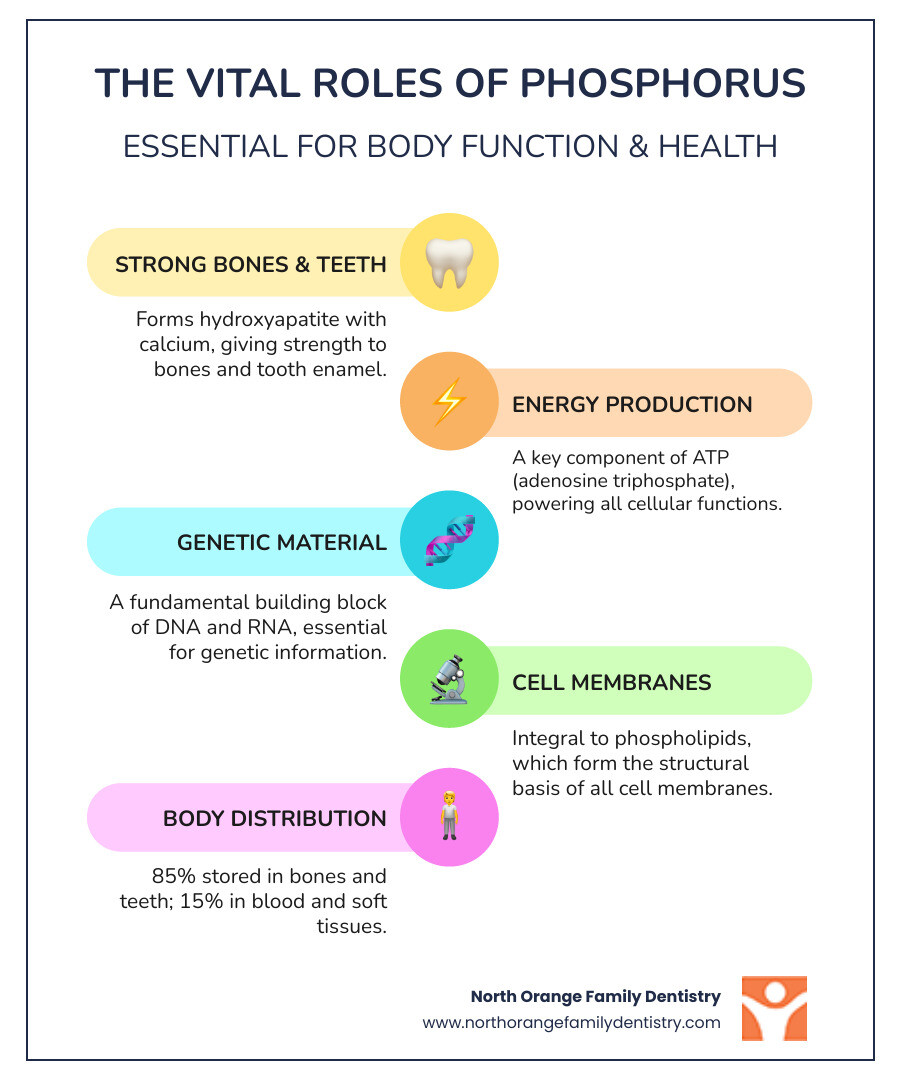
Phosphorus is the second most abundant mineral in the body. About 85% of it is in our bones and teeth, where it combines with calcium to form hydroxyapatite, the substance that gives enamel its strength. This makes a balanced phosphorus intake vital for strong teeth.
Beyond dental health, phosphorus is a multi-tasker. It's a key component of ATP (the body's energy source), cell membranes, and even our DNA and RNA. It also helps regulate enzymes and maintain a proper pH balance. Its interaction with calcium and vitamin D is crucial for bone health, as detailed in scientific studies.
The Recommended Dietary Allowance (RDA) for adults is 700 mg per day, while the FDA's Daily Value (DV) is 1,250 mg. Most Americans easily exceed this, with average intakes from food alone ranging from 1,189 mg to 1,596 mg daily. Because of this, true deficiency is rare and usually linked to specific medical conditions, not diet. A healthy blood phosphate level is typically 2.5 to 4.5 mg/dL.
Top Natural Foods with High Levels of Phosphorus
Natural, whole foods are the best sources of phosphorus. While animal sources are more easily absorbed, many plant-based foods are also rich in this mineral.
Animal Sources
- Chicken and Turkey: A 3.5-ounce serving of roasted chicken or turkey contains around 230 mg of phosphorus. Roasting preserves more phosphorus than boiling.
- Pork: A 3.5-ounce portion of cooked pork, like pork chops, offers around 197 mg.
- Organ Meats: These are nutrient powerhouses. A 3.5-ounce serving of chicken liver contains 442 mg of phosphorus.
- Seafood: Many types of seafood are excellent sources. Sardines pack 490 mg per 3.5 ounces, while cuttlefish (387 mg), scallops (334 mg), and salmon (226 mg) are also great choices.
Dairy
Dairy products are a major source of phosphorus in the American diet.
- Cheese: Hard cheeses are particularly rich. Just one ounce of Romano cheese has 760 mg (60% of the DV).
- Milk: One cup of skim milk provides 261 mg.
- Yogurt: A standard serving of plain yogurt offers around 240 mg.
Plant-Based Sources
Phosphorus in plants is often bound in a form called phytic acid, which is harder for humans to absorb. Soaking, sprouting, or fermenting these foods can increase phosphorus availability.
- Nuts and Seeds: Pumpkin and sunflower seeds provide over 330 mg per ounce. Brazil nuts are also a great source with 206 mg per ounce.
- Whole Grains: Spelt (291 mg per cooked cup) and oats (180 mg per cooked cup) are excellent choices.
- Pseudocereals: Cooked amaranth (364 mg per cup) and quinoa (281 mg per cup) are gluten-free, high-phosphorus options.
- Legumes: A cup of boiled lentils contains 356 mg, and beans like chickpeas and pinto beans have over 250 mg per cup.
- Soy Products: Mature soybeans offer 421 mg per cup. Fermented soy like tempeh and natto are also good sources.
Hidden Phosphorus: Additives in Processed Foods
While natural foods with high levels of phosphorus are healthy, a hidden source comes from additives in processed foods. This inorganic phosphorus is absorbed far more efficiently (70-100%) than the organic phosphorus in whole foods (40-70%). These additives can add 300 to 1,000 mg to a person's daily intake.
Since the FDA doesn't require phosphorus content to be listed on labels, you need to be a savvy shopper. Check the ingredients list for any words containing "PHOS" to identify these additives.
Common phosphate additives include:
- Phosphoric acid
- Disodium phosphate
- Calcium phosphate
- Sodium tripolyphosphate
- Tetrasodium pyrophosphate
You'll find these in a wide range of products, including fast food, dark colas, processed meats (deli meats, hot dogs), and many baked goods and convenience foods. Limiting these items is a key step in managing your total phosphorus intake.
Managing Your Intake of Foods with High Levels of Phosphorus
For most healthy people, the kidneys efficiently filter out excess phosphorus. However, extremely high intakes can lead to hyperphosphatemia (high blood phosphorus), which may affect calcium regulation and bone health.
Impact on Individuals with Chronic Kidney Disease (CKD)
Managing phosphorus is critical for individuals with CKD. Damaged kidneys can't remove excess phosphorus, leading to a dangerous buildup in the blood. This can pull calcium from bones, making them brittle, and cause calcium deposits in blood vessels, increasing the risk of heart attack and stroke. If you have CKD, work with your healthcare team to create a suitable diet. They may recommend phosphate binders, as detailed in resources like the KDOQI Clinical Practice Guideline for Nutrition in CKD.
Other Considerations
- Populations at Risk for Inadequacy: While rare, deficiency can affect preterm newborns, people with certain genetic disorders, and those with severe malnutrition.
- Cooking Methods: Boiling meat can reduce its phosphorus content, while roasting preserves it. For plant foods like grains and legumes, soaking or sprouting can make the phosphorus more available for absorption.
- Medication Interactions: Some antacids can block phosphorus absorption, while certain laxatives can increase blood phosphate levels. Always consult your doctor before using these medications long-term, especially if you have kidney or heart conditions.
Low-Phosphorus Alternatives for a Balanced Diet
For those who need to moderate their intake, such as individuals with CKD, knowing lower-phosphorus alternatives is helpful. This table compares some common high-phosphorus foods with more kidney-friendly counterparts. Prioritizing fresh fruits and vegetables, which are naturally low in phosphorus, is always a great strategy.
| Category | High-Phosphorus Choice | Lower-Phosphorus Alternative |
|---|---|---|
| Beverages | Dark colas, milk-based drinks, cocoa, beer/ale, canned iced teas, bottled beverages with phosphate additives | Water, coffee, tea, unenriched rice milk, apple juice, cranberry juice, grape juice, lemonade, ginger ale, lemon-lime soda, orange soda, root beer |
| Dairy | Cheese (especially hard cheeses like Romano), custard, milk, cream soups, ice cream, pudding, Greek yogurt | Rice milk, almond milk, cottage cheese, vegan cheese, sherbet, popsicles |
| Protein | Organ meats (oysters, beef liver, fish roe, sardines, chicken liver), processed meats (deli meats, hot dogs, bacon, sausage) | Chicken breast, turkey, most fresh fish (e.g., cod, sole), beef, veal, eggs, lamb, pork |
| Grains | Bran muffins, whole wheat bread, brown rice, oats, amaranth, quinoa | White rice, cornflakes, white bread, pasta, rice cakes, unsalted crackers |
| Snacks/Sweets | Chocolate candy, caramels, most processed/prepared foods, pizza, brewer’s yeast | Apples, berries, grapes, carrot sticks, cucumber, unsalted pretzels, unsalted popcorn, pound cake, sugar cookies |
| Legumes | Lentils, chickpeas, navy beans, pinto beans, mature soybeans | Green beans, wax beans, peas |
Remember to check food labels for "PHOS" to identify hidden phosphate additives in processed items.
Phosphorus and Your Dental Health
At North Orange Family Dentistry, we know diet and oral health are deeply connected. It's not just about sugar—getting the right balance of minerals like phosphorus is essential.
As discussed, phosphorus and calcium are a dynamic duo for building strong tooth enamel. They form hydroxyapatite, the hard, crystalline structure that protects your teeth from decay. A balanced intake of foods with high levels of phosphorus provides the raw materials to keep your enamel robust.
This is why we emphasize Oral Health Nutrition as a cornerstone of preventive care. A nutrient-rich diet supports healthy gums, a strong jawbone, and a balanced oral microbiome, as outlined in our guide to the Best Diet for Healthy Teeth and Gums.
Strong bone structure, supported by minerals like phosphorus, is also vital for procedures like dental implants. We offer endosteal dental implants (placed in the jawbone) for around $4500 for a single tooth. Additionally, our advanced laser treatments can address TMJ pain, canker sores, and periodontal disease. This combination of good nutrition and modern dentistry helps you achieve a healthy, confident smile.
Conclusion: Balancing Your Diet for Total Wellness
We've seen that phosphorus is a vital mineral for strong teeth and overall health. The key is balance: focus on whole foods with high levels of phosphorus like lean meats, dairy, and nuts, while being mindful of hidden phosphate additives in processed foods. Reading labels for ingredients with "PHOS" is a simple way to stay in control of your intake.
At North Orange Family Dentistry, we believe a healthy diet is the foundation of a healthy smile. We are committed to educating our patients in Lewis Center and Delaware, Ohio, on how nutrition impacts oral health.
Regular check-ups are essential. We make quality care accessible through our Dental Wellness Plan, which offers discounted yearly care for individuals and families without insurance. Whether you need a routine cleaning, are interested in Invisalign or teeth whitening, or require emergency dental treatment (often available same-day), our team is here for you. We also offer advanced laser treatments for TMJ pain and other conditions.
Learn more about the connection between diet and dental health in our oral health and nutrition resources. Let's work together to keep your smile shining brightly!
Understanding Foods with High Levels of Phosphorus
Foods with high levels of phosphorus include dairy, meats, seafood, nuts, seeds, whole grains, and legumes. This essential mineral is vital for building strong bones and teeth, producing energy, and supporting cell function. About 85% of your body's phosphorus is in your bones and teeth, where it partners with calcium to form hydroxyapatite—the main structural component of tooth enamel.
Quick Reference: Top High-Phosphorus Foods
| Food Category | Examples | Phosphorus Content |
|---|---|---|
| Dairy | Romano cheese, milk | 760 mg per oz, 261 mg per cup |
| Seafood | Sardines, salmon, cuttlefish | 387-490 mg per 3.5 oz |
| Seeds | Pumpkin, sunflower | 332-341 mg per oz |
| Organ Meats | Chicken liver, beef liver | 386-442 mg per 3.5 oz |
| Legumes | Lentils, soybeans | 356-421 mg per cup |
| Whole Grains | Amaranth, spelt | 281-364 mg per cup |
But not all phosphorus is the same. Natural phosphorus from whole foods is absorbed at a 40-70% rate, while phosphate additives in processed foods are absorbed almost completely. This is important because while most Americans meet the recommended 700-1,250 mg daily intake, processed foods can add an extra 300-1,000 mg.
As Dr. Kyle Bogan, founder of Advanced Smiles Lewis Center and a Fellow in the Academy of General Dentistry, I've seen how dietary choices, including the balance of minerals from foods with high levels of phosphorus, directly impact tooth strength and overall dental wellness.
A Comprehensive Guide to Foods with High Levels of Phosphorus
What is Phosphorus and Why is it Important?
Phosphorus is the second most abundant mineral in the body. About 85% of it is in our bones and teeth, where it combines with calcium to form hydroxyapatite, the substance that gives enamel its strength. This makes a balanced phosphorus intake vital for strong teeth.
Beyond dental health, phosphorus is a multi-tasker. It's a key component of ATP (the body's energy source), cell membranes, and even our DNA and RNA. It also helps regulate enzymes and maintain a proper pH balance. Its interaction with calcium and vitamin D is crucial for bone health, as detailed in scientific studies.
The Recommended Dietary Allowance (RDA) for adults is 700 mg per day, while the FDA's Daily Value (DV) is 1,250 mg. Most Americans easily exceed this, with average intakes from food alone ranging from 1,189 mg to 1,596 mg daily. Because of this, true deficiency is rare and usually linked to specific medical conditions, not diet. A healthy blood phosphate level is typically 2.5 to 4.5 mg/dL.
Top Natural Foods with High Levels of Phosphorus
Natural, whole foods are the best sources of phosphorus. While animal sources are more easily absorbed, many plant-based foods are also rich in this mineral.
Animal Sources
- Chicken and Turkey: A 3.5-ounce serving of roasted chicken or turkey contains around 230 mg of phosphorus. Roasting preserves more phosphorus than boiling.
- Pork: A 3.5-ounce portion of cooked pork, like pork chops, offers around 197 mg.
- Organ Meats: These are nutrient powerhouses. A 3.5-ounce serving of chicken liver contains 442 mg of phosphorus.
- Seafood: Many types of seafood are excellent sources. Sardines pack 490 mg per 3.5 ounces, while cuttlefish (387 mg), scallops (334 mg), and salmon (226 mg) are also great choices.
Dairy
Dairy products are a major source of phosphorus in the American diet.
- Cheese: Hard cheeses are particularly rich. Just one ounce of Romano cheese has 760 mg (60% of the DV).
- Milk: One cup of skim milk provides 261 mg.
- Yogurt: A standard serving of plain yogurt offers around 240 mg.
Plant-Based Sources
Phosphorus in plants is often bound in a form called phytic acid, which is harder for humans to absorb. Soaking, sprouting, or fermenting these foods can increase phosphorus availability.
- Nuts and Seeds: Pumpkin and sunflower seeds provide over 330 mg per ounce. Brazil nuts are also a great source with 206 mg per ounce.
- Whole Grains: Spelt (291 mg per cooked cup) and oats (180 mg per cooked cup) are excellent choices.
- Pseudocereals: Cooked amaranth (364 mg per cup) and quinoa (281 mg per cup) are gluten-free, high-phosphorus options.
- Legumes: A cup of boiled lentils contains 356 mg, and beans like chickpeas and pinto beans have over 250 mg per cup.
- Soy Products: Mature soybeans offer 421 mg per cup. Fermented soy like tempeh and natto are also good sources.
Hidden Phosphorus: Additives in Processed Foods
While natural foods with high levels of phosphorus are healthy, a hidden source comes from additives in processed foods. This inorganic phosphorus is absorbed far more efficiently (70-100%) than the organic phosphorus in whole foods (40-70%). These additives can add 300 to 1,000 mg to a person's daily intake.
Since the FDA doesn't require phosphorus content to be listed on labels, you need to be a savvy shopper. Check the ingredients list for any words containing "PHOS" to identify these additives.
Common phosphate additives include:
- Phosphoric acid
- Disodium phosphate
- Calcium phosphate
- Sodium tripolyphosphate
- Tetrasodium pyrophosphate
You'll find these in a wide range of products, including fast food, dark colas, processed meats (deli meats, hot dogs), and many baked goods and convenience foods. Limiting these items is a key step in managing your total phosphorus intake.
Managing Your Intake of Foods with High Levels of Phosphorus
For most healthy people, the kidneys efficiently filter out excess phosphorus. However, extremely high intakes can lead to hyperphosphatemia (high blood phosphorus), which may affect calcium regulation and bone health.
Impact on Individuals with Chronic Kidney Disease (CKD)
Managing phosphorus is critical for individuals with CKD. Damaged kidneys can't remove excess phosphorus, leading to a dangerous buildup in the blood. This can pull calcium from bones, making them brittle, and cause calcium deposits in blood vessels, increasing the risk of heart attack and stroke. If you have CKD, work with your healthcare team to create a suitable diet. They may recommend phosphate binders, as detailed in resources like the KDOQI Clinical Practice Guideline for Nutrition in CKD.
Other Considerations
- Populations at Risk for Inadequacy: While rare, deficiency can affect preterm newborns, people with certain genetic disorders, and those with severe malnutrition.
- Cooking Methods: Boiling meat can reduce its phosphorus content, while roasting preserves it. For plant foods like grains and legumes, soaking or sprouting can make the phosphorus more available for absorption.
- Medication Interactions: Some antacids can block phosphorus absorption, while certain laxatives can increase blood phosphate levels. Always consult your doctor before using these medications long-term, especially if you have kidney or heart conditions.
Low-Phosphorus Alternatives for a Balanced Diet
For those who need to moderate their intake, such as individuals with CKD, knowing lower-phosphorus alternatives is helpful. This table compares some common high-phosphorus foods with more kidney-friendly counterparts. Prioritizing fresh fruits and vegetables, which are naturally low in phosphorus, is always a great strategy.
| Category | High-Phosphorus Choice | Lower-Phosphorus Alternative |
|---|---|---|
| Beverages | Dark colas, milk-based drinks, cocoa, beer/ale, canned iced teas, bottled beverages with phosphate additives | Water, coffee, tea, unenriched rice milk, apple juice, cranberry juice, grape juice, lemonade, ginger ale, lemon-lime soda, orange soda, root beer |
| Dairy | Cheese (especially hard cheeses like Romano), custard, milk, cream soups, ice cream, pudding, Greek yogurt | Rice milk, almond milk, cottage cheese, vegan cheese, sherbet, popsicles |
| Protein | Organ meats (oysters, beef liver, fish roe, sardines, chicken liver), processed meats (deli meats, hot dogs, bacon, sausage) | Chicken breast, turkey, most fresh fish (e.g., cod, sole), beef, veal, eggs, lamb, pork |
| Grains | Bran muffins, whole wheat bread, brown rice, oats, amaranth, quinoa | White rice, cornflakes, white bread, pasta, rice cakes, unsalted crackers |
| Snacks/Sweets | Chocolate candy, caramels, most processed/prepared foods, pizza, brewer’s yeast | Apples, berries, grapes, carrot sticks, cucumber, unsalted pretzels, unsalted popcorn, pound cake, sugar cookies |
| Legumes | Lentils, chickpeas, navy beans, pinto beans, mature soybeans | Green beans, wax beans, peas |
Remember to check food labels for "PHOS" to identify hidden phosphate additives in processed items.
Phosphorus and Your Dental Health
At North Orange Family Dentistry, we know diet and oral health are deeply connected. It's not just about sugar—getting the right balance of minerals like phosphorus is essential.
As discussed, phosphorus and calcium are a dynamic duo for building strong tooth enamel. They form hydroxyapatite, the hard, crystalline structure that protects your teeth from decay. A balanced intake of foods with high levels of phosphorus provides the raw materials to keep your enamel robust.
This is why we emphasize Oral Health Nutrition as a cornerstone of preventive care. A nutrient-rich diet supports healthy gums, a strong jawbone, and a balanced oral microbiome, as outlined in our guide to the Best Diet for Healthy Teeth and Gums.
Strong bone structure, supported by minerals like phosphorus, is also vital for procedures like dental implants. We offer endosteal dental implants (placed in the jawbone) for around $4500 for a single tooth. Additionally, our advanced laser treatments can address TMJ pain, canker sores, and periodontal disease. This combination of good nutrition and modern dentistry helps you achieve a healthy, confident smile.
Conclusion: Balancing Your Diet for Total Wellness
We've seen that phosphorus is a vital mineral for strong teeth and overall health. The key is balance: focus on whole foods with high levels of phosphorus like lean meats, dairy, and nuts, while being mindful of hidden phosphate additives in processed foods. Reading labels for ingredients with "PHOS" is a simple way to stay in control of your intake.
At North Orange Family Dentistry, we believe a healthy diet is the foundation of a healthy smile. We are committed to educating our patients in Lewis Center and Delaware, Ohio, on how nutrition impacts oral health.
Regular check-ups are essential. We make quality care accessible through our Dental Wellness Plan, which offers discounted yearly care for individuals and families without insurance. Whether you need a routine cleaning, are interested in Invisalign or teeth whitening, or require emergency dental treatment (often available same-day), our team is here for you. We also offer advanced laser treatments for TMJ pain and other conditions.
Learn more about the connection between diet and dental health in our oral health and nutrition resources. Let's work together to keep your smile shining brightly!
Contact Us
Have any questions? Want to learn more?

