
Crowning Glory: Breaking Down the Cost of Porcelain Ceramic Crowns
Discover the cost of porcelain ceramic crown: averages, factors, insurance tips & long-term value at North Orange Family Dentistry.
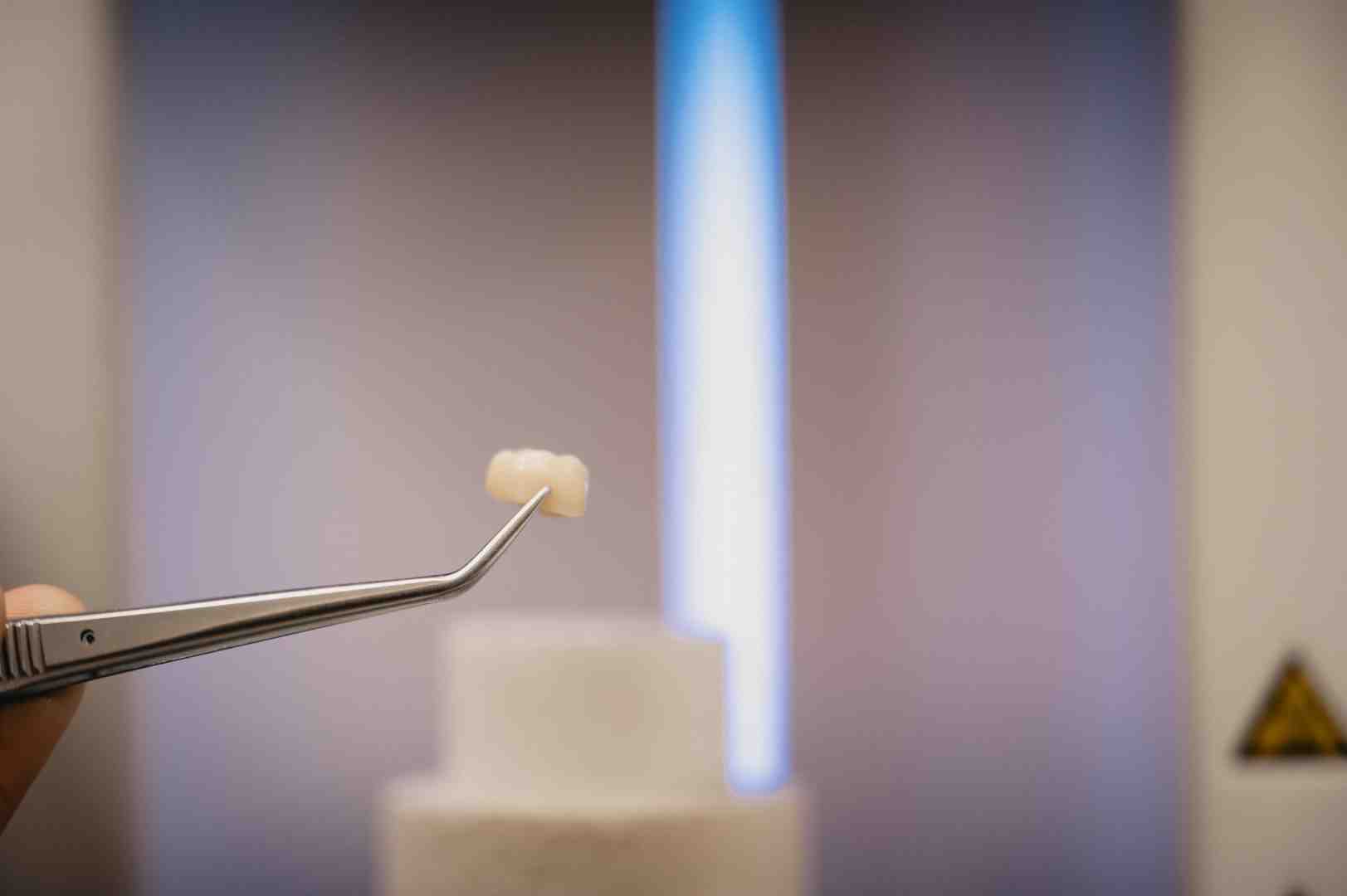


What Does a Porcelain Ceramic Crown Actually Cost?
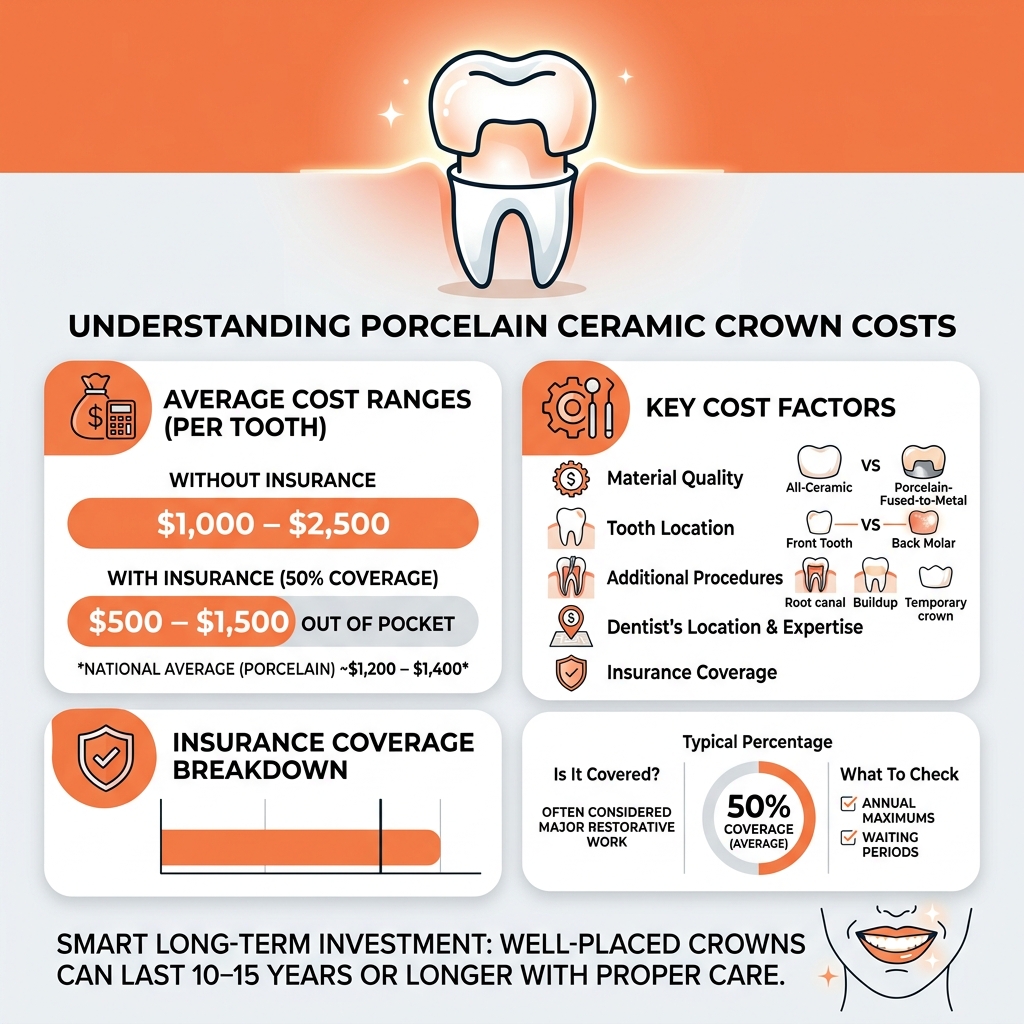
The cost of porcelain ceramic crown treatment in the U.S. typically falls between $1,000 and $2,500 per tooth without insurance, with most patients paying around $1,200–$1,400 on average.
Here's a quick snapshot so you can plan ahead:
SituationEstimated CostWithout insurance$1,000 – $2,500 per toothWith insurance (50% coverage)$500 – $1,500 out of pocketNational average (porcelain)~$1,200 – $1,400 per tooth
A few things shape that final number:
- Material quality – all-ceramic vs. porcelain-fused-to-metal
- Your tooth's location – front teeth vs. back molars
- Additional procedures – root canal, core buildup, or temporary crown
- Your dentist's location and expertise
- Whether you have dental insurance
The good news? A well-placed porcelain crown can last 10–15 years or longer with proper care — making it one of the smarter long-term investments in your oral health.
You're sitting in the dental chair. Your dentist says you need a crown. The first question that pops into most people's heads isn't "what kind?" — it's "how much is this going to cost me?"
That's completely fair. Dental work is a real financial decision, and porcelain ceramic crowns sit at the premium end of the crown spectrum. They're chosen because they look the most natural — especially important for front teeth — but that quality comes at a price.
At North Orange Family Dentistry in Delaware, Ohio, we believe every patient deserves a clear, honest picture of what to expect before treatment begins. This guide breaks down everything that drives the cost of a porcelain ceramic crown, what your insurance may cover, and how our Dental Wellness Plan can help if you don't have insurance.
No jargon. No surprises. Just the information you need to make a confident decision.
Understanding the Average cost of porcelain ceramic crown Treatments
When we talk about the cost of porcelain ceramic crown procedures, it is important to understand that you aren't just paying for a "cap." You are investing in a custom-engineered medical device designed to withstand thousands of pounds of pressure every single day.
Research indicates that premium options, including all-ceramic or all-porcelain crowns, generally range between $1,500 and $3,000 in high-end markets, though many patients find the national average sits closer to $1,300 per tooth. For those without insurance, the range is often quoted between $1,000 and $2,500. While this might seem like a wide gap, it reflects the difference between a standard "one-size-fits-all" approach and the highly customized, aesthetic work required for a visible front tooth.
Porcelain is highly valued because it is biocompatible and mimics the translucency of natural tooth enamel. Because these materials require specialized laboratory fabrication and high-quality ceramic blocks, they naturally carry a higher price tag than budget resin or basic metal options. To learn more about how these fit into a broader treatment plan, you can explore more info about dental crown services.
Comparing the cost of porcelain ceramic crown Materials
Not all crowns are created equal. The material you choose significantly impacts both the upfront price and the long-term durability of the restoration. Here is how porcelain compares to other common dental materials:
Material TypeEstimated Cost RangeBest Use CaseAll-Porcelain / Ceramic$1,000 – $2,500Front teeth; maximum aestheticsZirconia$1,000 – $2,500Molars; extreme durability and strengthPorcelain-Fused-to-Metal (PFM)$800 – $1,800Bridges; back teeth where strength is keyGold / Metal Alloys$900 – $2,500Back molars for heavy grinders
As you can see from this Zirconia vs Porcelain cost comparison, zirconia and porcelain often occupy a similar price bracket. However, porcelain is frequently preferred for the "smile zone" because it can be shade-matched more precisely to your surrounding teeth. PFM crowns offer a middle ground in terms of price but can sometimes develop a dark metallic line at the gumline over time as the gums recede.
Key Factors and Additional Procedures Influencing Your Investment
Why does a crown cost one price in Lewis Center and another in a different part of the country? Several variables are at play.
First, geographic location matters. Operating a high-tech facility in the Columbus metro area involves different overhead costs than a rural clinic. Second, the dentist's expertise is a major factor. At North Orange Family Dentistry, Dr. Kyle Bogan is an FICD fellow, placing him in the top 3% of dentists worldwide. This level of advanced training ensures a higher success rate and a more precise fit, which can prevent the need for costly replacements later.
Laboratory fees also fluctuate. Some dentists use low-cost labs, while others (like us) partner with high-end dental laboratories that use digital scanning and CAD/CAM technology to ensure the crown looks like a natural part of your smile. For a deeper dive into these variables, check out more info about the average cost of dental crowns.
Additional Procedures and the cost of porcelain ceramic crown Prep
The crown itself is often just one part of the total bill. If a tooth is severely decayed or broken, it may need "prep work" before it is strong enough to hold a crown. Common associated costs include:
- Root Canal: If the tooth's nerve is infected, a root canal is required first. This can add significant cost to the total treatment.
- Core Buildup: This involves using filling material to "rebuild" the tooth structure so the crown has something to grab onto.
- Digital X-rays: These are necessary to check the health of the roots and bone before placement.
- Temporary Crowns: Most porcelain crowns take a few weeks to be made in a lab, so a temporary cap is placed to protect your tooth in the meantime.
Understanding these "add-ons" is essential for an accurate budget. You can find more details in our guide on dental crown cost without insurance.
Navigating Insurance and the North Orange Dental Wellness Plan
If you have private dental insurance, your cost of porcelain ceramic crown treatment may be significantly reduced. Most plans categorize crowns as "major restorative" work.
Typically, insurance will cover about 50% of the cost after you have met your deductible. However, keep an eye on your annual maximum — most plans cap their total payout between $1,000 and $2,000 per year. If your crown and prep work exceed that limit, you'll be responsible for the remainder out of pocket. For more guidance on navigating these policies, see our tooth crown cost with insurance guide.
Affordable Solutions for Uninsured Patients
We know that many families in Delaware and Powell do not have traditional dental insurance. We don't want that to be a barrier to saving your natural teeth.
To make care accessible, we offer the North Orange Dental Wellness Plan. This is an in-house solution specifically for individuals and families without insurance. It allows you to receive your yearly preventative care (like cleanings and exams) and provides a discounted rate on restorative treatments, including porcelain crowns. This plan is designed to fit your budget while ensuring you receive the same five-star care as any other patient.
Long-Term Value and the Step-by-Step Placement Process
When evaluating the cost of porcelain ceramic crown treatment, it helps to look at the "annual cost." If a $1,500 crown lasts 15 years, you are essentially paying $100 a year to keep your natural tooth and maintain your chewing function. That is far more affordable than the cost of an extraction followed by a dental implant, which averages around $4,500 at our practice.
Porcelain crowns offer incredible biocompatibility, meaning they are gentle on your gum tissue. They are also highly resistant to staining, though they cannot be whitened once they are placed. For a breakdown of the value of these caps, visit our page on porcelain tooth cap cost.
From Consultation to Final Placement
What does the actual process look like? At North Orange Family Dentistry, we use modern technology to make the experience as comfortable as possible.
- Initial Exam: We use digital X-rays to assess the tooth and discuss your goals.
- Tooth Preparation: We gently remove a small amount of enamel to make room for the crown.
- Digital Impressions: No more messy "goop"! We use advanced scanners to create a 3D model of your mouth.
- Temporary Crown: We place a temporary cap while the lab crafts your permanent one.
- Final Placement: Once your porcelain crown arrives, we check the fit, color, and bite before permanently cementing it in place.
We also feature laser treatments that can help with gum health during the process, ensuring the area around your new crown stays healthy and infection-free. If you are in pain, we offer same-day emergency dental appointments most of the time to get you relief quickly.
Frequently Asked Questions about Porcelain Crowns
How long do porcelain ceramic crowns typically last?
On average, they last between 10 and 15 years. However, with excellent oral hygiene and regular check-ups at our Delaware office, many patients keep their crowns for 20 years or more. Avoiding habits like ice-chewing or using your teeth as tools will extend their life.
Does getting a dental crown hurt?
Not at all! We use local anesthesia to numb the area completely. For patients who feel a bit nervous, we focus on a "five-star experience" to ensure you feel at ease. You might feel some slight sensitivity for a few days after the procedure, but this is normal and temporary.
Can I whiten a porcelain crown if it becomes stained?
No. Porcelain does not respond to traditional whitening gels. If you are considering teeth whitening, we recommend doing it before your crown is made. That way, we can match the porcelain to your new, brighter shade.
Conclusion
Investing in a porcelain crown is about more than just fixing a tooth; it’s about preserving your smile and your confidence for years to come. At North Orange Family Dentistry, Dr. Kyle Bogan and our team are dedicated to providing advanced, comfortable care that fits your family's budget. Whether you are coming from Lewis Center, Powell, or downtown Delaware, we are here to provide the high-tech, high-touch dental experience you deserve.
Ready to restore your smile? Schedule your porcelain ceramic crown consultation with us today and let us help you achieve your "crowning glory."
What Does a Porcelain Ceramic Crown Actually Cost?
The cost of porcelain ceramic crown treatment in the U.S. typically falls between $1,000 and $2,500 per tooth without insurance, with most patients paying around $1,200–$1,400 on average.
Here's a quick snapshot so you can plan ahead:
SituationEstimated CostWithout insurance$1,000 – $2,500 per toothWith insurance (50% coverage)$500 – $1,500 out of pocketNational average (porcelain)~$1,200 – $1,400 per tooth
A few things shape that final number:
- Material quality – all-ceramic vs. porcelain-fused-to-metal
- Your tooth's location – front teeth vs. back molars
- Additional procedures – root canal, core buildup, or temporary crown
- Your dentist's location and expertise
- Whether you have dental insurance
The good news? A well-placed porcelain crown can last 10–15 years or longer with proper care — making it one of the smarter long-term investments in your oral health.
You're sitting in the dental chair. Your dentist says you need a crown. The first question that pops into most people's heads isn't "what kind?" — it's "how much is this going to cost me?"
That's completely fair. Dental work is a real financial decision, and porcelain ceramic crowns sit at the premium end of the crown spectrum. They're chosen because they look the most natural — especially important for front teeth — but that quality comes at a price.
At North Orange Family Dentistry in Delaware, Ohio, we believe every patient deserves a clear, honest picture of what to expect before treatment begins. This guide breaks down everything that drives the cost of a porcelain ceramic crown, what your insurance may cover, and how our Dental Wellness Plan can help if you don't have insurance.
No jargon. No surprises. Just the information you need to make a confident decision.
Understanding the Average cost of porcelain ceramic crown Treatments
When we talk about the cost of porcelain ceramic crown procedures, it is important to understand that you aren't just paying for a "cap." You are investing in a custom-engineered medical device designed to withstand thousands of pounds of pressure every single day.
Research indicates that premium options, including all-ceramic or all-porcelain crowns, generally range between $1,500 and $3,000 in high-end markets, though many patients find the national average sits closer to $1,300 per tooth. For those without insurance, the range is often quoted between $1,000 and $2,500. While this might seem like a wide gap, it reflects the difference between a standard "one-size-fits-all" approach and the highly customized, aesthetic work required for a visible front tooth.
Porcelain is highly valued because it is biocompatible and mimics the translucency of natural tooth enamel. Because these materials require specialized laboratory fabrication and high-quality ceramic blocks, they naturally carry a higher price tag than budget resin or basic metal options. To learn more about how these fit into a broader treatment plan, you can explore more info about dental crown services.
Comparing the cost of porcelain ceramic crown Materials
Not all crowns are created equal. The material you choose significantly impacts both the upfront price and the long-term durability of the restoration. Here is how porcelain compares to other common dental materials:
Material TypeEstimated Cost RangeBest Use CaseAll-Porcelain / Ceramic$1,000 – $2,500Front teeth; maximum aestheticsZirconia$1,000 – $2,500Molars; extreme durability and strengthPorcelain-Fused-to-Metal (PFM)$800 – $1,800Bridges; back teeth where strength is keyGold / Metal Alloys$900 – $2,500Back molars for heavy grinders
As you can see from this Zirconia vs Porcelain cost comparison, zirconia and porcelain often occupy a similar price bracket. However, porcelain is frequently preferred for the "smile zone" because it can be shade-matched more precisely to your surrounding teeth. PFM crowns offer a middle ground in terms of price but can sometimes develop a dark metallic line at the gumline over time as the gums recede.
Key Factors and Additional Procedures Influencing Your Investment
Why does a crown cost one price in Lewis Center and another in a different part of the country? Several variables are at play.
First, geographic location matters. Operating a high-tech facility in the Columbus metro area involves different overhead costs than a rural clinic. Second, the dentist's expertise is a major factor. At North Orange Family Dentistry, Dr. Kyle Bogan is an FICD fellow, placing him in the top 3% of dentists worldwide. This level of advanced training ensures a higher success rate and a more precise fit, which can prevent the need for costly replacements later.
Laboratory fees also fluctuate. Some dentists use low-cost labs, while others (like us) partner with high-end dental laboratories that use digital scanning and CAD/CAM technology to ensure the crown looks like a natural part of your smile. For a deeper dive into these variables, check out more info about the average cost of dental crowns.
Additional Procedures and the cost of porcelain ceramic crown Prep
The crown itself is often just one part of the total bill. If a tooth is severely decayed or broken, it may need "prep work" before it is strong enough to hold a crown. Common associated costs include:
- Root Canal: If the tooth's nerve is infected, a root canal is required first. This can add significant cost to the total treatment.
- Core Buildup: This involves using filling material to "rebuild" the tooth structure so the crown has something to grab onto.
- Digital X-rays: These are necessary to check the health of the roots and bone before placement.
- Temporary Crowns: Most porcelain crowns take a few weeks to be made in a lab, so a temporary cap is placed to protect your tooth in the meantime.
Understanding these "add-ons" is essential for an accurate budget. You can find more details in our guide on dental crown cost without insurance.
Navigating Insurance and the North Orange Dental Wellness Plan
If you have private dental insurance, your cost of porcelain ceramic crown treatment may be significantly reduced. Most plans categorize crowns as "major restorative" work.
Typically, insurance will cover about 50% of the cost after you have met your deductible. However, keep an eye on your annual maximum — most plans cap their total payout between $1,000 and $2,000 per year. If your crown and prep work exceed that limit, you'll be responsible for the remainder out of pocket. For more guidance on navigating these policies, see our tooth crown cost with insurance guide.
Affordable Solutions for Uninsured Patients
We know that many families in Delaware and Powell do not have traditional dental insurance. We don't want that to be a barrier to saving your natural teeth.
To make care accessible, we offer the North Orange Dental Wellness Plan. This is an in-house solution specifically for individuals and families without insurance. It allows you to receive your yearly preventative care (like cleanings and exams) and provides a discounted rate on restorative treatments, including porcelain crowns. This plan is designed to fit your budget while ensuring you receive the same five-star care as any other patient.
Long-Term Value and the Step-by-Step Placement Process
When evaluating the cost of porcelain ceramic crown treatment, it helps to look at the "annual cost." If a $1,500 crown lasts 15 years, you are essentially paying $100 a year to keep your natural tooth and maintain your chewing function. That is far more affordable than the cost of an extraction followed by a dental implant, which averages around $4,500 at our practice.
Porcelain crowns offer incredible biocompatibility, meaning they are gentle on your gum tissue. They are also highly resistant to staining, though they cannot be whitened once they are placed. For a breakdown of the value of these caps, visit our page on porcelain tooth cap cost.
From Consultation to Final Placement
What does the actual process look like? At North Orange Family Dentistry, we use modern technology to make the experience as comfortable as possible.
- Initial Exam: We use digital X-rays to assess the tooth and discuss your goals.
- Tooth Preparation: We gently remove a small amount of enamel to make room for the crown.
- Digital Impressions: No more messy "goop"! We use advanced scanners to create a 3D model of your mouth.
- Temporary Crown: We place a temporary cap while the lab crafts your permanent one.
- Final Placement: Once your porcelain crown arrives, we check the fit, color, and bite before permanently cementing it in place.
We also feature laser treatments that can help with gum health during the process, ensuring the area around your new crown stays healthy and infection-free. If you are in pain, we offer same-day emergency dental appointments most of the time to get you relief quickly.
Frequently Asked Questions about Porcelain Crowns
How long do porcelain ceramic crowns typically last?
On average, they last between 10 and 15 years. However, with excellent oral hygiene and regular check-ups at our Delaware office, many patients keep their crowns for 20 years or more. Avoiding habits like ice-chewing or using your teeth as tools will extend their life.
Does getting a dental crown hurt?
Not at all! We use local anesthesia to numb the area completely. For patients who feel a bit nervous, we focus on a "five-star experience" to ensure you feel at ease. You might feel some slight sensitivity for a few days after the procedure, but this is normal and temporary.
Can I whiten a porcelain crown if it becomes stained?
No. Porcelain does not respond to traditional whitening gels. If you are considering teeth whitening, we recommend doing it before your crown is made. That way, we can match the porcelain to your new, brighter shade.
Conclusion
Investing in a porcelain crown is about more than just fixing a tooth; it’s about preserving your smile and your confidence for years to come. At North Orange Family Dentistry, Dr. Kyle Bogan and our team are dedicated to providing advanced, comfortable care that fits your family's budget. Whether you are coming from Lewis Center, Powell, or downtown Delaware, we are here to provide the high-tech, high-touch dental experience you deserve.
Ready to restore your smile? Schedule your porcelain ceramic crown consultation with us today and let us help you achieve your "crowning glory."
Contact Us
Have any questions? Want to learn more?

