
Beyond the Block: Your Guide to Phosphorus in Cheese
Discover how cheese high in phosphorus affects your health, from bones to kidneys. Learn to choose wisely and enjoy cheese safely.



Understanding Phosphorus in Your Diet
Cheese high in phosphorus is a key concern for anyone managing kidney health, but it's also an important nutrient for strong teeth and bones. The phosphorus content in cheese varies dramatically—ranging from as low as 32 mg per ounce in cream cheese to over 380 mg per ounce in some processed varieties. Understanding which cheeses are highest and lowest in this mineral helps you make informed choices for your family's health.
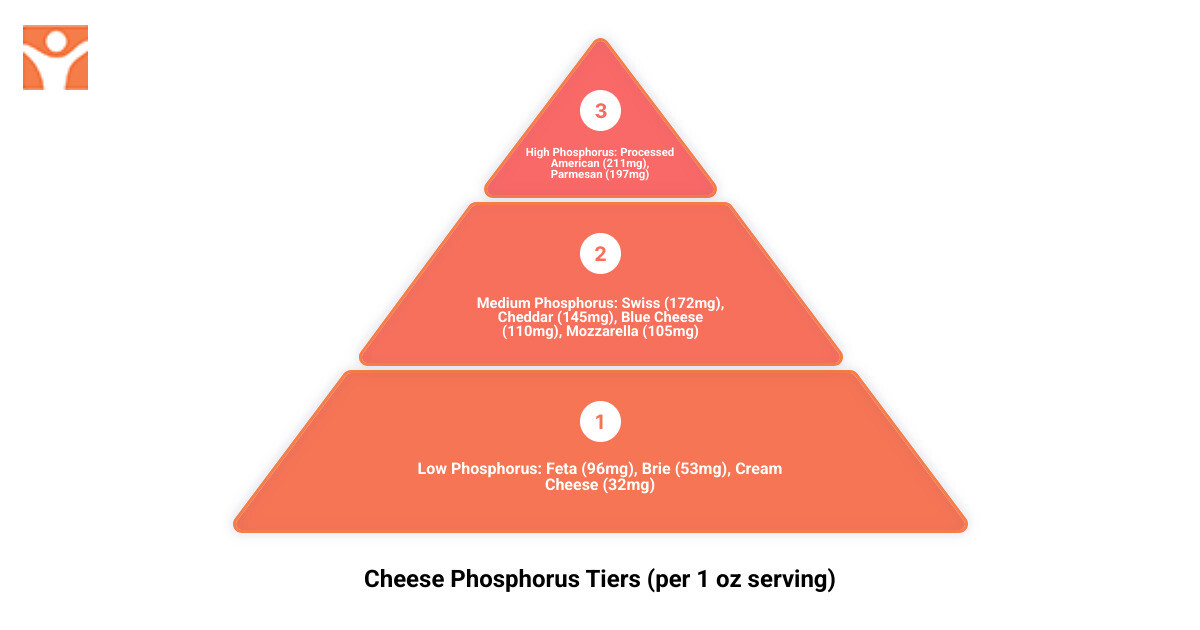
Quick Guide: Phosphorus Levels in Common Cheeses (per 1 oz serving)
| Cheese Type | Phosphorus Content | Category |
|---|---|---|
| Processed American | 211 mg | High |
| Parmesan (hard) | 197 mg | High |
| Swiss | 172 mg | Medium-High |
| Cheddar | 145 mg | Medium |
| Mozzarella | 105 mg | Medium |
| Blue Cheese | 110 mg | Medium |
| Feta | 96 mg | Low |
| Brie | 53 mg | Low |
| Cream Cheese | 32 mg | Low |
Key Takeaway: Processed and hard cheeses are generally highest in phosphorus, while soft and natural cheeses tend to be lower. Serving size matters—even low-phosphorus cheeses can add up if you eat large portions.
Phosphorus plays a vital role in building strong bones and teeth, working alongside calcium to fortify enamel and maintain bone density. But for individuals with kidney disease, too much phosphorus can build up in the blood, leading to serious complications. That's why knowing which cheese varieties fit your dietary needs is essential.
I'm Dr. Kyle Bogan from North Orange Family Dentistry, and throughout my years in dental practice, I've seen how dietary choices, including selecting the right cheese high in phosphorus or low in phosphorus, directly impact oral health outcomes for families. Understanding the nutritional profile of everyday foods like cheese helps my patients make choices that support both their smiles and their overall wellness.
Phosphorus is the second most abundant mineral in our bodies, vital for building and repairing bones and teeth, storing energy, and helping kidneys filter waste.
The Role of Phosphorus in Oral Health
For oral health, phosphorus is a superstar. It works with calcium to form the hard structure of our teeth and jawbone, fortifying enamel and maintaining bone density. A diet rich in these minerals acts as a shield for your teeth. Phosphorus also helps produce saliva, our natural defense against cavities, which neutralizes harmful acids. Cheese is a great source of both phosphorus and calcium, and it also contains casein, a protein that helps repair tooth enamel. At North Orange Family Dentistry in Lewis Center and Delaware, Ohio, we emphasize that a balanced diet with smart cheese choices is a powerful tool for a vibrant smile. Learn more from our resources on Nutrients for Strong Teeth and An Apple a Day Keeps the Dentist Away: Nutrition and Your Oral Health.
When Phosphorus Becomes a Problem: Kidney Health
While phosphorus is essential, it can become a problem for individuals with kidney disease. Healthy kidneys filter excess phosphorus from the blood, but when they don't function properly, phosphorus can build up. This condition, hyperphosphatemia, can pull calcium from bones, making them weak, and increase the risk of heart disease. Managing this often requires a special diet limiting phosphorus intake. The type and amount of cheese someone with kidney disease can eat depends on their specific condition, so consulting a healthcare provider is crucial. For detailed dietary guidance, the National Kidney Foundation is an excellent resource.
A Comparative Guide to Cheese High in Phosphorus
Navigating cheese can feel like a delicious adventure, but when you're watching your phosphorus intake, it requires a bit more savvy. The phosphorus content in cheese can vary widely, from under 30 mg to over 380 mg per ounce.
Generally, processed and hard cheeses are higher in phosphorus, while natural, soft cheeses are lower. This difference is due to production methods, moisture content, and the use of phosphorus additives. Processed cheeses often contain these additives to improve texture and shelf life. This added phosphorus is absorbed far more easily by the body (90-100%) compared to naturally occurring phosphorus (about 60%), making it a key concern for those on a restricted diet. It's also wise to consider sodium and protein content when choosing a cheese.
Highest vs. Lowest: A Phosphorus Cheese List
To give you a clearer picture, let's dive into a comparative list of various cheeses, highlighting their phosphorus content per 1-ounce serving. This will help you identify which cheeses are cheese high in phosphorus and which are lower-phosphorus alternatives. That these are approximate values, and slight variations can occur between brands.
| Cheese Type (per 1 oz / ~28g serving) | Phosphorus (mg) | Sodium (mg) | Protein (g) | Category | Notes |
|---|---|---|---|---|---|
| Processed American Cheese | 211 | 468 | 5 | High | Often contains phosphorus additives. |
| Parmesan (Hard) | 197 | 390 | 10 | High | Grated Parmesan (low-sodium) can be as high as 807mg per cup. |
| Swiss | 172 | 53 | 8 | Medium-High | A good choice for lower sodium. |
| Emmental | ~180 (255mg/40g) | ~15 (255mg/40g) | ~7 (255mg/40g) | High | Similar to Swiss, can be higher. |
| Cheddar | 145 | 185 | 6 | Medium | Reduced-fat cheddar can be higher in phosphorus. |
| Provolone | 141 | 249 | 7 | Medium | |
| Blue Cheese | 110 | 325 | 6 | Medium | Strong flavor means a little goes a long way. |
| Mozzarella | 105 | 106 | 6 | Medium | Whole milk mozzarella is generally lower than some processed versions. |
| Feta | 96 | 360 | 4 | Low | Higher in sodium, use sparingly. |
| Goat Cheese (Soft) | 72 | 103 | 5 | Low | |
| Brie | 53 | 178 | 6 | Low | |
| Ricotta (Part-Skim) | 49 (per 1/4 cup) | 26 (per 1/4 cup) | 3.5 (per 1/4 cup) | Low | Excellent for lower phosphorus, but serving size is important. |
| Cream Cheese | 32 | 96 | 2 | Low | Lowest phosphorus option. |
Note: Some data points, especially for Ricotta, are provided per different serving sizes in the research. We've adjusted to approximate 1 oz for comparison where possible, but always check labels for precise values.
We can see from this table that processed options like American cheese and hard, aged varieties like Parmesan tend to lead the pack in phosphorus content. Softer, fresh cheeses like cream cheese, ricotta, and brie offer much lower phosphorus levels, making them more kidney-friendly choices when consumed in moderation.
Reading the Label: Hidden Phosphorus and Other Nutrients
Since manufacturers aren't always required to list phosphorus on nutrition labels, it's important to become a label detective. The key is to look for ingredients that contain the letters "phos." These are phosphorus additives, which are almost completely absorbed by the body, unlike the phosphorus that occurs naturally in foods.
Common additives to watch for include:
- Phosphoric acid
- Dicalcium phosphate
- Sodium polyphosphate
If you see these on the ingredient list, especially in processed cheese slices, spreads, or canned cheese, it's a sign of high, absorbable phosphorus.
Beyond phosphorus, keep an eye on:
- Sodium: Cheese can be very high in sodium. Natural Swiss, ricotta, and cream cheese are often lower-sodium choices.
- Potassium: Most cheese is low in potassium, but some low-sodium versions use potassium chloride as a salt substitute, which may be a concern for those on a low-potassium diet.
- Fat: Cheese is high in fat, so moderation is key for heart health.
A typical serving size is 1-2 ounces (about the size of three dominoes). Even low-phosphorus cheeses add up in large quantities. For more detailed guidance, especially for a kidney-friendly diet, resources like DaVita's tips are very helpful.
Balancing Cheese in a Healthy Diet
Incorporating cheese into a healthy diet, especially when managing specific health conditions, is all about balance and making informed choices. It's not about cutting out cheese entirely, but rather about understanding its nutritional profile and enjoying it in a way that supports your health goals.
For a general healthy diet, cheese can be a fantastic source of calcium and protein. For those with kidney disease, careful selection and portion control become even more important. Working with professionals, such as a registered dietitian, can help you create a personalized eating plan that allows you to enjoy cheese safely.
Tips for Safe Cheese Consumption
Here are some practical tips to help you balance cheese in your diet, especially if you're watching your phosphorus intake:
- Control Portions: Stick to a 1-2 ounce serving. Think of cheese as a flavor improver, not the main course.
- Choose Strong Flavors: A small amount of a pungent cheese like sharp cheddar or blue cheese provides lots of flavor, helping you use less.
- Go Natural: Choose natural cheese blocks over processed slices or spreads to avoid highly absorbable phosphorus additives.
- Look for Low-Sodium: Cheeses like Swiss, fresh mozzarella, and ricotta are often lower in sodium.
- Pair with Fiber: Eat cheese with fruits, vegetables, or whole-grain crackers to create a more balanced and filling snack.
- Consult a Professional: If you have a health condition like kidney disease, work with a registered dietitian to create a safe eating plan.
- Stay Hydrated: Good hydration is crucial for kidney and oral health.
The goal is to make smart, informed choices, not to eliminate cheese entirely.
Your Oral Health and Nutrition Partner
At North Orange Family Dentistry, serving Lewis Center and Delaware, Ohio, we believe that a balanced diet is fundamental to great oral health. The food choices you make, including which cheese to eat, directly affect the health of your teeth and gums.
Led by the highly awarded Dr. Kyle Bogan, our team provides personalized, comprehensive family dental care. We focus on prevention and use advanced technology, including laser treatments for TMJ pain and periodontal disease. If you have a dental emergency, we can often see you the same day.
We are committed to making dental care affordable. For patients without insurance, our Dental Wellness Plan offers a discounted price on yearly care.
Whether you need a routine check-up or are interested in services like Invisalign, teeth whitening, dental implants (averaging $4500 for a single tooth), or veneers, our team is here to be your partner in health. To learn more, explore our resources on Oral Health Nutrition and Comprehensive Family Dentistry.
Understanding Phosphorus in Your Diet
Cheese high in phosphorus is a key concern for anyone managing kidney health, but it's also an important nutrient for strong teeth and bones. The phosphorus content in cheese varies dramatically—ranging from as low as 32 mg per ounce in cream cheese to over 380 mg per ounce in some processed varieties. Understanding which cheeses are highest and lowest in this mineral helps you make informed choices for your family's health.
Quick Guide: Phosphorus Levels in Common Cheeses (per 1 oz serving)
| Cheese Type | Phosphorus Content | Category |
|---|---|---|
| Processed American | 211 mg | High |
| Parmesan (hard) | 197 mg | High |
| Swiss | 172 mg | Medium-High |
| Cheddar | 145 mg | Medium |
| Mozzarella | 105 mg | Medium |
| Blue Cheese | 110 mg | Medium |
| Feta | 96 mg | Low |
| Brie | 53 mg | Low |
| Cream Cheese | 32 mg | Low |
Key Takeaway: Processed and hard cheeses are generally highest in phosphorus, while soft and natural cheeses tend to be lower. Serving size matters—even low-phosphorus cheeses can add up if you eat large portions.
Phosphorus plays a vital role in building strong bones and teeth, working alongside calcium to fortify enamel and maintain bone density. But for individuals with kidney disease, too much phosphorus can build up in the blood, leading to serious complications. That's why knowing which cheese varieties fit your dietary needs is essential.
I'm Dr. Kyle Bogan from North Orange Family Dentistry, and throughout my years in dental practice, I've seen how dietary choices, including selecting the right cheese high in phosphorus or low in phosphorus, directly impact oral health outcomes for families. Understanding the nutritional profile of everyday foods like cheese helps my patients make choices that support both their smiles and their overall wellness.
Phosphorus is the second most abundant mineral in our bodies, vital for building and repairing bones and teeth, storing energy, and helping kidneys filter waste.
The Role of Phosphorus in Oral Health
For oral health, phosphorus is a superstar. It works with calcium to form the hard structure of our teeth and jawbone, fortifying enamel and maintaining bone density. A diet rich in these minerals acts as a shield for your teeth. Phosphorus also helps produce saliva, our natural defense against cavities, which neutralizes harmful acids. Cheese is a great source of both phosphorus and calcium, and it also contains casein, a protein that helps repair tooth enamel. At North Orange Family Dentistry in Lewis Center and Delaware, Ohio, we emphasize that a balanced diet with smart cheese choices is a powerful tool for a vibrant smile. Learn more from our resources on Nutrients for Strong Teeth and An Apple a Day Keeps the Dentist Away: Nutrition and Your Oral Health.
When Phosphorus Becomes a Problem: Kidney Health
While phosphorus is essential, it can become a problem for individuals with kidney disease. Healthy kidneys filter excess phosphorus from the blood, but when they don't function properly, phosphorus can build up. This condition, hyperphosphatemia, can pull calcium from bones, making them weak, and increase the risk of heart disease. Managing this often requires a special diet limiting phosphorus intake. The type and amount of cheese someone with kidney disease can eat depends on their specific condition, so consulting a healthcare provider is crucial. For detailed dietary guidance, the National Kidney Foundation is an excellent resource.
A Comparative Guide to Cheese High in Phosphorus
Navigating cheese can feel like a delicious adventure, but when you're watching your phosphorus intake, it requires a bit more savvy. The phosphorus content in cheese can vary widely, from under 30 mg to over 380 mg per ounce.
Generally, processed and hard cheeses are higher in phosphorus, while natural, soft cheeses are lower. This difference is due to production methods, moisture content, and the use of phosphorus additives. Processed cheeses often contain these additives to improve texture and shelf life. This added phosphorus is absorbed far more easily by the body (90-100%) compared to naturally occurring phosphorus (about 60%), making it a key concern for those on a restricted diet. It's also wise to consider sodium and protein content when choosing a cheese.
Highest vs. Lowest: A Phosphorus Cheese List
To give you a clearer picture, let's dive into a comparative list of various cheeses, highlighting their phosphorus content per 1-ounce serving. This will help you identify which cheeses are cheese high in phosphorus and which are lower-phosphorus alternatives. That these are approximate values, and slight variations can occur between brands.
| Cheese Type (per 1 oz / ~28g serving) | Phosphorus (mg) | Sodium (mg) | Protein (g) | Category | Notes |
|---|---|---|---|---|---|
| Processed American Cheese | 211 | 468 | 5 | High | Often contains phosphorus additives. |
| Parmesan (Hard) | 197 | 390 | 10 | High | Grated Parmesan (low-sodium) can be as high as 807mg per cup. |
| Swiss | 172 | 53 | 8 | Medium-High | A good choice for lower sodium. |
| Emmental | ~180 (255mg/40g) | ~15 (255mg/40g) | ~7 (255mg/40g) | High | Similar to Swiss, can be higher. |
| Cheddar | 145 | 185 | 6 | Medium | Reduced-fat cheddar can be higher in phosphorus. |
| Provolone | 141 | 249 | 7 | Medium | |
| Blue Cheese | 110 | 325 | 6 | Medium | Strong flavor means a little goes a long way. |
| Mozzarella | 105 | 106 | 6 | Medium | Whole milk mozzarella is generally lower than some processed versions. |
| Feta | 96 | 360 | 4 | Low | Higher in sodium, use sparingly. |
| Goat Cheese (Soft) | 72 | 103 | 5 | Low | |
| Brie | 53 | 178 | 6 | Low | |
| Ricotta (Part-Skim) | 49 (per 1/4 cup) | 26 (per 1/4 cup) | 3.5 (per 1/4 cup) | Low | Excellent for lower phosphorus, but serving size is important. |
| Cream Cheese | 32 | 96 | 2 | Low | Lowest phosphorus option. |
Note: Some data points, especially for Ricotta, are provided per different serving sizes in the research. We've adjusted to approximate 1 oz for comparison where possible, but always check labels for precise values.
We can see from this table that processed options like American cheese and hard, aged varieties like Parmesan tend to lead the pack in phosphorus content. Softer, fresh cheeses like cream cheese, ricotta, and brie offer much lower phosphorus levels, making them more kidney-friendly choices when consumed in moderation.
Reading the Label: Hidden Phosphorus and Other Nutrients
Since manufacturers aren't always required to list phosphorus on nutrition labels, it's important to become a label detective. The key is to look for ingredients that contain the letters "phos." These are phosphorus additives, which are almost completely absorbed by the body, unlike the phosphorus that occurs naturally in foods.
Common additives to watch for include:
- Phosphoric acid
- Dicalcium phosphate
- Sodium polyphosphate
If you see these on the ingredient list, especially in processed cheese slices, spreads, or canned cheese, it's a sign of high, absorbable phosphorus.
Beyond phosphorus, keep an eye on:
- Sodium: Cheese can be very high in sodium. Natural Swiss, ricotta, and cream cheese are often lower-sodium choices.
- Potassium: Most cheese is low in potassium, but some low-sodium versions use potassium chloride as a salt substitute, which may be a concern for those on a low-potassium diet.
- Fat: Cheese is high in fat, so moderation is key for heart health.
A typical serving size is 1-2 ounces (about the size of three dominoes). Even low-phosphorus cheeses add up in large quantities. For more detailed guidance, especially for a kidney-friendly diet, resources like DaVita's tips are very helpful.
Balancing Cheese in a Healthy Diet
Incorporating cheese into a healthy diet, especially when managing specific health conditions, is all about balance and making informed choices. It's not about cutting out cheese entirely, but rather about understanding its nutritional profile and enjoying it in a way that supports your health goals.
For a general healthy diet, cheese can be a fantastic source of calcium and protein. For those with kidney disease, careful selection and portion control become even more important. Working with professionals, such as a registered dietitian, can help you create a personalized eating plan that allows you to enjoy cheese safely.
Tips for Safe Cheese Consumption
Here are some practical tips to help you balance cheese in your diet, especially if you're watching your phosphorus intake:
- Control Portions: Stick to a 1-2 ounce serving. Think of cheese as a flavor improver, not the main course.
- Choose Strong Flavors: A small amount of a pungent cheese like sharp cheddar or blue cheese provides lots of flavor, helping you use less.
- Go Natural: Choose natural cheese blocks over processed slices or spreads to avoid highly absorbable phosphorus additives.
- Look for Low-Sodium: Cheeses like Swiss, fresh mozzarella, and ricotta are often lower in sodium.
- Pair with Fiber: Eat cheese with fruits, vegetables, or whole-grain crackers to create a more balanced and filling snack.
- Consult a Professional: If you have a health condition like kidney disease, work with a registered dietitian to create a safe eating plan.
- Stay Hydrated: Good hydration is crucial for kidney and oral health.
The goal is to make smart, informed choices, not to eliminate cheese entirely.
Your Oral Health and Nutrition Partner
At North Orange Family Dentistry, serving Lewis Center and Delaware, Ohio, we believe that a balanced diet is fundamental to great oral health. The food choices you make, including which cheese to eat, directly affect the health of your teeth and gums.
Led by the highly awarded Dr. Kyle Bogan, our team provides personalized, comprehensive family dental care. We focus on prevention and use advanced technology, including laser treatments for TMJ pain and periodontal disease. If you have a dental emergency, we can often see you the same day.
We are committed to making dental care affordable. For patients without insurance, our Dental Wellness Plan offers a discounted price on yearly care.
Whether you need a routine check-up or are interested in services like Invisalign, teeth whitening, dental implants (averaging $4500 for a single tooth), or veneers, our team is here to be your partner in health. To learn more, explore our resources on Oral Health Nutrition and Comprehensive Family Dentistry.
Contact Us
Have any questions? Want to learn more?

