
Why Did My Tooth Break After a Filling? Causes and Solutions
Experiencing a broken tooth after filling? Discover causes, immediate care, and professional solutions to protect your smile. Get help now!



What Happens When Your Tooth Breaks After a Filling
A broken tooth after filling is alarming. It might happen when you're crunching on an apple or just chewing normally, leaving you with a sharp edge, a loose piece in your mouth, or sudden pain.
Quick Answer: Why Your Tooth Broke After a Filling
| Common Causes | What Happens |
|---|---|
| Excessive bite force | Pressure from chewing hard foods or grinding teeth cracks the filling or tooth |
| Old or large fillings | Fillings weaken over time; larger ones remove more tooth structure |
| New decay | Bacteria seep around filling edges, weakening the bond |
| Filling material failure | Materials break down—amalgam fails at 17.38%, composite at 11.87% over 10 years |
| Trauma or injury | Direct impact to the mouth damages the restored tooth |
What to do immediately:
- Rinse with warm salt water
- Apply a cold compress to reduce swelling
- Cover sharp edges with dental wax
- Avoid chewing on that side
- Call your dentist for an emergency appointment
Over 90% of adults have had cavities, so filling failures are common. The good news is that most broken teeth can be saved with prompt treatment.
As Dr. Kyle Bogan, founder of North Orange Family Dentistry, I've helped many patients in the Delaware and Lewis Center areas save their broken teeth. Understanding the causes and your treatment options is the first step toward a healthy, restored smile.
Understanding Why Your Tooth Broke After a Filling
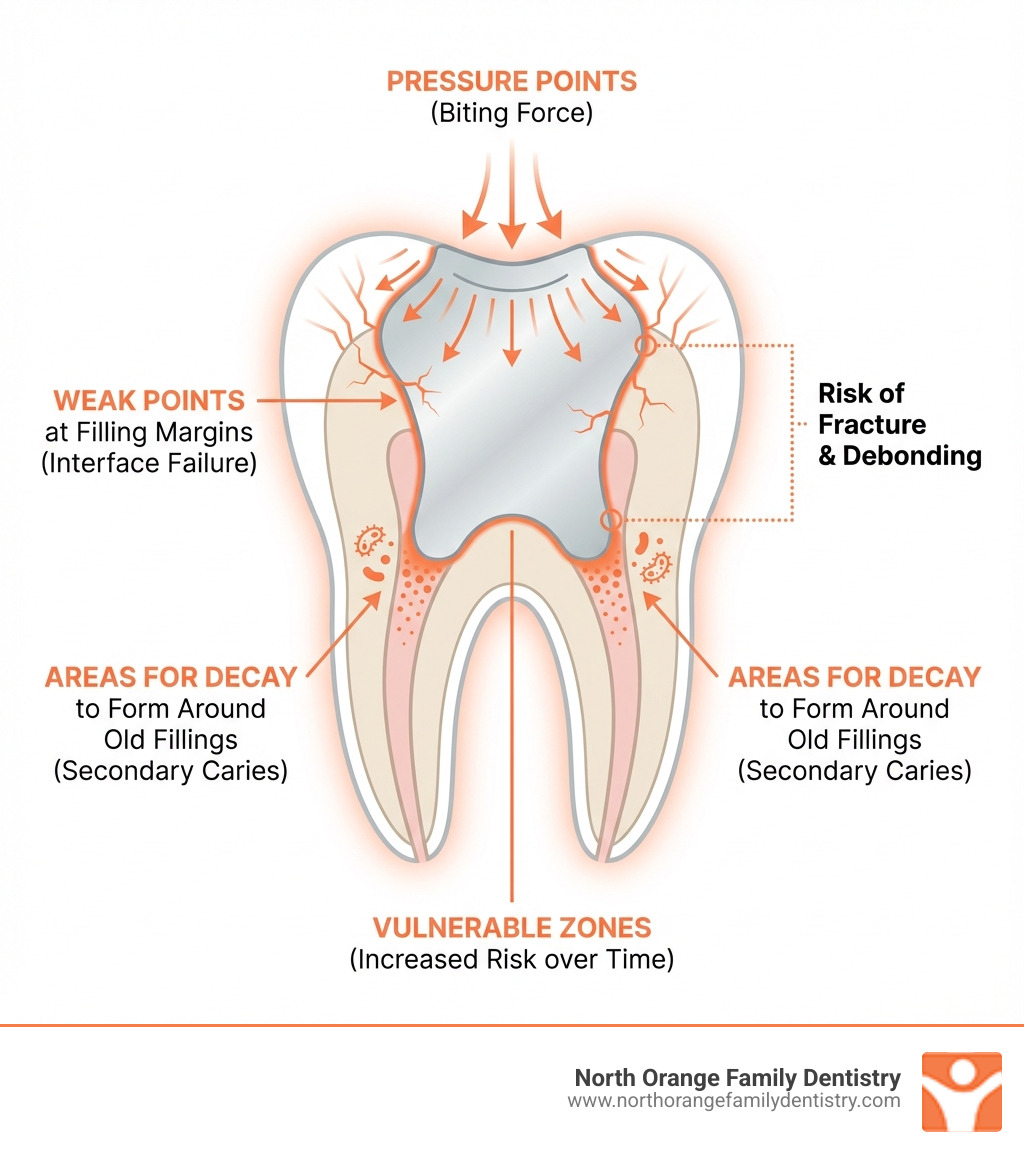
Fillings aren't permanent. Both the filling and the surrounding tooth are subject to daily stress. A broken tooth after filling usually happens due to a combination of factors.
Common Causes and Filling Failure
Understanding the root cause is the first step toward effective treatment.
- Excessive Bite Force: Biting on hard items like ice, hard candy, or popcorn kernels can create enough pressure to crack a filling or the tooth around it, especially if the filling is large.
- Bruxism (Teeth Grinding): This common habit, especially during sleep, puts sustained pressure on teeth, weakening fillings and causing fractures in the restoration and the tooth.
- Trauma or Injury: A fall, sports injury, or any impact to the mouth can be strong enough to fracture a restored tooth.
- Large or Old Fillings: Large fillings leave less natural tooth, making it weaker. Over time, fillings degrade and can fail. Studies show significant failure rates for both amalgam (17.38%) and composite (11.87%) fillings over a 10-year period.
- Recurrent Decay: Bacteria can seep into tiny gaps between the filling and the tooth, causing new decay underneath. This weakens the tooth from the inside, leading to a fracture.
- Filling Material Failure: All filling materials can chip or crack. The material type, placement technique, and lifestyle habits (like smoking and drinking) all contribute to the risk of failure.
- Weakened Tooth Structure (Post-Root Canal): Teeth that have had a root canal are more brittle and prone to fracture. They are often restored with a filling but typically require a crown for long-term protection.
Signs, Symptoms, and Immediate At-Home Care
Recognizing the signs of a broken tooth after filling and knowing what to do can prevent further damage and reduce discomfort until you see your dentist.
Common Signs and Symptoms:
- Sharp Pain: You may feel a sharp, erratic, or constant pain, especially when biting or when the tooth is exposed to hot or cold.
- Temperature Sensitivity: A new, intense sensitivity to hot and cold can occur if the inner layers of the tooth are exposed.
- Pain on Biting: Feeling a sharp pain when you put pressure on the tooth is a classic sign of a fracture.
- Visible Crack or Missing Piece: You may see a crack line or notice that a piece of the tooth or filling is gone.
- Sharp Edge: Your tongue may find a new sharp edge that can irritate or cut your mouth.
- Food Trapping: Food getting stuck in a new spot can indicate a gap from a missing piece of tooth or filling.
Immediate Steps You Can Take at Home:
These temporary steps can help manage the situation until you get professional care.
- Rinse with Warm Salt Water: Mix half a teaspoon of salt in warm water and rinse gently to clean the area and reduce bacteria.
- Apply a Cold Compress: Apply a cold compress to the outside of your cheek for 15-minute intervals to reduce swelling and pain.
- Use Dental Wax or Sugar-Free Gum: Cover any sharp edges with dental wax or sugar-free gum to protect your tongue and cheek.
- Avoid Chewing on the Affected Side: Eat soft foods and chew on the opposite side of your mouth to prevent further damage.
- Over-the-Counter Pain Relievers: Ibuprofen or acetaminophen can help manage pain until your appointment.
- Contact Us Immediately: Call North Orange Family Dentistry immediately. A broken tooth is a dental emergency, and we often offer same-day appointments to provide treatment.
These are temporary measures; professional dental care is essential. For more detailed care instructions, you can refer to resources like Broken Tooth: Care Instructions.
The Risks of Ignoring a Broken Tooth After a Filling
Ignoring a broken tooth after filling, even if it doesn't hurt, can lead to more serious, complex, and costly problems.
Here's what can happen if you delay treatment:
- Bacterial Infection: A break creates a pathway for bacteria to infect the tooth's inner pulp. According to the Cleveland Clinic, this infection can spread to the surrounding bone and gum.
- Pulp Damage: If the break exposes the pulp (the tooth's nerve), it can become infected and die, causing severe pain.
- Dental Abscess: An untreated infection can lead to a painful abscess (a pocket of pus), which can cause swelling and spread to other parts of the body.
- Worsening Fracture: A small crack can easily become a large fracture under normal chewing pressure, potentially splitting the tooth and making it unsalvageable.
- Tooth Loss: If the damage or infection is too severe, the tooth may need to be extracted, requiring a replacement like a dental implant or bridge.
- Increased Pain: A minor issue with little pain can quickly become painful as the damage or infection worsens.
- More Complex and Costly Treatment: Delaying treatment turns simple, affordable fixes into complex and expensive procedures like root canals, crowns, or extractions. Early intervention is always simpler and less costly.
Don't let a small problem become a big one. For more information on fractured teeth, you can consult resources like Cracked Tooth (Fractured Tooth) - Cleveland Clinic.
Professional Solutions and Long-Term Prevention
When you experience a broken tooth after filling, getting professional dental care is paramount. At North Orange Family Dentistry, we are equipped to handle dental emergencies and develop personalized treatment plans to restore your smile.
Professional Treatment for a Broken Tooth After a Filling
Your journey begins with a thorough exam. Dr. Bogan will use digital X-rays to assess the damage and determine the extent of the fracture. Your treatment plan will depend on the severity of the break.
For Minor Chips or Cracks:
- Smoothing: For very minor chips, we can simply smooth and polish the rough edge.
- New Filling: We can replace a failed filling or repair a small break with a new one to restore the tooth's function and appearance.
- Dental bonding: For small to moderate chips, dental bonding uses a tooth-colored resin to quickly and seamlessly restore the tooth's original shape.
For Moderate to Major Breaks:
- Dental crowns: For larger breaks or weakened teeth, a dental crown acts as a protective cap, restoring the tooth's strength, shape, and appearance.
- Root Canal Therapy: If the break exposes or infects the tooth's pulp (nerve), root canal therapy is needed to remove the damaged tissue. A crown is then placed to protect the treated tooth.
- Tooth Extraction: In severe cases where the tooth cannot be saved, extraction is necessary to protect your overall oral health.
- Dental Implants: If a tooth is extracted, a dental implant is an excellent replacement. We specialize in endosteal implants, which act as an artificial root for a new crown. A single tooth implant costs about $4500 and provides a durable, long-term solution.

Long-Term Care and Preventing Future Breaks
After your repair, our focus shifts to preventing future breaks and maintaining your healthy smile.
Here are key strategies for prevention:
- Maintain Excellent Oral Hygiene: Brush twice daily and floss daily to prevent new decay around restorations, a major cause of failure.
- Regular Dental Check-ups: Visit us for regular check-ups every six months. Early detection of wear, cracks, or decay allows for simpler, less costly treatment.
- Wear a Nightguard if You Grind Your Teeth: If you grind your teeth (bruxism), a custom-fitted nightguard from our office will protect your teeth and dental work from damage.
- Be Mindful of Your Chewing Habits: Avoid chewing on hard objects like ice, hard candy, and popcorn kernels, which can fracture teeth and fillings.
- Address Bite Issues: An uneven bite can cause excessive pressure on certain teeth. We can identify and correct bite issues to protect your restorations.
- Protect Your Teeth During Sports: Wear a custom-fitted mouthguard during contact sports to protect your teeth from impact and trauma.
For more comprehensive information on protecting your teeth, you can explore resources like More info about dental crowns.
Your Next Steps at North Orange Family Dentistry
If you have a broken tooth after filling, you don't have to face it alone. North Orange Family Dentistry serves the Lewis Center and Delaware, Ohio communities with the highest standard of care.
We know dental emergencies are urgent, which is why we offer same-day emergency appointments whenever possible. Dr. Kyle Bogan and our team use advanced technology, including laser treatments for TMJ pain and other conditions, to provide effective, comfortable, and personalized care.
Worried about cost? If you don't have dental insurance, our Dental Wellness Plan makes yearly care more affordable for individuals and families.
Don't let a broken tooth compromise your health. Whether you need a simple repair, a crown, or a dental implant, we're here to help.
Ready to restore your smile? Schedule an appointment for your dental crown or call us today to join our dental family.
What Happens When Your Tooth Breaks After a Filling
A broken tooth after filling is alarming. It might happen when you're crunching on an apple or just chewing normally, leaving you with a sharp edge, a loose piece in your mouth, or sudden pain.
Quick Answer: Why Your Tooth Broke After a Filling
| Common Causes | What Happens |
|---|---|
| Excessive bite force | Pressure from chewing hard foods or grinding teeth cracks the filling or tooth |
| Old or large fillings | Fillings weaken over time; larger ones remove more tooth structure |
| New decay | Bacteria seep around filling edges, weakening the bond |
| Filling material failure | Materials break down—amalgam fails at 17.38%, composite at 11.87% over 10 years |
| Trauma or injury | Direct impact to the mouth damages the restored tooth |
What to do immediately:
- Rinse with warm salt water
- Apply a cold compress to reduce swelling
- Cover sharp edges with dental wax
- Avoid chewing on that side
- Call your dentist for an emergency appointment
Over 90% of adults have had cavities, so filling failures are common. The good news is that most broken teeth can be saved with prompt treatment.
As Dr. Kyle Bogan, founder of North Orange Family Dentistry, I've helped many patients in the Delaware and Lewis Center areas save their broken teeth. Understanding the causes and your treatment options is the first step toward a healthy, restored smile.
Understanding Why Your Tooth Broke After a Filling
Fillings aren't permanent. Both the filling and the surrounding tooth are subject to daily stress. A broken tooth after filling usually happens due to a combination of factors.
Common Causes and Filling Failure
Understanding the root cause is the first step toward effective treatment.
- Excessive Bite Force: Biting on hard items like ice, hard candy, or popcorn kernels can create enough pressure to crack a filling or the tooth around it, especially if the filling is large.
- Bruxism (Teeth Grinding): This common habit, especially during sleep, puts sustained pressure on teeth, weakening fillings and causing fractures in the restoration and the tooth.
- Trauma or Injury: A fall, sports injury, or any impact to the mouth can be strong enough to fracture a restored tooth.
- Large or Old Fillings: Large fillings leave less natural tooth, making it weaker. Over time, fillings degrade and can fail. Studies show significant failure rates for both amalgam (17.38%) and composite (11.87%) fillings over a 10-year period.
- Recurrent Decay: Bacteria can seep into tiny gaps between the filling and the tooth, causing new decay underneath. This weakens the tooth from the inside, leading to a fracture.
- Filling Material Failure: All filling materials can chip or crack. The material type, placement technique, and lifestyle habits (like smoking and drinking) all contribute to the risk of failure.
- Weakened Tooth Structure (Post-Root Canal): Teeth that have had a root canal are more brittle and prone to fracture. They are often restored with a filling but typically require a crown for long-term protection.
Signs, Symptoms, and Immediate At-Home Care
Recognizing the signs of a broken tooth after filling and knowing what to do can prevent further damage and reduce discomfort until you see your dentist.
Common Signs and Symptoms:
- Sharp Pain: You may feel a sharp, erratic, or constant pain, especially when biting or when the tooth is exposed to hot or cold.
- Temperature Sensitivity: A new, intense sensitivity to hot and cold can occur if the inner layers of the tooth are exposed.
- Pain on Biting: Feeling a sharp pain when you put pressure on the tooth is a classic sign of a fracture.
- Visible Crack or Missing Piece: You may see a crack line or notice that a piece of the tooth or filling is gone.
- Sharp Edge: Your tongue may find a new sharp edge that can irritate or cut your mouth.
- Food Trapping: Food getting stuck in a new spot can indicate a gap from a missing piece of tooth or filling.
Immediate Steps You Can Take at Home:
These temporary steps can help manage the situation until you get professional care.
- Rinse with Warm Salt Water: Mix half a teaspoon of salt in warm water and rinse gently to clean the area and reduce bacteria.
- Apply a Cold Compress: Apply a cold compress to the outside of your cheek for 15-minute intervals to reduce swelling and pain.
- Use Dental Wax or Sugar-Free Gum: Cover any sharp edges with dental wax or sugar-free gum to protect your tongue and cheek.
- Avoid Chewing on the Affected Side: Eat soft foods and chew on the opposite side of your mouth to prevent further damage.
- Over-the-Counter Pain Relievers: Ibuprofen or acetaminophen can help manage pain until your appointment.
- Contact Us Immediately: Call North Orange Family Dentistry immediately. A broken tooth is a dental emergency, and we often offer same-day appointments to provide treatment.
These are temporary measures; professional dental care is essential. For more detailed care instructions, you can refer to resources like Broken Tooth: Care Instructions.
The Risks of Ignoring a Broken Tooth After a Filling
Ignoring a broken tooth after filling, even if it doesn't hurt, can lead to more serious, complex, and costly problems.
Here's what can happen if you delay treatment:
- Bacterial Infection: A break creates a pathway for bacteria to infect the tooth's inner pulp. According to the Cleveland Clinic, this infection can spread to the surrounding bone and gum.
- Pulp Damage: If the break exposes the pulp (the tooth's nerve), it can become infected and die, causing severe pain.
- Dental Abscess: An untreated infection can lead to a painful abscess (a pocket of pus), which can cause swelling and spread to other parts of the body.
- Worsening Fracture: A small crack can easily become a large fracture under normal chewing pressure, potentially splitting the tooth and making it unsalvageable.
- Tooth Loss: If the damage or infection is too severe, the tooth may need to be extracted, requiring a replacement like a dental implant or bridge.
- Increased Pain: A minor issue with little pain can quickly become painful as the damage or infection worsens.
- More Complex and Costly Treatment: Delaying treatment turns simple, affordable fixes into complex and expensive procedures like root canals, crowns, or extractions. Early intervention is always simpler and less costly.
Don't let a small problem become a big one. For more information on fractured teeth, you can consult resources like Cracked Tooth (Fractured Tooth) - Cleveland Clinic.
Professional Solutions and Long-Term Prevention
When you experience a broken tooth after filling, getting professional dental care is paramount. At North Orange Family Dentistry, we are equipped to handle dental emergencies and develop personalized treatment plans to restore your smile.
Professional Treatment for a Broken Tooth After a Filling
Your journey begins with a thorough exam. Dr. Bogan will use digital X-rays to assess the damage and determine the extent of the fracture. Your treatment plan will depend on the severity of the break.
For Minor Chips or Cracks:
- Smoothing: For very minor chips, we can simply smooth and polish the rough edge.
- New Filling: We can replace a failed filling or repair a small break with a new one to restore the tooth's function and appearance.
- Dental bonding: For small to moderate chips, dental bonding uses a tooth-colored resin to quickly and seamlessly restore the tooth's original shape.
For Moderate to Major Breaks:
- Dental crowns: For larger breaks or weakened teeth, a dental crown acts as a protective cap, restoring the tooth's strength, shape, and appearance.
- Root Canal Therapy: If the break exposes or infects the tooth's pulp (nerve), root canal therapy is needed to remove the damaged tissue. A crown is then placed to protect the treated tooth.
- Tooth Extraction: In severe cases where the tooth cannot be saved, extraction is necessary to protect your overall oral health.
- Dental Implants: If a tooth is extracted, a dental implant is an excellent replacement. We specialize in endosteal implants, which act as an artificial root for a new crown. A single tooth implant costs about $4500 and provides a durable, long-term solution.
Long-Term Care and Preventing Future Breaks
After your repair, our focus shifts to preventing future breaks and maintaining your healthy smile.
Here are key strategies for prevention:
- Maintain Excellent Oral Hygiene: Brush twice daily and floss daily to prevent new decay around restorations, a major cause of failure.
- Regular Dental Check-ups: Visit us for regular check-ups every six months. Early detection of wear, cracks, or decay allows for simpler, less costly treatment.
- Wear a Nightguard if You Grind Your Teeth: If you grind your teeth (bruxism), a custom-fitted nightguard from our office will protect your teeth and dental work from damage.
- Be Mindful of Your Chewing Habits: Avoid chewing on hard objects like ice, hard candy, and popcorn kernels, which can fracture teeth and fillings.
- Address Bite Issues: An uneven bite can cause excessive pressure on certain teeth. We can identify and correct bite issues to protect your restorations.
- Protect Your Teeth During Sports: Wear a custom-fitted mouthguard during contact sports to protect your teeth from impact and trauma.
For more comprehensive information on protecting your teeth, you can explore resources like More info about dental crowns.
Your Next Steps at North Orange Family Dentistry
If you have a broken tooth after filling, you don't have to face it alone. North Orange Family Dentistry serves the Lewis Center and Delaware, Ohio communities with the highest standard of care.
We know dental emergencies are urgent, which is why we offer same-day emergency appointments whenever possible. Dr. Kyle Bogan and our team use advanced technology, including laser treatments for TMJ pain and other conditions, to provide effective, comfortable, and personalized care.
Worried about cost? If you don't have dental insurance, our Dental Wellness Plan makes yearly care more affordable for individuals and families.
Don't let a broken tooth compromise your health. Whether you need a simple repair, a crown, or a dental implant, we're here to help.
Ready to restore your smile? Schedule an appointment for your dental crown or call us today to join our dental family.
Contact Us
Have any questions? Want to learn more?

