
The Ultimate Guide to the Best Toothpaste for Sensitive Teeth
Find the best toothpaste for sensitive teeth with dentist-approved ingredients for lasting relief and cavity protection.



The Best Toothpaste for Sensitive Teeth: Quick Picks and What You Need to Know
Finding the best toothpaste for sensitive teeth can make the difference between dreading your morning coffee and actually enjoying it. If hot, cold, sweet, or acidic foods make you wince, you're not alone — tooth sensitivity affects roughly 11.5% of people in the United States.
Here are the top picks by category to help you choose fast:
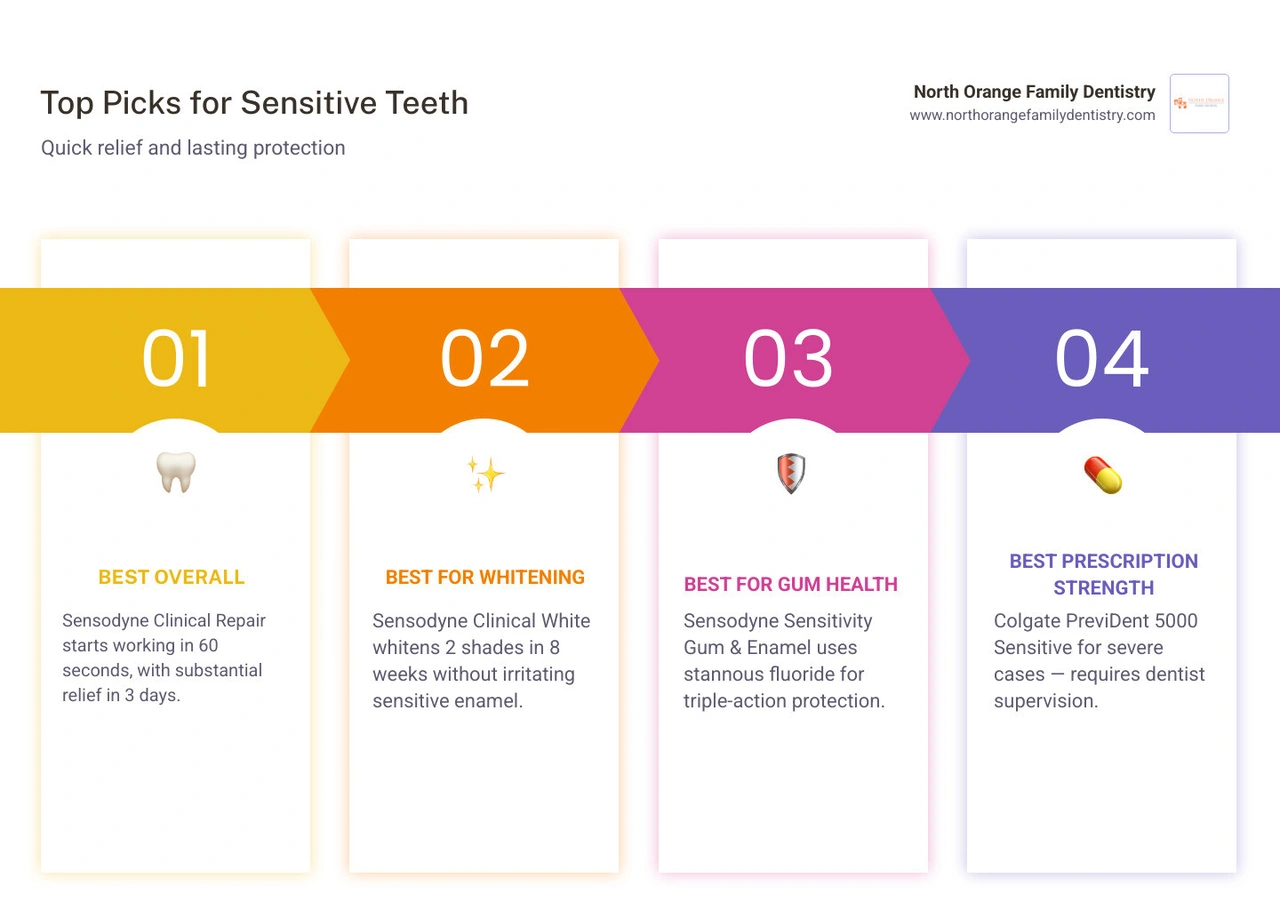
- Best Overall: Sensodyne Clinical Repair (starts working in 60 seconds, substantial relief in 3 days)
- Best for Whitening: Sensodyne Clinical White (2 shades whiter in 8 weeks, safe for sensitive enamel)
- Best for Gum Health + Sensitivity: Sensodyne Sensitivity Gum & Enamel (stannous fluoride triple-action formula)
- Best for Cavity Protection + Sensitivity: Sensodyne Cavity + Sensitivity (potassium nitrate + optimized fluoride)
- Best Fast-Acting Natural Option: Periosciences AO Pro Sensitive (clinically proven relief within 72 hours)
- Best Prescription-Strength: Colgate PreviDent 5000 Sensitive (for severe cases, dentist supervision required)
The two ingredients that actually work are potassium nitrate (calms the nerve) and stannous fluoride (seals the tiny pores that lead to the nerve). More on those below.
That sharp zing from a cold drink isn't just annoying — it's your tooth's exposed inner layer sending a pain signal to your brain. The good news is that the right toothpaste, used consistently, can build real protection over time.
But sometimes over-the-counter toothpaste isn't enough. If your sensitivity is severe, localized to one tooth, or just won't quit, it may point to something deeper — like gum recession, enamel erosion, or a cracked tooth — that needs a dentist's eye.
Essential best toothpaste for sensitive teeth terms:
What Causes Tooth Sensitivity and How Does Desensitizing Toothpaste Work?
To understand why your teeth react to temperature or sugar, we have to look beneath the surface. Your teeth are covered by a hard, protective outer layer called enamel. Underneath this enamel lies dentin, a softer, porous tissue that contains thousands of microscopic pathways known as dentinal tubules.
When your enamel wears down or your gums recede, these tubules become exposed to the elements. When you drink a glass of ice water or take a sip of hot tea, the temperature change travels directly down these open pathways to the nerve inside your tooth. If you have ever wondered why do my teeth hurt, this exposure is the most common culprit.
Desensitizing toothpastes are formulated to interrupt this pain loop in one of two ways:
- Nerve Depolarization: Active ingredients like potassium nitrate travel down the open tubules to reach the nerve endings. Once there, they calm the nerve and block the transmission of pain signals to your brain.
- Tubule Occlusion: Ingredients like stannous fluoride and nano-hydroxyapatite act like microscopic seals. They physically plug the open pores in your dentin, building a protective barrier that stops hot or cold triggers from ever reaching the nerve.
Key Ingredients to Look For in the Best Toothpaste for Sensitive Teeth
When searching for the best toothpaste for sensitive teeth, skipping the flashy front labels and looking straight at the active ingredients on the back of the box is the smartest move. Here are the powerhouse ingredients that are clinically proven to provide relief:
- Potassium Nitrate (5%): This is the maximum strength allowed in over-the-counter formulas. It is highly effective at calming hyperactive tooth nerves. As noted in the official drug facts for DailyMed - COLGATE SENSITIVE COMPLETE PROTECTION, potassium nitrate is recognized as a premier active ingredient for nerve desensitization.
- Stannous Fluoride: This unique form of fluoride does double duty. It not only strengthens your tooth enamel to prevent cavities, but it also physically bonds to the tooth surface to seal exposed dentin tubules.
- Sodium Fluoride: While it does not block sensitivity directly like stannous fluoride, sodium fluoride is exceptional for enamel remineralization. It helps rebuild worn areas before they can expose the sensitive dentin underneath, as detailed in DailyMed - COLGATE SENSITIVE ENAMEL HEALTH.
- Nano-Hydroxyapatite (nHA): A biocompatible alternative that makes up roughly 97% of our natural tooth enamel. It acts like liquid enamel, filling in micro-cracks and naturally sealing exposed tubules without relying on traditional chemicals.
Top Dentist-Approved Categories for Sensitivity Relief
Different mouths have different needs. While one person might struggle with sensitivity after a professional whitening session, another might need a formula that also fights plaque and gingivitis. Looking for products that carry the ADA Seal of Acceptance ensures you are using a formula backed by clinical efficacy.
Best Toothpaste for Sensitive Teeth with Cavity Protection
If you want to protect your teeth from decay while soothing nerve pain, a formula that balances optimized fluoride with potassium nitrate is ideal. Sensodyne Cavity + Sensitivity Toothpaste is a classic example of this dual-action approach. It delivers the maximum permitted dose of potassium nitrate to calm the nerves while using optimized fluoride to reharden weakened enamel, ensuring you do not have to compromise on cavity prevention to get relief.
Best Toothpaste for Sensitive Teeth and Gentle Whitening
Many traditional whitening toothpastes are highly abrasive, using harsh scrubbing agents or high concentrations of hydrogen peroxide that can wear down enamel and trigger severe tooth pain.
Fortunately, you can still brighten your smile safely. When looking into teeth whitening for sensitive teeth, we recommend choosing a low-abrasivity formula like Colgate Sensitive Whitening Toothpaste. These specialized formulas lift surface stains gently using mild polishing agents, allowing you to brighten your teeth without damaging the enamel or irritating the underlying nerves.
Best Prescription-Strength Option for Severe Sensitivity
For patients dealing with severe enamel erosion, dry mouth, or a high risk of tooth decay, over-the-counter options might not provide enough protection. In these clinical situations, we often recommend a prescription-strength option like Colgate® PreviDent® 5000 ppm Sensitive.
This high-fluoride formula contains 1.1% sodium fluoride (five times the strength of regular toothpaste) combined with 5% potassium nitrate. Because of its high concentration, it must be used under professional dental supervision to ensure safe and effective remineralization.
Best Dual-Action Option for Gum Health and Enamel Repair
Gum recession is one of the leading causes of exposed dentin. When your gums pull back, they expose the vulnerable roots of your teeth, which do not have a protective enamel coating.
To address both issues at once, a triple-action formula like Sensodyne Sensitivity Gum & Enamel is highly effective. It utilizes stannous fluoride to target plaque bacteria along the gumline to prevent further recession, while simultaneously building a protective layer over exposed dentin roots to block sensitivity.
How to Use Sensitive Toothpaste for Maximum Effectiveness
Simply switching your toothpaste is only half the battle; how you use it matters just as much. To get the absolute most out of your desensitizing toothpaste, we recommend following these simple steps:

- Use a Soft-Bristled Toothbrush: Hard bristles and aggressive scrubbing can wear away your enamel and push back your gums, making your sensitivity worse. Always use a soft-bristled or electric toothbrush with a pressure sensor.
- Brush Twice Daily for Two Minutes: Desensitizing ingredients require consistent contact with your teeth to work. Brush thoroughly twice a day, making sure to cover all sensitive areas.
- Try the "Smear" Method: For localized, sharp pain, you can smear a small dab of sensitive toothpaste directly onto the sensitive spot with a clean finger before bed. Leave it on to allow the active ingredients to penetrate the dentin overnight.
- Avoid Harsh Additives: Steer clear of toothpastes containing heavy baking soda, charcoal, or sodium lauryl sulfate (SLS) if you are prone to canker sores or mucosal irritation.
- Limit Acidic Foods: Highly acidic beverages like sodas, citrus juices, and sports drinks strip minerals from your enamel. If you do consume them, wait at least 30 minutes before brushing so you do not scrub away softened enamel.
For more helpful tips on keeping your daily oral hygiene routine comfortable, check out our guide on pain-free dental care.
Frequently Asked Questions About Tooth Sensitivity
Can tooth sensitivity be cured permanently?
While lost tooth enamel cannot grow back naturally, tooth sensitivity can be successfully managed so that it no longer interferes with your daily life. Long-term relief requires a combination of consistent at-home care with desensitizing toothpaste and professional sensitive teeth treatment at our office, which can include protective fluoride varnishes, dental bonding, or sealants.
How long does it take for sensitive toothpaste to work?
While some fast-acting formulas can begin blocking pain within days, toothpastes relying on potassium nitrate typically require 2 to 4 weeks of continuous, twice-daily use. This is because potassium nitrate needs time to build up a sufficient concentration around the tooth nerves to fully block the pain signals.
When should I see a dentist about my sensitive teeth?
You should schedule an appointment with us if your sensitivity is localized to a single tooth, persists for more than four weeks despite using sensitive toothpaste, or is accompanied by swelling, visible damage, or pain when biting down. These symptoms often point to underlying issues like a deep cavity, a cracked tooth, or gum disease that require prompt professional care.
Conclusion
Finding the best toothpaste for sensitive teeth is an excellent first step toward a pain-free smile, but it is only one piece of the puzzle. At North Orange Family Dentistry, we are dedicated to helping our neighbors in Delaware, Ohio, Lewis Center, Orange, and Powell find lasting relief from dental discomfort.
Led by Dr. Kyle Bogan — an esteemed OSU graduate and Fellow of the International College of Dentists (putting him in the top 3% of dentists worldwide) — our team provides comprehensive, comfortable care for patients of all ages.

If over-the-counter toothpastes are not giving you the relief you need, we offer advanced, state-of-the-art treatments to target the root cause of your pain. Our modern facility features cutting-edge laser treatments to heal canker sores, relieve TMJ pain, and treat periodontal disease comfortably. We also provide non-surgical gum therapies like Perio Protect, custom veneers, dental crowns, and tooth bonding to restore and protect your smile. For those looking to replace missing teeth, we offer high-quality endosteal dental implants starting at approximately $4,500 per tooth.
If you are experiencing sudden, severe discomfort, we also provide same-day emergency dental appointments most of the time to get you smiling again quickly. To keep our high-quality care accessible and affordable for everyone, we proudly offer an in-house Dental Wellness Plan. Designed specifically for individuals and families without dental insurance, this plan allows you to receive your essential yearly preventive care for a simplified, discounted price.
Whether you need a routine check-up or specialized care, we are here to help. Contact us today to schedule an appointment with your trusted family dentist at North Orange Family Dentistry and take the first step toward a healthier, more comfortable smile!
The Best Toothpaste for Sensitive Teeth: Quick Picks and What You Need to Know
Finding the best toothpaste for sensitive teeth can make the difference between dreading your morning coffee and actually enjoying it. If hot, cold, sweet, or acidic foods make you wince, you're not alone — tooth sensitivity affects roughly 11.5% of people in the United States.
Here are the top picks by category to help you choose fast:
- Best Overall: Sensodyne Clinical Repair (starts working in 60 seconds, substantial relief in 3 days)
- Best for Whitening: Sensodyne Clinical White (2 shades whiter in 8 weeks, safe for sensitive enamel)
- Best for Gum Health + Sensitivity: Sensodyne Sensitivity Gum & Enamel (stannous fluoride triple-action formula)
- Best for Cavity Protection + Sensitivity: Sensodyne Cavity + Sensitivity (potassium nitrate + optimized fluoride)
- Best Fast-Acting Natural Option: Periosciences AO Pro Sensitive (clinically proven relief within 72 hours)
- Best Prescription-Strength: Colgate PreviDent 5000 Sensitive (for severe cases, dentist supervision required)
The two ingredients that actually work are potassium nitrate (calms the nerve) and stannous fluoride (seals the tiny pores that lead to the nerve). More on those below.
That sharp zing from a cold drink isn't just annoying — it's your tooth's exposed inner layer sending a pain signal to your brain. The good news is that the right toothpaste, used consistently, can build real protection over time.
But sometimes over-the-counter toothpaste isn't enough. If your sensitivity is severe, localized to one tooth, or just won't quit, it may point to something deeper — like gum recession, enamel erosion, or a cracked tooth — that needs a dentist's eye.
Essential best toothpaste for sensitive teeth terms:
What Causes Tooth Sensitivity and How Does Desensitizing Toothpaste Work?
To understand why your teeth react to temperature or sugar, we have to look beneath the surface. Your teeth are covered by a hard, protective outer layer called enamel. Underneath this enamel lies dentin, a softer, porous tissue that contains thousands of microscopic pathways known as dentinal tubules.
When your enamel wears down or your gums recede, these tubules become exposed to the elements. When you drink a glass of ice water or take a sip of hot tea, the temperature change travels directly down these open pathways to the nerve inside your tooth. If you have ever wondered why do my teeth hurt, this exposure is the most common culprit.
Desensitizing toothpastes are formulated to interrupt this pain loop in one of two ways:
- Nerve Depolarization: Active ingredients like potassium nitrate travel down the open tubules to reach the nerve endings. Once there, they calm the nerve and block the transmission of pain signals to your brain.
- Tubule Occlusion: Ingredients like stannous fluoride and nano-hydroxyapatite act like microscopic seals. They physically plug the open pores in your dentin, building a protective barrier that stops hot or cold triggers from ever reaching the nerve.
Key Ingredients to Look For in the Best Toothpaste for Sensitive Teeth
When searching for the best toothpaste for sensitive teeth, skipping the flashy front labels and looking straight at the active ingredients on the back of the box is the smartest move. Here are the powerhouse ingredients that are clinically proven to provide relief:
- Potassium Nitrate (5%): This is the maximum strength allowed in over-the-counter formulas. It is highly effective at calming hyperactive tooth nerves. As noted in the official drug facts for DailyMed - COLGATE SENSITIVE COMPLETE PROTECTION, potassium nitrate is recognized as a premier active ingredient for nerve desensitization.
- Stannous Fluoride: This unique form of fluoride does double duty. It not only strengthens your tooth enamel to prevent cavities, but it also physically bonds to the tooth surface to seal exposed dentin tubules.
- Sodium Fluoride: While it does not block sensitivity directly like stannous fluoride, sodium fluoride is exceptional for enamel remineralization. It helps rebuild worn areas before they can expose the sensitive dentin underneath, as detailed in DailyMed - COLGATE SENSITIVE ENAMEL HEALTH.
- Nano-Hydroxyapatite (nHA): A biocompatible alternative that makes up roughly 97% of our natural tooth enamel. It acts like liquid enamel, filling in micro-cracks and naturally sealing exposed tubules without relying on traditional chemicals.
Top Dentist-Approved Categories for Sensitivity Relief
Different mouths have different needs. While one person might struggle with sensitivity after a professional whitening session, another might need a formula that also fights plaque and gingivitis. Looking for products that carry the ADA Seal of Acceptance ensures you are using a formula backed by clinical efficacy.
Best Toothpaste for Sensitive Teeth with Cavity Protection
If you want to protect your teeth from decay while soothing nerve pain, a formula that balances optimized fluoride with potassium nitrate is ideal. Sensodyne Cavity + Sensitivity Toothpaste is a classic example of this dual-action approach. It delivers the maximum permitted dose of potassium nitrate to calm the nerves while using optimized fluoride to reharden weakened enamel, ensuring you do not have to compromise on cavity prevention to get relief.
Best Toothpaste for Sensitive Teeth and Gentle Whitening
Many traditional whitening toothpastes are highly abrasive, using harsh scrubbing agents or high concentrations of hydrogen peroxide that can wear down enamel and trigger severe tooth pain.
Fortunately, you can still brighten your smile safely. When looking into teeth whitening for sensitive teeth, we recommend choosing a low-abrasivity formula like Colgate Sensitive Whitening Toothpaste. These specialized formulas lift surface stains gently using mild polishing agents, allowing you to brighten your teeth without damaging the enamel or irritating the underlying nerves.
Best Prescription-Strength Option for Severe Sensitivity
For patients dealing with severe enamel erosion, dry mouth, or a high risk of tooth decay, over-the-counter options might not provide enough protection. In these clinical situations, we often recommend a prescription-strength option like Colgate® PreviDent® 5000 ppm Sensitive.
This high-fluoride formula contains 1.1% sodium fluoride (five times the strength of regular toothpaste) combined with 5% potassium nitrate. Because of its high concentration, it must be used under professional dental supervision to ensure safe and effective remineralization.
Best Dual-Action Option for Gum Health and Enamel Repair
Gum recession is one of the leading causes of exposed dentin. When your gums pull back, they expose the vulnerable roots of your teeth, which do not have a protective enamel coating.
To address both issues at once, a triple-action formula like Sensodyne Sensitivity Gum & Enamel is highly effective. It utilizes stannous fluoride to target plaque bacteria along the gumline to prevent further recession, while simultaneously building a protective layer over exposed dentin roots to block sensitivity.
How to Use Sensitive Toothpaste for Maximum Effectiveness
Simply switching your toothpaste is only half the battle; how you use it matters just as much. To get the absolute most out of your desensitizing toothpaste, we recommend following these simple steps:
- Use a Soft-Bristled Toothbrush: Hard bristles and aggressive scrubbing can wear away your enamel and push back your gums, making your sensitivity worse. Always use a soft-bristled or electric toothbrush with a pressure sensor.
- Brush Twice Daily for Two Minutes: Desensitizing ingredients require consistent contact with your teeth to work. Brush thoroughly twice a day, making sure to cover all sensitive areas.
- Try the "Smear" Method: For localized, sharp pain, you can smear a small dab of sensitive toothpaste directly onto the sensitive spot with a clean finger before bed. Leave it on to allow the active ingredients to penetrate the dentin overnight.
- Avoid Harsh Additives: Steer clear of toothpastes containing heavy baking soda, charcoal, or sodium lauryl sulfate (SLS) if you are prone to canker sores or mucosal irritation.
- Limit Acidic Foods: Highly acidic beverages like sodas, citrus juices, and sports drinks strip minerals from your enamel. If you do consume them, wait at least 30 minutes before brushing so you do not scrub away softened enamel.
For more helpful tips on keeping your daily oral hygiene routine comfortable, check out our guide on pain-free dental care.
Frequently Asked Questions About Tooth Sensitivity
Can tooth sensitivity be cured permanently?
While lost tooth enamel cannot grow back naturally, tooth sensitivity can be successfully managed so that it no longer interferes with your daily life. Long-term relief requires a combination of consistent at-home care with desensitizing toothpaste and professional sensitive teeth treatment at our office, which can include protective fluoride varnishes, dental bonding, or sealants.
How long does it take for sensitive toothpaste to work?
While some fast-acting formulas can begin blocking pain within days, toothpastes relying on potassium nitrate typically require 2 to 4 weeks of continuous, twice-daily use. This is because potassium nitrate needs time to build up a sufficient concentration around the tooth nerves to fully block the pain signals.
When should I see a dentist about my sensitive teeth?
You should schedule an appointment with us if your sensitivity is localized to a single tooth, persists for more than four weeks despite using sensitive toothpaste, or is accompanied by swelling, visible damage, or pain when biting down. These symptoms often point to underlying issues like a deep cavity, a cracked tooth, or gum disease that require prompt professional care.
Conclusion
Finding the best toothpaste for sensitive teeth is an excellent first step toward a pain-free smile, but it is only one piece of the puzzle. At North Orange Family Dentistry, we are dedicated to helping our neighbors in Delaware, Ohio, Lewis Center, Orange, and Powell find lasting relief from dental discomfort.
Led by Dr. Kyle Bogan — an esteemed OSU graduate and Fellow of the International College of Dentists (putting him in the top 3% of dentists worldwide) — our team provides comprehensive, comfortable care for patients of all ages.
If over-the-counter toothpastes are not giving you the relief you need, we offer advanced, state-of-the-art treatments to target the root cause of your pain. Our modern facility features cutting-edge laser treatments to heal canker sores, relieve TMJ pain, and treat periodontal disease comfortably. We also provide non-surgical gum therapies like Perio Protect, custom veneers, dental crowns, and tooth bonding to restore and protect your smile. For those looking to replace missing teeth, we offer high-quality endosteal dental implants starting at approximately $4,500 per tooth.
If you are experiencing sudden, severe discomfort, we also provide same-day emergency dental appointments most of the time to get you smiling again quickly. To keep our high-quality care accessible and affordable for everyone, we proudly offer an in-house Dental Wellness Plan. Designed specifically for individuals and families without dental insurance, this plan allows you to receive your essential yearly preventive care for a simplified, discounted price.
Whether you need a routine check-up or specialized care, we are here to help. Contact us today to schedule an appointment with your trusted family dentist at North Orange Family Dentistry and take the first step toward a healthier, more comfortable smile!
Contact Us
Have any questions? Want to learn more?

