
The Ultimate Guide to Comparing Dental Crown Alternatives
Compare alternatives to dental crowns to preserve natural teeth, from bonding to veneers, with expert guidance at North Orange Family Dentistry.


Alternatives to Dental Crowns: A Quick Guide to Saving More of Your Tooth
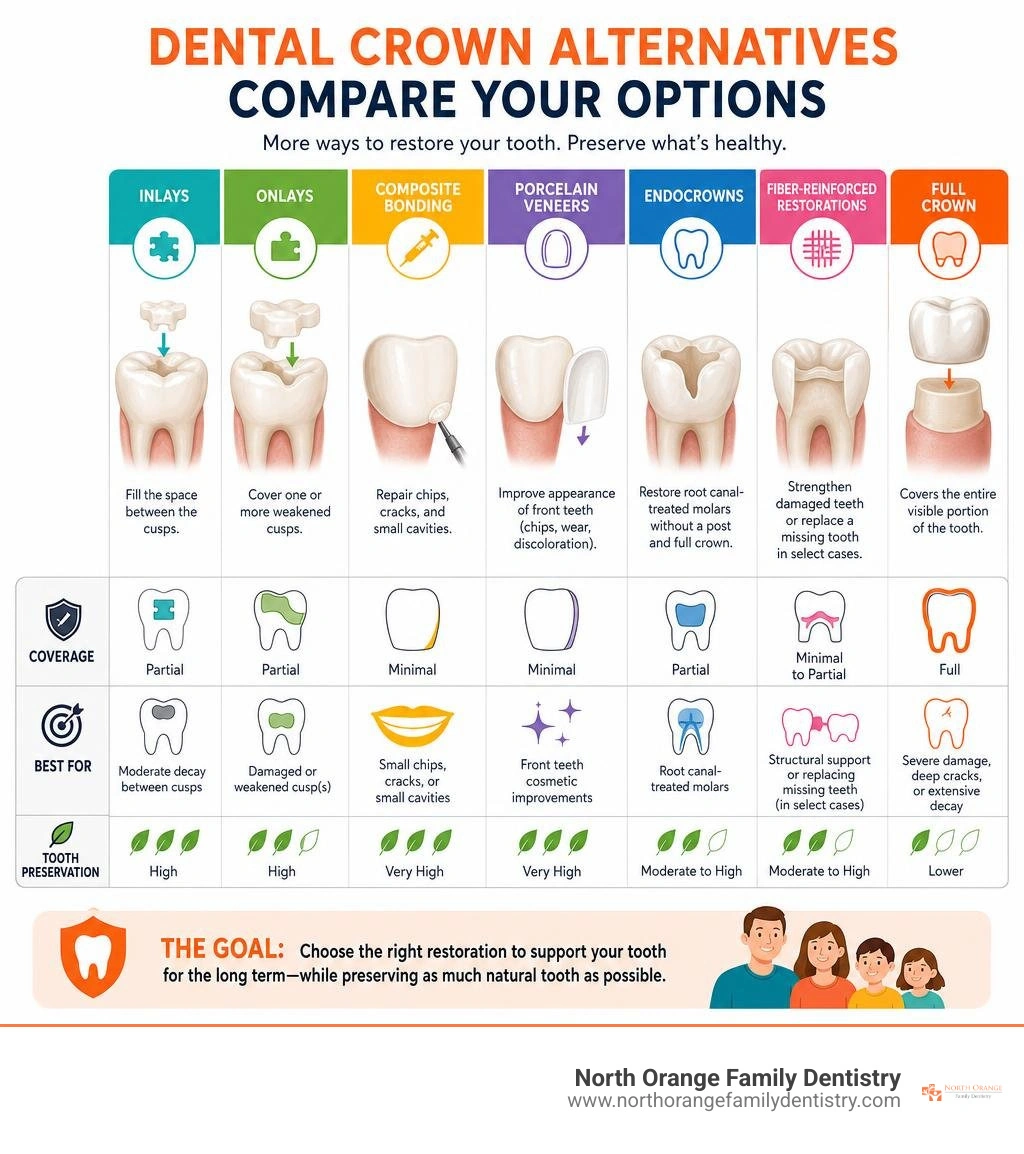
Alternatives to dental crowns include inlays, onlays, composite bonding, porcelain veneers, endocrowns, and certain fiber-reinforced restorations. The best choice depends on how much healthy tooth remains, where the damage is located, your bite forces, and whether the tooth has had a root canal.
- Inlays repair damage between the cusps of a back tooth.
- Onlays cover one or more weakened cusps while keeping healthy tooth walls intact.
- Composite bonding can repair small chips, cracks, and cavities with tooth-colored resin.
- Porcelain veneers improve the appearance of front teeth with surface-level chips, wear, or discoloration.
- Endocrowns may restore some root-canal-treated molars without a separate post and full crown.
- Fiber-reinforced restorations are conservative options used in select cases to strengthen a damaged tooth or replace a missing tooth without preparing neighboring teeth for full crowns.
A crown covers the entire visible portion of a tooth. That level of coverage is sometimes essential, but it is not always the most conservative option. When strong enamel and stable tooth walls remain, a partial restoration may protect the tooth while removing less natural structure.
The goal is not to avoid crowns at all costs. It is to choose the restoration that gives a tooth reliable support for the long term. A full crown may still be the safer choice for severe damage, deep cracks, major decay, or a tooth with too little healthy structure left to hold an alternative securely.
Relevant articles related to alternatives to dental crowns:
Top Alternatives to Dental Crowns for Preserving Natural Teeth
When a tooth experiences decay or structural damage, traditional treatments often involve shaving down natural enamel to place a full cap. However, modern restorative techniques prioritize retaining as much healthy natural tooth structure as possible. Preserving natural enamel and dentin keeps the natural root foundation strong, reduces post-procedure tooth sensitivity, and leaves more options open for future care. Determining candidacy for alternatives to dental crowns depends on remaining sound enamel margins, bite forces, and overall oral health.
Inlays, Onlays, and Overlays: Partial Crown Solutions
Inlays, onlays, and overlays—often called partial crowns—are ideal indirect restorations when damage is too extensive for a standard filling but not severe enough to require a full crown.
- Inlays fit snugly within the grooves between tooth cusps.
- Onlays extend over one or more damaged cusps to distribute chewing loads safely.
- Overlays cover the entire biting surface while preserving intact outer enamel walls.
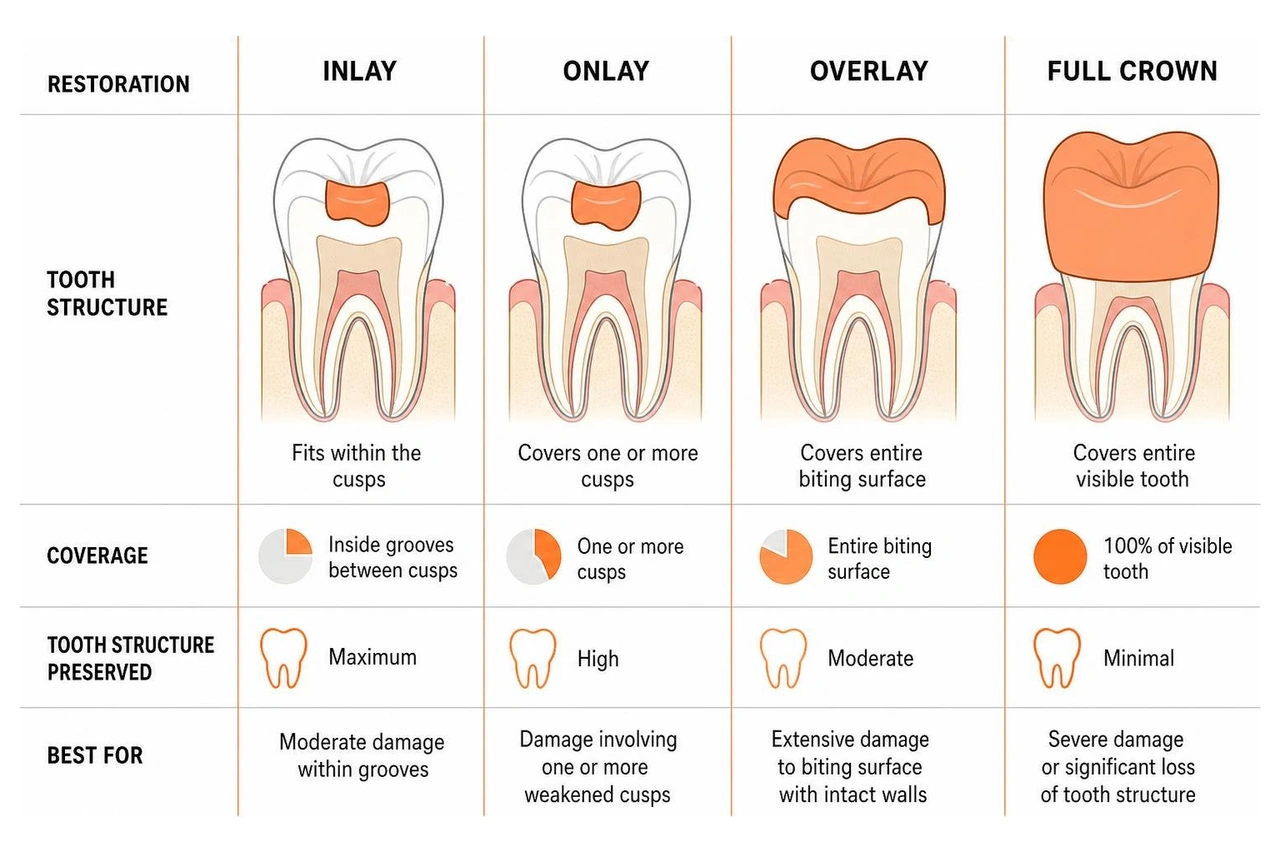
These custom-crafted restorations are often made from high-strength ceramic or porcelain, matching the aesthetic and functional properties of natural teeth. Unlike full porcelain dental crowns, partial crowns keep healthy outer enamel untouched, allowing for superior adhesive bonding along preserved margins.
Direct Composite Bonding as Alternatives to Dental Crowns
Direct composite dental bonding is a single-visit restoration option for minor chips, small fractures, and localized decay. We apply a durable tooth-colored composite resin directly to the tooth, shape it to match natural contours, and cure it using a specialized light.
To prevent marginal leakage and volumetric shrinkage as composite resins cure, skilled clinicians utilize an incremental layering technique. By placing composite resin in small layers, we control polymerization stress, ensuring a tight seal against the tooth. While bonding is less invasive and fast, it is best suited for low-stress areas or moderate repairs.
Porcelain Veneers: Cosmetic Alternatives to Dental Crowns for Front Teeth
When treating aesthetic concerns or surface-level structural issues on front teeth, porcelain veneers provide an exceptional alternative to traditional full-coverage crowns. Veneer preparations are remarkably conservative, typically requiring only 0.3 to 0.7 millimeters of enamel reduction from the front surface of the tooth.
Veneers effectively correct severe discoloration, minor misalignment, worn edges, and chips without aggressive circumferential tooth grinding. However, because veneers sit primarily on the front tooth surface, they offer limited structural reinforcement for severely broken or heavily decayed teeth subject to heavy biting forces.
Endocrowns and Resin-Bonded Fiber Bridges for Complex Structural Damage
For teeth with significant structural compromise, specialized conservative restorations offer excellent strength without conventional post-and-core crown preparations.
- Endocrowns: Designed specifically for root-canal-treated molars, endocrowns utilize the natural pulp chamber for mechanical retention. By anchoring directly into the pulp cavity as a monobloc restoration, endocrowns eliminate the need for invasive metal or fiber posts and full crown preps.
- Resin-Bonded Fiber Bridges: When replacing a missing tooth, fiber-reinforced composite (FRC) bridges offer a non-invasive alternative to traditional crown-supported fixed partial dentures. According to Scientific research on FRC bridges, these bridges bond continuous glass fibers to adjacent healthy teeth, achieving a high survival rate of 94.4% at 4.8 years while completely preserving neighboring tooth structure.
How Biomimetic Dentistry and Advanced Materials Protect Teeth
Biomimetic dentistry aims to respect and mimic the biomechanical behavior of natural teeth. By leveraging advanced adhesive materials and fiber reinforcement, biomimetic approaches distribute functional stresses evenly across the tooth, dramatically lowering the risk of catastrophic fractures and reducing the need for root canals.
Fiber-Reinforced Composites and the Wallpapering Technique
Preparing moderate cavities in premolars can reduce cusp stiffness significantly. To restore natural strength, modern restorative protocols utilize short and continuous glass or polyethylene fibers embedded in flowable composite resin.

One innovative biomimetic approach is the "wallpapering technique." In this procedure, closely adapted pieces of woven glass fiber mesh (such as Ribbond) are applied along the internal cavity walls before placing final composite layers. This fiber matrix absorbs multidirectional stress and halts crack propagation.
Clinical research demonstrates these benefits:
- As shown in a Scientific study on fiber placement in MOD cavities, adding polyethylene fiber significantly increases fracture resistance compared to standard composite fillings, restoring tooth strength near intact natural levels.
- Scientific research on direct composite stress-reduced restorations highlights that stress-reducing fiber placement encourages favorable fracture patterns above the gumline, keeping the natural tooth repairable if injury occurs.
Vital Pulp Capping Protocols to Save the Tooth Nerve
When deep caries extend near or slightly expose the dental pulp, full crowns and root canals are not always inevitable. Vital pulp therapy uses direct pulp capping protocols to protect and preserve nerve vitality.
Advanced bioactive materials—including Mineral Trioxide Aggregate (MTA) and modern resin-based calcium silicate formulations—release calcium ions and maintain an alkaline pH. As detailed in Scientific research on bioactive pulp capping materials, these materials stimulate the pulp to form protective dentin bridges and hydroxyapatite layers. Sealing the tooth with bioactive pulp caps stops bacterial leakage, relieves deep inflammation, and keeps the natural tooth nerve alive and functional.
Comparing Cost, Longevity, and Procedures for Crown Alternatives
Understanding procedural expectations, structural lifespan, and financial considerations helps patients choose the right restoration for their lifestyle and budget.
Durability, Lifespan, and Maintenance of Restorative Options
Every restoration type offers unique longevity profiles depending on material composition, home care hygiene, and occlusal habits like night grinding (bruxism):
- Composite Bonding: Typically lasts 5 to 10 years before requiring minor touching up or replacement.
- Porcelain Veneers: Generally provide 10 to 15 years of reliable aesthetic performance.
- Ceramic Inlays and Onlays: Often achieve 10 to 20 years or more with dedicated oral hygiene.
- Traditional Crowns: Often last 15 or more years when supported by healthy underlying tooth structure.
Maintaining any alternative requires daily brushing with non-abrasive toothpaste, routine flossing around resin margins, regular dental checkups, and wearing a custom nightguard if you clench or grind your teeth. Proper care protects both the restoration and surrounding sound enamel, avoiding premature wear or decay. Check out our comprehensive guide on dental crowns to compare long-term expectations across all treatment types.
Financial Comparison and Insurance Coverage
Evaluating treatment costs involves weighing short-term out-of-pocket expenses against long-term material durability. Less invasive direct techniques like dental bonding require a smaller upfront investment than indirect laboratory-milled ceramic onlays, veneers, or endocrowns.

Dental insurance policies typically view inlays, onlays, and endocrowns as medically necessary restorative care, reimbursing them at similar rates to standard crowns. Conversely, purely aesthetic treatments like veneers are rarely covered by standard insurance benefit plans.
To help make essential restorative care accessible, our office offers a dedicated Dental Wellness Plan designed for individuals and families without dental insurance. This plan enables patients to receive routine preventive services and discounted restorative treatments without standard insurance restrictions. Learn more in our guides on the average cost of dental crowns and dental crown cost without insurance.
When Full Coverage Crowns Are Necessary vs. Seeking a Second Opinion
While conservative options are ideal whenever possible, full-coverage crowns remain indispensable for severely compromised teeth that cannot support partial restorations.
Signs a Full Coverage Crown Is Unavoidable
A traditional crown is usually required when:
- Over 50 percent of the healthy natural tooth structure has been lost to severe decay or trauma.
- Deep vertical crack lines extend below the gumline or across the pulpal floor.
- Remaining dentin walls are extremely thin, fragile, or prone to flexure under normal chewing load.
- Advanced structural embrittlement follows extensive endodontic root canal therapy on high-load molars.
To understand structural requirements and costs fully, review our detailed resource on the cost of crown tooth.
When to Seek a Second Opinion from a Restorative Specialist
If you have been told you need a full coverage crown but feel unsure whether your tooth can be saved with a more conservative onlay or biomimetic restoration, seeking a second opinion is a wise step. A comprehensive evaluation by an experienced restorative practitioner evaluates remaining enamel margins, bite dynamics, and tooth wall thickness to confirm whether a conservative alternative can deliver a reliable, long-lasting outcome.
Frequently Asked Questions About Alternatives to Dental Crowns
Can an onlay be used instead of a dental crown?
Yes. An onlay is an ideal alternative when one or more tooth cusps are structurally damaged, but the outer enamel walls remain sound and intact above the gumline. Onlays restore full chewing strength while leaving healthy natural tooth structure untouched.
Is an endocrown better than a traditional crown after a root canal?
For many root-canal-treated molars with sufficient pulp chamber depth, an endocrown offers excellent stability and strength. Endocrowns anchor directly inside the pulp chamber, avoiding invasive post-space drilling and preserving valuable root dentin.
How long do dental crown alternatives typically last compared to standard crowns?
With proper oral hygiene and regular dental checkups, ceramic inlays and onlays can last 10 to 20 years or longer, performing comparably to full crowns. Composite bonding generally lasts 5 to 10 years, while porcelain veneers average 10 to 15 years.
Conclusion
Choosing the right restoration comes down to preserving your natural smile and protecting healthy tooth structure whenever possible. Modern restorative approaches—ranging from ceramic inlays and onlays to biomimetic fiber bonding and endocrowns—offer reliable, durable ways to save your natural enamel.
At North Orange Family Dentistry, located in Lewis Center, Ohio and serving Delaware, Orange, and Powell, our expert team led by Dr. Kyle Bogan—a Fellow of the International College of Dentists (in the top 3% of dentists worldwide)—is dedicated to providing modern, personalized care for your whole family. Our primary dental services prioritize your complete health, including:
- Invisalign
- TMJ Pain relief
- Teeth whitening
- Dental Implants (North Orange Family Dentistry provides endosteal dental implants at an average cost of about $4500 per tooth)
- Tooth Bonding
- Veneers
- Crowns
- Root Canal therapy
- Oral Hygiene & Wellness checkups
- Digital Dentures
We offer specialized laser treatments for TMJ pain, rapid canker sore healing, and non-invasive periodontal disease therapy. If you ever experience a dental emergency, we provide prompt care and are usually able to schedule same-day emergency appointments (with standard appointments available until 3:00 PM). For patients without traditional insurance, our flexible Dental Wellness Plan keeps comprehensive preventive and restorative care comfortably within reach.
Ready to explore conservative restorative solutions customized for your smile? Schedule a consultation with North Orange Family Dentistry today!
Alternatives to Dental Crowns: A Quick Guide to Saving More of Your Tooth
Alternatives to dental crowns include inlays, onlays, composite bonding, porcelain veneers, endocrowns, and certain fiber-reinforced restorations. The best choice depends on how much healthy tooth remains, where the damage is located, your bite forces, and whether the tooth has had a root canal.
- Inlays repair damage between the cusps of a back tooth.
- Onlays cover one or more weakened cusps while keeping healthy tooth walls intact.
- Composite bonding can repair small chips, cracks, and cavities with tooth-colored resin.
- Porcelain veneers improve the appearance of front teeth with surface-level chips, wear, or discoloration.
- Endocrowns may restore some root-canal-treated molars without a separate post and full crown.
- Fiber-reinforced restorations are conservative options used in select cases to strengthen a damaged tooth or replace a missing tooth without preparing neighboring teeth for full crowns.
A crown covers the entire visible portion of a tooth. That level of coverage is sometimes essential, but it is not always the most conservative option. When strong enamel and stable tooth walls remain, a partial restoration may protect the tooth while removing less natural structure.
The goal is not to avoid crowns at all costs. It is to choose the restoration that gives a tooth reliable support for the long term. A full crown may still be the safer choice for severe damage, deep cracks, major decay, or a tooth with too little healthy structure left to hold an alternative securely.
Relevant articles related to alternatives to dental crowns:
Top Alternatives to Dental Crowns for Preserving Natural Teeth
When a tooth experiences decay or structural damage, traditional treatments often involve shaving down natural enamel to place a full cap. However, modern restorative techniques prioritize retaining as much healthy natural tooth structure as possible. Preserving natural enamel and dentin keeps the natural root foundation strong, reduces post-procedure tooth sensitivity, and leaves more options open for future care. Determining candidacy for alternatives to dental crowns depends on remaining sound enamel margins, bite forces, and overall oral health.
Inlays, Onlays, and Overlays: Partial Crown Solutions
Inlays, onlays, and overlays—often called partial crowns—are ideal indirect restorations when damage is too extensive for a standard filling but not severe enough to require a full crown.
- Inlays fit snugly within the grooves between tooth cusps.
- Onlays extend over one or more damaged cusps to distribute chewing loads safely.
- Overlays cover the entire biting surface while preserving intact outer enamel walls.
These custom-crafted restorations are often made from high-strength ceramic or porcelain, matching the aesthetic and functional properties of natural teeth. Unlike full porcelain dental crowns, partial crowns keep healthy outer enamel untouched, allowing for superior adhesive bonding along preserved margins.
Direct Composite Bonding as Alternatives to Dental Crowns
Direct composite dental bonding is a single-visit restoration option for minor chips, small fractures, and localized decay. We apply a durable tooth-colored composite resin directly to the tooth, shape it to match natural contours, and cure it using a specialized light.
To prevent marginal leakage and volumetric shrinkage as composite resins cure, skilled clinicians utilize an incremental layering technique. By placing composite resin in small layers, we control polymerization stress, ensuring a tight seal against the tooth. While bonding is less invasive and fast, it is best suited for low-stress areas or moderate repairs.
Porcelain Veneers: Cosmetic Alternatives to Dental Crowns for Front Teeth
When treating aesthetic concerns or surface-level structural issues on front teeth, porcelain veneers provide an exceptional alternative to traditional full-coverage crowns. Veneer preparations are remarkably conservative, typically requiring only 0.3 to 0.7 millimeters of enamel reduction from the front surface of the tooth.
Veneers effectively correct severe discoloration, minor misalignment, worn edges, and chips without aggressive circumferential tooth grinding. However, because veneers sit primarily on the front tooth surface, they offer limited structural reinforcement for severely broken or heavily decayed teeth subject to heavy biting forces.
Endocrowns and Resin-Bonded Fiber Bridges for Complex Structural Damage
For teeth with significant structural compromise, specialized conservative restorations offer excellent strength without conventional post-and-core crown preparations.
- Endocrowns: Designed specifically for root-canal-treated molars, endocrowns utilize the natural pulp chamber for mechanical retention. By anchoring directly into the pulp cavity as a monobloc restoration, endocrowns eliminate the need for invasive metal or fiber posts and full crown preps.
- Resin-Bonded Fiber Bridges: When replacing a missing tooth, fiber-reinforced composite (FRC) bridges offer a non-invasive alternative to traditional crown-supported fixed partial dentures. According to Scientific research on FRC bridges, these bridges bond continuous glass fibers to adjacent healthy teeth, achieving a high survival rate of 94.4% at 4.8 years while completely preserving neighboring tooth structure.
How Biomimetic Dentistry and Advanced Materials Protect Teeth
Biomimetic dentistry aims to respect and mimic the biomechanical behavior of natural teeth. By leveraging advanced adhesive materials and fiber reinforcement, biomimetic approaches distribute functional stresses evenly across the tooth, dramatically lowering the risk of catastrophic fractures and reducing the need for root canals.
Fiber-Reinforced Composites and the Wallpapering Technique
Preparing moderate cavities in premolars can reduce cusp stiffness significantly. To restore natural strength, modern restorative protocols utilize short and continuous glass or polyethylene fibers embedded in flowable composite resin.
One innovative biomimetic approach is the "wallpapering technique." In this procedure, closely adapted pieces of woven glass fiber mesh (such as Ribbond) are applied along the internal cavity walls before placing final composite layers. This fiber matrix absorbs multidirectional stress and halts crack propagation.
Clinical research demonstrates these benefits:
- As shown in a Scientific study on fiber placement in MOD cavities, adding polyethylene fiber significantly increases fracture resistance compared to standard composite fillings, restoring tooth strength near intact natural levels.
- Scientific research on direct composite stress-reduced restorations highlights that stress-reducing fiber placement encourages favorable fracture patterns above the gumline, keeping the natural tooth repairable if injury occurs.
Vital Pulp Capping Protocols to Save the Tooth Nerve
When deep caries extend near or slightly expose the dental pulp, full crowns and root canals are not always inevitable. Vital pulp therapy uses direct pulp capping protocols to protect and preserve nerve vitality.
Advanced bioactive materials—including Mineral Trioxide Aggregate (MTA) and modern resin-based calcium silicate formulations—release calcium ions and maintain an alkaline pH. As detailed in Scientific research on bioactive pulp capping materials, these materials stimulate the pulp to form protective dentin bridges and hydroxyapatite layers. Sealing the tooth with bioactive pulp caps stops bacterial leakage, relieves deep inflammation, and keeps the natural tooth nerve alive and functional.
Comparing Cost, Longevity, and Procedures for Crown Alternatives
Understanding procedural expectations, structural lifespan, and financial considerations helps patients choose the right restoration for their lifestyle and budget.
Durability, Lifespan, and Maintenance of Restorative Options
Every restoration type offers unique longevity profiles depending on material composition, home care hygiene, and occlusal habits like night grinding (bruxism):
- Composite Bonding: Typically lasts 5 to 10 years before requiring minor touching up or replacement.
- Porcelain Veneers: Generally provide 10 to 15 years of reliable aesthetic performance.
- Ceramic Inlays and Onlays: Often achieve 10 to 20 years or more with dedicated oral hygiene.
- Traditional Crowns: Often last 15 or more years when supported by healthy underlying tooth structure.
Maintaining any alternative requires daily brushing with non-abrasive toothpaste, routine flossing around resin margins, regular dental checkups, and wearing a custom nightguard if you clench or grind your teeth. Proper care protects both the restoration and surrounding sound enamel, avoiding premature wear or decay. Check out our comprehensive guide on dental crowns to compare long-term expectations across all treatment types.
Financial Comparison and Insurance Coverage
Evaluating treatment costs involves weighing short-term out-of-pocket expenses against long-term material durability. Less invasive direct techniques like dental bonding require a smaller upfront investment than indirect laboratory-milled ceramic onlays, veneers, or endocrowns.
Dental insurance policies typically view inlays, onlays, and endocrowns as medically necessary restorative care, reimbursing them at similar rates to standard crowns. Conversely, purely aesthetic treatments like veneers are rarely covered by standard insurance benefit plans.
To help make essential restorative care accessible, our office offers a dedicated Dental Wellness Plan designed for individuals and families without dental insurance. This plan enables patients to receive routine preventive services and discounted restorative treatments without standard insurance restrictions. Learn more in our guides on the average cost of dental crowns and dental crown cost without insurance.
When Full Coverage Crowns Are Necessary vs. Seeking a Second Opinion
While conservative options are ideal whenever possible, full-coverage crowns remain indispensable for severely compromised teeth that cannot support partial restorations.
Signs a Full Coverage Crown Is Unavoidable
A traditional crown is usually required when:
- Over 50 percent of the healthy natural tooth structure has been lost to severe decay or trauma.
- Deep vertical crack lines extend below the gumline or across the pulpal floor.
- Remaining dentin walls are extremely thin, fragile, or prone to flexure under normal chewing load.
- Advanced structural embrittlement follows extensive endodontic root canal therapy on high-load molars.
To understand structural requirements and costs fully, review our detailed resource on the cost of crown tooth.
When to Seek a Second Opinion from a Restorative Specialist
If you have been told you need a full coverage crown but feel unsure whether your tooth can be saved with a more conservative onlay or biomimetic restoration, seeking a second opinion is a wise step. A comprehensive evaluation by an experienced restorative practitioner evaluates remaining enamel margins, bite dynamics, and tooth wall thickness to confirm whether a conservative alternative can deliver a reliable, long-lasting outcome.
Frequently Asked Questions About Alternatives to Dental Crowns
Can an onlay be used instead of a dental crown?
Yes. An onlay is an ideal alternative when one or more tooth cusps are structurally damaged, but the outer enamel walls remain sound and intact above the gumline. Onlays restore full chewing strength while leaving healthy natural tooth structure untouched.
Is an endocrown better than a traditional crown after a root canal?
For many root-canal-treated molars with sufficient pulp chamber depth, an endocrown offers excellent stability and strength. Endocrowns anchor directly inside the pulp chamber, avoiding invasive post-space drilling and preserving valuable root dentin.
How long do dental crown alternatives typically last compared to standard crowns?
With proper oral hygiene and regular dental checkups, ceramic inlays and onlays can last 10 to 20 years or longer, performing comparably to full crowns. Composite bonding generally lasts 5 to 10 years, while porcelain veneers average 10 to 15 years.
Conclusion
Choosing the right restoration comes down to preserving your natural smile and protecting healthy tooth structure whenever possible. Modern restorative approaches—ranging from ceramic inlays and onlays to biomimetic fiber bonding and endocrowns—offer reliable, durable ways to save your natural enamel.
At North Orange Family Dentistry, located in Lewis Center, Ohio and serving Delaware, Orange, and Powell, our expert team led by Dr. Kyle Bogan—a Fellow of the International College of Dentists (in the top 3% of dentists worldwide)—is dedicated to providing modern, personalized care for your whole family. Our primary dental services prioritize your complete health, including:
- Invisalign
- TMJ Pain relief
- Teeth whitening
- Dental Implants (North Orange Family Dentistry provides endosteal dental implants at an average cost of about $4500 per tooth)
- Tooth Bonding
- Veneers
- Crowns
- Root Canal therapy
- Oral Hygiene & Wellness checkups
- Digital Dentures
We offer specialized laser treatments for TMJ pain, rapid canker sore healing, and non-invasive periodontal disease therapy. If you ever experience a dental emergency, we provide prompt care and are usually able to schedule same-day emergency appointments (with standard appointments available until 3:00 PM). For patients without traditional insurance, our flexible Dental Wellness Plan keeps comprehensive preventive and restorative care comfortably within reach.
Ready to explore conservative restorative solutions customized for your smile? Schedule a consultation with North Orange Family Dentistry today!
Contact Us
Have any questions? Want to learn more?

