
How to Find a Preventive Care Dentist Without Breaking the Bank
Discover affordable dental care options: Medicaid, clinics, dental schools, in-house plans & emergency tips without breaking the bank!


Why So Many Families Struggle to Afford Dental Care
Affordable dental care options are more accessible than most people realize — and knowing where to look can save your family a lot of money and stress.
Here's a quick overview of your main options:
| Option | Best For |
|---|---|
| Medicaid & CHIP | Low-income families and children |
| Health Insurance Marketplace | Individuals without employer coverage |
| Federally Qualified Health Centers | Sliding-scale fees based on income |
| Dental schools | Reduced-cost supervised care |
| Nonprofit/volunteer programs | Seniors, disabled adults, uninsured |
| In-house dental wellness plans | Uninsured individuals and families wanting predictable yearly costs |
Dental care is one of those things that's easy to put off — especially when money is tight. But the cost of avoiding the dentist almost always ends up higher than the cost of going.
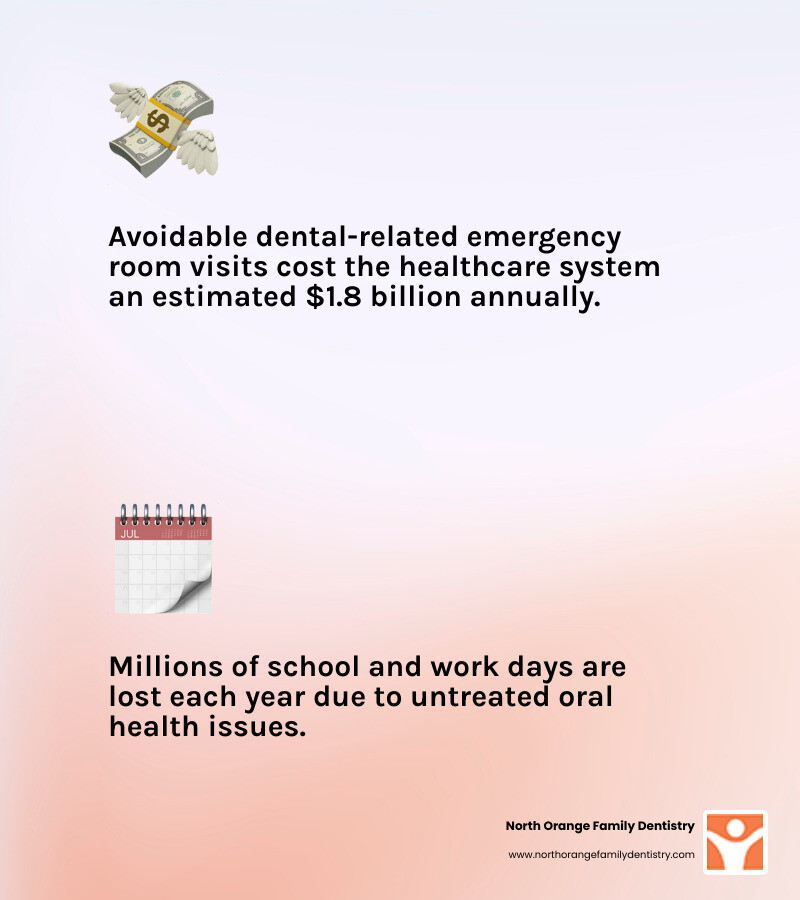
The numbers tell a clear story. In Canada alone, one in four people skipped a dental visit in 2022 simply because they couldn't afford it. Avoidable dental-related emergency room visits cost the healthcare system an estimated $1.8 billion in a single year. And millions of school days and work days are lost every year because of untreated oral health problems.
The same pressures exist for families across the U.S. Whether you're uninsured, underinsured, or just trying to stretch your budget further, the barrier between you and a healthy smile often feels bigger than it needs to be.
The good news? It doesn't have to be.
There are real, practical options available — from government programs and community clinics to in-house wellness plans like the one offered at North Orange Family Dentistry, designed specifically for individuals and families without insurance who want quality preventive care at a predictable, discounted cost.
This guide walks you through all of them, clearly and without the jargon.
Important Affordable dental care options terms:
Government-Backed Affordable Dental Care Options
When you are searching for affordable dental care options, the first place many people look is toward state and federal programs. These resources are designed to provide a safety net for those who might otherwise go without essential oral health services. The Centers for Medicare & Medicaid Services oversees the primary public health insurance programs in the United States, ensuring that millions of Americans have access to some level of care.
While Medicare is primarily health insurance for those 65 and older or those with specific disabilities, it is important to note that Medicare generally does not cover routine dental services like cleanings, fillings, or dentures. However, some Medicare Advantage Plans may offer extra dental coverage as an added benefit. For most low-income individuals and families, Medicaid and CHIP are the more common routes for dental assistance.
Medicaid and CHIP for Families
Medicaid is a joint federal and state program that provides health coverage to eligible low-income adults, children, pregnant women, and people with disabilities. Because it is managed at the state level, dental services can vary significantly depending on where you live. In many states, Medicaid provides comprehensive dental care for children but may only cover limited emergency dental services for adults.
For families who earn too much to qualify for Medicaid but still struggle with private insurance costs, CHIP (Children's Health Insurance Program) is a lifesaver. It provides low-cost health and dental services to children and, in some states, pregnant women. A family of four earning up to $50,000 a year or more may still qualify for these benefits. To find a provider who accepts these programs, you can use the Medicaid/CHIP Dentist Locator at InsureKidsNow.gov.
If you find that you don't qualify for these government programs but still need a way to manage costs, we offer a dental wellness plan in Ohio specifically for our patients in the Delaware and Lewis Center areas. This is a great alternative for those who need predictable, discounted care without the red tape of state-run insurance.
Community Resources and Educational Clinics

Beyond government insurance, there are physical locations dedicated to providing care to underserved populations. These centers often operate on a "sliding scale," meaning the amount you pay is based directly on your household income.
The Bureau of Primary Health Care supports a vast network of Federally Qualified Health Centers (FQHCs). These community health centers provide primary care and dental services regardless of a patient's ability to pay. You can easily find a community health center near you using the HRSA search tool. These centers are vital for people living in rural areas or communities where dental providers are scarce.
Dental Schools and Clinical Trials
If you live near a university, dental schools can be an excellent source of high-quality, reduced-cost treatment. In these clinics, dental students provide care under the direct and close supervision of experienced, licensed faculty dentists. Because these are teaching facilities, they often only charge for the cost of materials and equipment, which can lead to massive savings for you. You can browse this state-by-state directory to find a school in your region.
Another unique way to access care is through clinical trials. The National Institute of Dental and Craniofacial Research (NIDCR) sometimes seeks volunteers with specific oral conditions to participate in research studies. In exchange for participating, you may receive free or low-cost treatment related to the study. You can check the NIH Clinical Center or a list of clinical trials seeking patients to see if you qualify.
Nonprofit and Volunteer Networks
Nonprofit organizations also step in to fill the gaps. The Dental Lifeline Network provides comprehensive dental care through a network of volunteer dentists and labs. They specifically focus on qualifying adults who are over 65, have a permanent disability, or suffer from a chronic, serious illness.
For broader community events, America’s Dentists Care Foundation helps organize "Mission of Mercy" clinics. These are large-scale events where volunteers provide free dental care to hundreds of people in a single weekend. You can check their directory to see when an event might be coming to your area. Additionally, local chapters of the United Way often keep lists of local dental resources and can provide referrals if you locate a chapter near you.
Navigating the Health Insurance Marketplace
For those who don't have access to employer-sponsored benefits, the Health Insurance Marketplace offers a way to purchase private coverage. Under the Affordable Care Act (ACA), dental coverage is treated as an "essential health benefit" for children under 18, meaning it must be available as part of a health plan or as a standalone option.
When shopping for dental payment options, you'll find that you can either pick a health plan that includes dental or buy a separate standalone dental plan. It is important to remember that you generally cannot buy a Marketplace dental plan unless you are also buying a health plan at the same time.
Affordable Dental Care Options for Children vs. Adults
The rules for adults are a bit different than for children. While dental coverage must be offered for children, it is not considered an essential benefit for adults. This means health plans aren't required to include it, and you'll often need to look for a separate plan.
When comparing Marketplace plans, pay close attention to:
- Waiting Periods: Many separate dental plans have a waiting period (sometimes 6 to 12 months) before they will cover major procedures like crowns or root canals.
- Deductibles and Maximums: Unlike health insurance, dental insurance usually has a "calendar year maximum," which is the most the plan will pay for your care in a year.
- Out-of-Pocket Costs: You’ll still be responsible for co-payments, which can range from 20% to 50% of the procedure cost.
Why In-House Affordable Dental Care Options Win
While insurance is a common choice, many of our patients find that an in-house no-insurance-dental-plan is actually a much better fit for their lifestyle and budget. At North Orange Family Dentistry, we created our wellness plan to remove the middlemen and the headaches.
Unlike traditional insurance, our in-house plan has:
- No Waiting Periods: You can start using your benefits the very same day you sign up.
- No Deductibles or Maximums: You don't have to worry about hitting a "cap" on your care or paying out a high deductible before coverage kicks in.
- Predictable Pricing: You pay a flat yearly membership fee that covers your preventive care (cleanings, exams, and X-rays) and gives you a significant discount on all other services.
It is the ideal solution for individuals and families in Delaware County who want high-quality care without the stress of insurance claims and denials.
Handling Dental Emergencies on a Budget
A dental emergency doesn't always wait for you to have the money saved up. Whether it's a severe toothache or a knocked-out tooth, waiting can lead to infection or permanent tooth loss. We understand that the fear of the bill often keeps people away, but we want you to know what happens if you can't afford dental care — the problem usually gets much more expensive.
If you knock out a tooth, time is of the essence. Handle the tooth by the crown (the top part), rinse it gently without scrubbing, and try to place it back in the socket or keep it in a glass of milk. Call us immediately. We offer same-day emergency dental appointments most of the time to help save your natural smile.
Restorative Solutions for Every Budget
If you do need work done, we focus on providing options that balance quality and cost.
- Tooth Bonding: This is an affordable tooth crown alternative for minor chips or gaps. It uses a composite resin that we match to your tooth color, and it can often be done in just one visit.
- Dental Implants: For missing teeth, we provide endosteal dental implants. While these are a premium long-term solution, we focus on affordable dental implants by balancing cost and quality. On average, a single tooth implant at our practice costs about $4500.
- Digital Dentures: If you need to replace multiple teeth, our digital dentures offer a precise fit using advanced technology, making them more comfortable and durable than traditional methods.
- Root Canal Therapy: Often, a root canal is the most affordable way to save a natural tooth and avoid the higher cost of extraction and replacement.
Frequently Asked Questions about Affordable Dental Care
Who qualifies for government dental assistance?
Eligibility for programs like Medicaid and CHIP is primarily based on your household's "Modified Adjusted Gross Income" (MAGI). For children, the income thresholds are often higher than for adults. Seniors may find some help through specific Medicare Advantage plans, and veterans should check their eligibility through the VA dental program. Generally, you must be a resident of the state where you are applying and meet specific citizenship or immigration requirements.
Where can I find free dental care events?
The best way to find free events is to check the clinic schedule for the America’s Dentists Care Foundation. You can also contact the Ohio Dental Association for information on local "Give Kids A Smile" events, which provide free screenings and treatment for children in need every February.
Conclusion
Finding affordable dental care options shouldn't feel like a full-time job. Whether you utilize government programs, visit a community health center, or join our in-house Dental Wellness Plan, the most important step is to prioritize your preventive care now to avoid costly problems later.
At North Orange Family Dentistry, Dr. Kyle Bogan and our team are dedicated to serving the Delaware, Ohio community with the most advanced-dentistry available. From our specialized laser treatments for TMJ pain and periodontal disease to our same-day emergency care, we are here to ensure your family gets five-star treatment that fits your budget.
If you’re ready to experience dental care that puts your needs first, we invite you to join our family. We're located conveniently in Lewis Center, and we can't wait to see you smile.
Why So Many Families Struggle to Afford Dental Care
Affordable dental care options are more accessible than most people realize — and knowing where to look can save your family a lot of money and stress.
Here's a quick overview of your main options:
| Option | Best For |
|---|---|
| Medicaid & CHIP | Low-income families and children |
| Health Insurance Marketplace | Individuals without employer coverage |
| Federally Qualified Health Centers | Sliding-scale fees based on income |
| Dental schools | Reduced-cost supervised care |
| Nonprofit/volunteer programs | Seniors, disabled adults, uninsured |
| In-house dental wellness plans | Uninsured individuals and families wanting predictable yearly costs |
Dental care is one of those things that's easy to put off — especially when money is tight. But the cost of avoiding the dentist almost always ends up higher than the cost of going.
The numbers tell a clear story. In Canada alone, one in four people skipped a dental visit in 2022 simply because they couldn't afford it. Avoidable dental-related emergency room visits cost the healthcare system an estimated $1.8 billion in a single year. And millions of school days and work days are lost every year because of untreated oral health problems.
The same pressures exist for families across the U.S. Whether you're uninsured, underinsured, or just trying to stretch your budget further, the barrier between you and a healthy smile often feels bigger than it needs to be.
The good news? It doesn't have to be.
There are real, practical options available — from government programs and community clinics to in-house wellness plans like the one offered at North Orange Family Dentistry, designed specifically for individuals and families without insurance who want quality preventive care at a predictable, discounted cost.
This guide walks you through all of them, clearly and without the jargon.
Important Affordable dental care options terms:
Government-Backed Affordable Dental Care Options
When you are searching for affordable dental care options, the first place many people look is toward state and federal programs. These resources are designed to provide a safety net for those who might otherwise go without essential oral health services. The Centers for Medicare & Medicaid Services oversees the primary public health insurance programs in the United States, ensuring that millions of Americans have access to some level of care.
While Medicare is primarily health insurance for those 65 and older or those with specific disabilities, it is important to note that Medicare generally does not cover routine dental services like cleanings, fillings, or dentures. However, some Medicare Advantage Plans may offer extra dental coverage as an added benefit. For most low-income individuals and families, Medicaid and CHIP are the more common routes for dental assistance.
Medicaid and CHIP for Families
Medicaid is a joint federal and state program that provides health coverage to eligible low-income adults, children, pregnant women, and people with disabilities. Because it is managed at the state level, dental services can vary significantly depending on where you live. In many states, Medicaid provides comprehensive dental care for children but may only cover limited emergency dental services for adults.
For families who earn too much to qualify for Medicaid but still struggle with private insurance costs, CHIP (Children's Health Insurance Program) is a lifesaver. It provides low-cost health and dental services to children and, in some states, pregnant women. A family of four earning up to $50,000 a year or more may still qualify for these benefits. To find a provider who accepts these programs, you can use the Medicaid/CHIP Dentist Locator at InsureKidsNow.gov.
If you find that you don't qualify for these government programs but still need a way to manage costs, we offer a dental wellness plan in Ohio specifically for our patients in the Delaware and Lewis Center areas. This is a great alternative for those who need predictable, discounted care without the red tape of state-run insurance.
Community Resources and Educational Clinics
Beyond government insurance, there are physical locations dedicated to providing care to underserved populations. These centers often operate on a "sliding scale," meaning the amount you pay is based directly on your household income.
The Bureau of Primary Health Care supports a vast network of Federally Qualified Health Centers (FQHCs). These community health centers provide primary care and dental services regardless of a patient's ability to pay. You can easily find a community health center near you using the HRSA search tool. These centers are vital for people living in rural areas or communities where dental providers are scarce.
Dental Schools and Clinical Trials
If you live near a university, dental schools can be an excellent source of high-quality, reduced-cost treatment. In these clinics, dental students provide care under the direct and close supervision of experienced, licensed faculty dentists. Because these are teaching facilities, they often only charge for the cost of materials and equipment, which can lead to massive savings for you. You can browse this state-by-state directory to find a school in your region.
Another unique way to access care is through clinical trials. The National Institute of Dental and Craniofacial Research (NIDCR) sometimes seeks volunteers with specific oral conditions to participate in research studies. In exchange for participating, you may receive free or low-cost treatment related to the study. You can check the NIH Clinical Center or a list of clinical trials seeking patients to see if you qualify.
Nonprofit and Volunteer Networks
Nonprofit organizations also step in to fill the gaps. The Dental Lifeline Network provides comprehensive dental care through a network of volunteer dentists and labs. They specifically focus on qualifying adults who are over 65, have a permanent disability, or suffer from a chronic, serious illness.
For broader community events, America’s Dentists Care Foundation helps organize "Mission of Mercy" clinics. These are large-scale events where volunteers provide free dental care to hundreds of people in a single weekend. You can check their directory to see when an event might be coming to your area. Additionally, local chapters of the United Way often keep lists of local dental resources and can provide referrals if you locate a chapter near you.
Navigating the Health Insurance Marketplace
For those who don't have access to employer-sponsored benefits, the Health Insurance Marketplace offers a way to purchase private coverage. Under the Affordable Care Act (ACA), dental coverage is treated as an "essential health benefit" for children under 18, meaning it must be available as part of a health plan or as a standalone option.
When shopping for dental payment options, you'll find that you can either pick a health plan that includes dental or buy a separate standalone dental plan. It is important to remember that you generally cannot buy a Marketplace dental plan unless you are also buying a health plan at the same time.
Affordable Dental Care Options for Children vs. Adults
The rules for adults are a bit different than for children. While dental coverage must be offered for children, it is not considered an essential benefit for adults. This means health plans aren't required to include it, and you'll often need to look for a separate plan.
When comparing Marketplace plans, pay close attention to:
- Waiting Periods: Many separate dental plans have a waiting period (sometimes 6 to 12 months) before they will cover major procedures like crowns or root canals.
- Deductibles and Maximums: Unlike health insurance, dental insurance usually has a "calendar year maximum," which is the most the plan will pay for your care in a year.
- Out-of-Pocket Costs: You’ll still be responsible for co-payments, which can range from 20% to 50% of the procedure cost.
Why In-House Affordable Dental Care Options Win
While insurance is a common choice, many of our patients find that an in-house no-insurance-dental-plan is actually a much better fit for their lifestyle and budget. At North Orange Family Dentistry, we created our wellness plan to remove the middlemen and the headaches.
Unlike traditional insurance, our in-house plan has:
- No Waiting Periods: You can start using your benefits the very same day you sign up.
- No Deductibles or Maximums: You don't have to worry about hitting a "cap" on your care or paying out a high deductible before coverage kicks in.
- Predictable Pricing: You pay a flat yearly membership fee that covers your preventive care (cleanings, exams, and X-rays) and gives you a significant discount on all other services.
It is the ideal solution for individuals and families in Delaware County who want high-quality care without the stress of insurance claims and denials.
Handling Dental Emergencies on a Budget
A dental emergency doesn't always wait for you to have the money saved up. Whether it's a severe toothache or a knocked-out tooth, waiting can lead to infection or permanent tooth loss. We understand that the fear of the bill often keeps people away, but we want you to know what happens if you can't afford dental care — the problem usually gets much more expensive.
If you knock out a tooth, time is of the essence. Handle the tooth by the crown (the top part), rinse it gently without scrubbing, and try to place it back in the socket or keep it in a glass of milk. Call us immediately. We offer same-day emergency dental appointments most of the time to help save your natural smile.
Restorative Solutions for Every Budget
If you do need work done, we focus on providing options that balance quality and cost.
- Tooth Bonding: This is an affordable tooth crown alternative for minor chips or gaps. It uses a composite resin that we match to your tooth color, and it can often be done in just one visit.
- Dental Implants: For missing teeth, we provide endosteal dental implants. While these are a premium long-term solution, we focus on affordable dental implants by balancing cost and quality. On average, a single tooth implant at our practice costs about $4500.
- Digital Dentures: If you need to replace multiple teeth, our digital dentures offer a precise fit using advanced technology, making them more comfortable and durable than traditional methods.
- Root Canal Therapy: Often, a root canal is the most affordable way to save a natural tooth and avoid the higher cost of extraction and replacement.
Frequently Asked Questions about Affordable Dental Care
Who qualifies for government dental assistance?
Eligibility for programs like Medicaid and CHIP is primarily based on your household's "Modified Adjusted Gross Income" (MAGI). For children, the income thresholds are often higher than for adults. Seniors may find some help through specific Medicare Advantage plans, and veterans should check their eligibility through the VA dental program. Generally, you must be a resident of the state where you are applying and meet specific citizenship or immigration requirements.
Where can I find free dental care events?
The best way to find free events is to check the clinic schedule for the America’s Dentists Care Foundation. You can also contact the Ohio Dental Association for information on local "Give Kids A Smile" events, which provide free screenings and treatment for children in need every February.
Conclusion
Finding affordable dental care options shouldn't feel like a full-time job. Whether you utilize government programs, visit a community health center, or join our in-house Dental Wellness Plan, the most important step is to prioritize your preventive care now to avoid costly problems later.
At North Orange Family Dentistry, Dr. Kyle Bogan and our team are dedicated to serving the Delaware, Ohio community with the most advanced-dentistry available. From our specialized laser treatments for TMJ pain and periodontal disease to our same-day emergency care, we are here to ensure your family gets five-star treatment that fits your budget.
If you’re ready to experience dental care that puts your needs first, we invite you to join our family. We're located conveniently in Lewis Center, and we can't wait to see you smile.
Contact Us
Have any questions? Want to learn more?

